
How to issue invoices compliantly when forestry purchases timber and Chinese herbal medicines? Kailing Technology's agricultural product purchase invoice system verifies self-production attributes and purchase scope

Logs are scaled by piece, while medicinal plants are accepted by variety, part, and weight. The two kinds of goods appear to both come from forest land or planting land, yet they cannot be handled generically with one set of material names and one "self-production statement." Timber may already be processed into sawn timber, and medicinal materials may also be self-produced by farmers, resold by brokers, or further processed. In forestry scenarios, the Kailing Technology agricultural product purchase invoice system needs to first distinguish the goods scope and seller identity, and then connect scaling, acceptance, payment, and invoicing to their respective actual purchases.
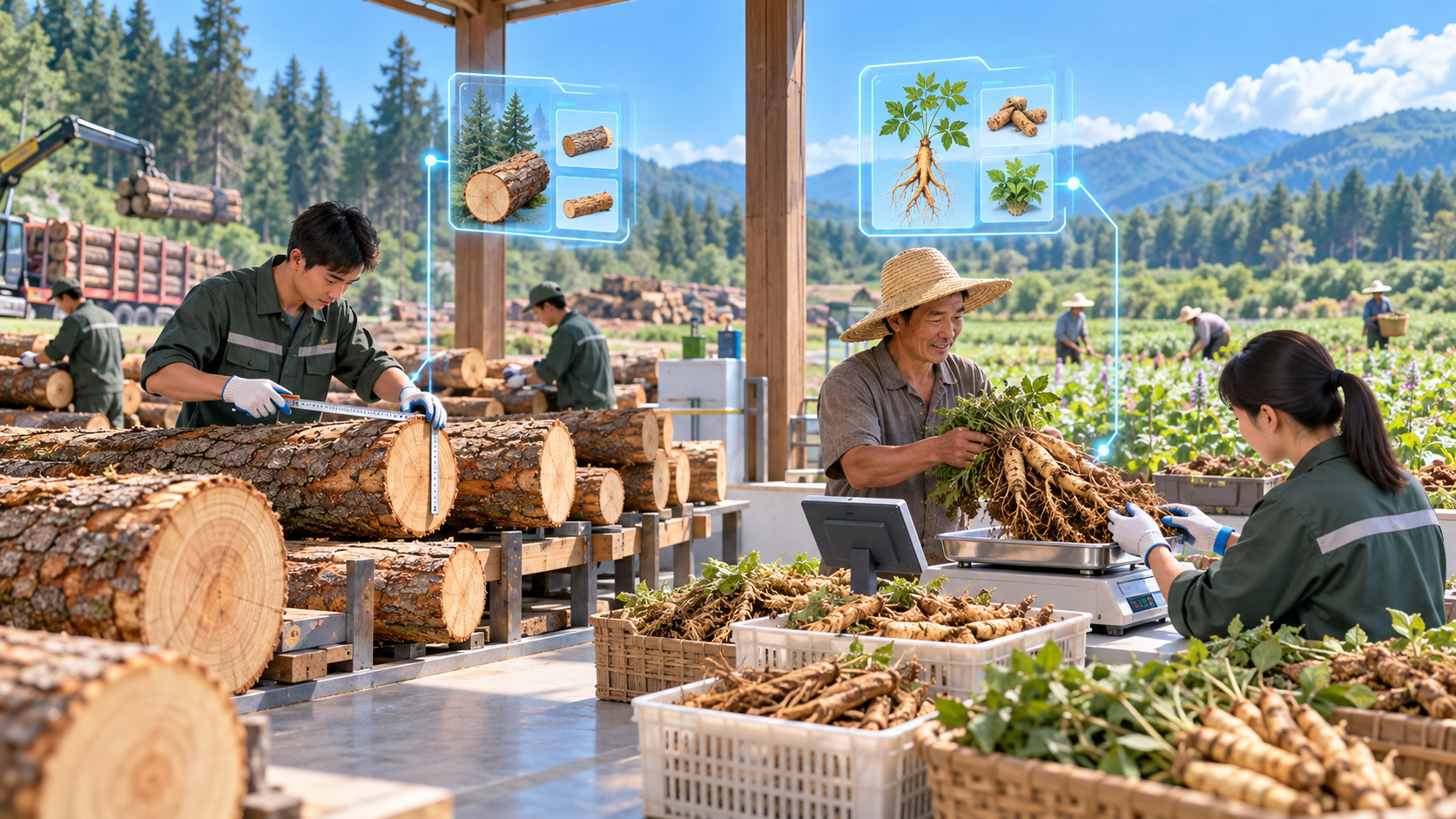
▍First break "timber" and "Chinese herbal medicine" into specific goods that can be judged
The "Notes on the Scope of Goods Subject to the 9% VAT Rate" includes logs under forestry products, including wood segments with branches and tips removed, bark removed, and sawn to a certain length, while explicitly stating that sawn timber is not within that scope. The medicinal plant entry includes roots, stems, bark, leaves, flowers, fruits, etc. used as raw materials for traditional Chinese medicine, and also lists some decoction pieces processed from medicinal plants, but Chinese patent medicines are not within that goods scope. The classification here is one step in determining the attributes of the goods; it does not mean that anything falling within the notes can be exempted from tax as self-produced by agricultural producers or have acquisition invoices issued by the purchaser.
Enterprises should record the variety, delivery form, processing stage, and applicable tax classification judgment in the material master data. If logs, sawn timber, medicinal plants, and decoction pieces have similar names but involve different processing states, they should not be uniformly changed to "timber" or "Chinese herbal medicine" for invoicing convenience. Category selection before receipt should allow review; when uncertain, the finance and tax position should first confirm based on current policies and the competent tax authority's criteria, then decide the invoice handling method.
▍Step two: trace the self-produced source: planting and harvesting, or purchased-for-resale
The self-produced agricultural product policy focuses on agricultural producers personally directly engaged in planting, harvesting and other activities and selling the corresponding primary products. Logs from forest farmers' own forest land and medicinal plants grown by herb growers themselves can be verified according to the true situation; if a purchaser buys externally and then resells, or an agent collects and mixes goods from multiple households, it cannot be defaulted as self-produced merely because the seller is a natural person. Land or forest land operation materials, harvest records, planted varieties and delivery scale can serve as verification clues; specific supporting materials are determined according to actual business and local management requirements.
For medicinal materials, pay special attention to the situation where one person provides multiple varieties. When a household that has long grown one medicinal plant temporarily delivers several categories clearly from different sources, the system should prompt re-verification of origin, planting or collection method. For timber, the legality of source and relevant forestry management materials should also be checked at the same time; the invoice system can collect materials but does not replace the regulatory judgment of competent authorities such as forest resources and logging transport. If any material is missing, it should be clearly required that business personnel supplement evidence or suspend the corresponding settlement, rather than having finance look for explanations after invoicing.
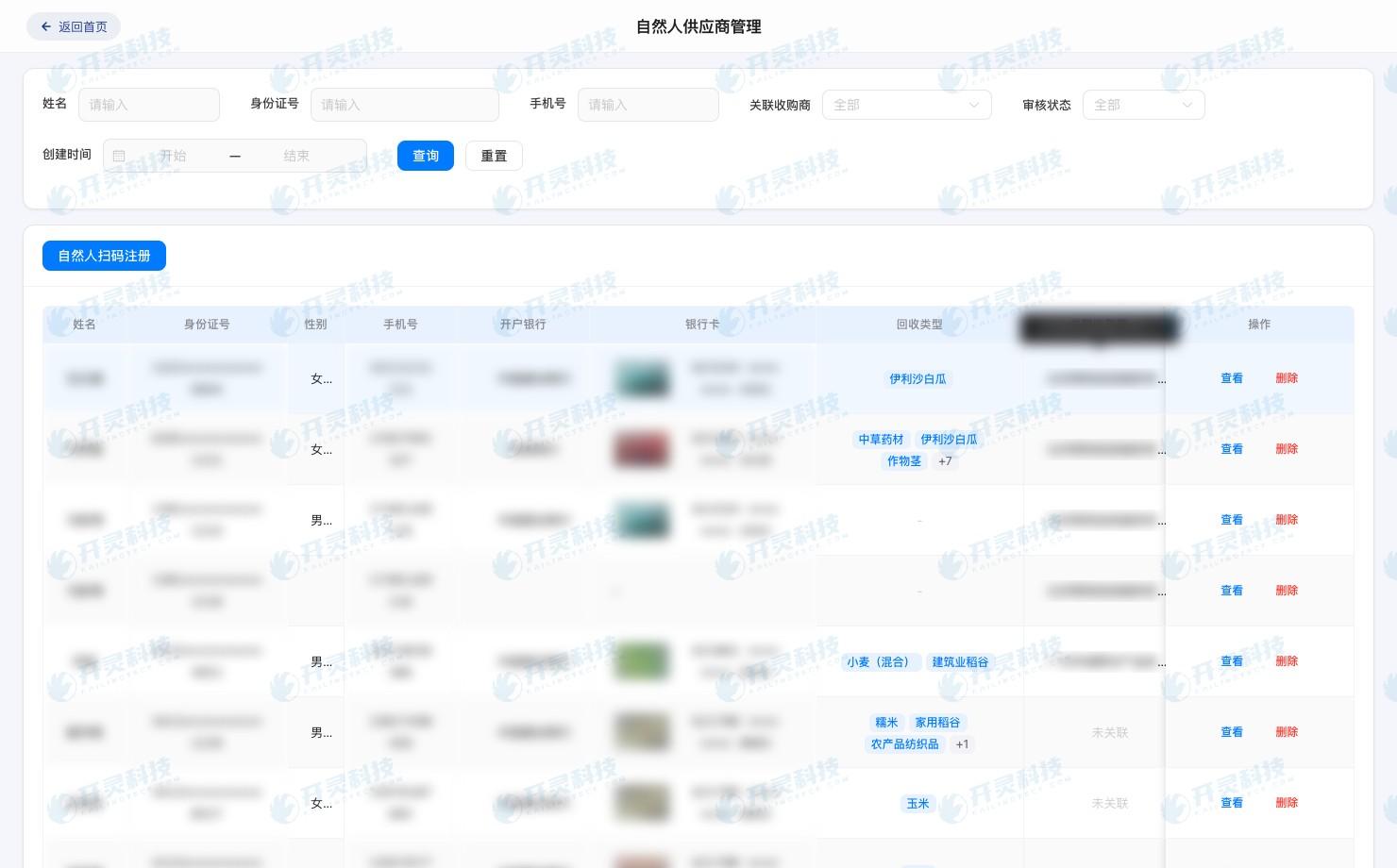
Example of agricultural producer profile creation interface
▍Logs use scaling and grading; medicinal materials use batch quality acceptance
Logs may form quantity and price by tree species, diameter, length, material grade, and scaling rules. Scaling records should point to the actual delivery batch and retain the reviewer, measurement results, and reasons for adjustment. If one truck mixes multiple tree species, record by detail, and it is not advisable to use total truck weight as the pricing basis for each tree species. Only by first forming a verifiable receiving note and then a settlement note can it be explained how the invoice amount is aggregated from each log or each group of logs.
Acceptance of medicinal plants focuses on specific varieties, fresh or dry state, impurity content, moisture content and harvest batch. Enterprises can record sampling or inspection conclusions and confirm the settleable quantity together with weighing results; when deductions are made due to quality review, retain the original number, adjusted number and confirmation basis. Timber scaling and medicinal material weighing are both business evidence, but fields and review methods should be configured by category, and the "net weight - unit price" form of one industry cannot be rigidly applied to another type of goods.
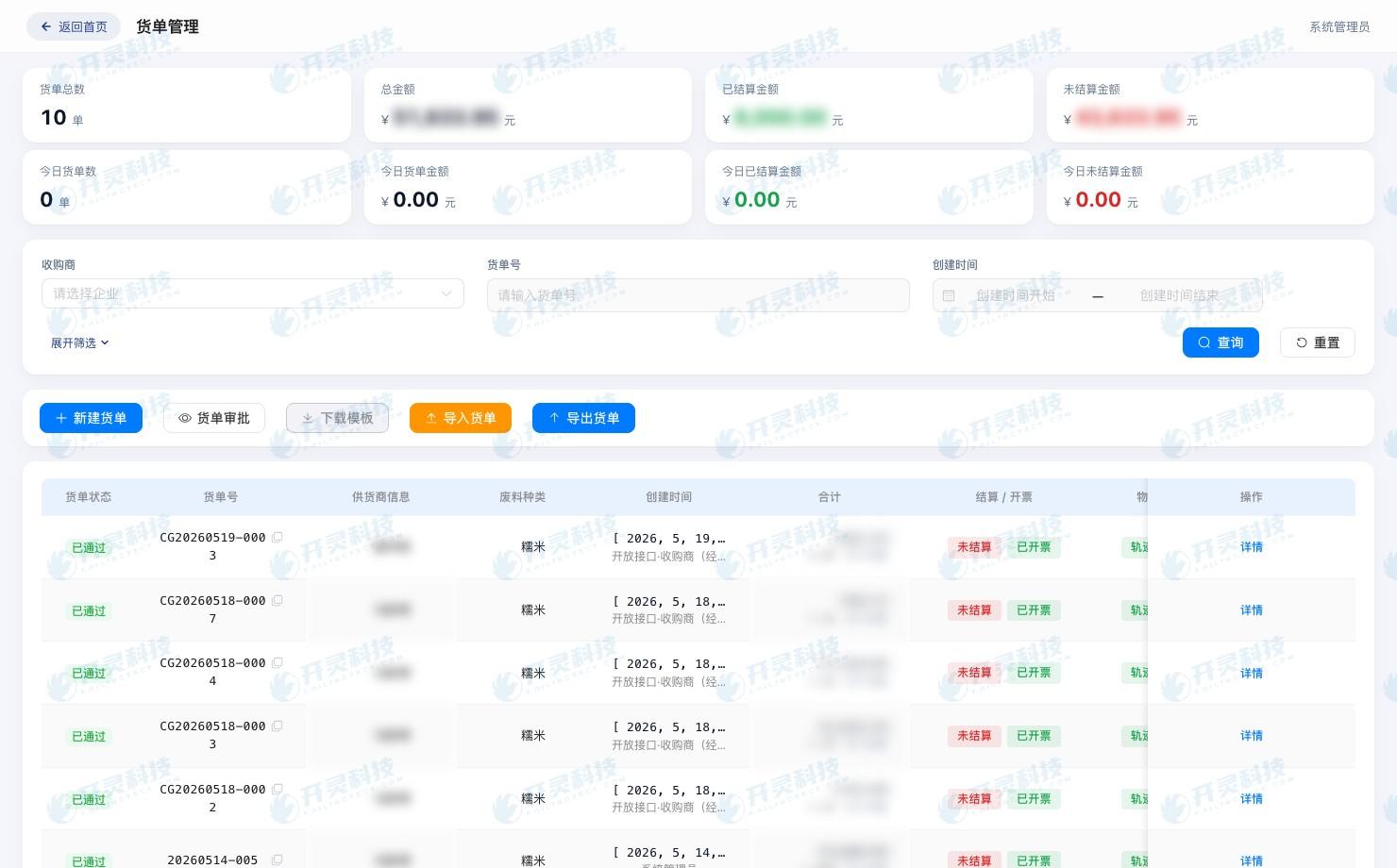
Example of agricultural product receiving goods note interface
▍Payments and invoices follow the confirmed goods scope
Agricultural product purchase invoices should be truthfully filled in based on the actual agricultural producers, goods, and prices purchased. General taxpayers that obtain or issue compliant agricultural product sales invoices or purchase invoices may calculate input tax based on the face purchase price and the current 9% deduction rate; applicability also depends on the seller's self-produced status, goods category, enterprise qualification, and local invoicing requirements. If medicinal materials are resold by a commercial operator, or timber has become a product outside the corresponding annotation scope, the invoice path consistent with the actual transaction should be used, and the boundary cannot be bypassed in the system by changing the material name.
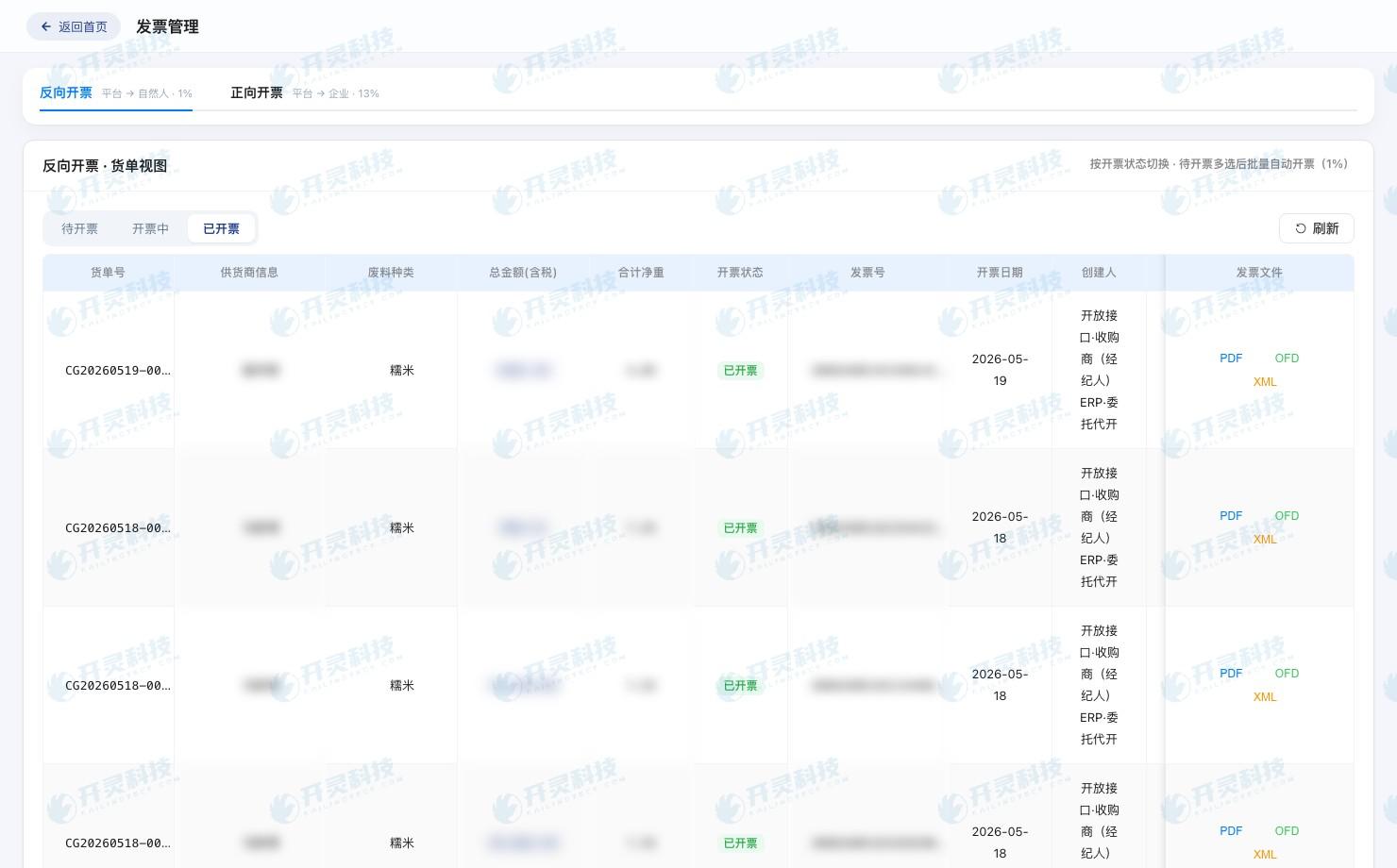
Example of goods list view for agricultural product purchase invoice
At payment, verify the account, amount, and bank result against the seller and the confirmed settlement statement. For timber and medicinal material acquisitions from the same seller, the enterprise can view the payable list in a unified way, but should separately retain the acceptance, pricing, and invoice linkage of each type of goods. If payment is made in installments or returns occur, the adjustment should be applied to the original transaction, not handled only through general ledger differences at month-end. Kailing Technology's agricultural product acquisition invoicing system can aggregate goods order, payment, and invoicing status, allowing invoices to be traced back along the evidence chain from the settlement results.
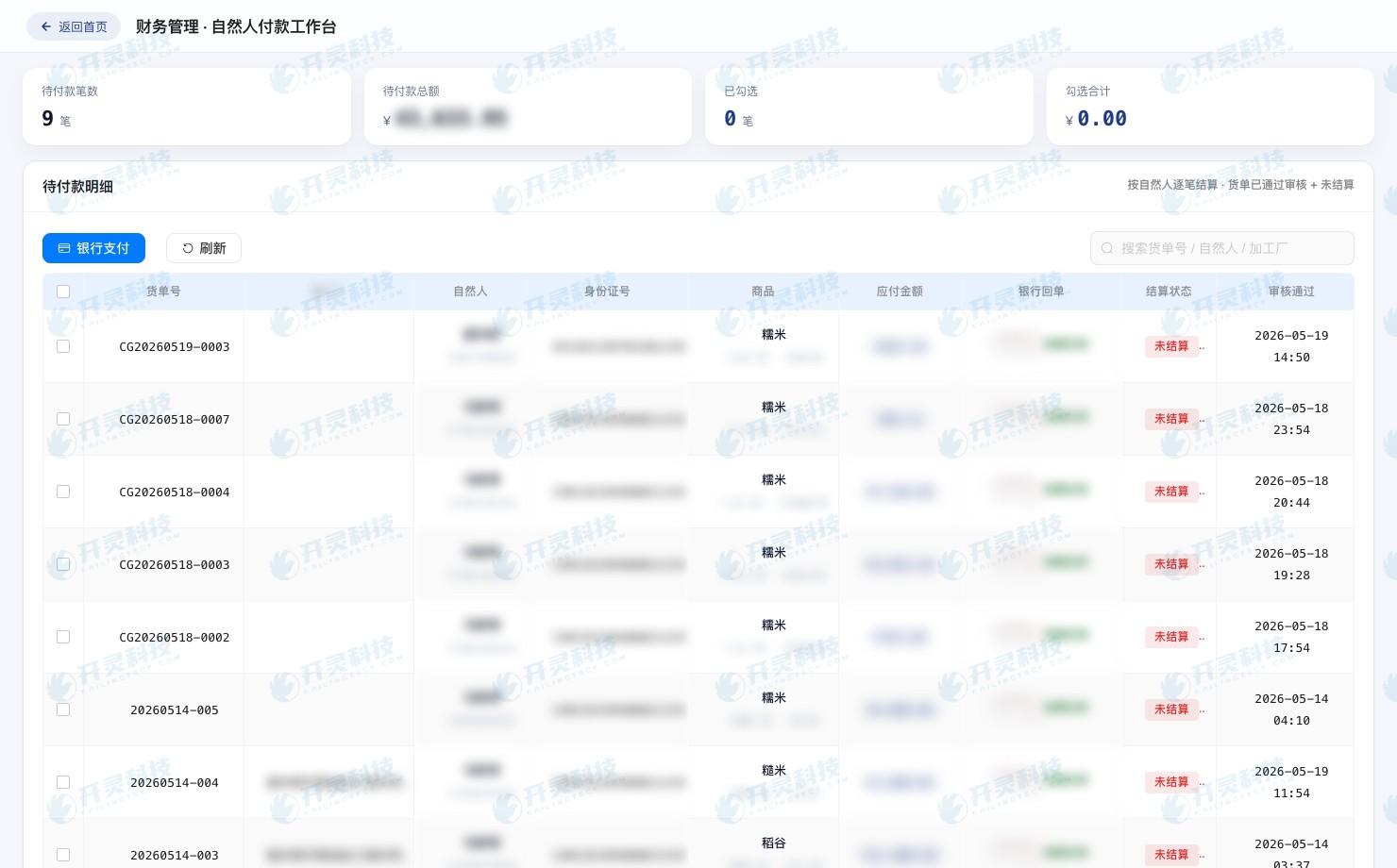
Example of agricultural producer payment workbench
▍Use three easily confused samples for launch acceptance
Sample 1: Logs and sawn timber enter in the same vehicle; check whether the system can distinguish goods form and invoice determination. Sample 2: Medicinal plants self-produced by a herb grower coexist with purchased goods for resale; check whether they are handled separately by source. Sample 3: Medicinal material varieties change or inspection deductions occur; check whether self-production materials, quality records, payments and invoices can still correspond by batch. For each sample, have on-site scaling or acceptance personnel and finance review together, rather than only checking whether the system successfully issued an invoice.
The value of Kailing Technology's agricultural product purchase invoice system is to keep two judgments at the business front end: first determine what was bought, then determine from whom it was bought. Five-flow archives can organize self-production proof, agreements, goods, tax, and fund materials for each purchase, but complete materials do not replace substantive judgment on the goods scope and the authenticity of self-production.
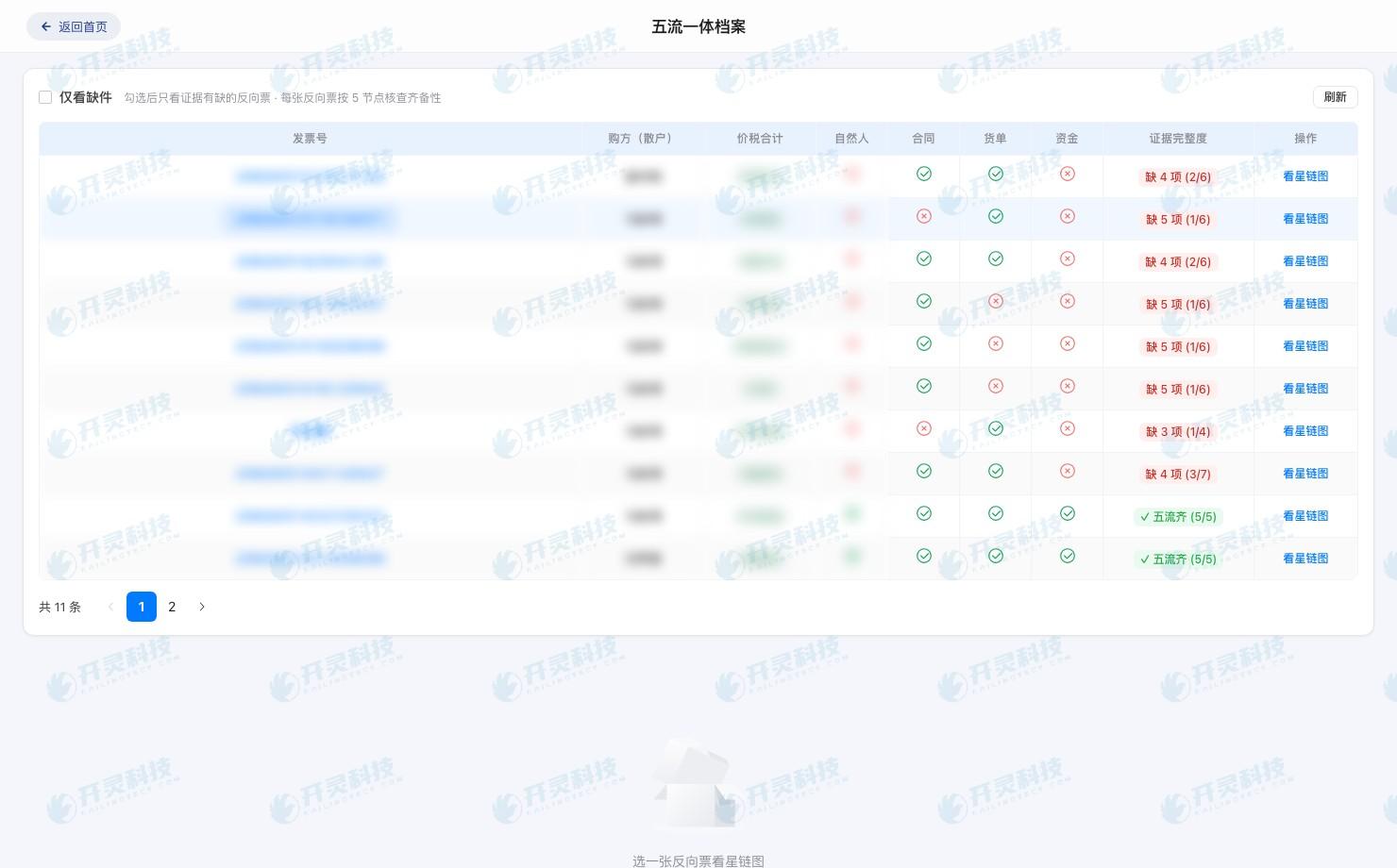
Example of the five-flow evidence archiving interface
▍FAQ
Q: Can logs and sawn timber be invoiced under the same forestry product criteria for acquisition invoices?
A: They should not be judged together. The current commodity scope notes include logs under forestry products, while explicitly stating that sawn timber is not within that scope; the invoice should be determined based on the actual goods and the nature of the transaction.
Q: Are all Chinese herbal medicines self-produced agricultural products of agricultural producers?
A: No. It also depends on whether the seller directly plants or harvests, the specific goods, and the processing state; purchased-for-resale goods cannot be treated under the self-produced criteria merely because of the medicinal material name.
Q: If a truck carries a mix of multiple types of timber, can only the truck weight be recorded?
A: It is recommended to retain the tree species, specifications or grades, and their respective scaling results, then aggregate them into the settlement and invoice amounts.
Q: Can five-flow archives replace forestry logging management materials?
A: No. The system can link relevant vouchers and access paths, but enterprises must still fulfill their respective obligations under applicable forestry and tax rules.
Have timber and medicinal materials invoiced separately according to their true source, category, and acceptance results, and learn about Kailing Technology's agricultural product purchase invoice solution: https://www.kailingteck.com/fxncp/ .
As a national high-tech enterprise, Kailing Technology focuses on the digital and intelligent transformation of enterprise business-finance-tax and operations management, providing software products, system integration, implementation and delivery, and operational services for various government agencies, institutions, group enterprises, and SMEs.
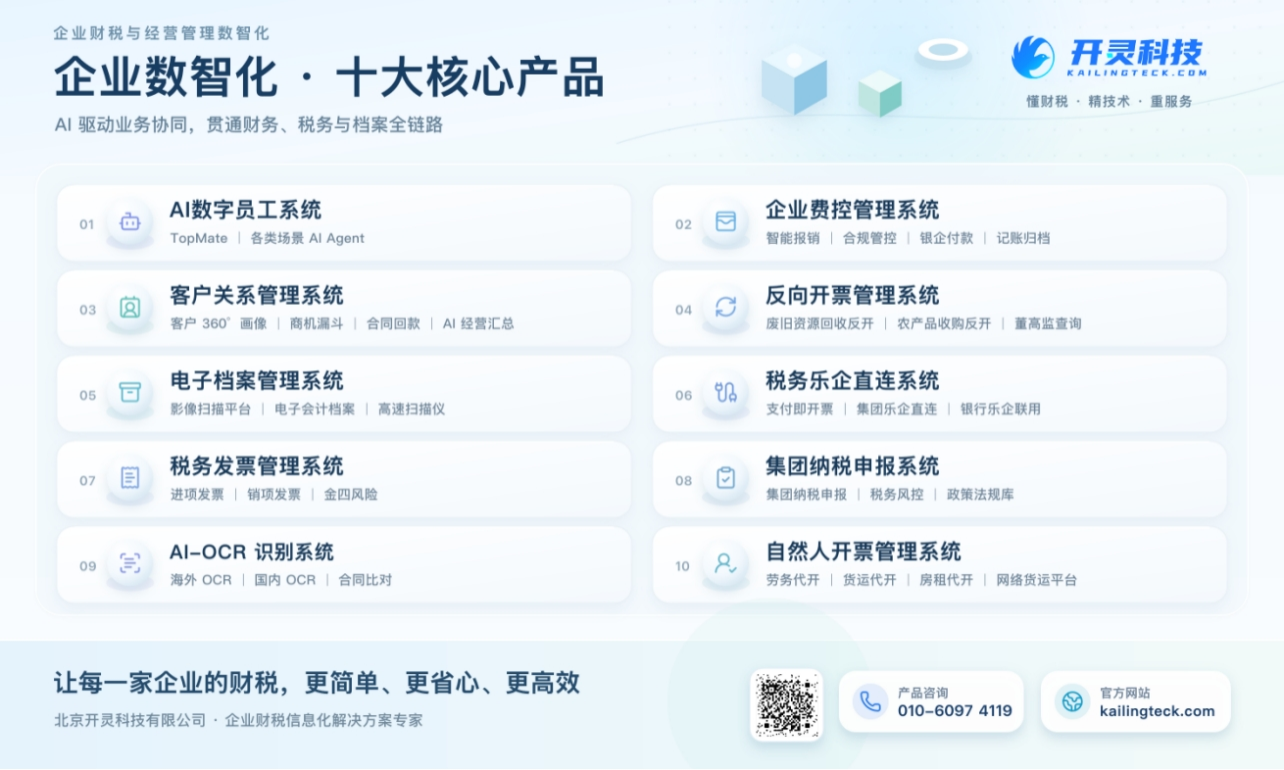
The company has now formed ten core product lines, including: AI digital employee system, enterprise expense control management system, customer relationship management system, reverse invoicing management system, invoice issuance for individuals management system, electronic archives management system, tax fully digitalized e-invoice Leqi system, tax invoice management system, group tax filing system, and AI OCR recognition system. It is committed to connecting enterprise business, finance, tax, funds, and archive data to help customers improve operational efficiency, business-finance-tax compliance capabilities, and digital management levels.
If you have any business-finance-tax digital transformation needs, welcome to contact us. Beijing Kailing Technology will serve you wholeheartedly.
Keywords: Forestry purchase invoices, Kailing Technology agricultural product purchase invoices, log scaling, self-produced Chinese herbal medicines, five flows in one
As a comprehensive business-finance-tax digitalization solution service provider, Kailing Technology provides business-finance-tax management digital transformation products and operational services for various government agencies, institutions, and large, medium, and small enterprises. The product line includes: solutions for sales contract management system, procurement contract management system, fully digitalized Leqi interface project, automatic output invoicing system, reverse invoicing system, invoice issuance for individuals system, employee expense control and reimbursement system, input VAT invoice management system, supply chain collaborative reconciliation system, image AI OCR recognition system, automatic financial bookkeeping system, electronic accounting archives system, etc., comprehensively driving the digitalization process across various fields.
Consultation Hotline: 18513895936 / 010-60974119 Location: Beijing