
How are weighbridge weighing, receiving settlement, and bank payment automatically matched? Kailing Technology reverse invoicing system unifies business numbers
At 7:20 in the morning, a scrap steel truck completed its second weighing. The weighbridge operator saw the net weight recorded, the receiving clerk settled by grade and impurity deduction, but finance found two pending payment records with similar amounts and the same name. The driver waited at the counter for payment, and the invoicing desk asked which weighbridge ticket it corresponded to. All three tables listed the same seller, yet the vehicle, goods, settlement, payment, and invoice could not be linked.
Kailing Technology's reverse invoicing system generates a unified business number at vehicle registration, linking weighbridge tickets, receiving orders, settlement orders, invoicing requests, payment instructions, and bank receipts segment by segment. Each system retains its original number, and finance can query from either end and land on the same purchase.

▍When a vehicle enters, first establish a business mainline for one purchase
As soon as the vehicle arrives at the station, the gate guard or receiver first selects the station, seller, and category, and enters the license plate, driver, and expected cargo information. The system then generates a unified business number and manages other vehicles of the same seller that day separately. On-site personnel do not need to wait until settlement is complete to create the business retroactively, and every subsequent action has a clear anchor point.
Weighbridge equipment generates its own weighbridge ticket number, and the enterprise's existing ERP may also generate a receiving order number. Kailing Technology's reverse invoicing system saves the mapping between these original numbers and the unified business number; position staff operate the familiar systems as usual, while queries have the same business mainline. Scanning, direct interface reading, or controlled import can all be organized around this mainline.
When there are sellers with the same name, vehicles entering continuously, or receipt at multiple stations, the system locates them jointly by station, vehicle, time, and entity profile. When finance opens the pending settlement record, what they see is a purchase with an on-site source.
▍Weighbridge weighing and goods receipt acceptance must complete handover on site
When the truck weighs in for the first time, the system receives the gross weight, device, time, and operating position; after unloading, it is weighed again, and the net weight is formed from the original readings. The receiver then supplements the scrap steel category, grade, impurity deduction, acceptance images, and on-site notes, confirming which weights enter valid receipt and which parts need to be returned or adjusted.
When one vehicle has multiple categories, the receiving clerk splits the details under the same business number; during re-weighing, the original reading and the result are retained side by side. Manual corrections record the reason, operator, and time, and the settlement position can locate the source of the change.
After handover is completed, the weighbridge record moves from "weighed" to "accepted," and only then does the system send a processable task to the settlement step. Finance does not need to call to ask whether this vehicle has been unloaded, and receiving clerks can also see in the list which vehicles remain on site due to missing acceptance information.
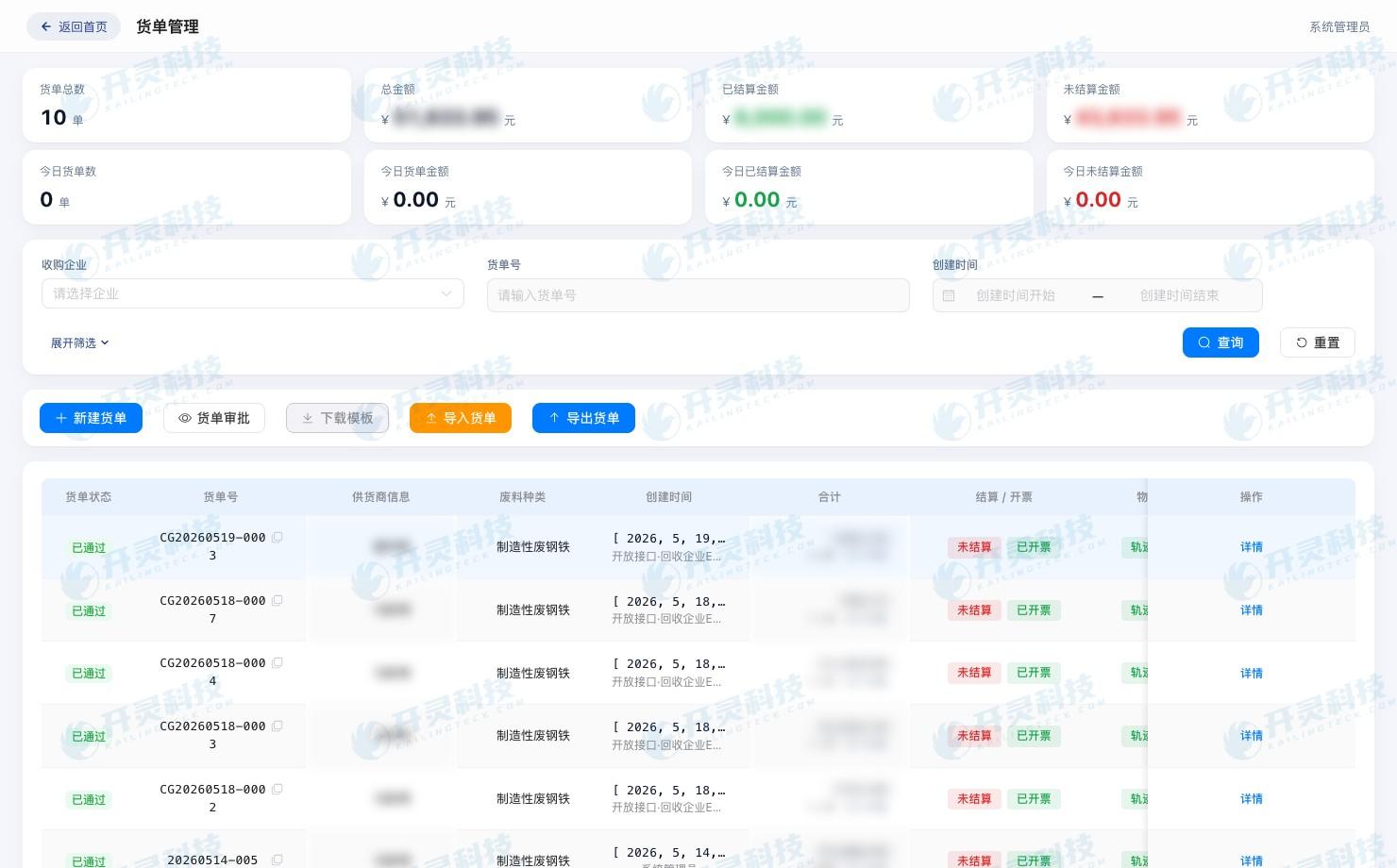
Linkage between weighbridge weighing and receiving order (information desensitized)
▍Settlement forms a version based on the confirmed weight, grade, and price
After the settlement clerk opens the business number, the system brings up the valid net weight, category, grade, impurity deduction result, and seller information, then calculates the amount payable according to the current price rules. Quantity comes from receipt confirmation, unit price comes from the effective price version, and the deduction basis is linked to on-site records, so every part of the amount has a source.
If both parties adjust the grade or return part of the goods after review, the system generates a new settlement version while retaining the pre-adjustment data, modification reason, and confirmation records. When window staff explain the difference to the driver, they can directly show changes in net weight, impurity deduction, and unit price, no longer relying on verbal retelling to explain the total.
After settlement confirmation, payment and invoicing read the same result. The amount is confirmed only once, and subsequent steps proceed by status, reducing duplicate calculations, duplicate deductions, and mixed versions.
▍Invoicing tasks continue to use the business number and record aggregation and splitting
After the settlement status changes to confirmed, the system generates a pending issuance task, bringing up the seller profile, goods category, quantity, amount, and related materials. The invoicing desk first checks entity verification, historical cumulative totals, and material status, then initiates reverse invoicing. The invoicing request number is saved with the unified business number, and the in-process, success, failure, and red-letter reversal statuses continue to be written back.
When multiple vehicles are consolidated into one invoice, each vehicle's weighbridge ticket, receiving, and settlement details remain separately queryable; when one purchase is split into multiple invoices, the system records each invoicing amount and remaining invoiceable amount. Finance can open an invoice and drill down to the vehicles and goods that compose it, avoiding having only a total after consolidation.
If the interface times out, the operator first queries the status using the original request number. If the tax side has already succeeded, the system receives the result and completes the write-back; if the request failed, processing is initiated again along the original business number. This action distinguishes technical retries from business duplication, so counter staff will not generate a second task by clicking the button one more time.
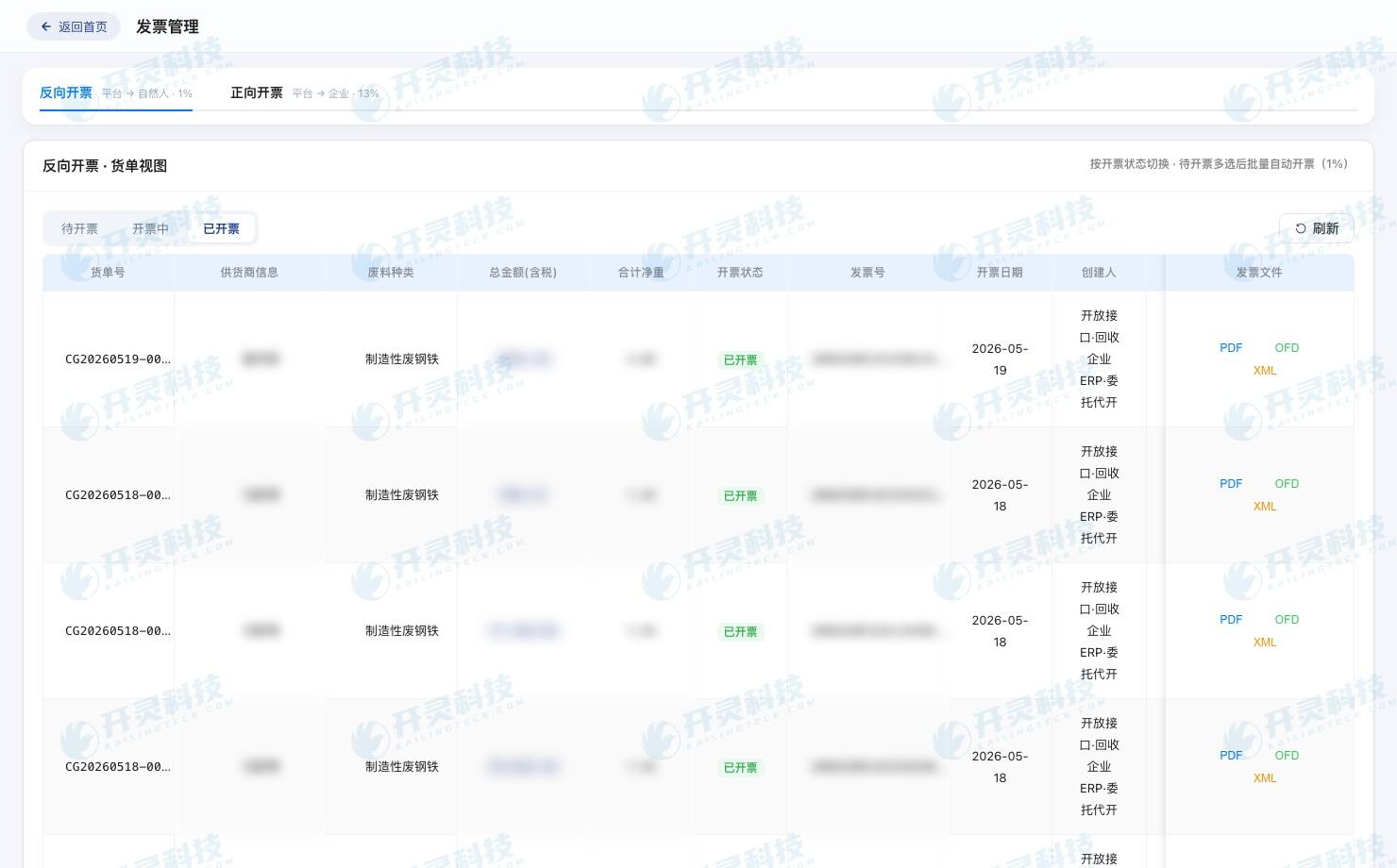
Invoicing tasks linked to purchase business numbers (information desensitized)
▍Bank payment starts from settlement details and connects back to the final result
The cashier selects a confirmed settlement in the pending payment list; the payee, account, amount, and business number automatically enter the payment instruction. Even if the same seller has multiple transactions of the same amount within one day, the instructions can still point to their respective vehicles and settlement versions. Batch payment forms a bank batch while retaining item-by-item business details.
The bank returns processing, successful, returned, or failed, and the system updates one by one, without using a single batch status to cover all results. When an account is incorrect, the cashier handles only the corresponding detail; after modifying the account and resubmitting, the new instruction continues to be associated with the original business, and the first failed transaction also remains on the timeline.
After the receipt enters the system, it is first linked by payment instruction number, then checked against account, amount, and time. When the match is unique, it is automatically archived; when candidates appear, it is pushed for manual confirmation. When the driver asks about payment progress at the window, the staff can clearly state whether it is currently stopped at approval, bank acceptance, or return for correction.
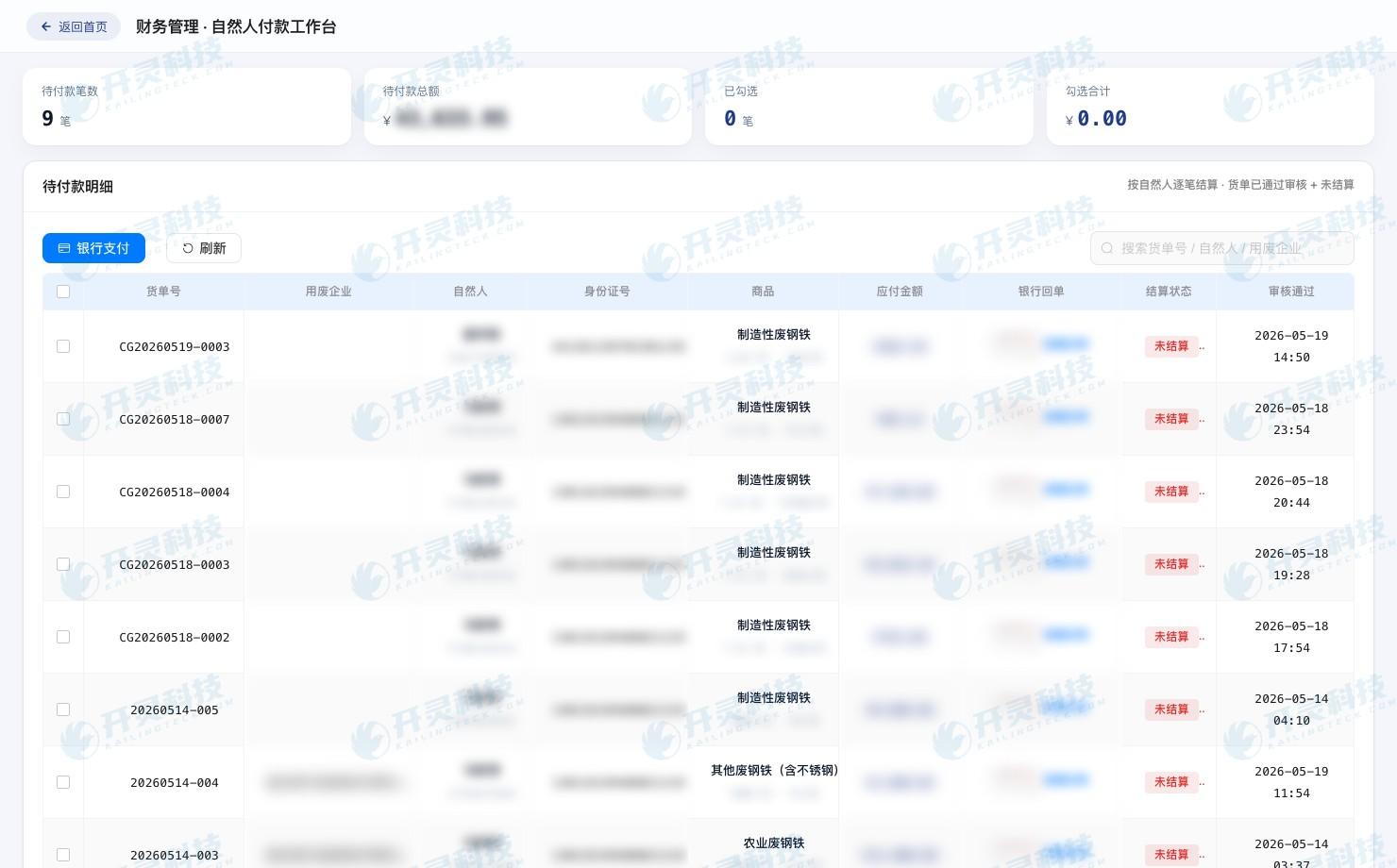
Bank payments are associated with purchase orders one by one (information has been desensitized)
▍Order splitting, order merging, and failed retries all preserve the original business relationship
Real recycling business rarely remains one truck per order forever. One truck with multiple categories needs to be split into multiple receiving details, multiple trucks for the same household may be aggregated for settlement, and one settlement may be paid in batches. The unified business number records upstream sources and downstream destinations, and each split detail carries its own quantity, amount, and status.
When a partial return occurs, the system generates an adjustment record based on the original receipt, and settlement simultaneously updates the processable quantity; when a partial payment occurs, the paid amount, pending balance, and receipt are displayed separately. Red reversal or re-issuance also leaves an association along the original invoice and business number, so what finance sees is the complete process of change.
After an interface failure, processing resumes and the staff member continues from the original task rather than duplicating a new order. The system first checks the original request status, then decides whether to write back, resend, or resubmit. This reduces duplicate payments and duplicate invoicing, and also allows technical staff to locate the failure point through logs.
▍A unified business number turns month-end reconciliation into daily status handling
The system displays weighed pending acceptance, received pending settlement, settled pending invoicing, invoiced pending payment, payment returned, and red-letter reversal pending processing. Different roles can open the workbench and handle the current task.
Accountants reverse-query payment instructions, settlement, goods receipt, and weighbridge tickets from bank receipts; invoicing positions reverse-query goods and sellers from invoices; site leads view settlement and fund results from vehicles. Multiple query paths ultimately land on the same purchase, and cross-department communication changes from "send me the table" to "open this business."
Entity information, goods receipt images, contracts, invoices, and receipts are archived under the same relationship. A single business archive can restore entry, measurement, settlement, invoice payment, and exception handling.
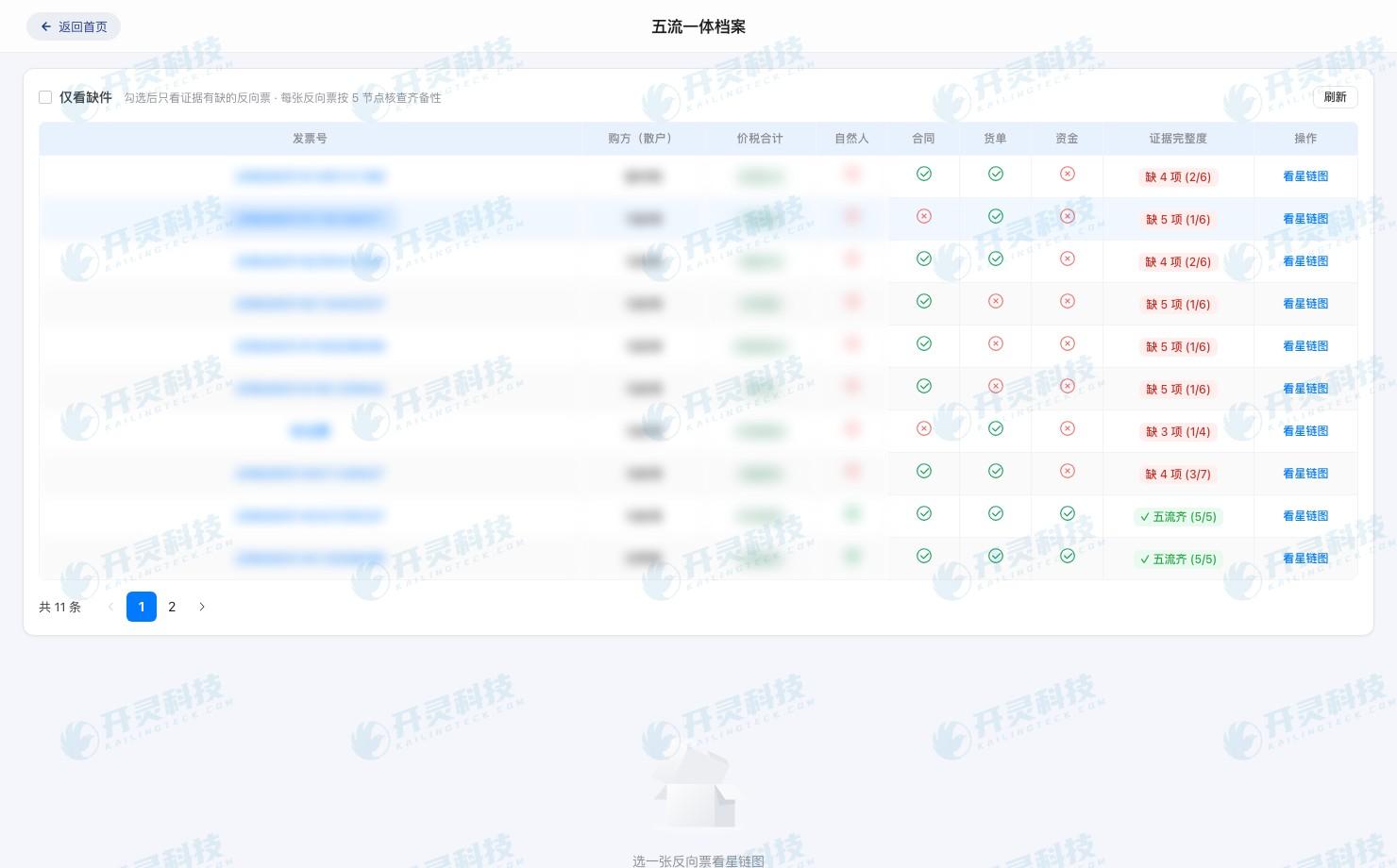
Five-flow ledger under the unified business number (information desensitized)
▍Go-live acceptance should expand from one normal vehicle to complex samples
The first group of test cases runs a single category, one settlement, one invoicing, and one payment; the second group adds one truck with multiple categories, multi-truck aggregation, batch payment, and partial returns, verifying quantity, amount, and status.
The third group creates invoicing timeouts, bank returns, late receipts, and duplicate submissions, observing whether the system first queries the original result, isolates failed details, and writes the final status back to the original business. Acceptance staff must also trace back separately from the invoice side, bank side, and weighbridge side to confirm that all three paths yield the same overall business picture.
Implementation judgment falls on four things: when the primary key is generated, where the original data comes from, who writes back the status, and which position handles exceptions. Once the answers are solidified into processes and ledgers, site expansion can also be adjusted along the same skeleton.
▍FAQ
Q: Do all systems need to be changed to the same document number?
A: Each system retains its original number, and the system maps them to a unified business number, so position operating habits and external transaction flows can continue.
Q: Is it acceptable to match bank receipts only by amount?
A: Same-amount transactions occur frequently; prioritize the payment instruction number, then verify together with account, amount, time, and business relationship.
Q: Can multiple vehicle purchases be aggregated into one invoice?
A: Aggregation tasks can be created by business arrangement while preserving the component details of each vehicle, each weighbridge ticket, and each settlement.
Q: After an interface timeout, how can duplicate payment or invoicing be avoided?
A: First query the processing status by the original request number, confirm the result, and then perform write-back, re-push, or resubmission.
Use a unified business number to run through weighing, settlement, invoice and payment, and archiving. Learn about Kailing Technology's reverse invoicing system: https://www.kailingteck.com/fxzy/ .
As a national high-tech enterprise, Kailing Technology focuses on the digital and intelligent transformation of enterprise business-finance-tax and operations management, providing software products, system integration, implementation and delivery, and operational services for various government agencies, institutions, group enterprises, and SMEs.
The company has now formed ten core product lines, including: AI digital employee system, enterprise expense control management system, customer relationship management system, reverse invoicing management system, invoice issuance for individuals management system, electronic archives management system, tax fully digitalized e-invoice Leqi system, tax invoice management system, group tax filing system, and AI OCR recognition system. It is committed to connecting enterprise business, finance, tax, funds, and archive data to help customers improve operational efficiency, business-finance-tax compliance capabilities, and digital management levels.
If you have any business-finance-tax digital transformation needs, welcome to contact us. Beijing Kailing Technology will serve you wholeheartedly.
Keywords: Weighbridge settlement payment reconciliation, unified business number, reverse invoicing system, bank receipt, scrap resource purchase
As a comprehensive business-finance-tax digitalization solution service provider, Kailing Technology provides business-finance-tax management digital transformation products and operational services for various government agencies, institutions, and large, medium, and small enterprises. The product line includes: solutions for sales contract management system, procurement contract management system, fully digitalized Leqi interface project, automatic output invoicing system, reverse invoicing system, invoice issuance for individuals system, employee expense control and reimbursement system, input VAT invoice management system, supply chain collaborative reconciliation system, image AI OCR recognition system, automatic financial bookkeeping system, electronic accounting archives system, etc., comprehensively driving the digitalization process across various fields.
Consultation Hotline: 18513895936 / 010-60974119 Location: Beijing