
How can multiple scrap metal recycling stations unify invoicing? Kailing Technology reverse invoicing system centrally manages entities and quotas

At 9 a.m. on Monday, Chengdong Station had just confirmed a truckload of scrap aluminum, while Chengxi Station registered the same individual seller; Chengnan Station's weighbridge ticket had already been uploaded but stopped in the pending queue due to incorrect invoicing entity selection. Facing three stations, two legal entities, and a set of intersecting cumulative records, headquarters finance's greatest concern was not issuing one fewer invoice that day, but each station calculating and modifying separately, causing the same person, the same goods, and the same exception to appear in three versions.
The Kailing Technology reverse invoicing system consolidates this type of multi-site conflict into one set of group master data and business ledgers: the site retains the real goods receipt action, headquarters uniformly verifies the entity and natural person cumulative totals, invoicing tasks are routed by legal entity and status, and payment, red-letter reversal, and five-flow materials return to the original site and original goods order. Centralized management therefore lands on every traceable business action.

▍For cross-station receipt on the same day, first let each transaction find the correct entity
The purchaser at Chengdong Station first scans the seller's identity information, selects the legal entity and station for this transaction, and then enters the vehicle, category, gross weight, tare weight, and net weight. Before saving, the system calls the group master file, prompts that this seller has already appeared at Chengxi Station that day, and displays the station, legal entity, and processing status of each of the two businesses. The purchaser sees the information needed for the current site, while headquarters sees cross-station association clues, and both parties collaborate around the same master file.
The organization tree links the group, legal entity, recycling station, warehouse, and position layer by layer. Site personnel can only create and process goods receipts within their jurisdiction, legal entity finance only receives invoicing tasks for its own entity, and the headquarters tax position views summaries and exceptions. In this way, the centralized platform provides a unified entry point, while the actual transaction entity, payment account, and invoicing tax number still match transaction by transaction; a goods receipt from Chengnan Station with the wrong entity selected will be blocked at the confirmation step.
▍Kailing Technology's reverse invoicing system unifies natural person master files and verification versions
After the same seller is first registered at Chengdong Station, the controlled master file is directly called when conducting business again at Chengxi Station. Name, identity identifier, receiving account, and contact information are displayed by permission; verification results such as legal entity, directors and supervisors, individual registration, and applicable qualifications record the query time and result version. Stations reduce one duplicate entry, and headquarters gains one continuous trajectory.
After verification hits an anomaly, the task enters a clear processing queue. For example, when Chengxi Station finds that identity information is pending supplement, the system pushes the reason to that station's handler and also reminds headquarters to pay attention to other to-dos for the same master file; businesses that have completed verification and have complete materials maintain their original progress. Anomalies therefore have an owner, handling action, and completion record, rather than being scattered across phone calls and spreadsheets.
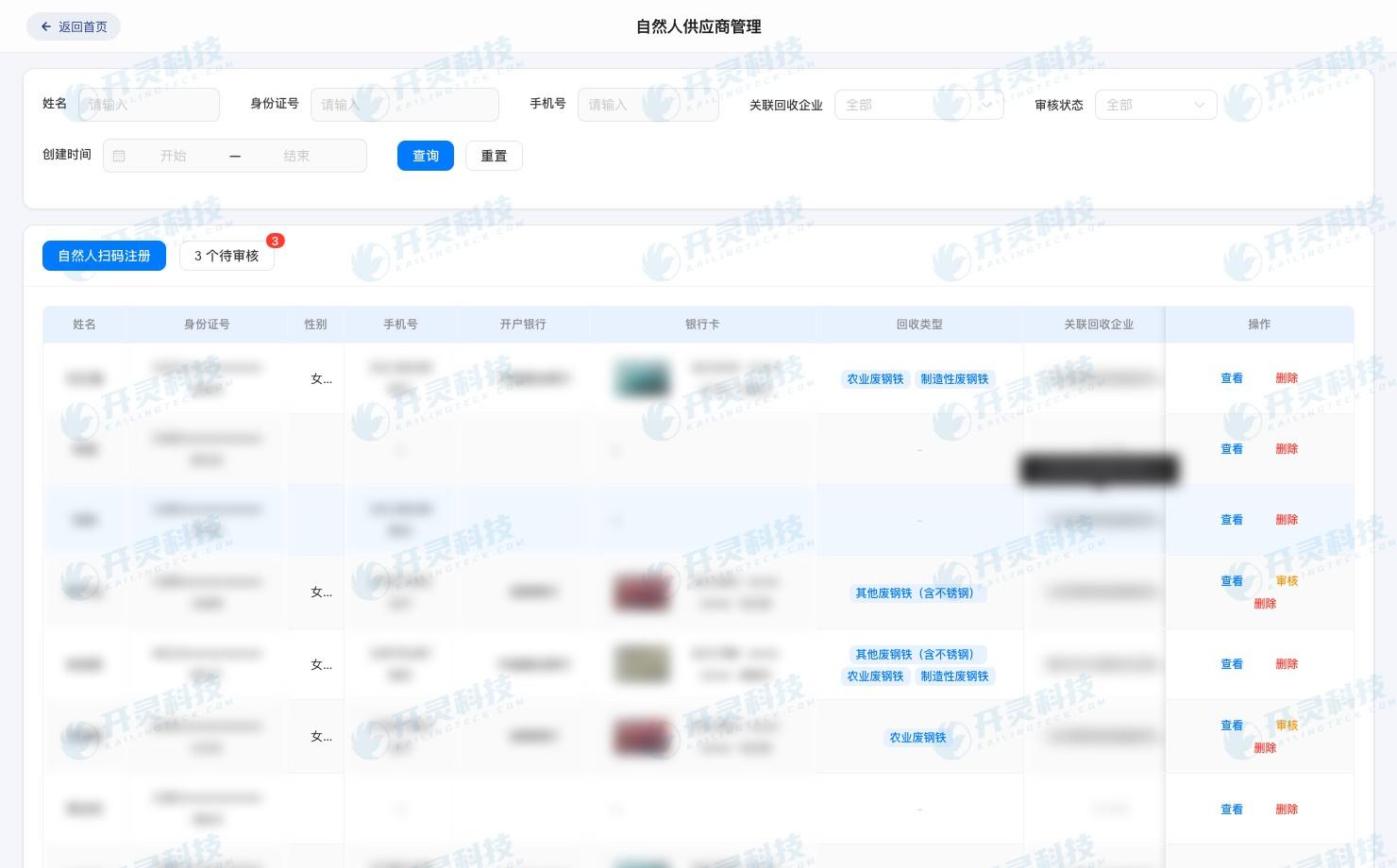
Unified profile creation and entity verification for individuals (information desensitized)
▍Cross-station cumulative totals are calculated centrally, and the five-million-yuan threshold can be drilled down to details
When a qualifying resource recycling enterprise issues reverse invoices to individuals selling scrapped products, it must monitor the criterion that the cumulative reverse invoicing sales amount over no more than twelve consecutive months does not exceed five million yuan. In multi-site scenarios, the system aggregates related business under a unified individual identifier; records from Chengdong and Chengxi enter the same cumulative track, and when a site submits this transaction it can immediately see statuses such as approaching threshold, materials pending verification, or processing suspended.
The headquarters dashboard does not just give a balance, but can also expand to view the composition details: which day, which site, which legal entity, which goods order, current invoice status, and red-letter reversal adjustment. When encountering historical data migration or cross-legal-entity business, the tax position configures the inclusion scope according to the confirmed organization and policy basis, and the calculation process retains the data source. In this way, finance has a business working paper when explaining values, and sites have a clear basis when handling borderline business.
Multi-station individual cumulative calculation basis and detail dashboard
▍Stations retain receipt facts, and headquarters accepts orders along the unified business number
After the vehicle enters the site, the weighbridge generates the raw weight, the purchaser supplements the category, grade, impurity deduction, unit price, and on-site images, and the acceptance post confirms and generates a unique business number. This number follows the cargo note into settlement and invoicing. When headquarters finance opens the task, they can directly review the original weighbridge ticket, acceptance version, and handling station, without copying paper forms into headquarters spreadsheets again.
When encountering a weak network, the station first records receiving in a controlled process, and after the network recovers, syncs by business number. The system identifies the same number and version, and duplicate uploads only update the sync result; if different modifications appear on both ends, the field differences are sent to the original station for confirmation. The weight correction at Chengnan Station therefore retains the original value, modification reason, and reviewer, and headquarters reads the confirmed version.
When finance finds a suspicious unit price or weight, it returns the task to the corresponding site with the reason stated. The on-site position initiates a correction based on the physical goods, weighbridge ticket, and acceptance record, and after review is completed the task enters the pending invoicing pool again. Whoever holds the facts handles the source data; headquarters focuses on invoice and tax validation, reducing cross-department verbal data transfer and direct back-end data changes.
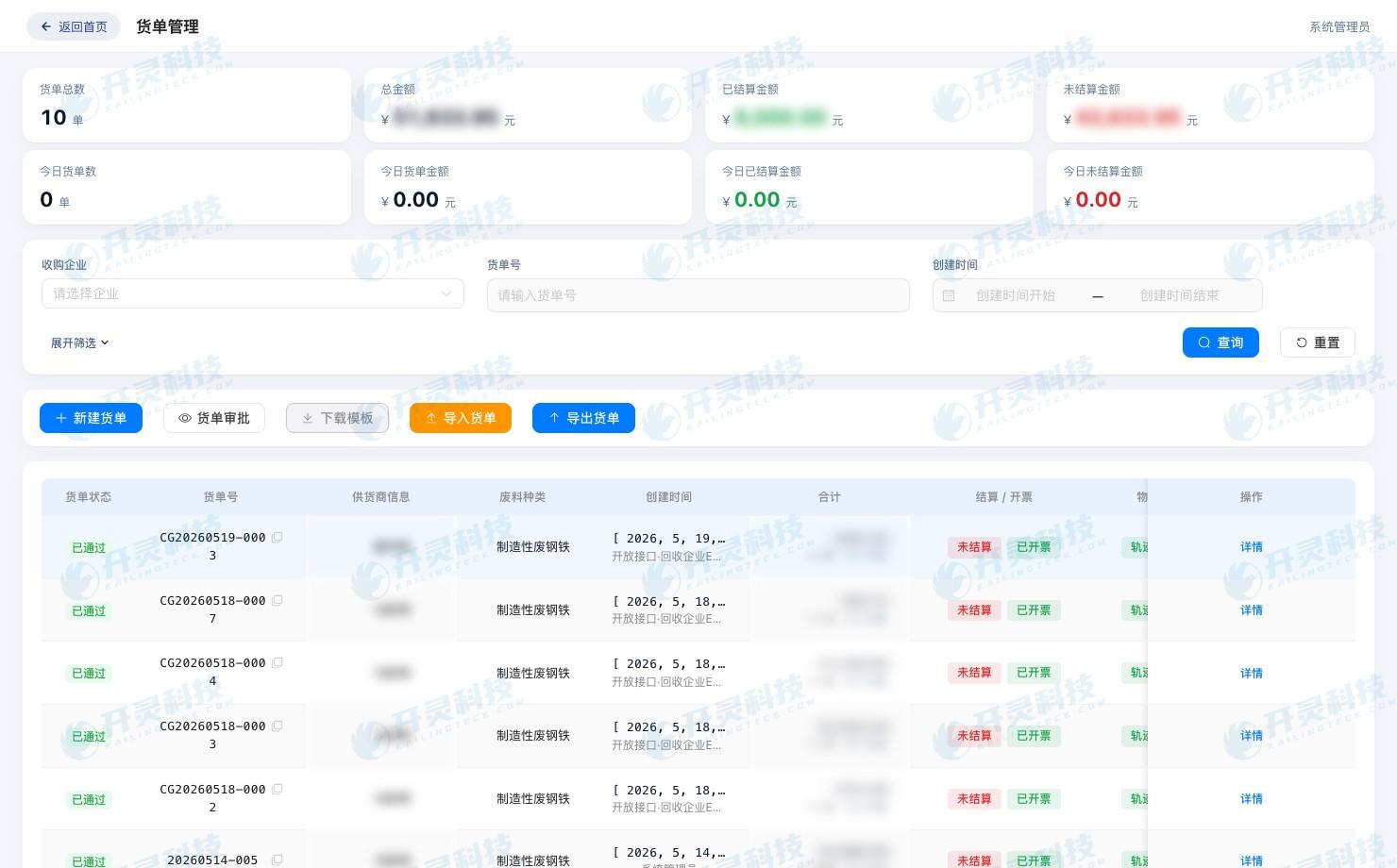
Site goods receipt and weighing grading record (information desensitized)
▍Centralized invoicing is pooled by entity, so a single-station exception will not block the whole batch
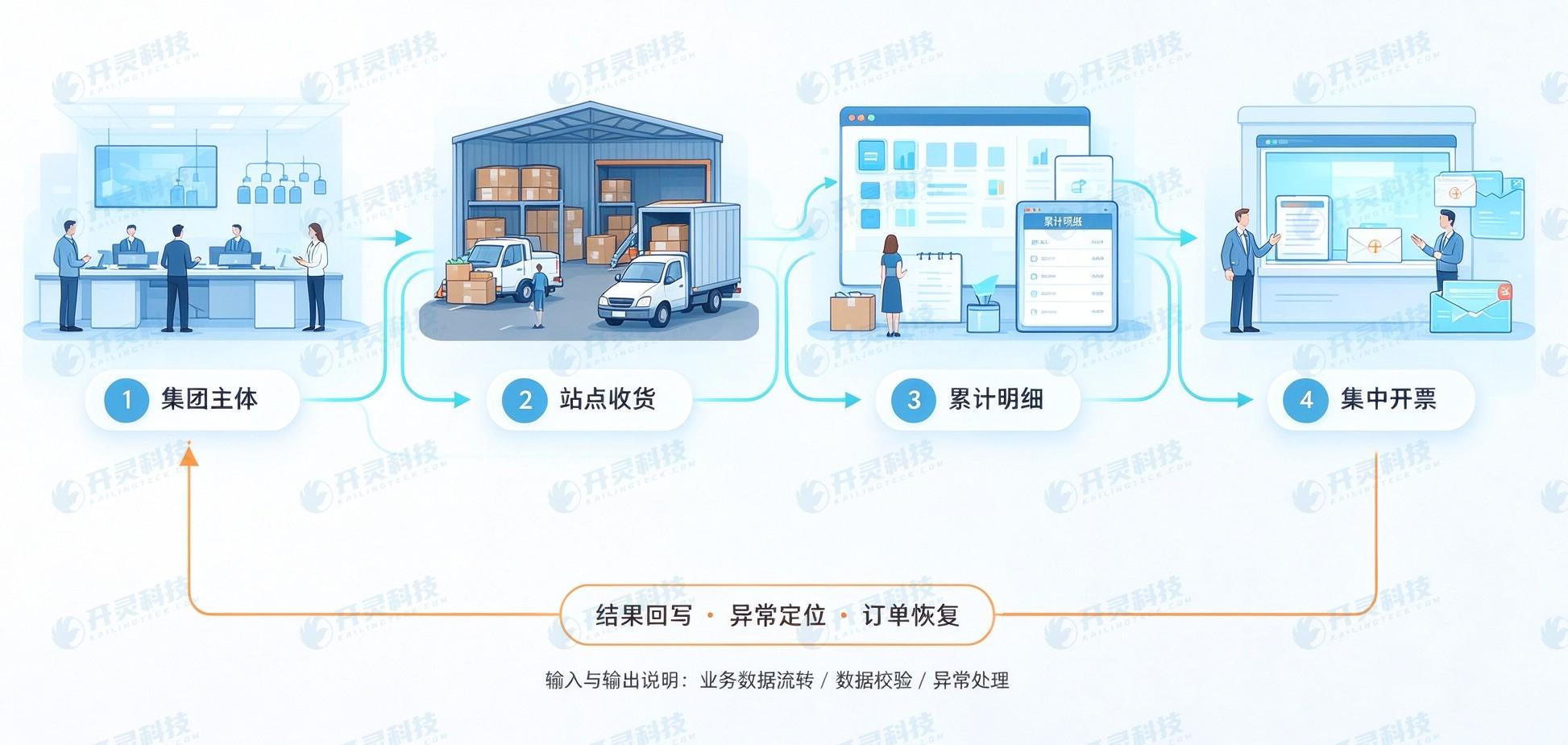
After the confirmed goods orders from each station enter the group's pending invoicing pool, the Kailing Technology reverse invoicing system automatically groups them by legal entity, invoice type, individual cumulative amount, and material status. Tasks with complete materials at Chengdong Station continue to generate invoicing requests; tasks awaiting identity materials at Chengxi Station stop in the review queue; tasks with incorrect entity selection at Chengnan Station return to the source order. Finance can see at a glance the processable volume, blocking reasons, and corresponding owners.
Each invoicing request carries a unique request number. When the interface does not respond for a short time, the system first queries the original request status, then decides whether to continue waiting or enter the exception queue, avoiding duplicate clicks by finance that create a second request. Results such as successful issuance, processing, failure, and red-letter reversal are written back to the original business number, sites can view progress on their own goods orders, and headquarters grasps the overall status.
When partial failures occur in batch tasks, successful records are written back normally, and failed records are handled separately with reasons. Finance can filter by site, legal entity, or error type, and supplement materials, retry, or initiate red-letter reversal one by one. At the end of the day, what the system provides is not a vague failure list, but the current node of each task and the next handler.
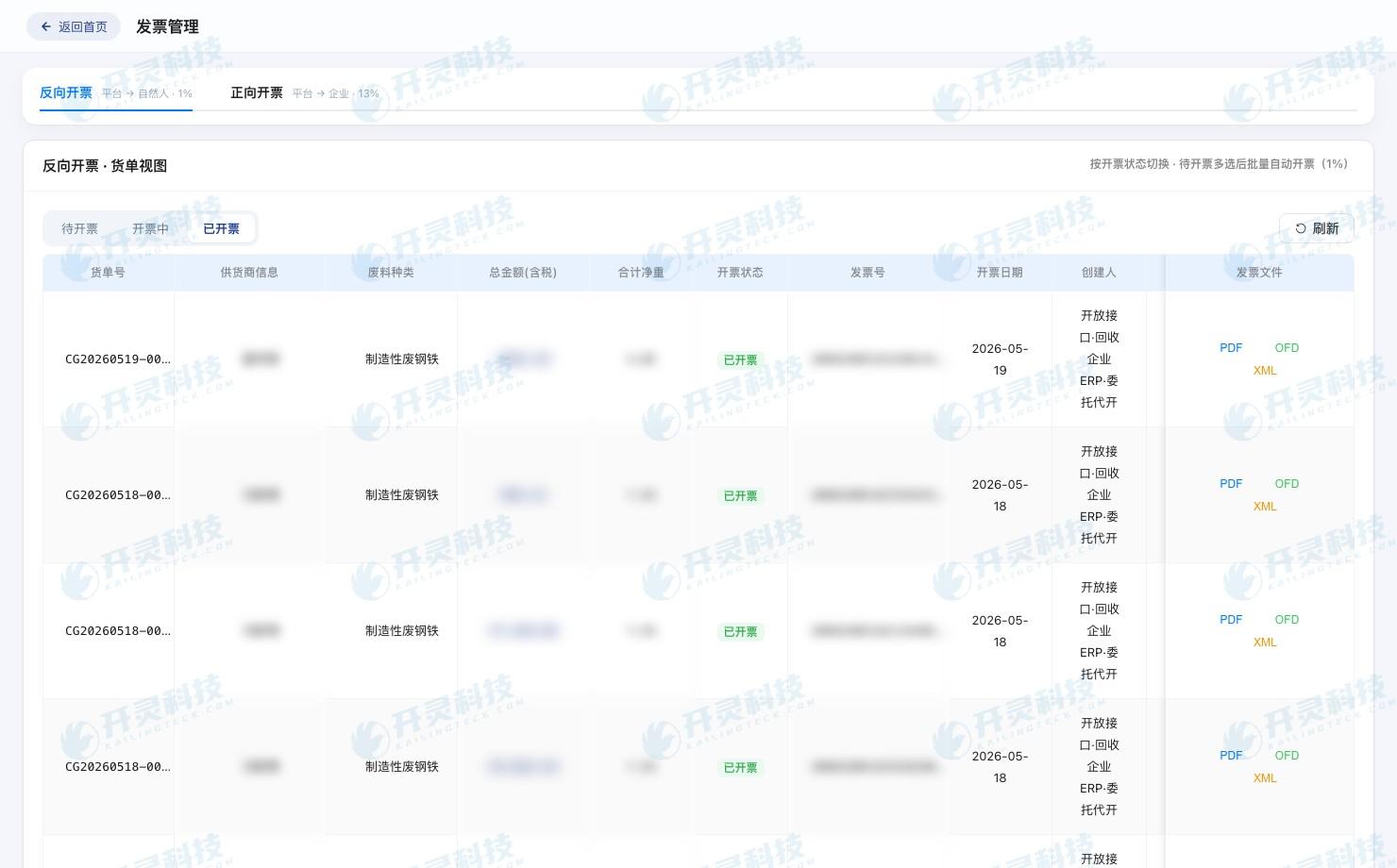
Centralized pending invoicing tasks and station status write-back (information desensitized)
▍Payments and five-flow ledgers return to the original station, original legal entity, and original goods order
After invoicing is completed, payment instructions are generated along the business number, including the real legal entity account, natural person payee information, and the settlement details for this transaction. Headquarters can approve and execute centrally, while bank receipts are linked one by one to the original goods order. Even if one batch payment covers multiple sites, the system retains each amount, payee, payment status, and return reason, and sites do not need to split the group total themselves.
Headquarters audit first views the distribution of missing materials by legal entity and site, then selects one invoice to drill down to the seller master file, original site weighbridge ticket, settlement, and payment receipt; when switching to the bank statement entry, the same business number can return the corresponding goods and invoice. Gaps are broken into site tasks such as Chengdong pending identity supplement and Chengxi pending weighbridge ticket supplement, headquarters tracks completion time, and on-site positions fill in the original facts.
At month-end, headquarters focuses on received but unsettled, invoiced but unpaid, payment returned, red-letter reversal pending write-back, and materials pending supplement. Each anomaly in the list can continue to drill down to the site and handler. Managers see the scale of the problem, business personnel receive specific tasks, and the five-flow ledger shifts from finding materials after the fact to a daily processing checklist.
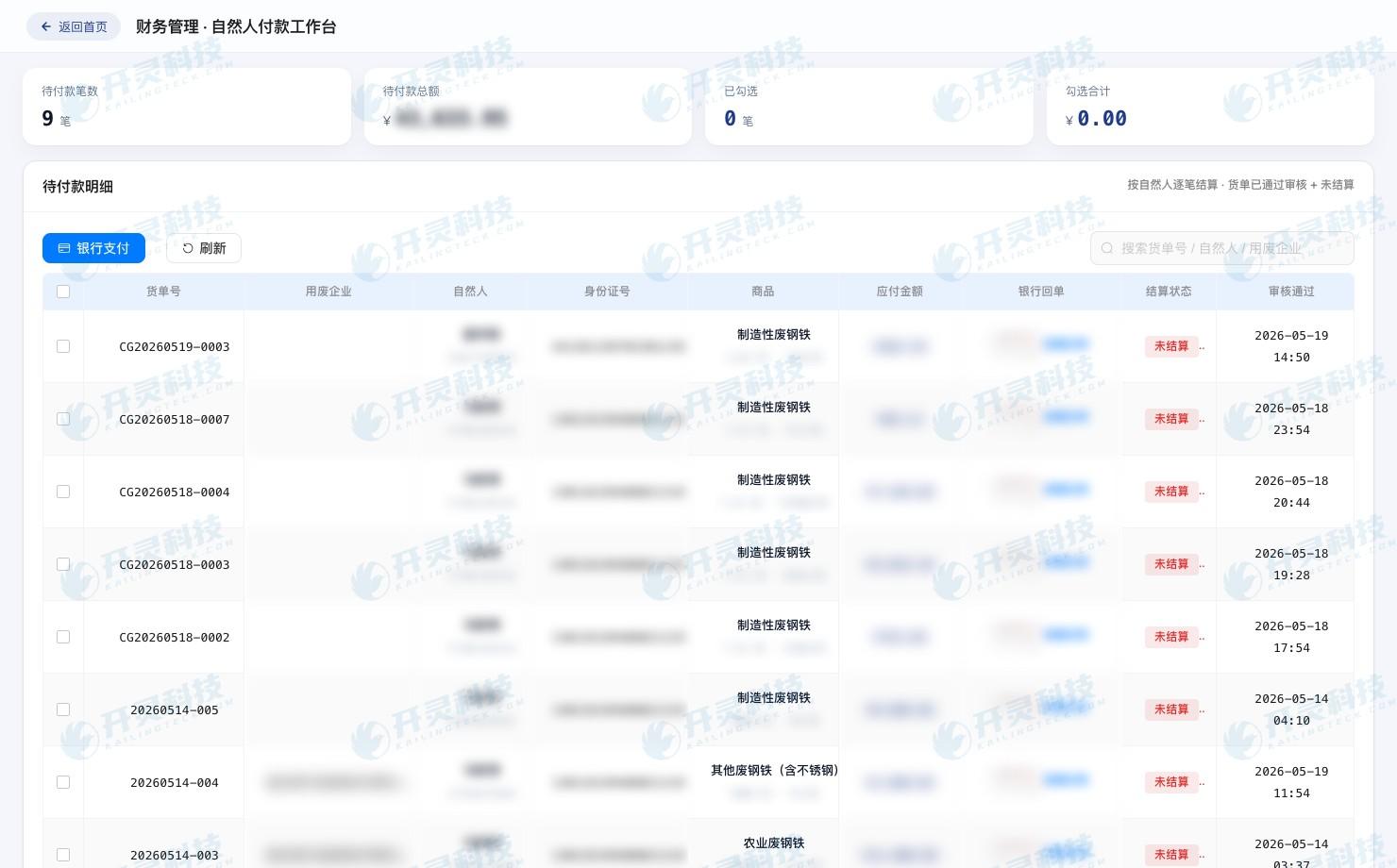
Centralized payment linked to the original purchase business (information desensitized)
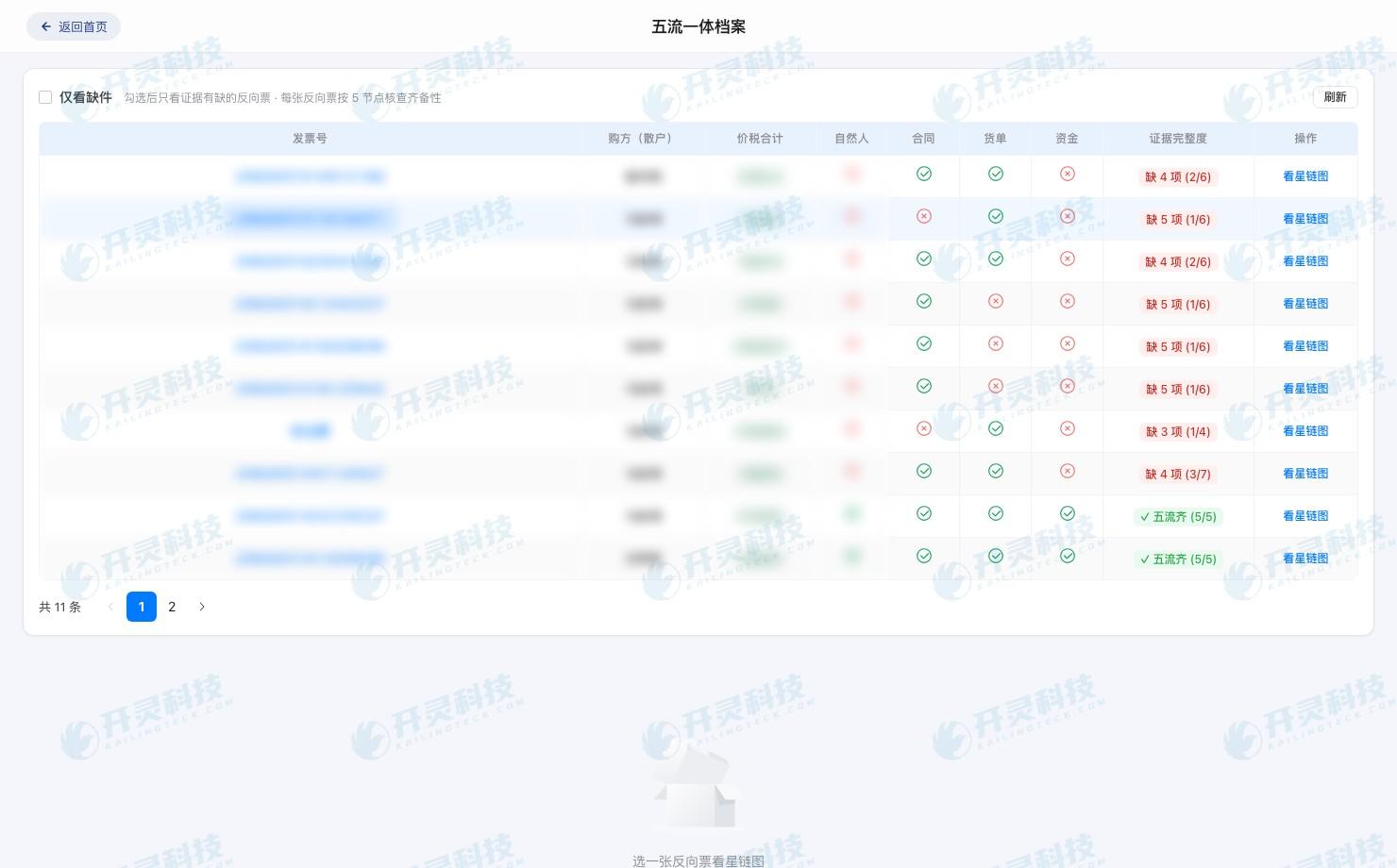
Multi-station five-flow ledger drill-down (information desensitized)
▍For multi-station rollout, first run cross-station samples, then replicate the organization template
The first implementation step selects a station representative in business volume, network conditions, and equipment type, enters the legal entity, positions, categories, weighbridge, and payment accounts, and runs through the complete chain of one vehicle from registration, weighing, settlement, invoicing, to archiving. The project team records each manual handover and field source, then decides which rules are unified by the group and which differences remain in station configuration.
After the pilot passes, the organization tree, roles, category dictionary, invoicing validation, and interface mapping form templates and are enabled in batches by site. Before each new site goes live, verify the weighbridge version, network, personnel division of labor, historical archives, and payment methods, then execute the same set of regression samples. Kailing Technology uses this method to turn centralized management into replicable site actions, so that when the group expands it gains a unified view while preserving on-site executability.
▍FAQ
Q: Can multiple stations share one tax number for invoicing?
A: Each task selects the tax number and payment account according to the real transaction entity. The group platform handles unified verification and scheduling, and each legal entity's business is completed in its own task pool.
Q: Does a natural person profile need to be created separately for each station?
A: The unified master file can be called by authorized stations; each receipt separately records station, legal entity, goods, and time, and file changes also retain versions.
Q: How does headquarters handle a weighbridge ticket error after discovery?
A: Headquarters returns the task to the source station and marks the doubtful points; on-site positions initiate corrections based on weighbridge tickets and acceptance facts, and the system records before-and-after values and the review process.
Q: Will a failure at one station affect other stations?
A: Tasks are routed by station, legal entity, and status. Failed stations enter the exception queue, while other tasks with complete materials continue invoicing, payment, and write-back.
Unify entity, cumulative, and invoicing rules while preserving site business boundaries; learn about Kailing Technology's multi-site reverse invoicing solution: https://www.kailingteck.com/fxzy/ .
As a national high-tech enterprise, Kailing Technology focuses on the digital and intelligent transformation of enterprise business-finance-tax and operations management, providing software products, system integration, implementation and delivery, and operational services for various government agencies, institutions, group enterprises, and SMEs.
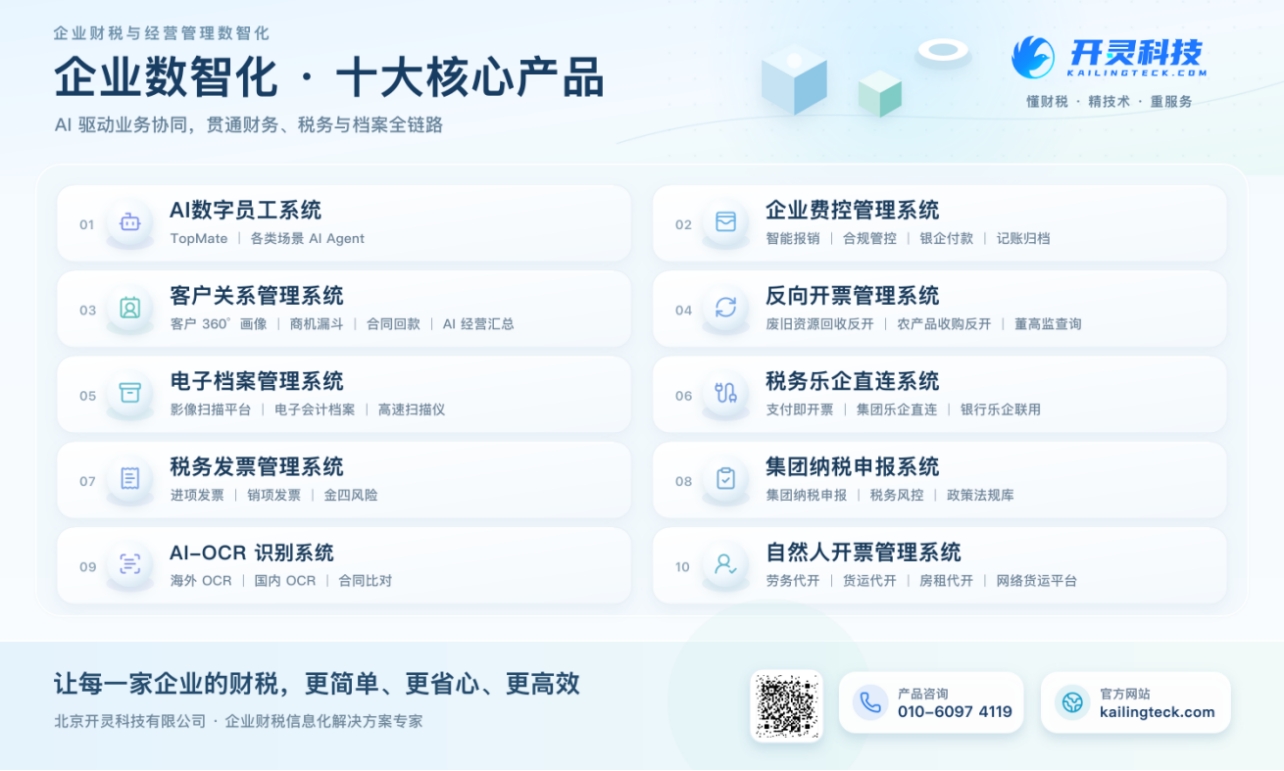
The company has now formed ten core product lines, including: AI digital employee system, enterprise expense control management system, customer relationship management system, reverse invoicing management system, invoice issuance for individuals management system, electronic archives management system, tax fully digitalized e-invoice Leqi system, tax invoice management system, group tax filing system, and AI OCR recognition system. It is committed to connecting enterprise business, finance, tax, funds, and archive data to help customers improve operational efficiency, business-finance-tax compliance capabilities, and digital management levels.
If you have any business-finance-tax digital transformation needs, welcome to contact us. Beijing Kailing Technology will serve you wholeheartedly.
Keywords: Multi-station reverse invoicing, scrap metal recycling stations, centralized entity management, individual quotas, reverse invoicing system
As a comprehensive business-finance-tax digitalization solution service provider, Kailing Technology provides business-finance-tax management digital transformation products and operational services for various government agencies, institutions, and large, medium, and small enterprises. The product line includes: solutions for sales contract management system, procurement contract management system, fully digitalized Leqi interface project, automatic output invoicing system, reverse invoicing system, invoice issuance for individuals system, employee expense control and reimbursement system, input VAT invoice management system, supply chain collaborative reconciliation system, image AI OCR recognition system, automatic financial bookkeeping system, electronic accounting archives system, etc., comprehensively driving the digitalization process across various fields.
Consultation Hotline: 18513895936 / 010-60974119 Location: Beijing