
How is payment and immediate invoicing for agricultural product purchases implemented? Kailing Technology's agricultural product purchase reverse invoicing system connects purchasing, payment, and invoicing
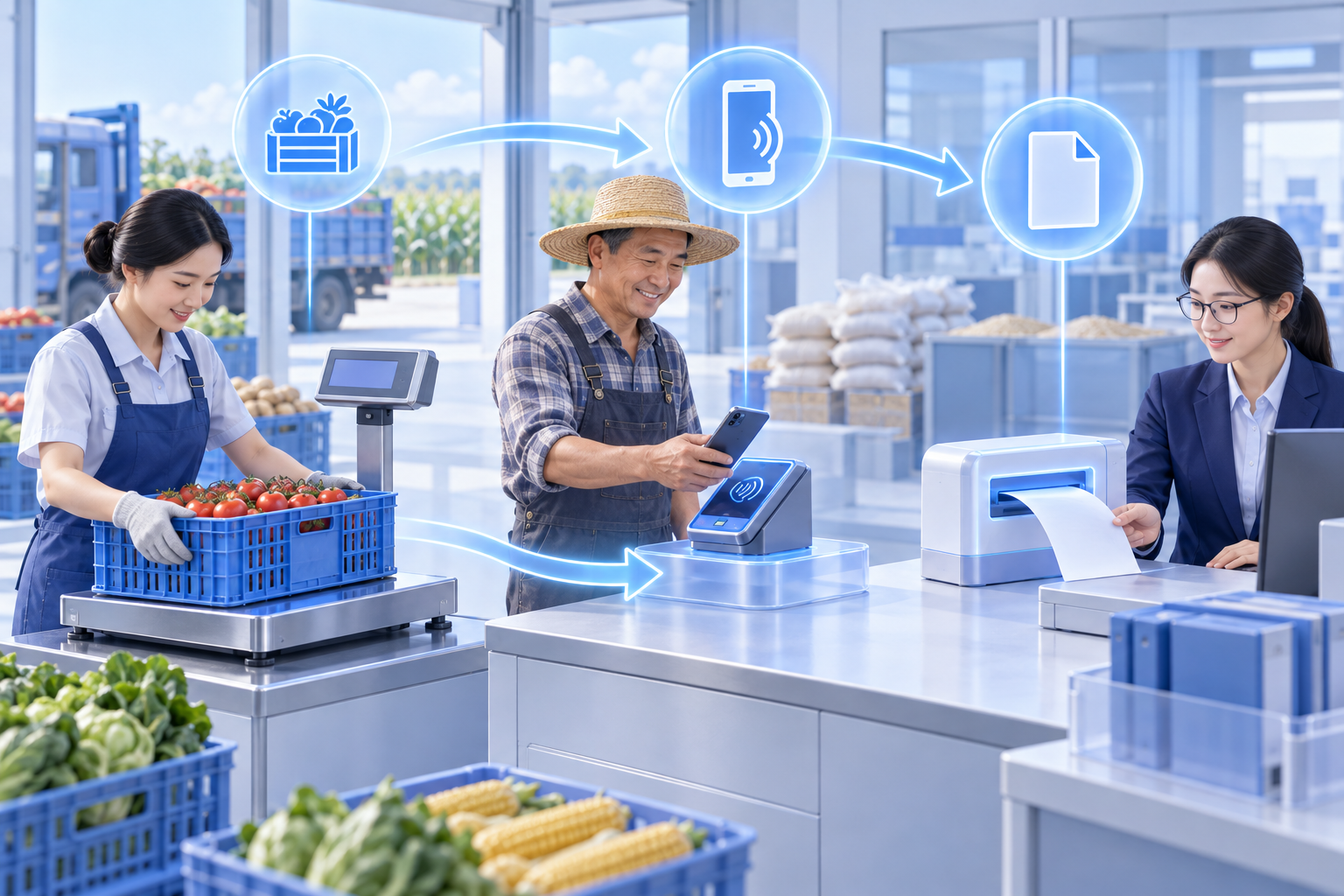
At four in the morning, the purchasing point welcomes the first grain delivery peak of the day. A corn purchase has already completed weighing, the farmer stands at the window waiting for payment, the cashier is confirming the receiving account, and the finance staff is waiting for the purchase invoice to enter the ledger. The three keep pressing one another: at what step is the payment, has the invoice been issued, and who exactly does this weighbridge ticket correspond to. The data all exists, yet it is scattered across different stages.
The project team does not interpret "payment means invoicing" as a slogan, but instead follows this real business forward: farmer and self-produced material confirmation, receipt and settlement generate pending payment business, the partner platform forms transaction and fund records, payment triggers invoicing, invoice and payment results are returned to the enterprise, and finally it is archived by order. Kailing Technology undertakes business orchestration and interface implementation within this, enabling farmers, enterprises, and the partner platform to collaborate around the same business number.
▍Step 1: Bring farmer and self-production materials into this transaction
The archiving staff first retrieves the delivering farmer's archive and verifies identity, contact information, receiving account, purchase category, and self-production materials. The system brings the archive status directly into the purchase order: those with complete materials enter subsequent stages, while those lacking key materials remain in pending supplementation, and window staff can tell the farmer on the spot what is missing and where to supplement it. In this way, the early-morning site will not have repeated queuing because of searching for paper copies.
The visible result of this step is that when the procurement lead clicks in from the business number, they can see "who produced, who delivered, who received payment, and what status the materials are in." Payment and invoicing start from clear object relationships, and subsequent personnel do not need to reconstruct the on-site situation by phone.
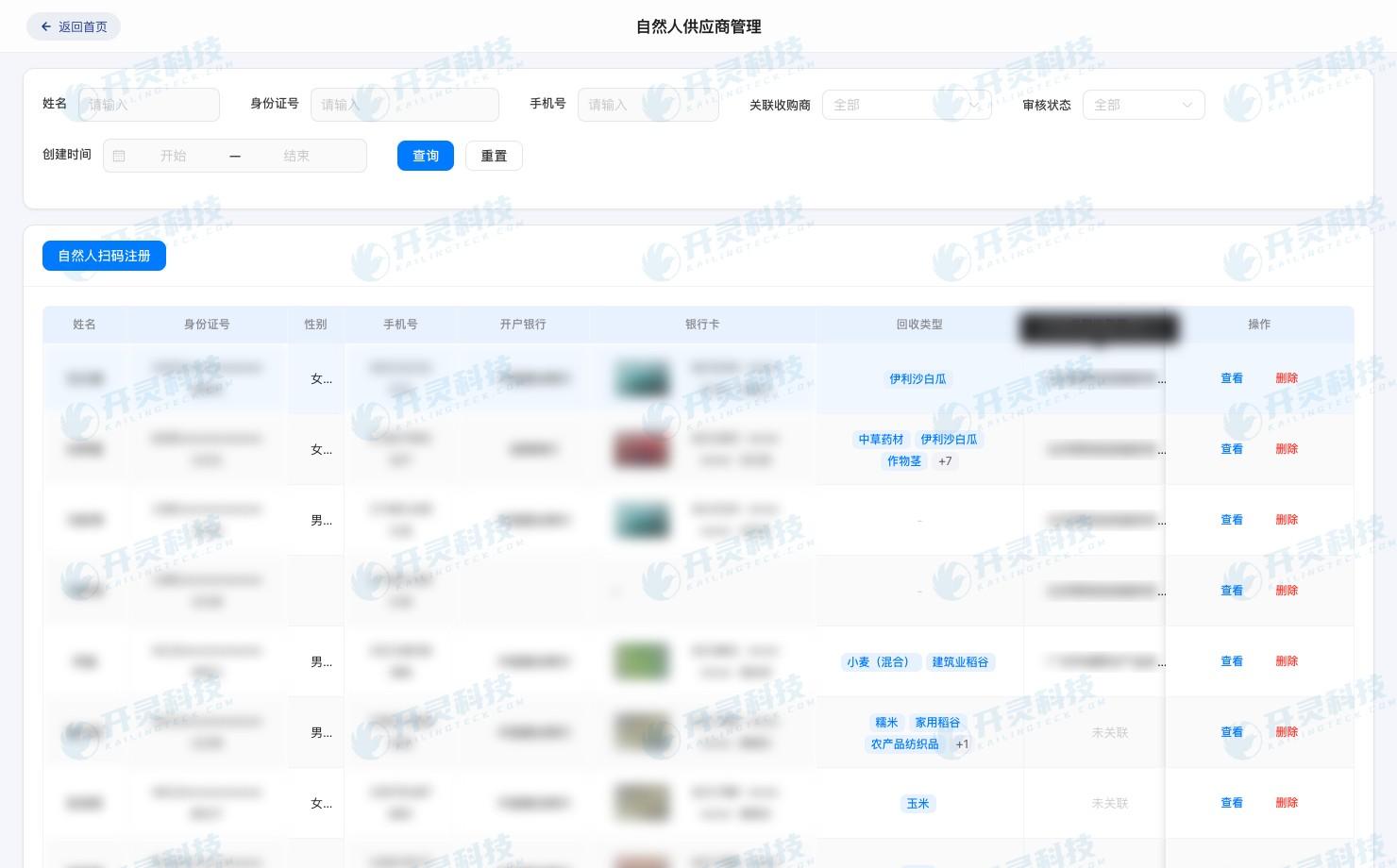
Farmer archiving and self-production material confirmation (information desensitized)
▍Step 2: Let receipt and settlement generate a unique amount payable
After the vehicle is weighed, the system receives gross weight, tare weight, net weight, category, grade, and on-site images, and the quality inspection result and unit price rules jointly generate the settlement amount. Only after the operator confirms quantity and price does the procurement order move from "goods received" to "pending settlement"; after settlement approval is completed, it then enters "pending payment." Each status change records the person and time.
Once this corn settlement is confirmed, the farmer window, cashier workbench, and finance ledger see the same net weight, unit price, and amount payable. When the farmer asks "why is it this amount," the purchaser can directly open the calculation process explanation instead of piecing together an answer from several spreadsheets.
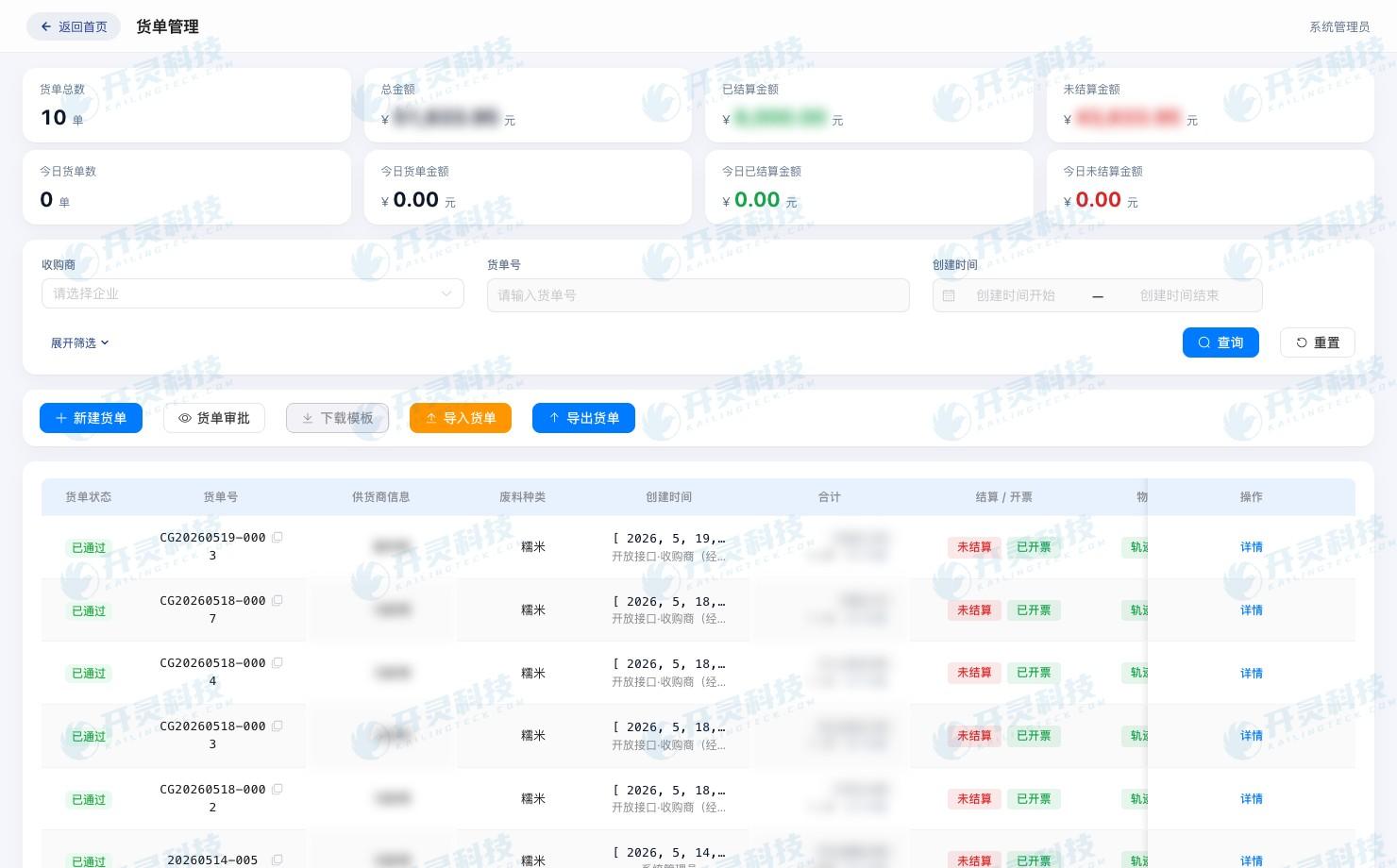
Agricultural product purchase order and weighing settlement (information desensitized)
▍Step 3: Clarify the counterparty, account, and business relationship before payment
The cashier opens the pending payment task, and the page simultaneously displays the farmer name, receiving account, account opening information, business number, settlement amount, and invoice-payment status. The system checks the archive status, receipt settlement, payment object, account relationship, duplicate requests, and current processing status in sequence. If any item is abnormal, it returns to the original document for processing rather than modifying a payment form offline.
The approved payment request carries complete business information into the partner platform, including enterprise, farmer, category, quantity, amount, receiving account, and source document. The resulting fund record naturally carries the procurement context, and when finance checks the bank result, it can directly return to the corresponding batch.
▍Step 4: Four types of roles each complete one segment of actions
At the joint debugging meeting, the project team mapped the roles on a single diagram: the bank or payment platform with the corresponding capabilities assumes the direct connection unit role and invites the purchasing enterprise; after the enterprise confirms, it becomes the Leqi user unit, responsible for real purchasing and payment approval; farmers complete the necessary information confirmation and receive payment; Kailing Technology is responsible for process orchestration on the enterprise business side, interface integration, status write-back, and exception coordination.
Once roles are clearly divided, the interface list becomes clear as well: who manages accounts, receives payment requests, and returns invoice payment status, and who stores weighbridge tickets and self-produced materials. Every field has a source, every exception has a handling entry point, and when integration testing fails, the responsible system can be directly identified.
This role diagram also helps management judge project conditions. When the interfaces, data quality, and implementation scope of the existing ERP and weighbridge match, Kailing can connect valid data and retain the original system; account, authorization, and production environment activation on the partner platform are advanced as independent milestones.
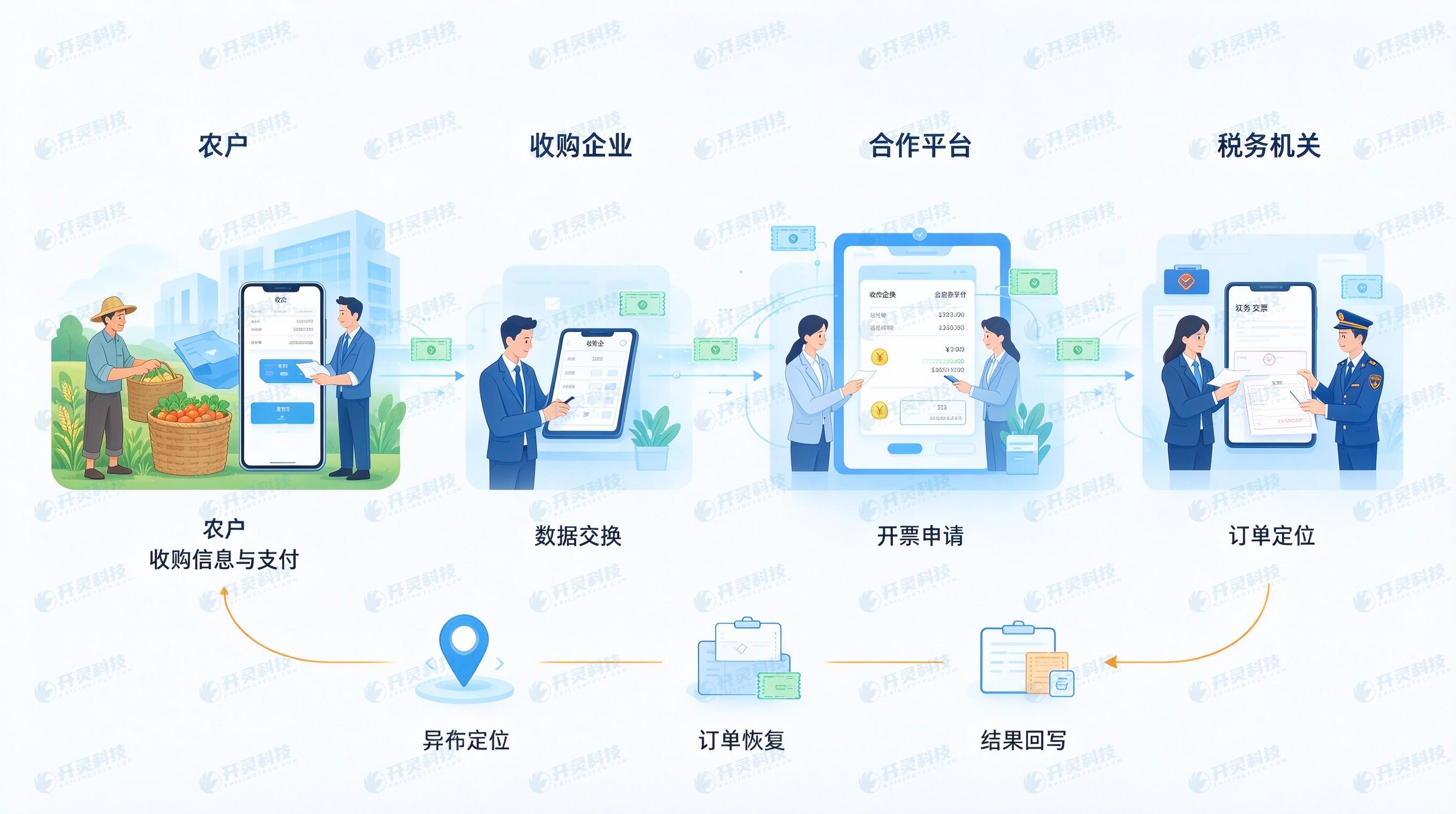
Relationship among direct-connection unit, user unit, farmer, and implementer
▍Step 5: Make payment an explicit trigger point in the invoicing chain
After payment approval, the Kailing system submits a request to the partner platform by business number and sets the status to "processing." The partner platform forms transaction and fund records and connects to agricultural product procurement invoice issuance according to the activated process. The enterprise workbench continuously displays results at the three levels of acceptance, payment, and invoicing, and operators do not need to refresh multiple pages to follow up.
When testing this step, the project team focuses on trigger conditions, not just whether an invoice appears at the end: can a document with unfinished settlement be initiated, can a farmer with pending materials be blocked, will repeated clicks on the same document generate a second request, and does the old request become invalid after the amount changes. Only after all four checks pass does the payment action truly become a controlled invoicing entry point.
After that early-morning corn procurement is submitted, the farmer first sees the payment processing progress, and finance then sees the invoice task enter the queue. Both results hang under the procurement order, and the site no longer uses speculation such as "the money has been paid, so the invoice should have been issued" to replace system status.
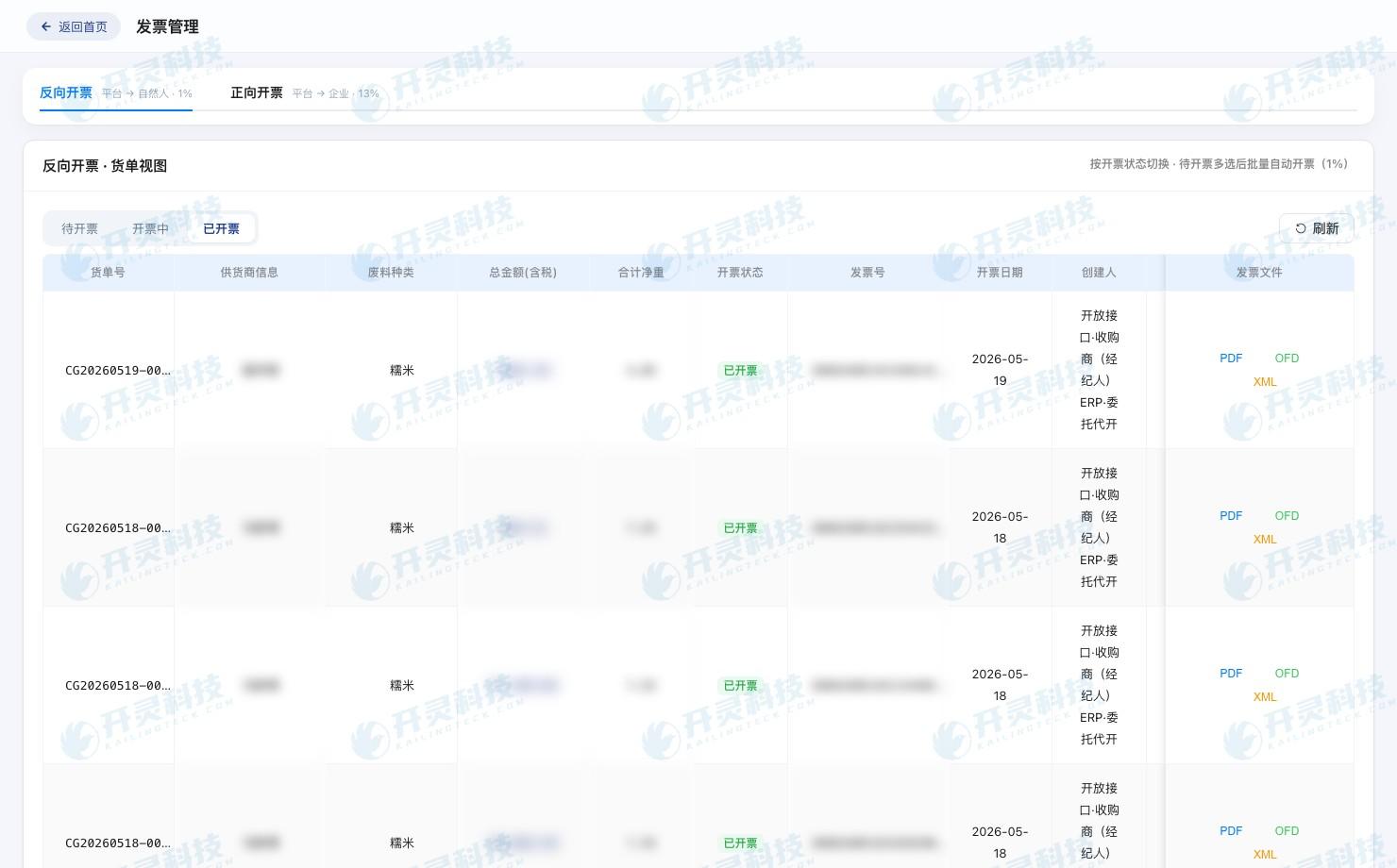
Agricultural product purchase invoice tasks and write-back status (information desensitized)
▍Step 6: Write payment and invoice results back to the original procurement order
The partner platform returns payment success, failure, or processing status, while the invoicing side returns invoicing tasks, numbers, and delivery results. The Kailing system updates the purchase order, farmer ledger, and finance to-dos according to the original business number, and saves request time, return time, and key transaction flows. The cashier returns from the bank result to the purchase order, and finance returns from the invoice number to the payment record; both paths are bidirectional.
The project team conducted an on-site spot check of one successful sample: the purchase order shows payment made and invoice issued, and the bank statement, invoice number, farmer, and amount are consistent; then another in-progress sample was spot-checked: the page clearly indicates which step is currently paused and provides a query entry point. It can be seen that the result is not a vague "completed," but rather each role can see the status they care about.
After results are written back, finance can filter paid pending invoicing, invoiced pending write-back, and payment failed business, and advance handling by status.
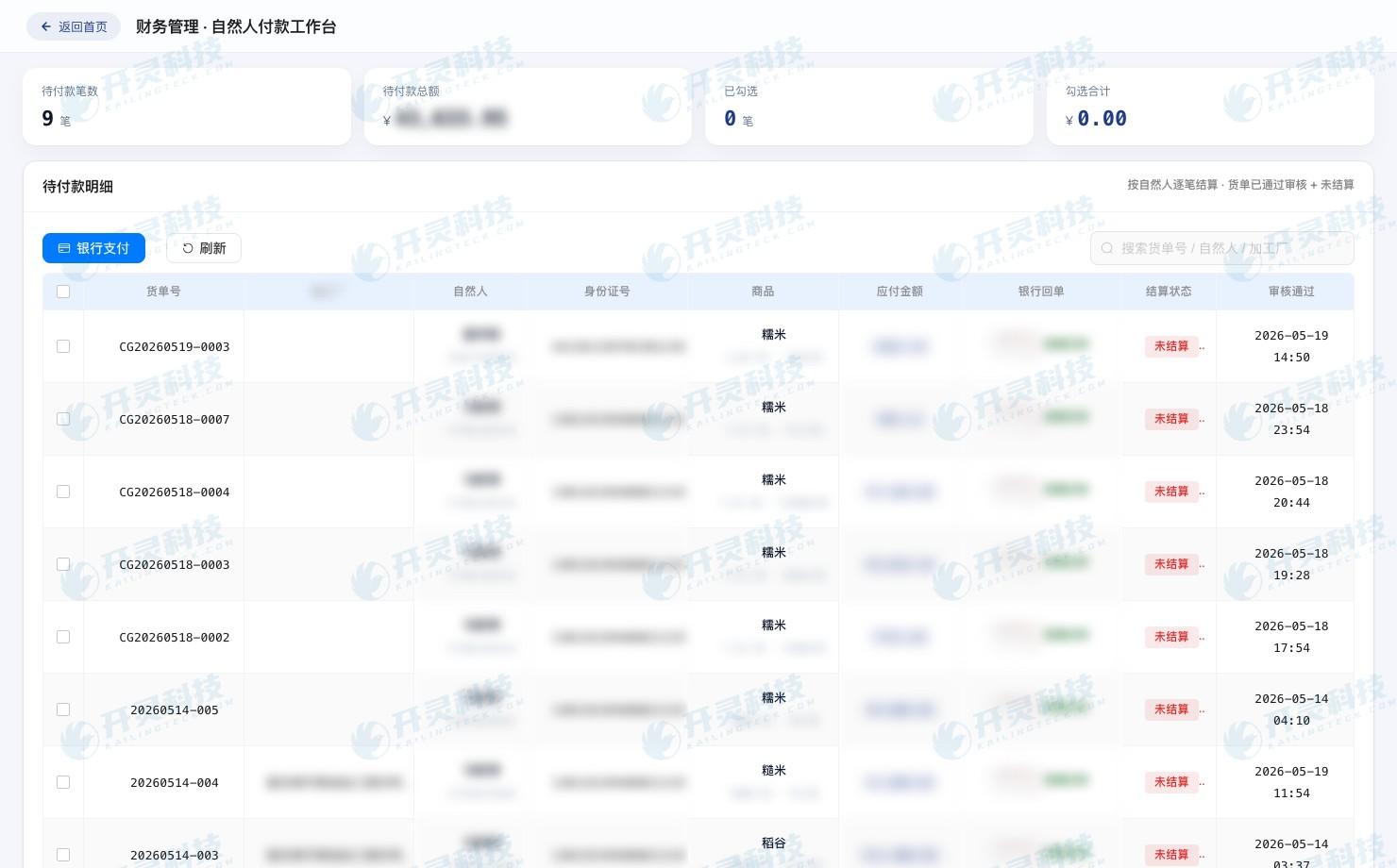
Payment for goods is linked to the procurement order (information has been desensitized)
▍Step 7: Recover exceptions from the original number to avoid duplicate payment and duplicate invoicing
The real test of system integration is not normal success, but the unknown state after a network interruption. If no clear result is received after submission, the operator first queries the original request by business number; if it finds the platform has accepted it, it continues to wait for the callback; only after confirming it was not accepted does it recover from the original document. When the farmer, account, or amount is modified, a new version is generated, the old version retains traces and stops flowing.
Acceptance should run at least four types of exceptions: payment failure, unknown payment result, payment success but invoicing failure, and invoicing success but enterprise-side write-back interruption. For each sample, the processing entry point, retry conditions, operation logs, and final status must be checked. Red reversal or refund business is also initiated from the original invoice and original purchase order, so that forward and reverse records can be traced to each other.
After exception recovery is running through, the cashier avoids duplicate payments and finance avoids initiating duplicate invoicing; issues enter the to-do list of the corresponding role by status.
▍Step 8: Five-flow archiving lets a transaction undergo penetrating inspection at any time
After the process ends, the system collects the farmer identity and self-produced materials, contract or entrustment relationship, weighbridge ticket quality inspection and settlement, invoice result, payment flow, and receipt into the same business number. Finance enters from the invoice and can see goods and funds; the site enters from the weighbridge ticket and can see the farmer, payment, and invoice; managers search the day's business by farmer, date, category, or status.
During project acceptance, the person in charge randomly called out the invoice number of that early-morning corn purchase. The operator followed the page to open the farmer profile, self-produced materials, vehicle weighing, settlement approval, platform request, bank result, and invoice file in sequence, without leaving that transaction throughout. If any material is missing, the system directly displays the missing item and enters a supplementary task.
At this point, "payment is invoicing" has changed from an interface function into a closed purchase loop: farmers know which step the payment has reached, cashiers avoid duplicate payments, and finance can trace business by invoice. When selecting a system, use real samples to run the full chain and accept objects, amounts, statuses, exceptions, and archives one by one.
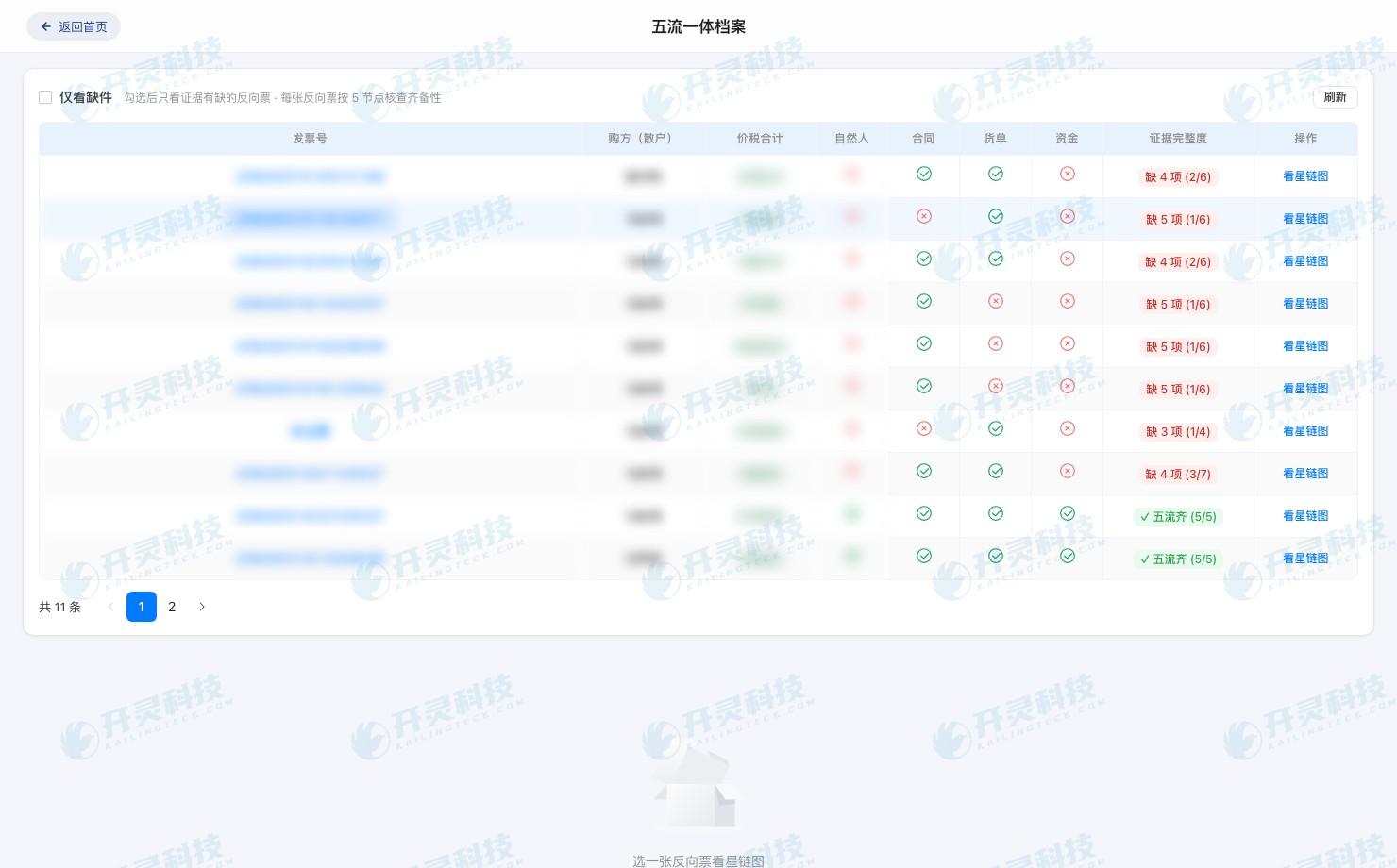
Purchase, payment, and invoicing materials archived by document (information masked)
▍FAQ
Q: What should be prepared first for implementing payment-triggered invoicing for agricultural products?
A: First prepare authentic farmer files, self-production materials, procurement and settlement samples, receiving accounts, and account authorization for the enterprise and the partner platform. The project team conducts joint testing with both normal and exception orders.
Q: Which part is Kailing Technology responsible for in the project?
A: Kailing Technology is responsible for enterprise-side procurement business orchestration, existing system interfaces, partner platform connection, status write-back, exception handling, and per-order archiving implementation.
Q: What should I do if I do not see the invoice immediately after payment?
A: The system queries payment acceptance and invoicing status by business number, confirms the stage where it is stuck, restores from the original order, and retains a record of each query and handling.
Q: How do we verify that payment and invoicing are truly connected?
A: Take one real procurement, run it all the way from farmer materials, weighbridge ticket, settlement, and payment to invoice write-back, then trace back from the invoice number to the goods, funds, and archives.
Let procurement, payment, invoices, and evidence archives fall under the same business number. Learn about the Kailing Technology agricultural product procurement solution: https://www.kailingteck.com/fxncp/ .
As a national high-tech enterprise, Kailing Technology focuses on the digital and intelligent transformation of enterprise business-finance-tax and operations management, providing software products, system integration, implementation and delivery, and operational services for various government agencies, institutions, group enterprises, and SMEs.
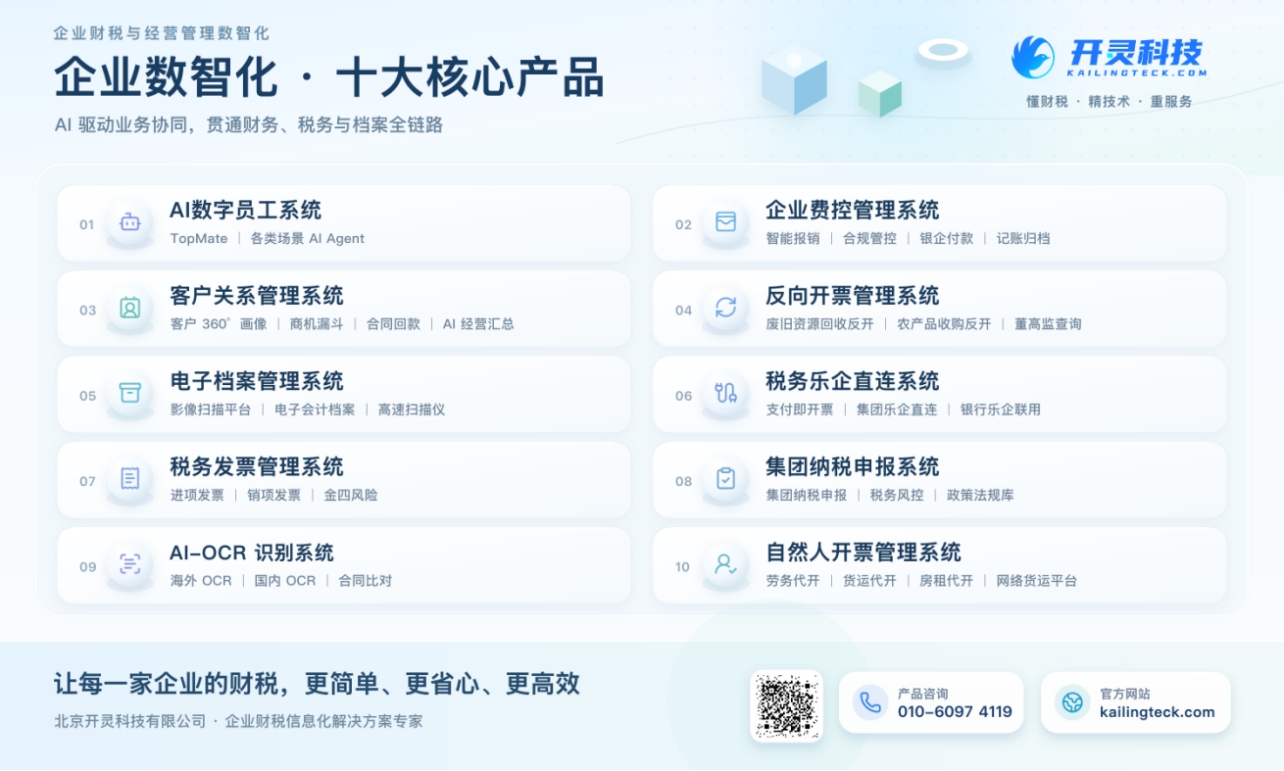
The company has now formed ten core product lines, including: AI digital employee system, enterprise expense control management system, customer relationship management system, reverse invoicing management system, invoice issuance for individuals management system, electronic archives management system, tax fully digitalized e-invoice Leqi system, tax invoice management system, group tax filing system, and AI OCR recognition system. It is committed to connecting enterprise business, finance, tax, funds, and archive data to help customers improve operational efficiency, business-finance-tax compliance capabilities, and digital management levels.
If you have any business-finance-tax digital transformation needs, welcome to contact us. Beijing Kailing Technology will serve you wholeheartedly.
Keywords: Agricultural product payment and immediate invoicing, agricultural product purchase reverse invoicing system, Leqi joint use, farmer payment, purchase invoice
As a comprehensive business-finance-tax digitalization solution service provider, Kailing Technology provides business-finance-tax management digital transformation products and operational services for various government agencies, institutions, and large, medium, and small enterprises. The product line includes: solutions for sales contract management system, procurement contract management system, fully digitalized Leqi interface project, automatic output invoicing system, reverse invoicing system, invoice issuance for individuals system, employee expense control and reimbursement system, input VAT invoice management system, supply chain collaborative reconciliation system, image AI OCR recognition system, automatic financial bookkeeping system, electronic accounting archives system, etc., comprehensively driving the digitalization process across various fields.
Consultation Hotline: 18513895936 / 010-60974119 Location: Beijing