
How to choose a reverse invoicing system for waste resource recycling? Kailing Technology answers key questions with entity verification and a five-flow ledger
At 8:40 a.m., a truck loaded with scrap steel stopped on the weighbridge. The driver handed over the seller's ID card, the weighbridge room reported the gross weight, and the purchaser was preparing to grade it, but finance was asking in the group chat: what is this natural person's cumulative reverse invoicing sales amount over no more than twelve consecutive months, who is the receiving account, and after this truckload is invoiced, can the original weighbridge ticket be found from the invoice number? Everyone on site held one piece of information, but no one could reconstruct the entire purchase within one minute.
This is exactly the real problem that selection of a reverse invoicing system for waste resource recycling needs to solve. The Kailing Technology reverse invoicing system links entity verification, receiving settlement, invoicing and payment, and the five-flow ledger under the same business number, so that a vehicle entering the site leaves a continuous status from the moment its file is created. The procurement team can use this business as a test to see how the system responds, rather than checking off items one by one against a feature list.

▍First use one entering vehicle to identify the real contradiction in system selection
After the vehicle is weighed for the first time, the purchaser confirms the category and initial grade on site, the weighbridge operator saves the gross weight, and the seller profile simultaneously enters verification. The system binds the license plate, station, operator, weighing time, and natural person, and the business number is generated immediately. What finance sees in the to-do list is not an isolated amount, but an acquisition that is taking shape.
After the vehicle is unloaded, sorted, and weighed a second time, the net weight, impurity deduction, grade, and unit price together form the settlement result. If the grade is temporarily adjusted on site, the system retains the values before and after the adjustment, the reason, and the confirming person. At the invoicing stage, the product name, quantity, and amount come directly from the confirmed settlement statement, and finance no longer needs to piece together data from chat records.
A selection demo should start with such a complex sample. Let the vendor receive one entry, one adjustment, one payment, and one red reversal, and then trace back the full-chain materials from any node. If the demo only imports a prepared invoicing table, the procurement team sees only invoicing efficiency; being able to restore the entire process along the business number is what shows that the system has entered the operational front line.
▍How entity verification blocks incorrect objects before invoicing
State Taxation Administration Announcement No. 5 of 2024 took effect on April 29, 2024, allowing qualifying resource recycling enterprises to issue reverse invoices to individuals selling scrapped products. At project launch, enterprises first verify the hazardous waste operation permit, end-of-life vehicle recycling and dismantling qualification, or other renewable resource recycling operator filing according to actual operations, and configure applicable stations and business scope into the system.
After a natural person submits materials, the system creates a seller profile and verifies identity, contact information, receiving account, and related relationships set by the enterprise. When verification conditions such as legal person, director/supervisor/senior manager, or registered individual business are hit, the invoicing task stops in the pre-queue and the reason is pushed to the business or risk control position. After the handler completes materials or adjusts the transaction path, the status continues to flow downward.
The cumulative threshold should also be based on the same profile. The cumulative sales amount of reverse invoicing for a seller over twelve consecutive months shall not exceed five million yuan; the system continuously aggregates based on historical invoicing results and gives a clear prompt when the current business approaches the control line. In this way, the purchaser can see the impact before settlement, and finance does not need to wait until the invoicing page to discover that the entity needs review.
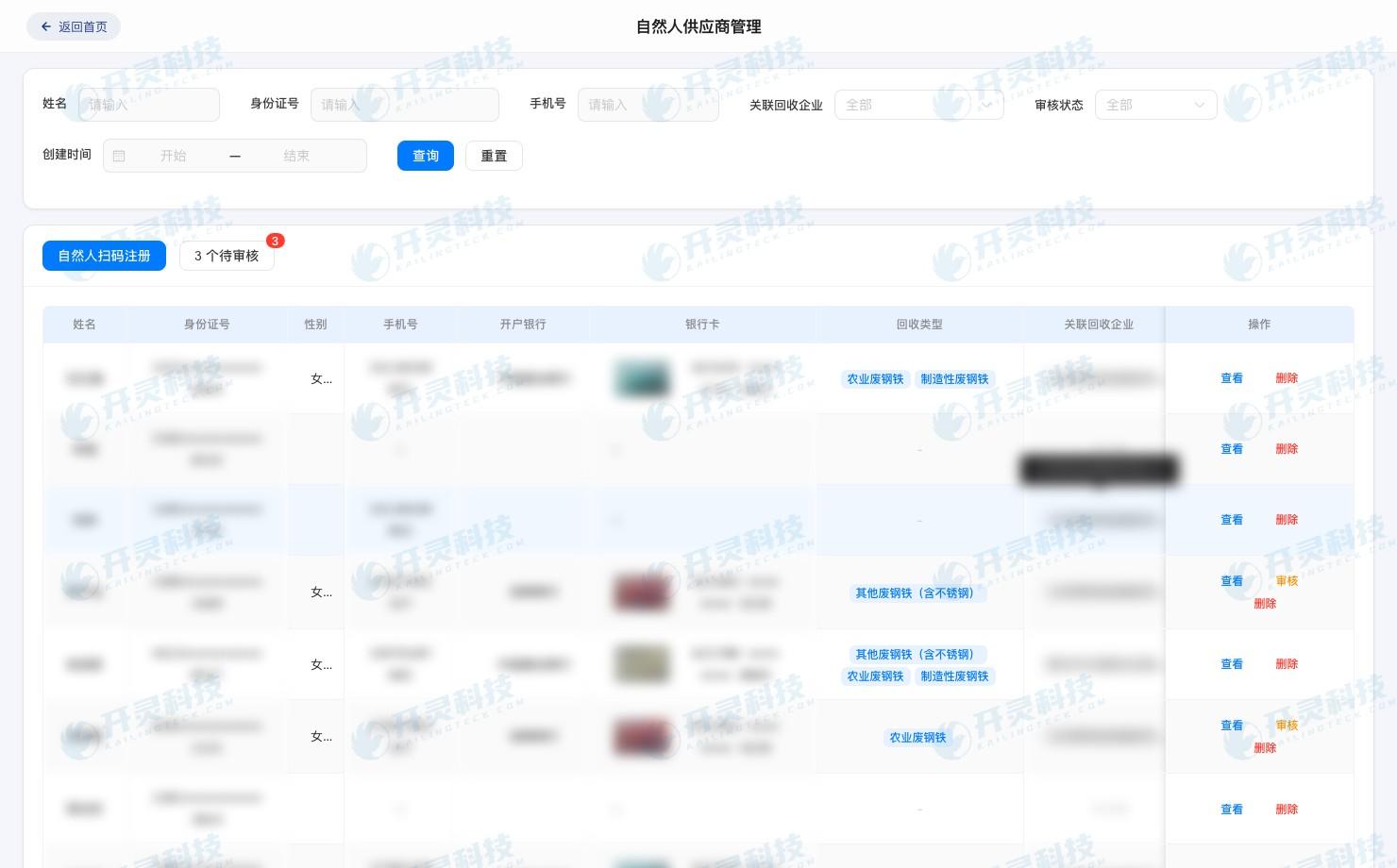
Profile creation and entity information verification for natural person sellers (information has been desensitized)
▍How goods notes and weighbridge tickets turn on-site actions into explainable amounts
Acceptance actions for scrap steel, scrap copper, scrap aluminum, waste paper, and waste plastic differ. Kailing Technology's reverse invoicing system can configure category, grade, gross weight, tare weight, net weight, impurity deduction, unit price, and settlement method according to enterprise site conditions. The weighbridge room records original measurement, quality inspectors confirm grade, procurement personnel complete price confirmation, and each position maintains only the fields it controls.
When one truck is mixed-loaded, the system stores the total weight and the sorted category details under the same receiving note; when part of the goods is returned, the returned quantity and valid quantity are recorded separately; when prices are temporarily adjusted, the original price, adjustment basis, and effective time enter the settlement version together. Finance can open the invoice details and see how the amount was formed along the calculation relationship.
Scale ticket numbers, receiving order numbers, and settlement order numbers each have their uses, and the business number connects them. During procurement acceptance, one should not only view invoice-payment backward from vehicles and scale tickets, but also locate goods forward from invoices or bank statements. When two-way queries are smooth, month-end reconciliation changes from manually flipping through tables to searching by order, and station disputes can return to specific operation records.
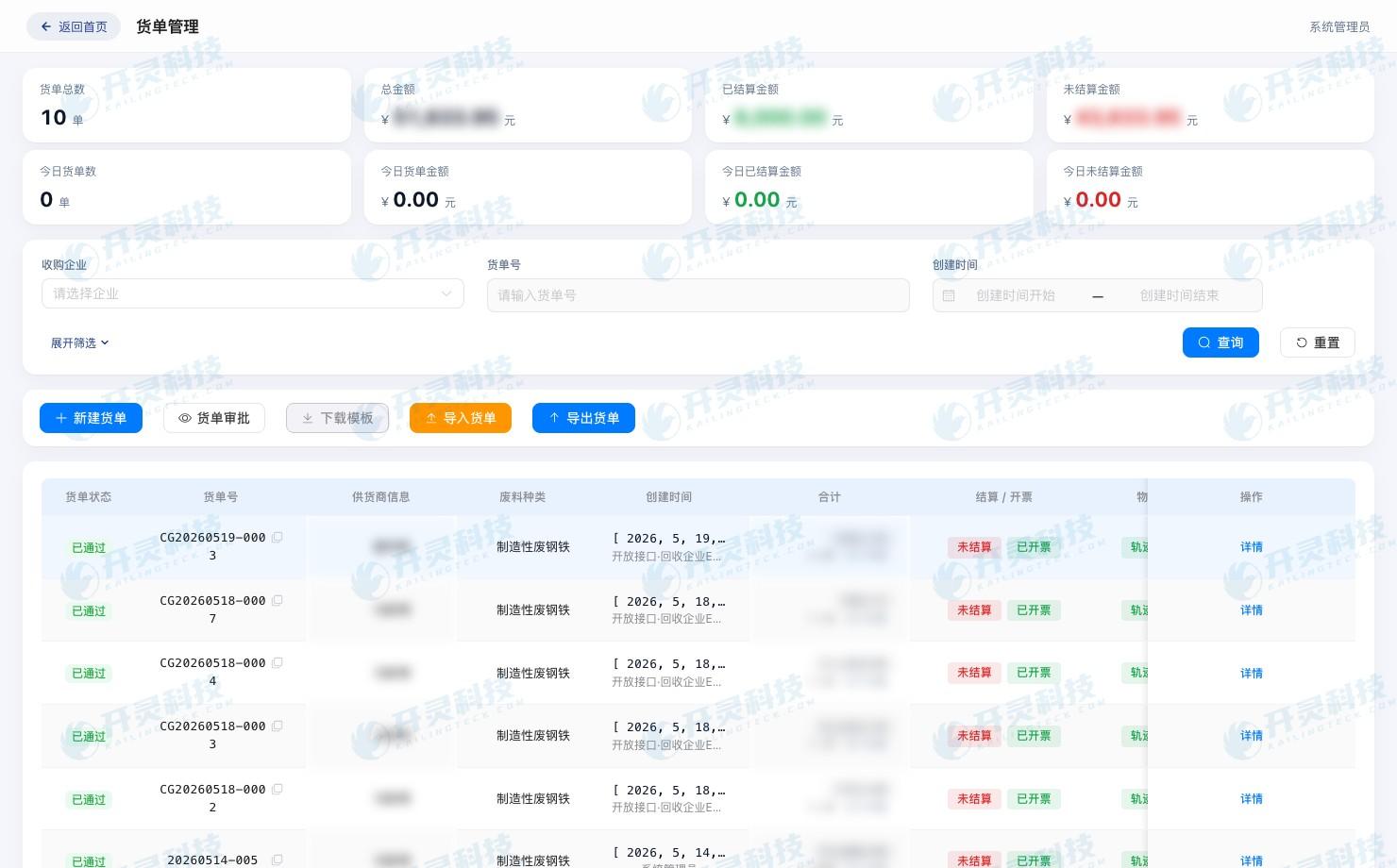
Waste resource receiving order and weighing settlement information (information desensitized)
▍How Kailing Technology's reverse invoicing system forms a five-flow ledger
After settlement confirmation, the system organizes five types of internal enterprise evidence around the business number: self-certification materials explain the seller's identity, contracts or agreements record the agreement between both parties, business materials present entry, weighing, grading, and settlement, tax materials preserve blue invoices and red-ink processing, and fund materials record payment requests, bank results, and receipts. The five types of materials point to each other on the same timeline.
Finance enters from the invoice and can see the corresponding seller, goods details, and payment status; fund personnel enter from the bank receipt and can find the settlement order and currently valid invoice; the station manager enters from the receiving order and can see whether materials are complete and what step the invoice-payment has reached. Query paths unfold around one business transaction and no longer rely on five departments separately maintaining folders.
When the system finds missing profile items, it assigns actions to the positions that hold the information: identity anomalies enter business review, missing scale ticket fields return to the site, payment account changes enter fund approval, and red-ink applications enter tax processing along the original blue invoice. Each to-do carries the original business, problem location, and handling result, and managers can also see which station the problems are concentrated at.
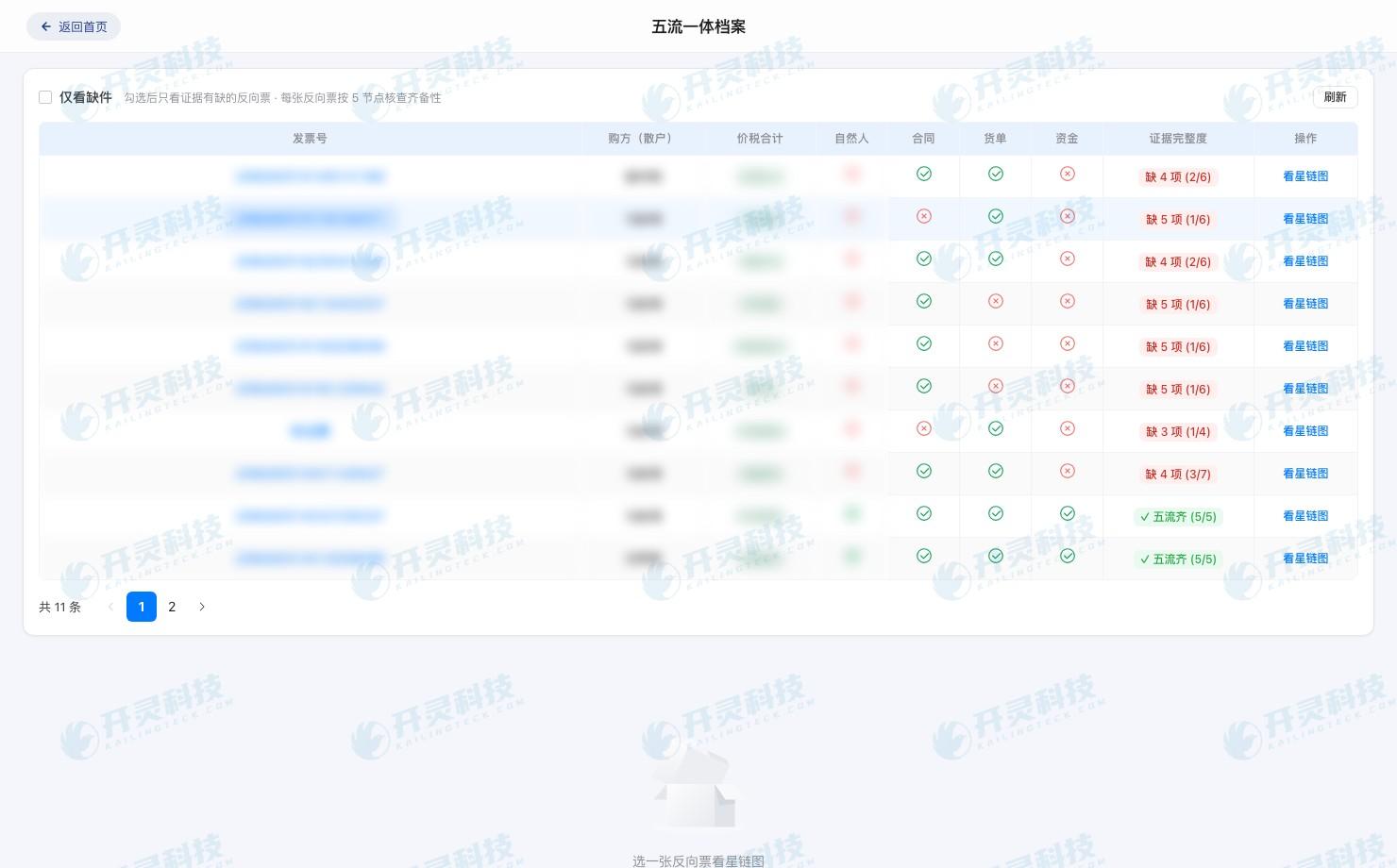
Establishing a five-flow evidence ledger around a single procurement (information desensitized)
▍How payment, invoicing, and red reversal stay on the same status line
After finance initiates invoicing, the system separately records submitted, processing, success, failure, and unknown result. When the network times out, the system first queries the result using the original request number; if success is found, it writes back the invoice number, and if failure is found, it enters the repair queue. Operators will not repeatedly submit the same transaction because the page did not return in time.
The payment stage also preserves process status. After a batch payment file or bank-enterprise direct connection request is sent, each seller, goods note, amount, and account retains details; bank acceptance, successful payment, return, or failure then returns to the original settlement note. The cashier can open exception records, see the return reason and next action, and after handling, the old and new payment records remain linked.
When a return, discount, or invoice error occurs, red-letter processing is initiated from the original blue invoice and simultaneously affects the available invoicing amount, settlement adjustments, and payment differences. The original invoice, red invoice, and re-issuance results form a readable timeline. Adding partial returns, payment refunds, and red-offset re-issuance to procurement acceptance allows direct observation of the system's recovery capability in reverse business.
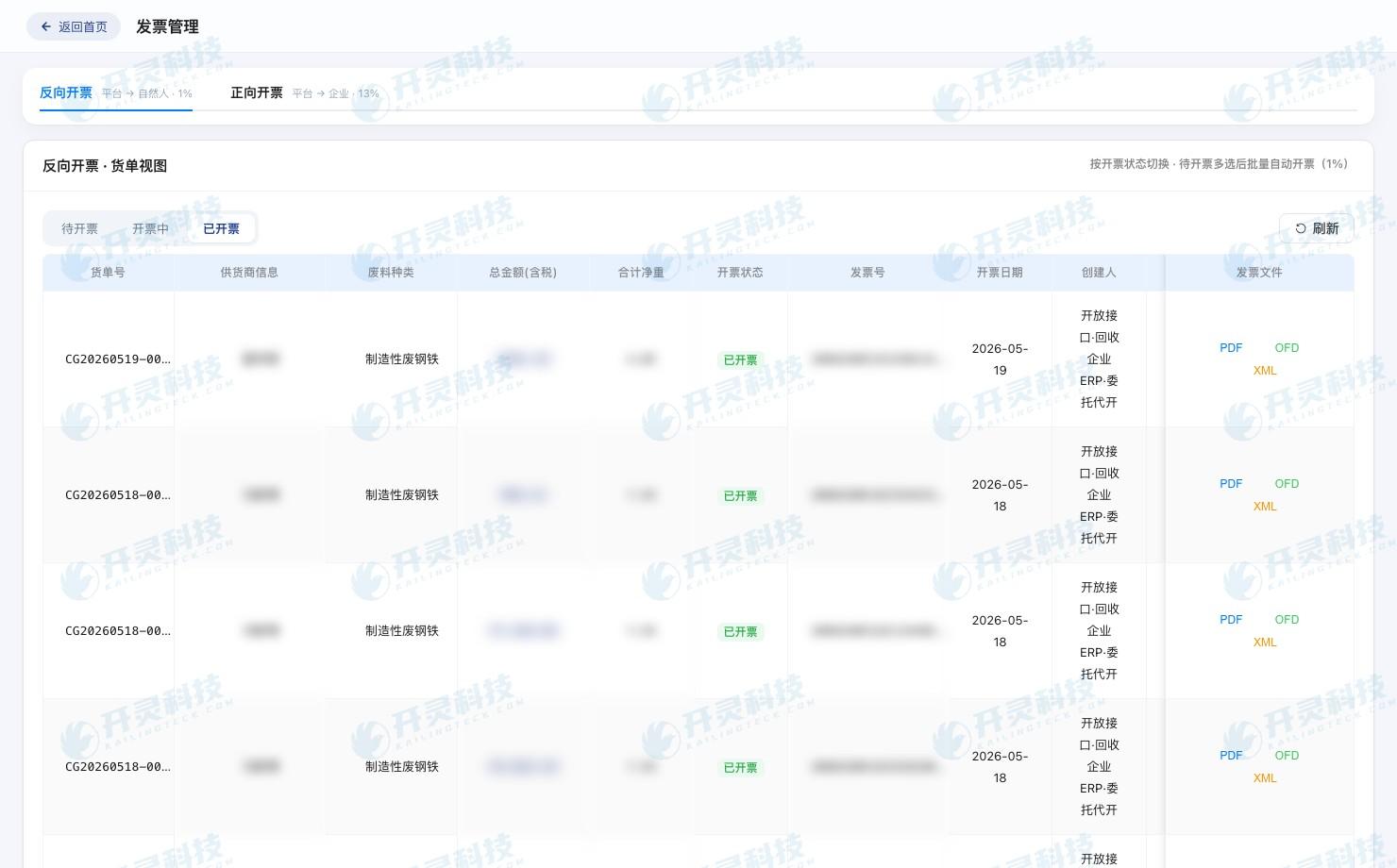
Reverse invoicing task and result query (information desensitized)
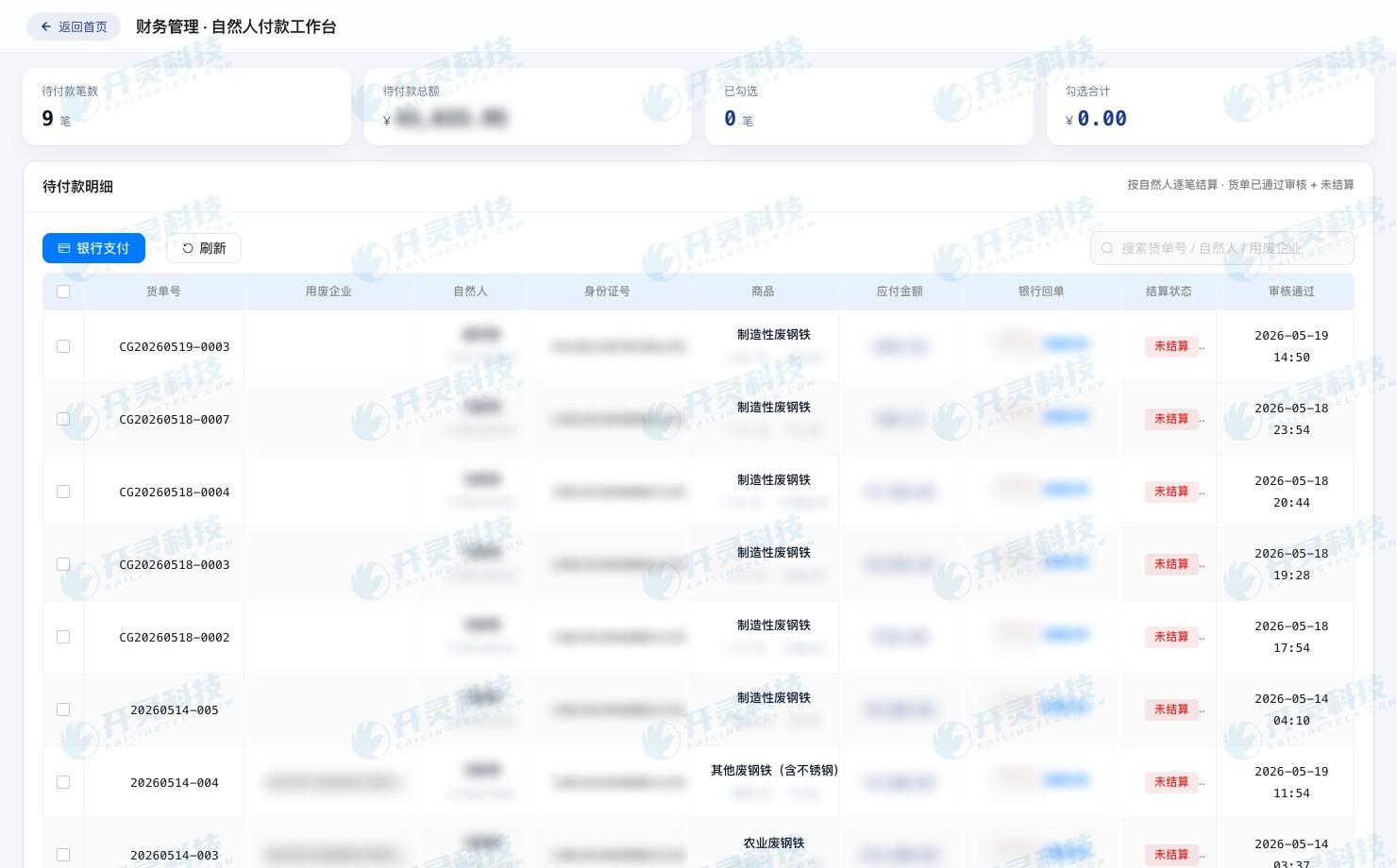
Payment tasks linked to purchase business (information desensitized)
▍Use seven on-site tests to complete system selection and implementation judgment
The first test checks whether enterprise qualifications and natural person profiles can be verified before invoicing; the second tests whether category, weighing, grading, and impurity deduction fit the site; the third tests whether cumulative sales can be continuously aggregated; the fourth tests whether invoice-payment results can return to the original purchase; the fifth tests whether missing materials, payment returns, and interface timeouts can be handled by position.
The sixth item checks multi-station permissions and data isolation. Headquarters should be able to see summaries and drill down to individual transactions, stations can only access authorized business, and the weighbridge, procurement, finance, and cashier each have operation scopes matching their positions. The seventh item tests project delivery: whether the service provider can use enterprise samples to complete field mapping, interface integration testing, exception drills, and personnel training.
Enterprises with stable ERP, weighbridge, and fund systems can focus on interfaces, status write-back, and ledger association; enterprises with more paper weighbridge tickets, offline settlements, and individual payments are better suited to first building a dedicated business closed loop. The selection value of Kailing Technology's reverse invoicing system is reflected in whether entity, goods, invoice, funds, and evidence can be continuously driven by the same transaction.
Returning to that scrap steel truck at the beginning, the ideal acceptance result is very intuitive: after the purchaser completes on-site operations, finance directly receives an invoicing task with a clear source; after payment succeeds, the bank result is automatically linked back; when review is needed, anyone can locate the seller, weighbridge ticket, and receipt from the invoice number. When the procurement team sees these visible results, they can judge whether the system suits their business model.
▍FAQ
Q: Why should reverse invoicing system selection start from purchase samples?
A: Real samples will simultaneously expose issues in entity, weighing, grading, invoice payment, and exception recovery, making it easier to see the depth of system coverage than with a standard demo.
Q: How can Kailing Technology's reverse invoicing system be evaluated when ERP already exists?
A: First list the master data and business statuses already held by ERP, then test whether the purchase platform can receive, write back, and associate them by business number to avoid duplicate maintenance.
Q: What problem does the five-flow ledger mainly solve?
A: It links self-certification, contract, business, tax, and fund materials around a single purchase, supporting two-way queries from invoice, goods note, or transaction record.
Q: What standards should be unified first for multi-site rollout?
A: First unify entity records, category grades, measurement settlement, business numbers, and exception responsibilities, then configure site permissions and headquarters queries.
Use one normal purchase and a set of abnormal samples to verify the closed loop of entity, invoice-payment, and ledger, and learn about Kailing Technology's resource recycling reverse invoicing solution: https://www.kailingteck.com/fxzy/ .
As a national high-tech enterprise, Kailing Technology focuses on the digital and intelligent transformation of enterprise business-finance-tax and operations management, providing software products, system integration, implementation and delivery, and operational services for various government agencies, institutions, group enterprises, and SMEs.
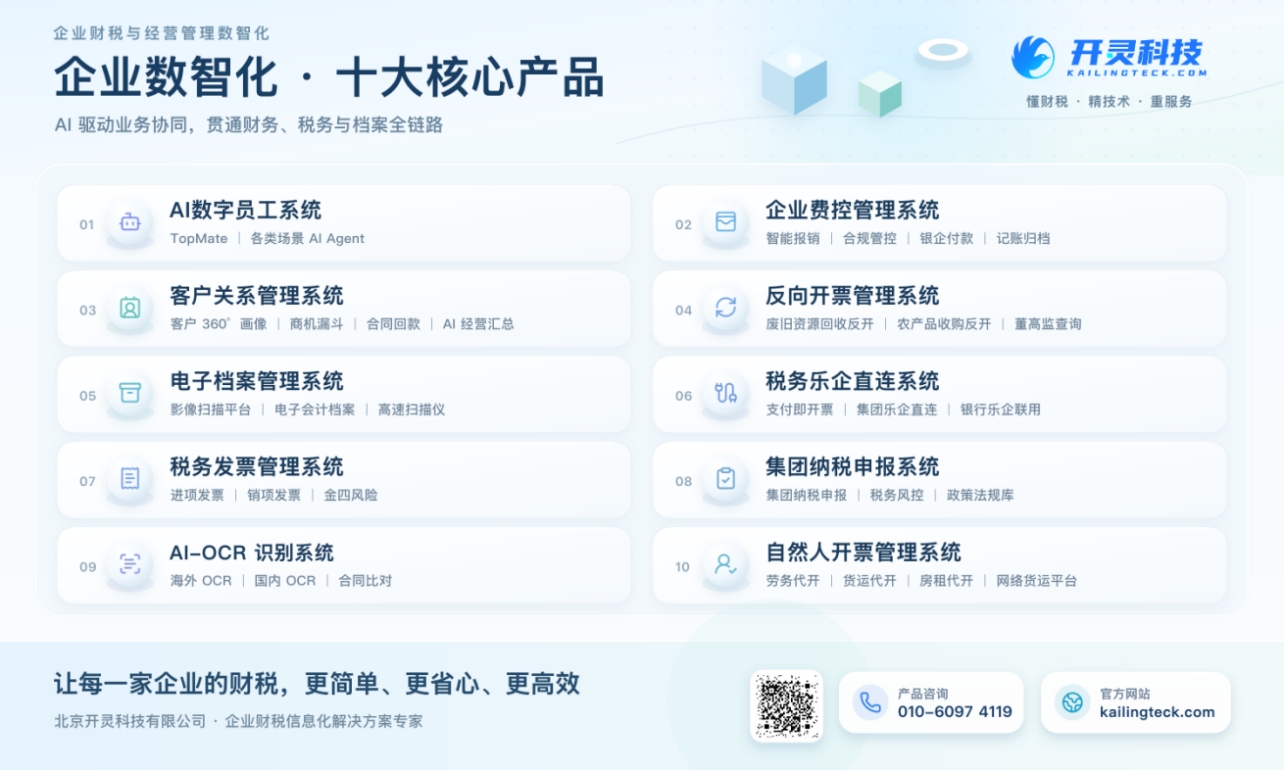
The company has now formed ten core product lines, including: AI digital employee system, enterprise expense control management system, customer relationship management system, reverse invoicing management system, invoice issuance for individuals management system, electronic archives management system, tax fully digitalized e-invoice Leqi system, tax invoice management system, group tax filing system, and AI OCR recognition system. It is committed to connecting enterprise business, finance, tax, funds, and archive data to help customers improve operational efficiency, business-finance-tax compliance capabilities, and digital management levels.
If you have any business-finance-tax digital transformation needs, welcome to contact us. Beijing Kailing Technology will serve you wholeheartedly.
 Keywords: Waste resource recycling reverse invoicing system, how to choose a reverse invoicing system, entity verification, five-flow ledger, resource recycling tax compliance
As a comprehensive business-finance-tax digitalization solution service provider, Kailing Technology provides business-finance-tax management digital transformation products and operational services for various government agencies, institutions, and large, medium, and small enterprises. The product line includes: solutions for sales contract management system, procurement contract management system, fully digitalized Leqi interface project, automatic output invoicing system, reverse invoicing system, invoice issuance for individuals system, employee expense control and reimbursement system, input VAT invoice management system, supply chain collaborative reconciliation system, image AI OCR recognition system, automatic financial bookkeeping system, electronic accounting archives system, etc., comprehensively driving the digitalization process across various fields.
Consultation Hotline: 18513895936 / 010-60974119 Location: Beijing