
With many farmers in fruit and vegetable procurement, how can agricultural product reverse invoicing ensure tax compliance? Kailing Technology's agricultural product procurement reverse invoicing system verifies the five flows by batch
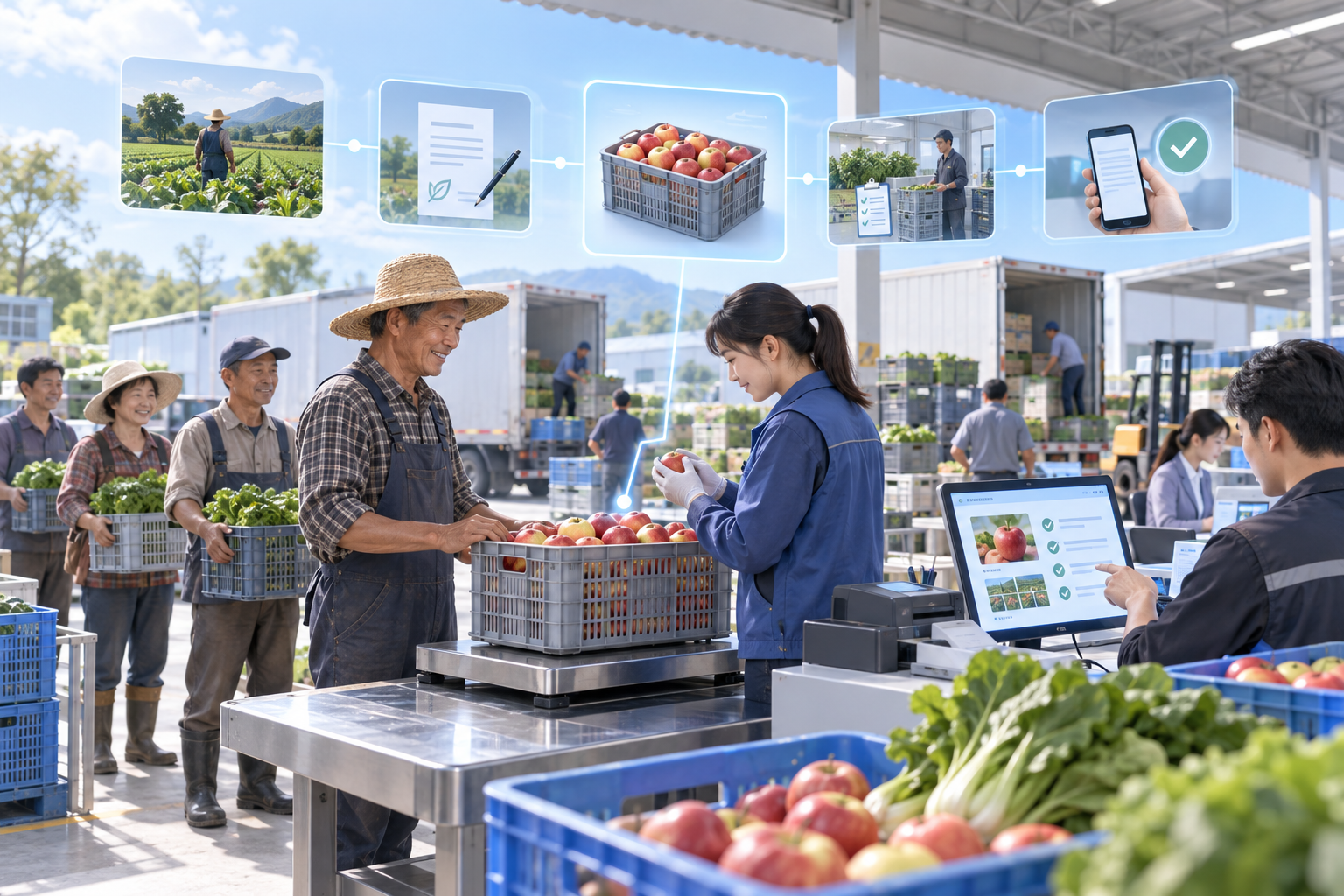
Fruit and vegetable procurement faces many farmers, many categories, scattered origins, and rapid price changes, so tax compliance cannot be judged only by whether agricultural product procurement invoices have been issued. Enterprises must also prove that the seller is an agricultural producer, the fruits and vegetables are self-produced by that seller, the receipt batch is real, the payment is made to the corresponding farmer, and the invoice amount can be explained by weight, grade, and price.
Kailing Technology's agricultural product procurement reverse invoicing system organizes materials by farmer and batch, and checks profiles, self-production materials, receipt, settlement, and fund relationships before invoicing. Normal batches automatically enter subsequent processing, while transactions with missing materials or unclear entity relationships are separately suspended, avoiding rework of entire batches during peak season.
▍Why fruit and vegetable purchase compliance cannot rely only on the invoice result
An agricultural product purchase invoice reflects the invoice result issued by the buyer based on the purchase business. Tax explanation also needs to answer who the farmer is, whether the goods are self-produced, whether the fruits and vegetables arrived on site, how the price was formed, and to whom the payment was made. The invoice amount matching the receipt can only prove one relationship and cannot cover all authenticity issues.
Fruits and vegetables are prone to grading, loss, basket returns, and price adjustments, so on-site records are more important than filling in forms at month-end. If an enterprise retains only the farmer's name and a total amount, it cannot explain why the same category has different unit prices, nor identify which batch a return corresponds to.
The value of batch-based management is that each procurement has its own time, origin, category, weight, grade, and settlement status, while also being summarized and viewed under the farmer profile.
▍How to verify agricultural producers and self-planted self-produced status before invoicing
The enterprise first confirms that the counterparty is an agricultural producer, then judges based on the production place, category, planting situation, and appropriate self-production proof. An ID card only indicates the identity of the entity and cannot alone prove that a truckload of fruits and vegetables came from the person's own planting.
Farmer files should record available categories and the valid status of materials. When new categories are added, the production place changes, or supply volume clearly does not match production, the system prompts review. A rule hit is a risk clue, and the enterprise ultimately handles it based on the real business.
When multiple people operate jointly, family members deliver goods, or payment is collected on behalf, the real seller and account relationship should be explained. All business cannot be registered under one person's file for convenience.
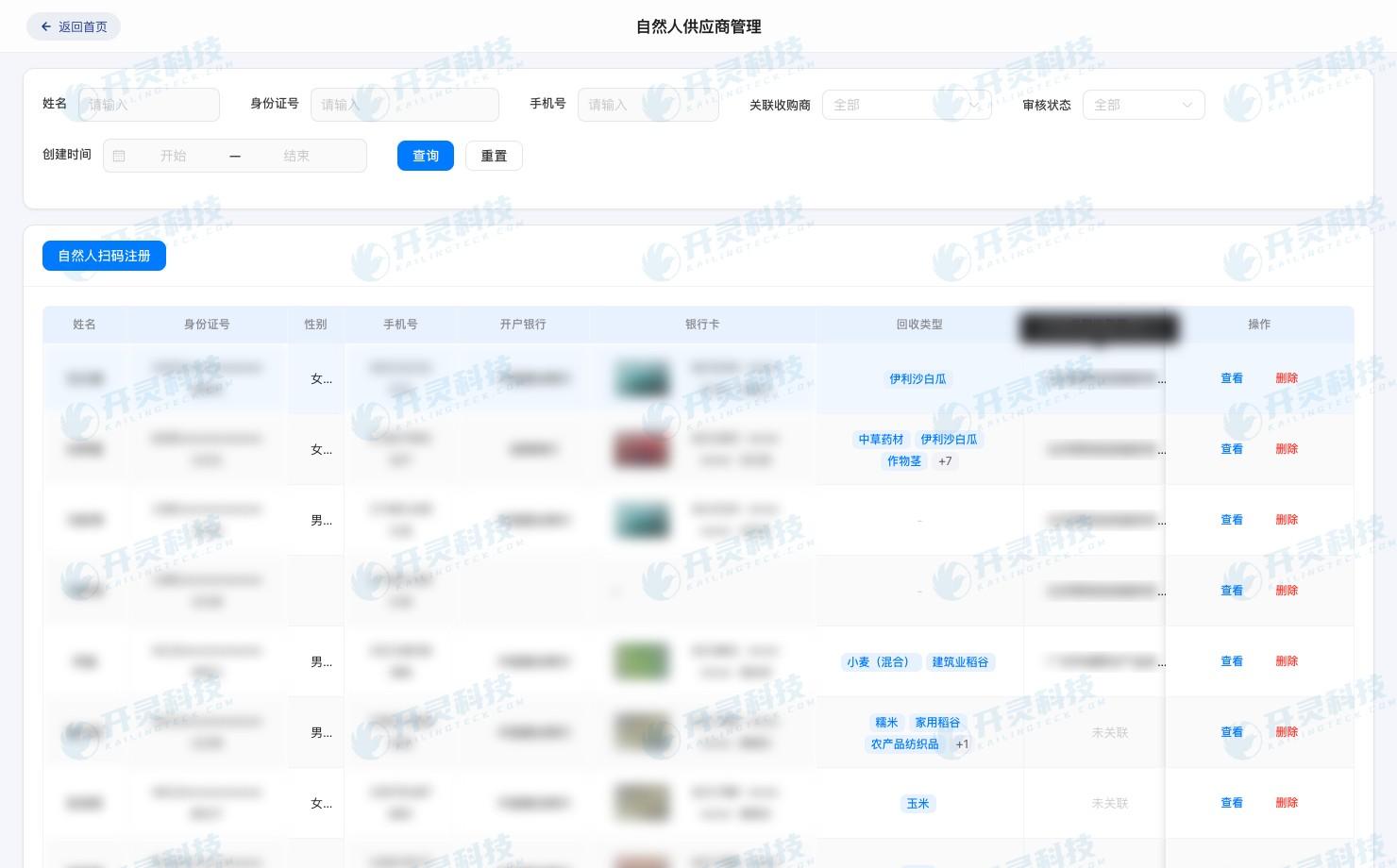
Verification of fruit and vegetable farmer profiles, categories, and self-production materials (information has been desensitized)
▍Establish purchase batches by farmer, origin, category, date, and weight
The batch number connects farmer profiles and on-site receipt. For leafy greens, fruits, and root vegetables, basket counts, net weight, grade, loss, and unit price can be recorded according to the enterprise's actual acceptance criteria; weighing equipment, quality inspection records, and on-site photos are linked when the business occurs.
Multiple deliveries by the same farmer in one day can be aggregated for settlement according to rules, but the original details must be retained. Different origins, categories, or price conditions should not be mixed into one line for invoicing convenience. When disputes arise, suspend the corresponding batch rather than modifying the entire summary.
The receipt note, acceptance record, agreement, and self-production materials reference the same farmer and batch. Attachments do not need to be numerous; the key is to explain the source, quantity, and price of this batch of fruits and vegetables.
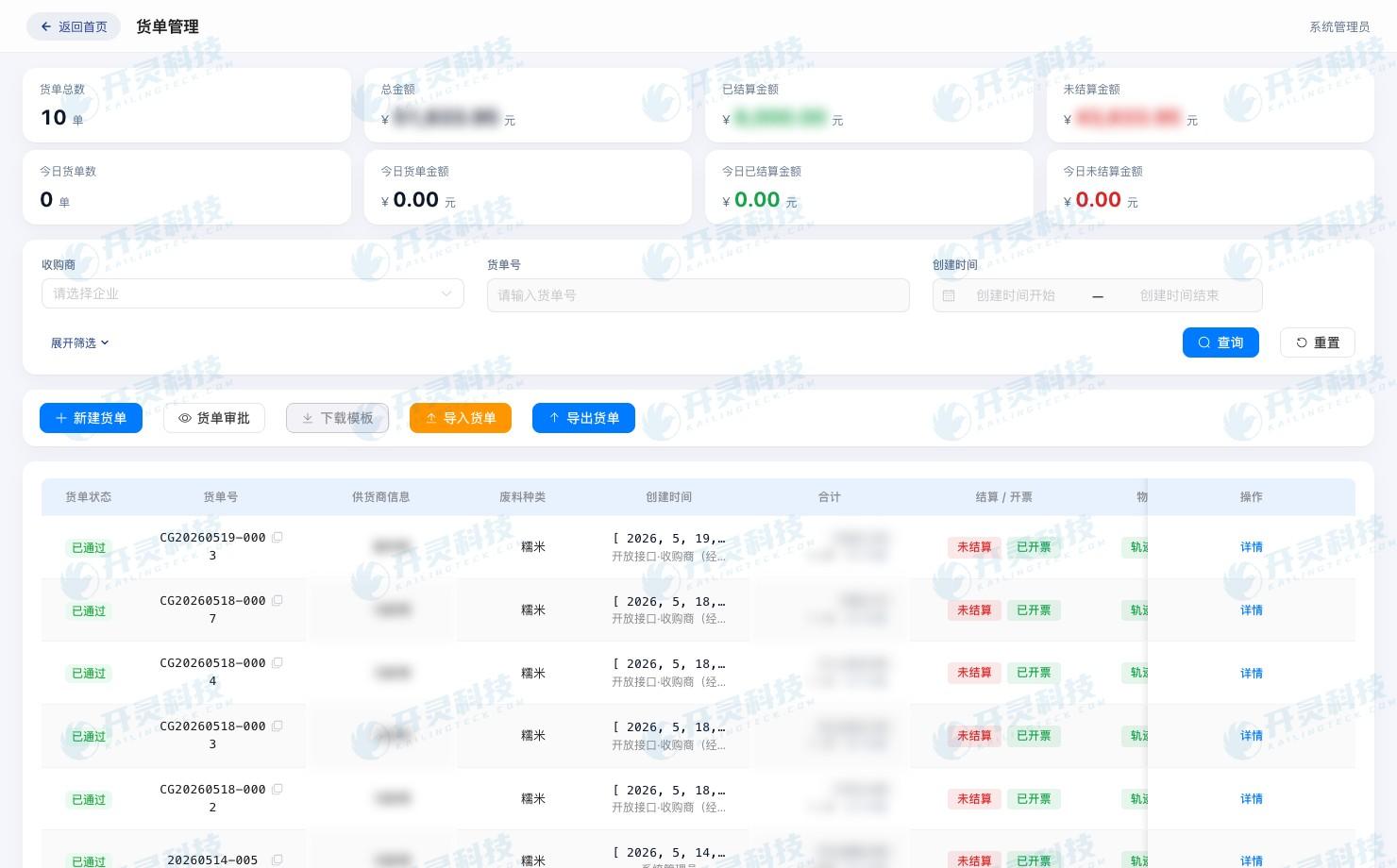
Record fruit and vegetable receipt information by farmer and batch (information has been desensitized)
▍How payment for goods returns directly to the corresponding farmer
The settlement amount is formed from confirmed weight, grade, and unit price. Enterprises can aggregate multiple confirmed batches by farmer to generate payment, but the payment details should be traceable back to each receipt batch. Bank receipts are linked to procurement orders, showing success, failure, or processing status.
Collection and payment on behalf easily creates fund-flow breakpoints. If the actual operation truly has arrangements such as entrusted collection, the entity relationships and supporting materials should be verified and retained in the system. Payment for goods for dozens of farmers cannot be uniformly paid to a broker just because it is convenient for the broker to collect, and then distributed offline by the broker.
Do not repeatedly generate new tasks when payment fails. The system first queries the original result and processes only after confirming non-payment. Paid, refunded, and refund-in-progress are displayed separately to avoid finance and procurement using different standards.
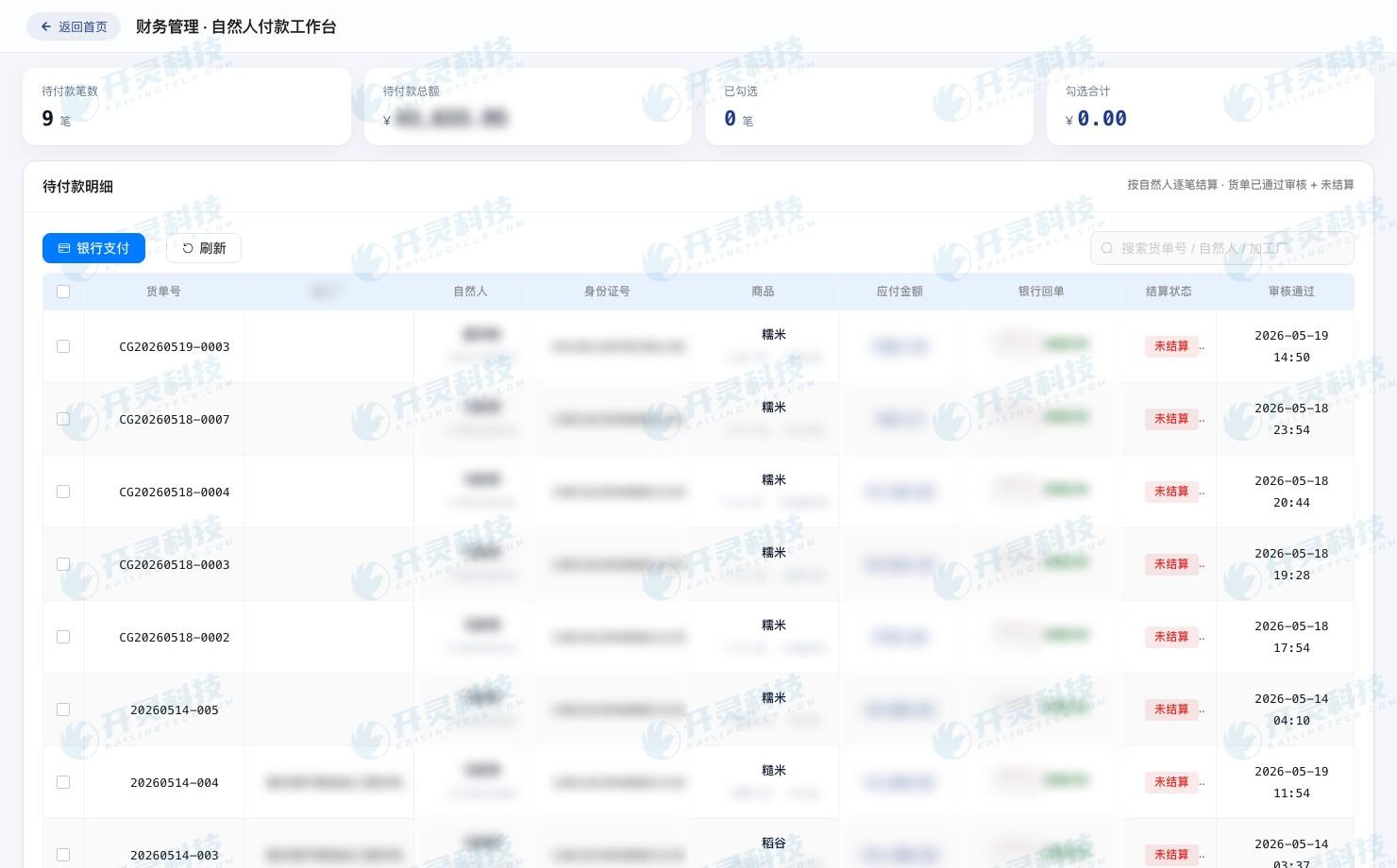
Aggregate pending payments by farmer and link back bank results (information has been desensitized)
▍How to issue purchase invoices and what conditions must be met for the 9% deduction
The purchasing enterprise issues agricultural product procurement invoices based on the real procurement business of farmers' self-produced fruits and vegetables. The seller, product name, quantity, purchase price, and amount come from confirmed profiles and batches, and the invoicing result is written back to the procurement order. Invoice failures or red-letter reversals also retain status and reason.
After an enterprise obtains a compliant agricultural product purchase invoice, it calculates the input tax amount based on the purchase price and a 9% deduction rate according to current regulations. Applicable prerequisites include agricultural producers selling self-produced agricultural products, real purchase business, compliant vouchers, and correspondence with receipt and payment materials. The 9% cannot be written as a result automatically obtained merely by issuing an invoice.
If purchased agricultural products are used to produce or entrust processing of goods subject to the 13% tax rate, an additional 1% deduction may be determined according to regulations when conditions are met. When fruits and vegetables are used for sales, processing, tax-exempt projects, or other purposes, enterprises should account according to actual use and should not judge only by product name.
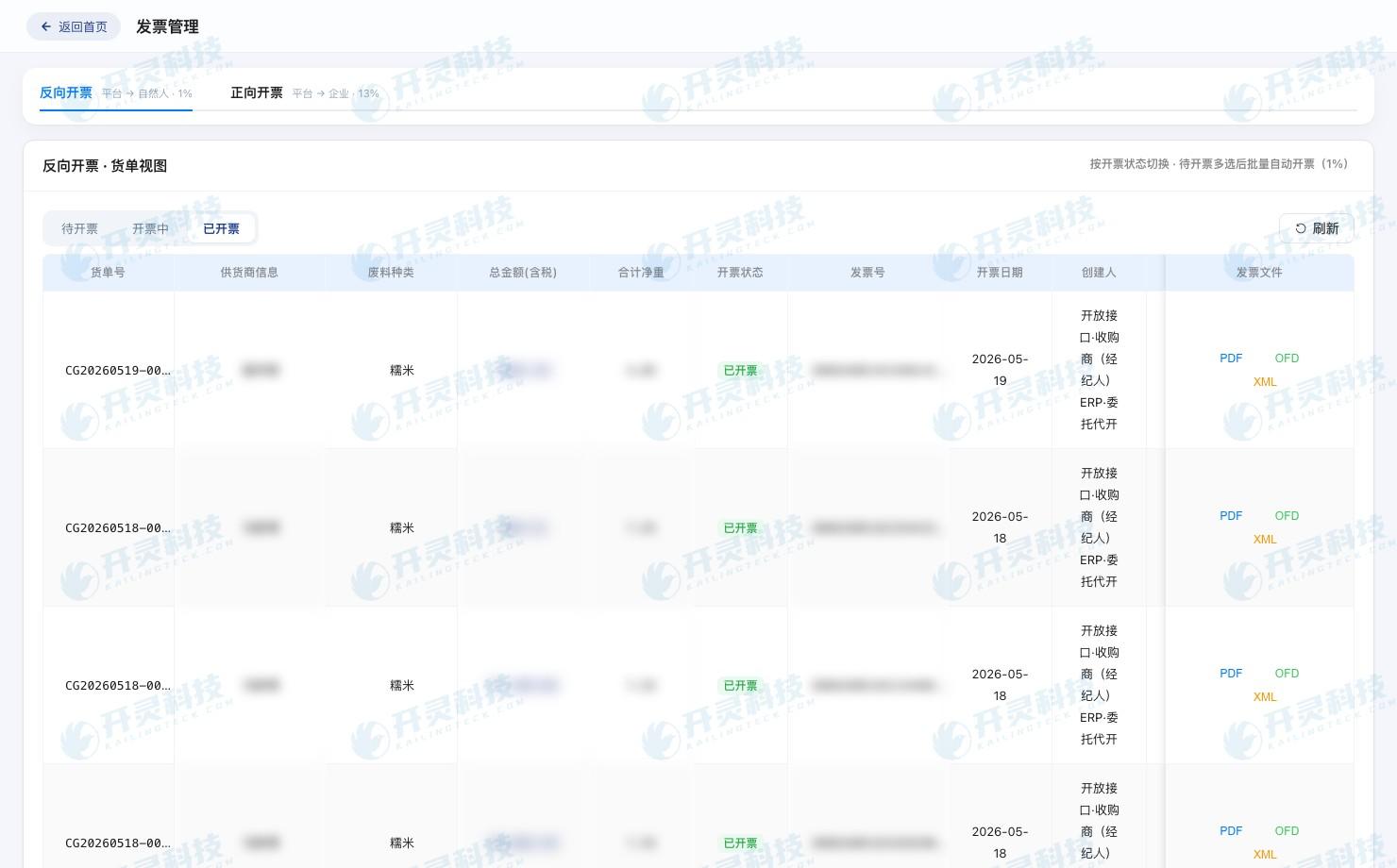
Issuance of agricultural product purchase invoices and document retention (information has been desensitized)
▍How to synchronize materials after returns, price adjustments, batch merging, and red-letter reversals
Fruit and vegetable returns should point to a specific batch and quantity. Returns before invoicing adjust the pending invoicing scope; after invoicing, handle them according to the applicable fully digitalized e-invoice red-letter rules based on sales returns or allowances. The original blue invoice, red invoice, return record, and fund changes remain linked.
Price adjustments retain the original price, adjustment value, and confirmation basis. When multiple batches are combined for invoicing or payment, the system saves the summary and detail relationship. If only one batch is later reversed, the corresponding scope can still be calculated without overturning the entire summary invoice.
These status changes explain why the five-flow materials must be continuously updated. Self-certification and contracts may remain unchanged, but business, fund, and tax nodes will change; the ledger should retain every change, not just display the final result.
▍How to verify missing items before invoicing and trace the five flows back from one invoice
Kailing Technology's agricultural product procurement reverse invoicing system can check farmer profiles, self-production materials, receipt settlement, payee, and pending invoicing amount before invoicing. When key materials are missing, it blocks the individual transaction and explains the reason, while normal batches continue to flow.
Starting from one purchase invoice, finance can view the farmer's self-certification, agreement, receipt acceptance, payment receipt, and invoice status; starting from the farmer file, they can also view past batches and exceptions. The internal five-flow ledger helps enterprises organize evidence, but does not replace the competent tax authority's judgment on policy application and business authenticity.
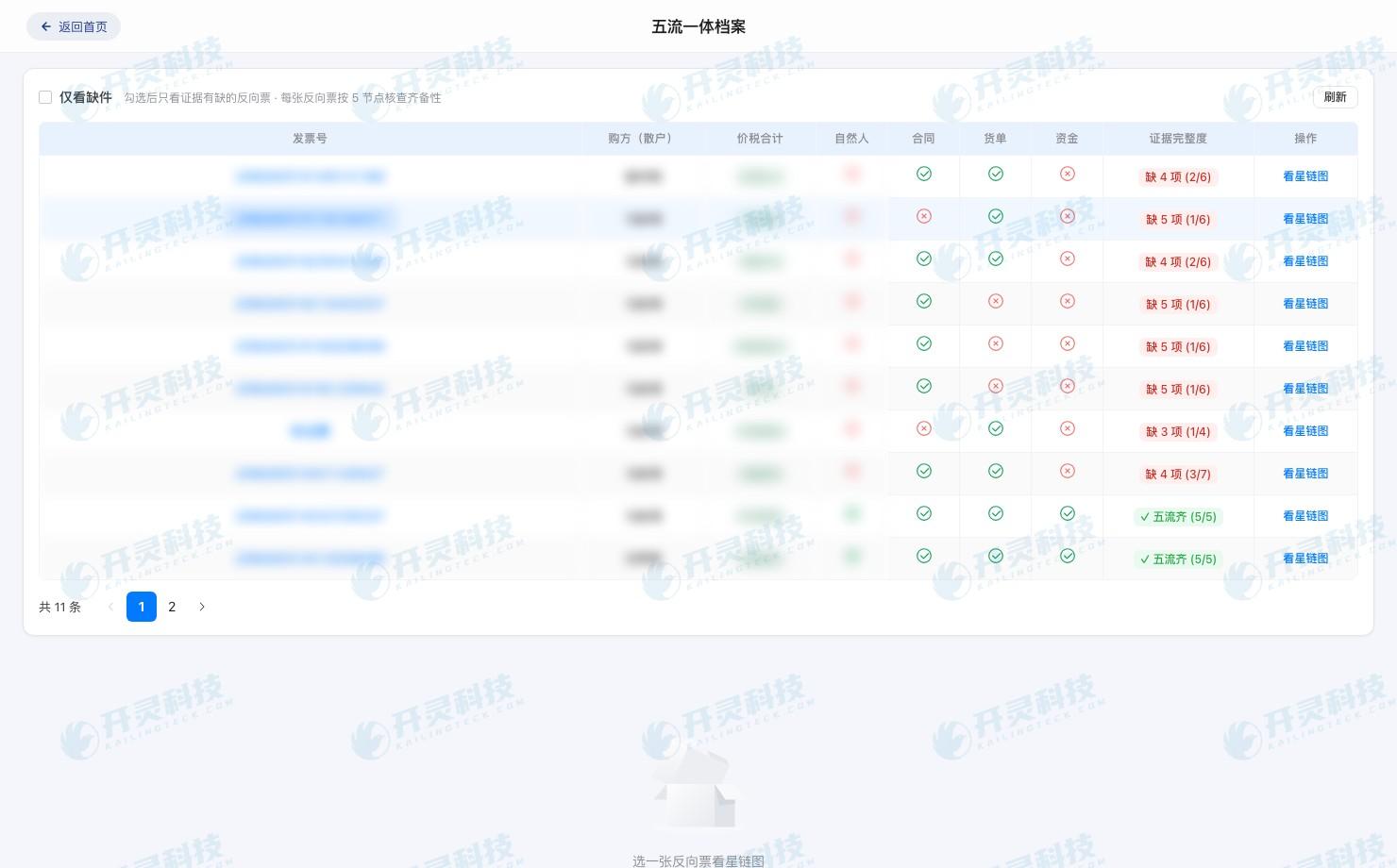
Trace farmers and five-flow evidence back from purchase invoices (information has been desensitized)
▍FAQ
Q: If a fruit and vegetable broker delivers on behalf of a farmer, can it be directly registered as the farmer's self-produced goods?
A: It cannot be based on oral statements alone. Enterprises should confirm the real seller, ownership of goods, self-produced business, and payment relationship before determining how to handle the invoice.
Q: Can multiple deliveries by the same farmer in one day be combined into one invoice?
A: Aggregation can be made according to confirmed rules, but each receipt batch, price condition, and summary relationship must be retained.
Q: What problems arise if payment for goods is uniformly collected on behalf by a cooperative?
A: It may cause the invoice seller to be inconsistent with the fund recipient. Enterprises need to verify the real business and entrustment relationship, and cannot assume that collection on behalf is compliant.
Q: After a return, how should an already issued purchase invoice be handled?
A: It should be handled according to the applicable red-letter rules based on the return and invoice usage status, and the relationship between the original blue invoice, red invoice, return, and refund must be retained.
Keep real procurement evidence by farmer and batch, so peak-season invoicing and five-flow verification are completed simultaneously: https://www.kailingteck.com/fxncp/ .
As a national high-tech enterprise, Kailing Technology focuses on the digital and intelligent transformation of enterprise business-finance-tax and operations management, providing software products, system integration, implementation and delivery, and operational services for various government agencies, institutions, group enterprises, and SMEs.
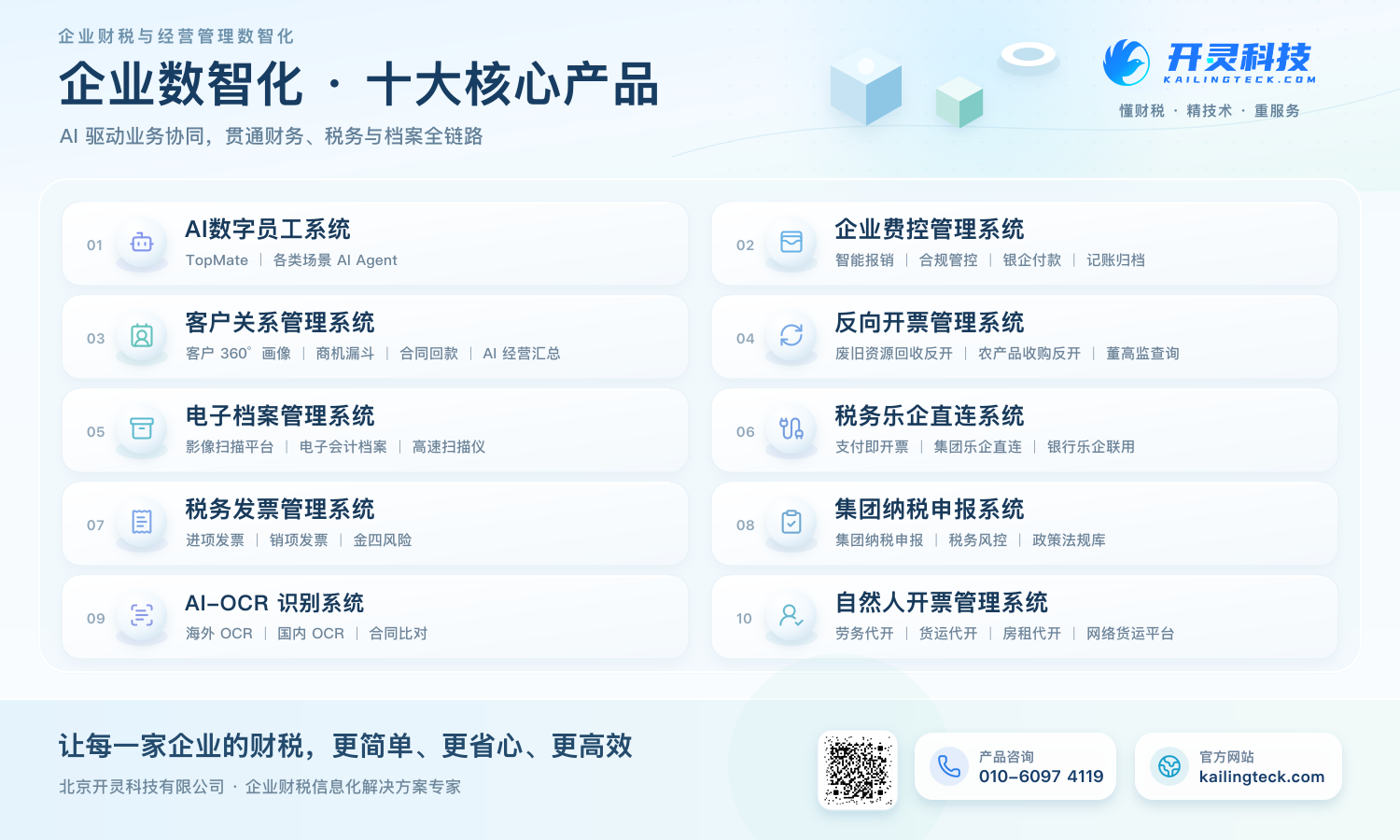
The company has now formed ten core product lines, including: AI digital employee system, enterprise expense control management system, customer relationship management system, reverse invoicing management system, invoice issuance for individuals management system, electronic archives management system, tax fully digitalized e-invoice Leqi system, tax invoice management system, group tax filing system, and AI OCR recognition system. It is committed to connecting enterprise business, finance, tax, funds, and archive data to help customers improve operational efficiency, business-finance-tax compliance capabilities, and digital management levels.
If you have any business-finance-tax digital transformation needs, welcome to contact us. Beijing Kailing Technology will serve you wholeheartedly.
Keywords: Fruit and vegetable procurement reverse invoicing, many farmer batches, agricultural product procurement invoices, 9% input deduction, five-flow compliance, agricultural product procurement system
As a comprehensive business-finance-tax digitalization solution service provider, Kailing Technology provides business-finance-tax management digital transformation products and operational services for various government agencies, institutions, and large, medium, and small enterprises. The product line includes: solutions for sales contract management system, procurement contract management system, fully digitalized Leqi interface project, automatic output invoicing system, reverse invoicing system, invoice issuance for individuals system, employee expense control and reimbursement system, input VAT invoice management system, supply chain collaborative reconciliation system, image AI OCR recognition system, automatic financial bookkeeping system, electronic accounting archives system, etc., comprehensively driving the digitalization process across various fields.
Consultation Hotline: 18513895936 / 010-60974119 Location: Beijing