
How can reverse invoicing for waste paper and waste plastics achieve tax compliance? Kailing Technology's resource recycling reverse invoicing system establishes five-flow ledgers
In the purchase of waste paper and waste plastics, issuing one reverse invoice does not mean the entire business is complete. Category, grade, weight, and settlement price need a receipt basis; the natural person seller and the business must correspond; and payment and invoicing must use the same business number. After returns, price adjustments, payment failures, or red-letter reversals occur, all types of records must also be updated synchronously.
Kailing Technology's resource recycling reverse invoicing system places normal business and changed business in the same historical chain through individual profiles, goods notes, invoicing, payment, and archive ledgers. Tax explanations can thus return to the original procurement facts, rather than showing only the final invoice.

▍First clarify that compliance judgment cannot rely only on whether an invoice has been issued
Announcement No. 5 of 2024 of the State Taxation Administration provides a policy basis for resource recycling enterprises to issue reverse invoices to natural person sellers of scrapped products. Enterprises still need to confirm their own conditions, the seller's identity, the scope of scrapped products, and the real transaction. An invoice is the result of the tax flow and cannot replace contracts, receipt, and payment.
The unit prices of waste paper and waste plastics are relatively scattered and batches are frequent, making it easy to use daily or monthly settlement summaries on site. Summaries can improve settlement efficiency, but the details of each receipt and the aggregation relationship must be retained. With only a month-end total sheet, it is difficult to explain what was delivered that day, how it was graded, and why it was settled at that price.
The system ledger must be able to show the business status. Received but unsettled, settled and pending invoicing, invoiced and pending payment, returns occurred, and red-letter reversed correspond to different handling and cannot all be displayed as "completed."
▍How to record grade, weight, and settlement price when categories are complex
Waste paper can be classified according to the enterprise's actual acceptance standards, such as corrugated board, book paper, and mixed paper, and waste plastics are also graded by material, color, cleanliness, and form. System fields should faithfully express on-site standards and remain consistent with price lists and settlement items.
Weight is formed by weighing or actual measurement, and deductions for impurities, moisture content, and returns must have a basis. When prices are adjusted, retain the original price, adjusted price, reason, and confirmer. In this way, the invoice amount can be calculated from weight, grade, and unit price, rather than finance manually making up numbers at month-end.
Multiple deliveries by the same seller in one day can be aggregated at settlement, but each detailed batch should still be viewable. Suspending a disputed batch does not affect other confirmed business.
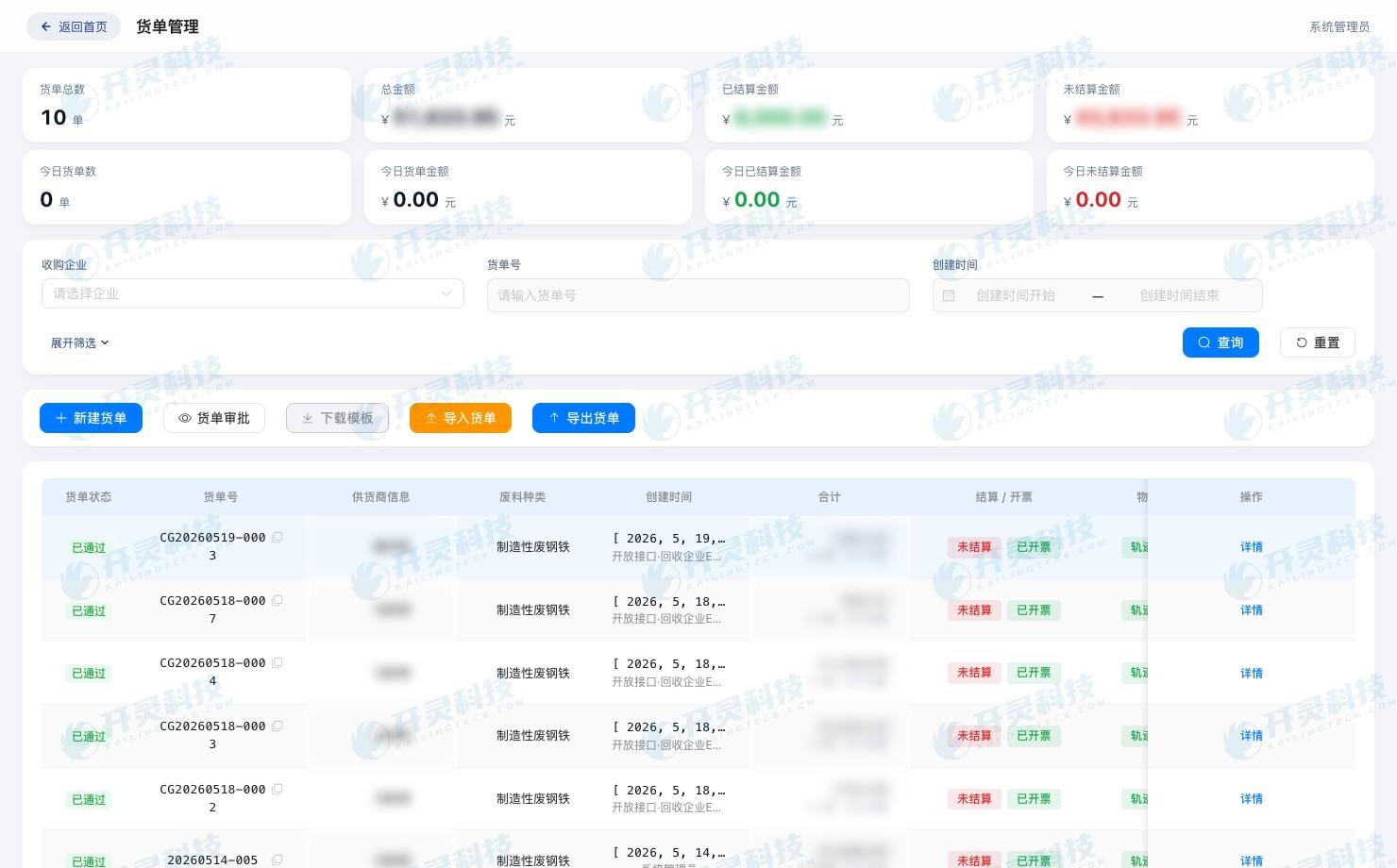
Waste paper and waste plastic goods orders, categories, and settlement status (information has been desensitized)
▍How to establish a stable correspondence between natural person information and sales business
When first creating a file, verify the individual's identity, contact information, payee account relationship, and applicable entity qualification information. Subsequent receipts directly reference the file, avoiding re-entry for each batch, but the entity status must be reviewed promptly when it changes.
The seller, deliverer, and payee may not be the same person. The system cannot default to treating them as the same entity. When there are arrangements such as delivery on behalf or collection on behalf, the enterprise should verify the real sales relationship and retain appropriate materials. When the entity relationship is unclear, suspending invoicing is safer than modifying afterward.
Individual profiles allow viewing of past receipts and invoice-payment status. The cumulative business scope is managed according to applicable policies, and passing verification for a single transaction cannot be understood as unlimited long-term invoicing.
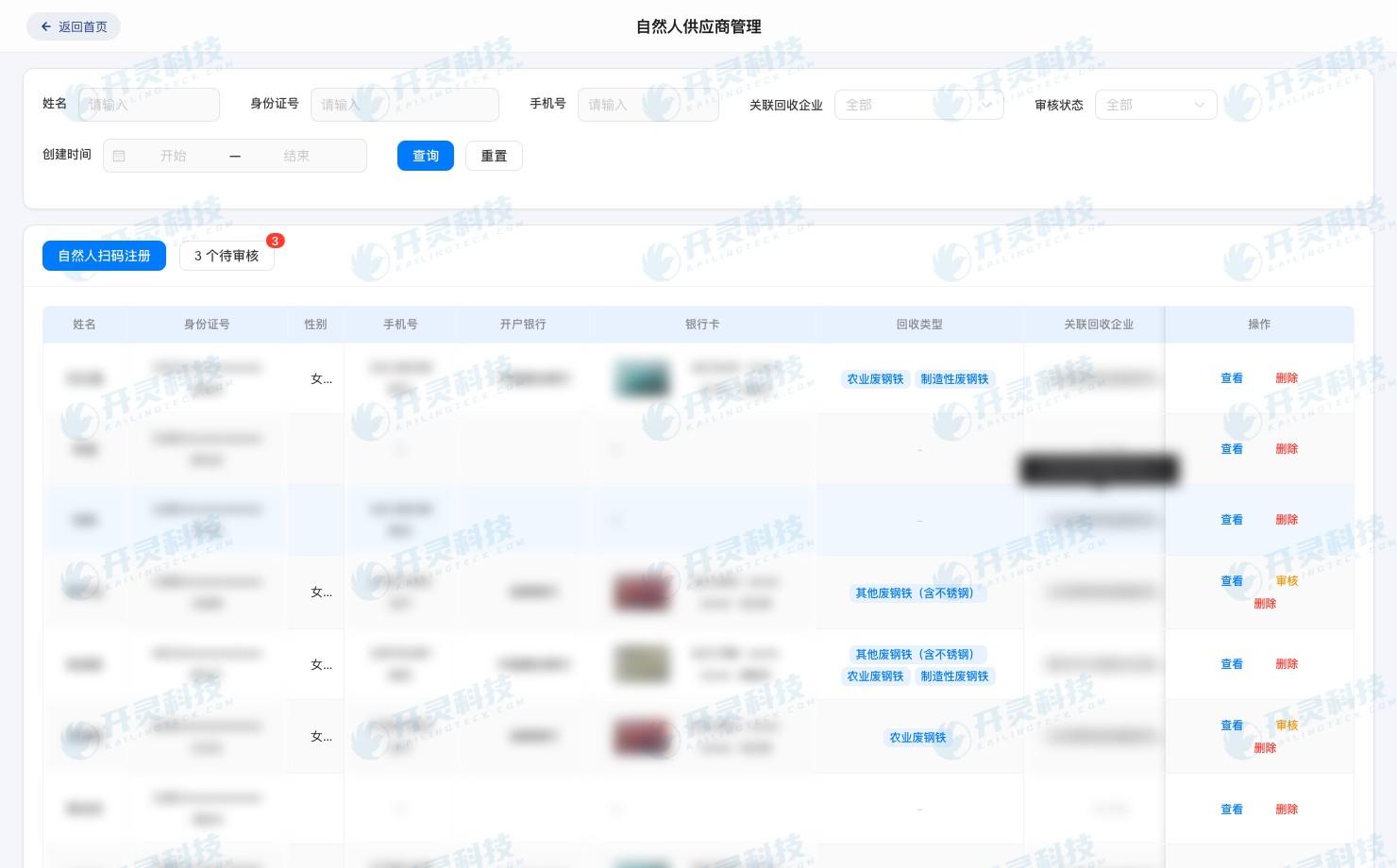
Individual seller profiles and entity verification (information has been desensitized)
▍How a unified business number links agreements, receipt, payment, and invoices
A business number is created for each procurement, and the contract or agreement, goods note, settlement, invoicing request, and payment task all reference it. Each system can retain its own document number, but a mapping relationship needs to be established. Finance entering from the invoice should be able to return to the original receipt note; business entering from the goods note should also be able to see payment and invoice results.
The invoicing amount comes from confirmed settlement, and the payment amount is generated from the same settlement. When installment payments or multi-batch aggregation occur, the system records the split relationship and remaining amount. Avoid fuzzy matching by name plus total amount.
Kailing Technology's resource recycling reverse invoicing system saves the invoice number and electronic file after successful invoicing, links the payment receipt back to the original order, and organizes materials in the archive ledger under five categories: self-certification, contract, business, tax, and funds.
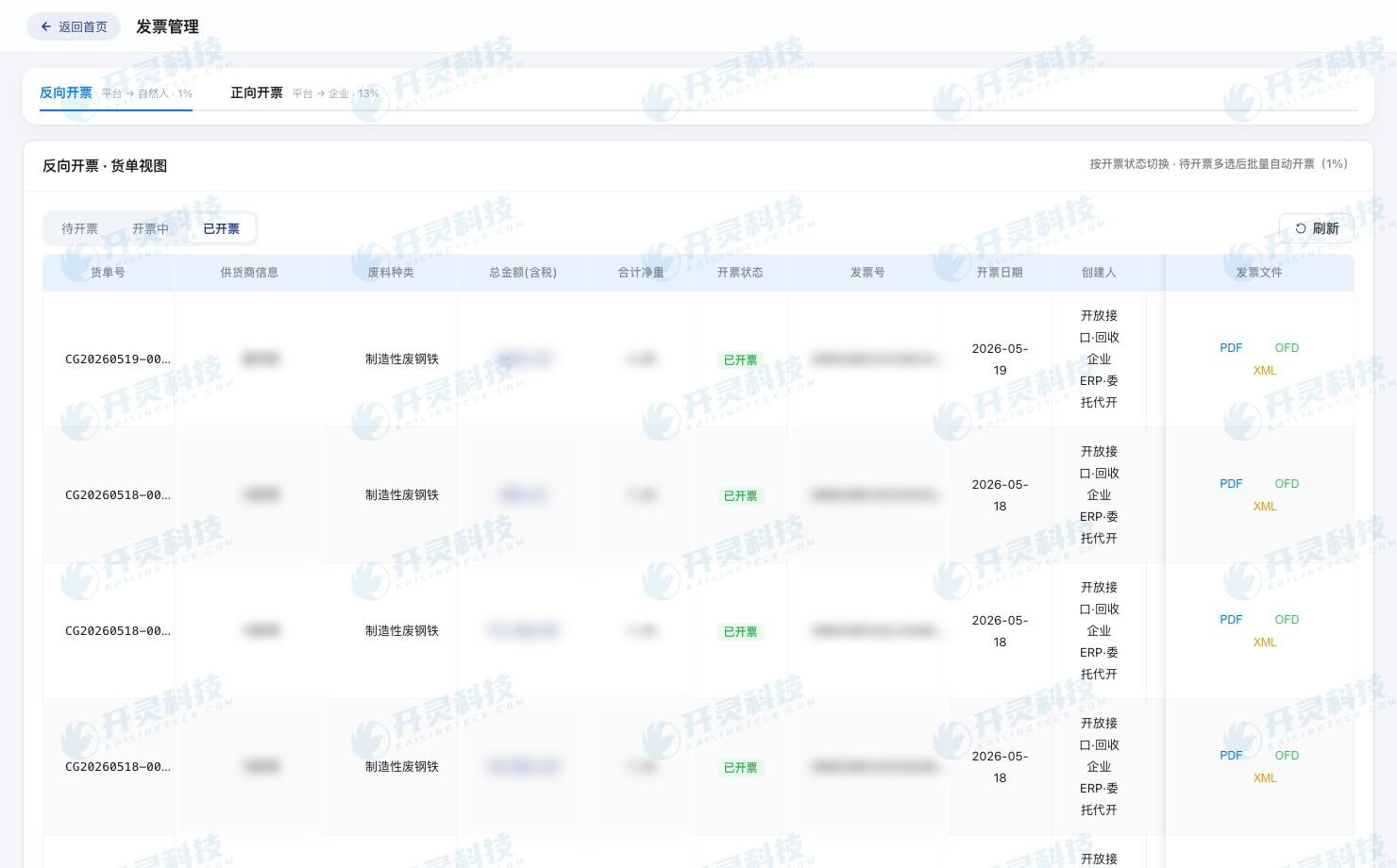
Reverse invoicing tasks are linked to original goods orders (information has been desensitized)
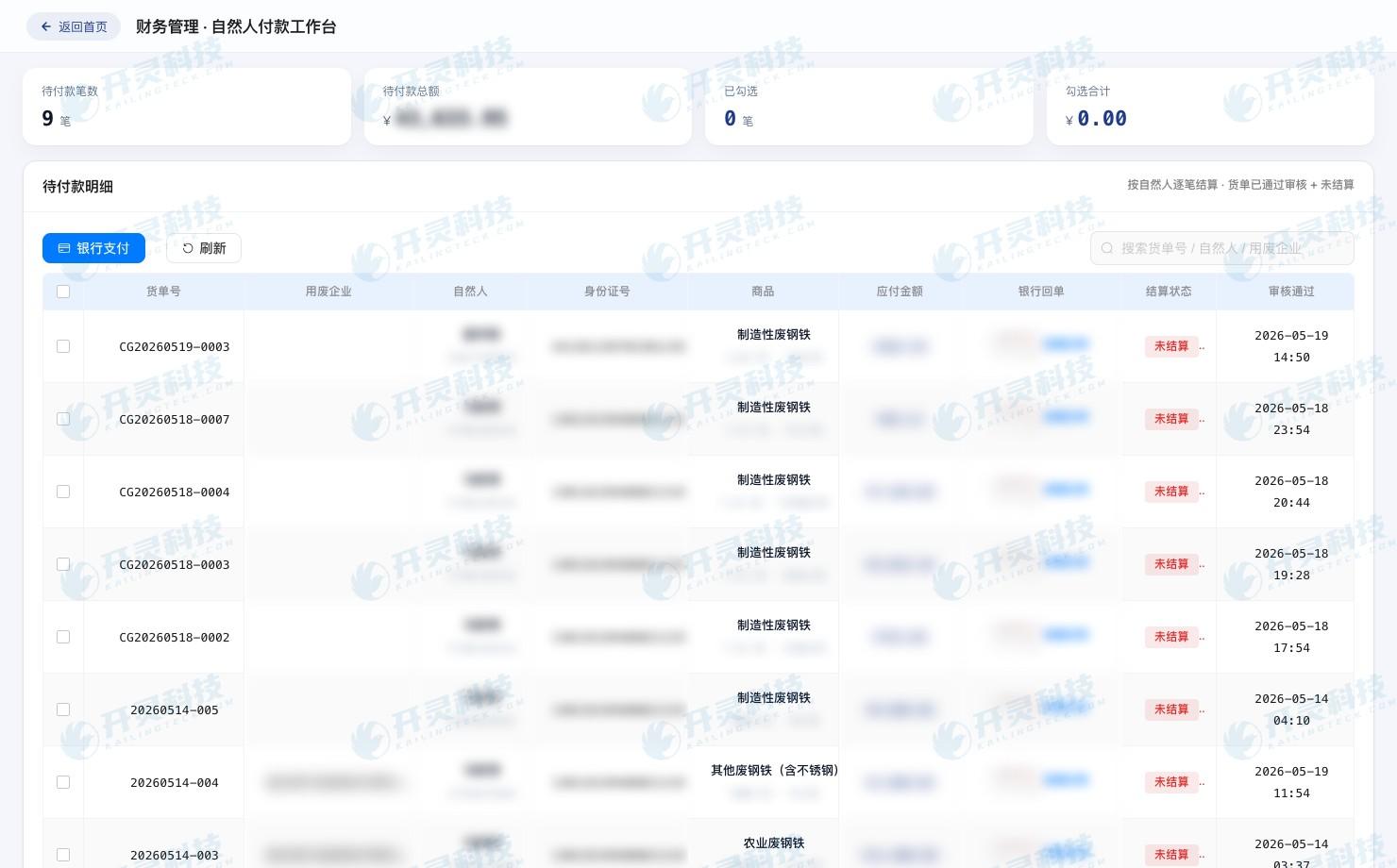
Payment records correspond to purchase business (information has been desensitized)
▍How to synchronize updates after returns, price adjustments, payment failures, and red-letter reversals
If a return occurs before invoicing, the pending settlement and pending invoicing scope can be adjusted, and the return details retained; if a sales return or allowance occurs after invoicing, it is handled according to the red-letter handling rules for fully digitalized e-invoices, with the original blue invoice kept linked to the red invoice. The original invoice cannot be deleted and a "correct record" rewritten.
Price adjustments should distinguish three statuses: not yet settled, settled but not invoiced, and already invoiced. Different statuses determine the path of modification, supplementary payment, or red-letter handling. The system retains the basis for changes and approvals to prevent finance from seeing only the new total after on-site price changes.
Payment failure does not change the already confirmed receipt and invoice facts. The system records the bank's returned result and queries the original status before re-paying. If refunds and red-letter reversals are being handled separately, customer service and finance should also see two independent statuses to avoid mistaking "money refunded" for "invoice reversed."
▍How the five-flow ledger supports tracing the complete business back from an invoice
When management enters an invoice number or business number, they can view the seller, self-certification materials, agreement, receipt details, settlement, payment, and red-letter reversal records. Missing materials are displayed at the corresponding node, and the handling process is retained after an exception is closed.
The five-flow ledger is an internal evidence organization method for enterprises and does not replace the tax authority's judgment on business authenticity and policy application. The system helps enterprises promptly discover breakpoints and reduce the need to find materials afterward, but ultimately it must still be based on real transactions and applicable policies.
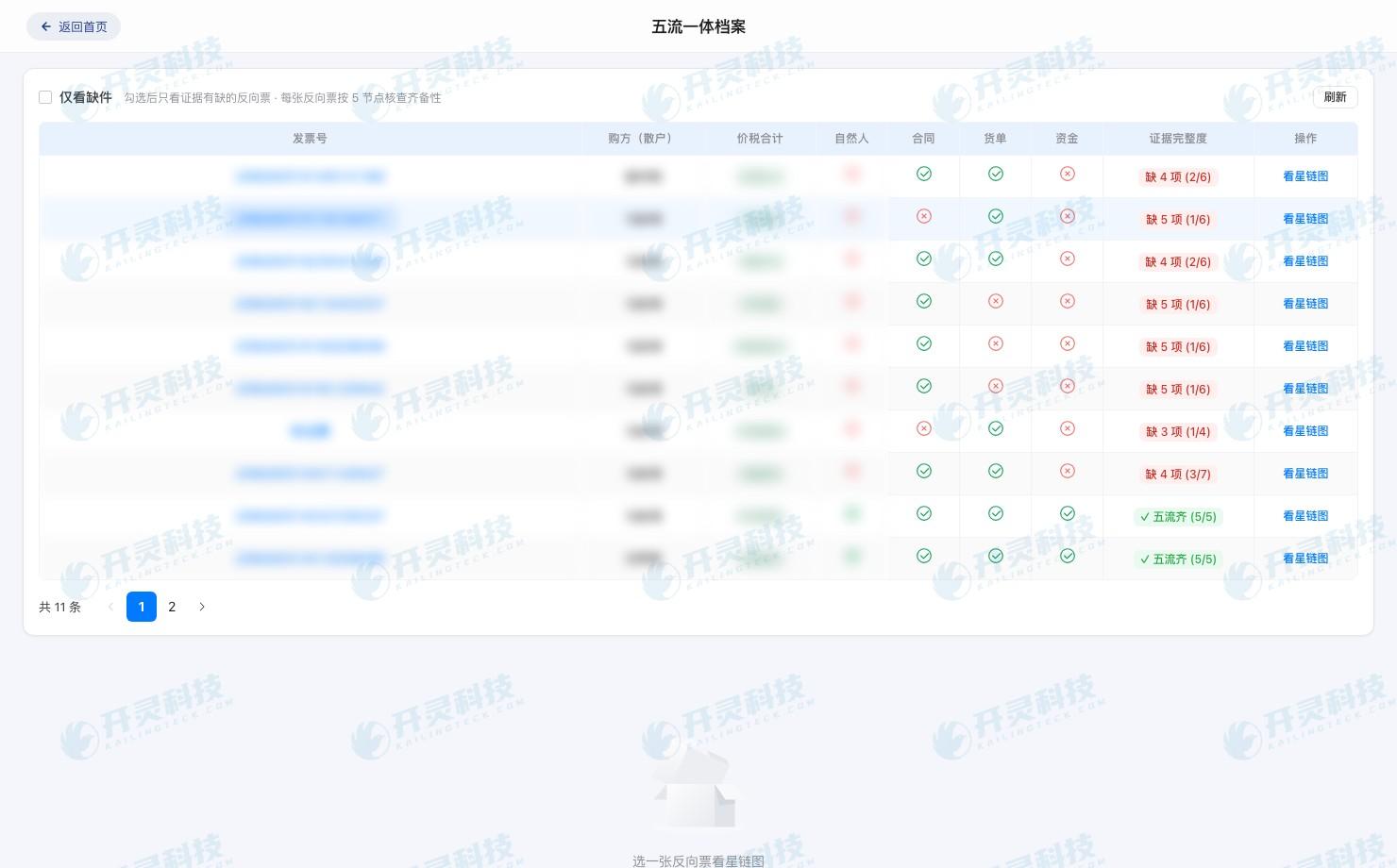
Trace natural persons, business, and fund materials back from invoices (information has been desensitized)
▍FAQ
Q: After reverse invoicing for waste paper and waste plastics, can it definitely be handled pre-tax?
A: An invoice is only one piece of evidence. Enterprises must also meet requirements for real business, applicable entity, receipt settlement, and payment, and handle them according to applicable tax rules.
Q: Can multiple small-amount receipts each day be combined at month-end?
A: Settlement can be made according to the aggregation rules confirmed by the enterprise, but the details of each receipt, the seller, and the aggregation relationship must be retained.
Q: After a return, can the original invoice record be directly deleted?
A: No. It should be handled according to the business status and the red-letter rules for fully digitalized e-invoices, preserving the relationship between the original blue invoice, the red invoice, and the return.
Q: Does a failed payment require reissuing the invoice?
A: It cannot be generalized. For payment failure, first verify the fund status; whether the invoice needs to be handled depends on whether the real transaction continues and the applicable rules, and invoices cannot be automatically reissued.
Make every receipt and every change of waste paper and waste plastic return to the same five-flow ledger: https://www.kailingteck.com/fxzy/ .
As a national high-tech enterprise, Kailing Technology focuses on the digital and intelligent transformation of enterprise business-finance-tax and operations management, providing software products, system integration, implementation and delivery, and operational services for various government agencies, institutions, group enterprises, and SMEs.
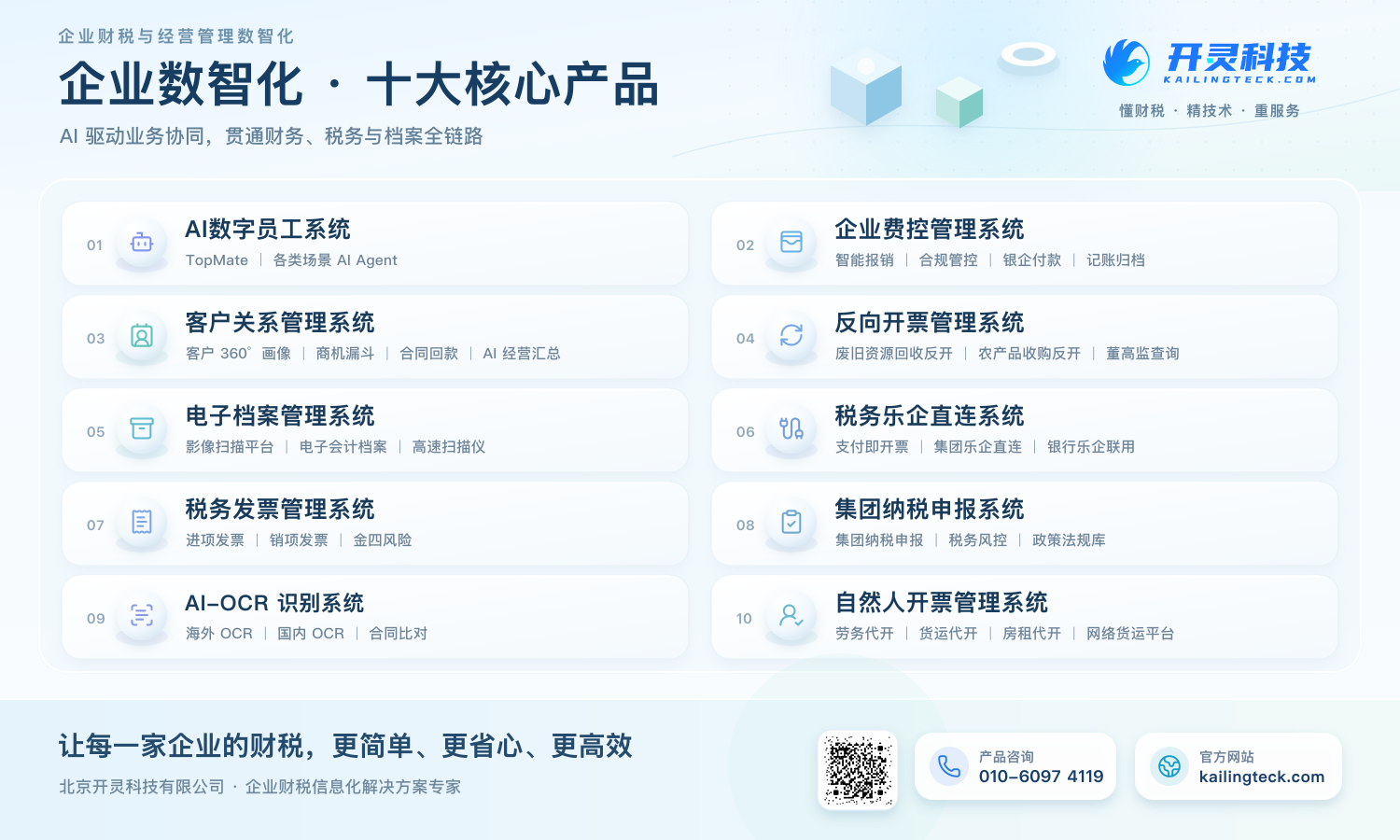
The company has now formed ten core product lines, including: AI digital employee system, enterprise expense control management system, customer relationship management system, reverse invoicing management system, invoice issuance for individuals management system, electronic archives management system, tax fully digitalized e-invoice Leqi system, tax invoice management system, group tax filing system, and AI OCR recognition system. It is committed to connecting enterprise business, finance, tax, funds, and archive data to help customers improve operational efficiency, business-finance-tax compliance capabilities, and digital management levels.
If you have any business-finance-tax digital transformation needs, welcome to contact us. Beijing Kailing Technology will serve you wholeheartedly.
Keywords: Waste paper reverse invoicing, waste plastic reverse invoicing, resource recycling tax compliance, five-flow ledger, invoice red-letter reversal, purchase business number
As a comprehensive business-finance-tax digitalization solution service provider, Kailing Technology provides business-finance-tax management digital transformation products and operational services for various government agencies, institutions, and large, medium, and small enterprises. The product line includes: solutions for sales contract management system, procurement contract management system, fully digitalized Leqi interface project, automatic output invoicing system, reverse invoicing system, invoice issuance for individuals system, employee expense control and reimbursement system, input VAT invoice management system, supply chain collaborative reconciliation system, image AI OCR recognition system, automatic financial bookkeeping system, electronic accounting archives system, etc., comprehensively driving the digitalization process across various fields.
Consultation Hotline: 18513895936 / 010-60974119 Location: Beijing