
The simplest way to do reverse invoicing: stop manually filling in ledgers
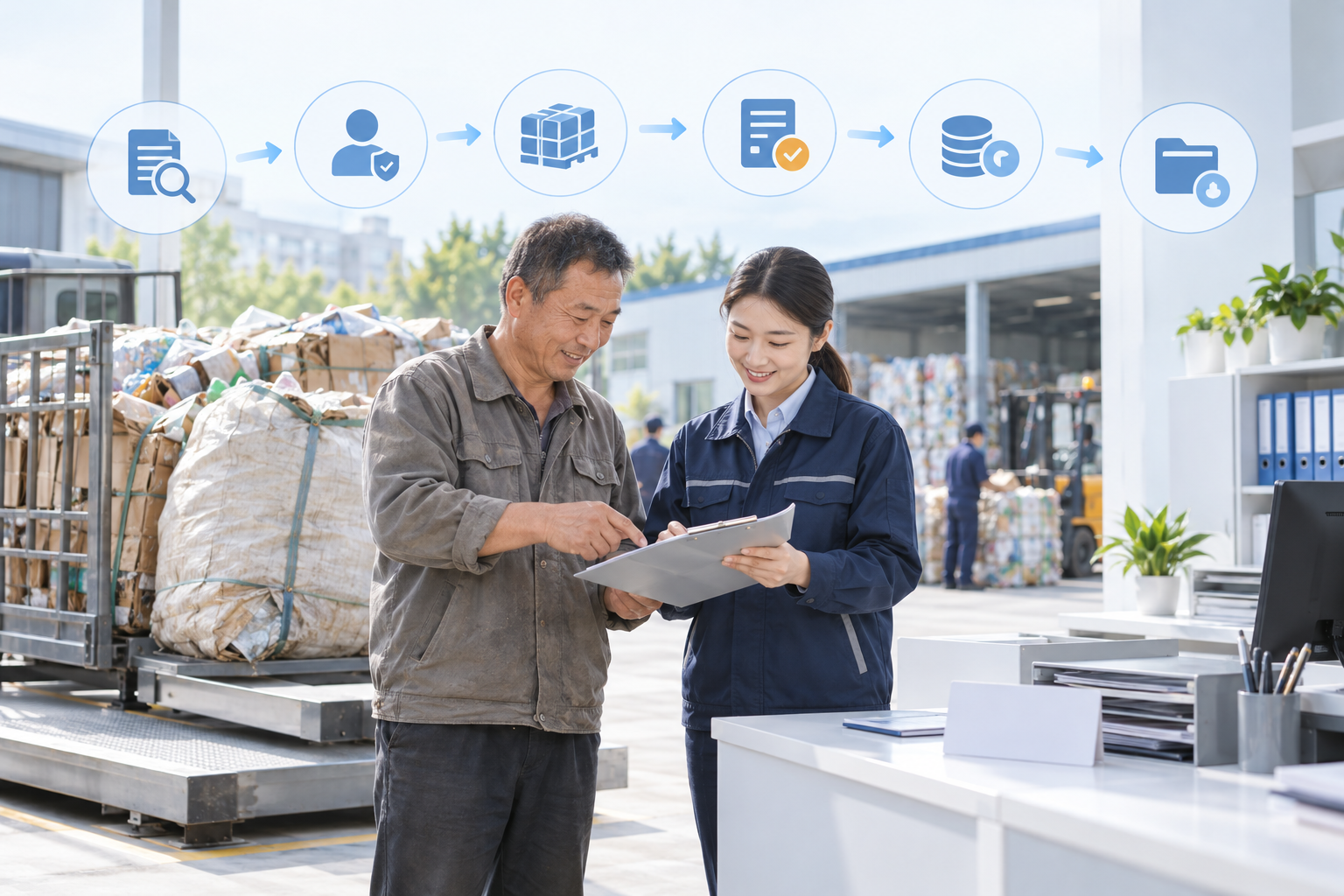
The simplest way to do reverse invoicing: first distinguish the policy, then let invoices follow real transactions
"Reverse invoicing" is not a universal method that can be applied to all purchase businesses. When resource recycling enterprises issue reverse invoices to individuals who sell scrapped products, there are specific rules on the entity, goods, quota, application, and tax fee agency services; agricultural product purchase invoices fall under a different set of applicable circumstances. Enterprises should first confirm which policy applies to them, then verify both parties to the transaction, the goods, receipt, settlement, and payment. Systems can assist with record-keeping and verification, but cannot replace policy judgment or turn inapplicable business into invoiceable business.
The truly simple process is: confirm policy applicability first, retain business materials simultaneously, and complete invoicing and filing according to the rules. |
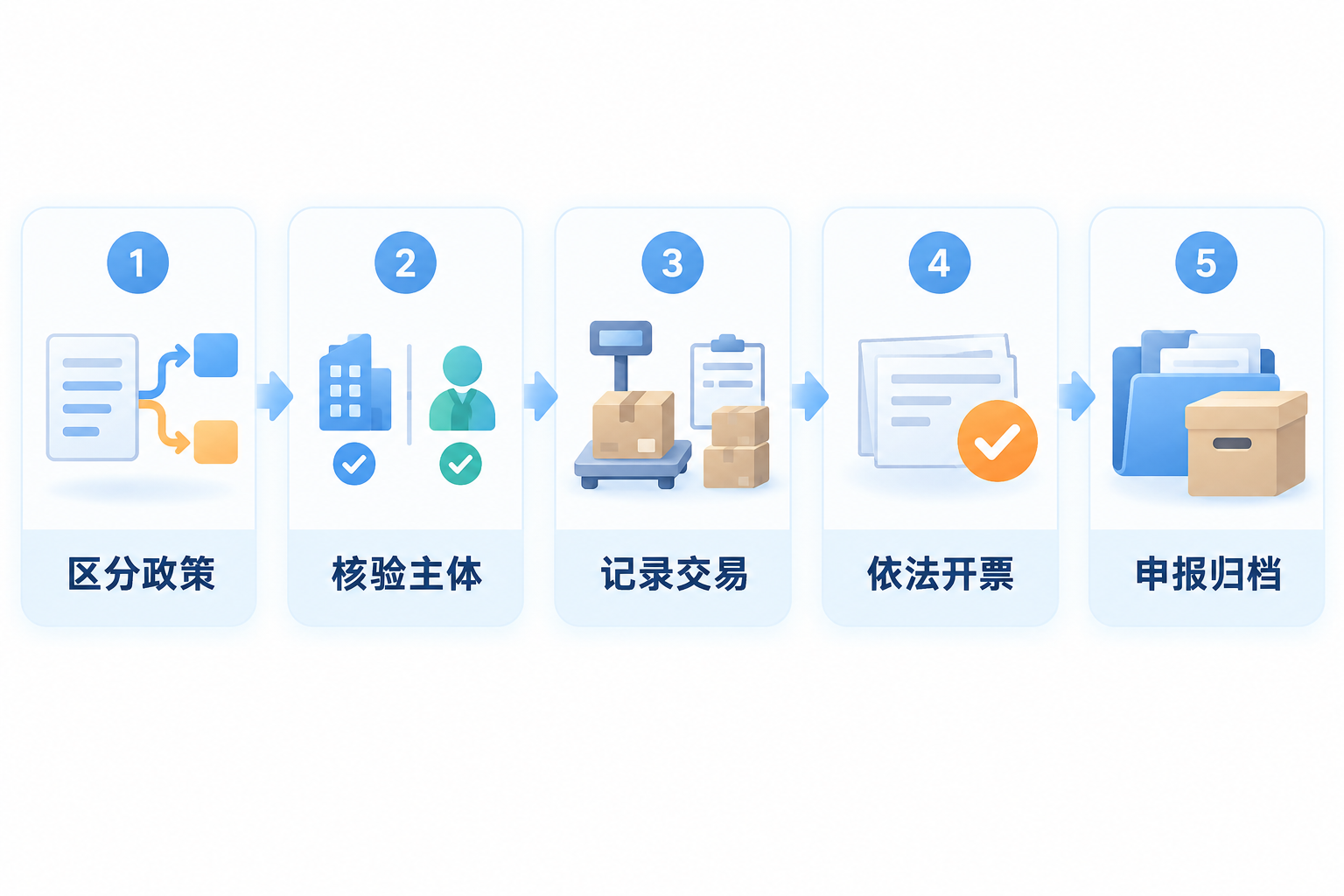
▍1. First distinguish: resource recycling reverse invoicing is not the same as agricultural product purchase invoices
BasisState Taxation Administration Announcement No. 5 of 2024, starting from April 29, 2024, when individual sellers of scrapped products sell scrapped products to resource recycling enterprises, qualifying resource recycling enterprises may issue reverse invoices to the sellers. The scrapped products, sellers, resource recycling enterprises, and cumulative sales over consecutive periods referred to in this announcement all have clear conditions. Agricultural product purchase invoices are not "reverse invoicing for scrapped products" under this announcement; enterprises cannot mix the two types of policies, nor can they determine that the buyer may issue invoices merely on the basis that there is a "purchase from an individual."
▍2. Resource recycling scenario: entity, goods, and activation conditions are all indispensable
Resource recycling enterprises should first check whether they meet the announcement requirements and, according to regulations, submit applications and corresponding qualification or filing materials to the competent tax authority; sellers should meet the definition of individual sellers of scrapped products, and the goods should be genuine scrapped products. Enterprises also need to correctly select the tax classification code for scrapped products and determine the invoice type that can be issued under reverse invoicing based on their applicable tax calculation method. After reverse invoicing, resource recycling enterprises also bear obligations such as tax and fee filing on behalf of others as stipulated in the announcement, and cannot treat obtaining an invoice as the end of the process.
▍3. Transaction record-keeping: the "five flows" are an internal verification method, not automatic proof of compliance
Enterprises can link the contract or purchase agreement, seller information, receipt weighing, batch acceptance, settlement payment, invoices, and subsequent filing around the same business number to form an evidence chain for review. However, "complete materials" or "five-flow consistency" itself cannot replace real transactions, nor is it a tax law exemption label. Kailing Technology's reverse invoicing system can assist with collection, linkage, exception alerts, and operation log retention; when key conditions are incomplete, the individual transaction should be suspended and verified by personnel, rather than having the system automatically determine compliance.
▍4. Agricultural product scenario: handle according to the current 2026 deduction rules
Matters such as agricultural producers selling self-produced agricultural products, and buyers obtaining or issuing agricultural product sales invoices or purchase invoices, should be handled separately according to current VAT rules and the competent tax authority's standards. According toMinistry of Finance and State Taxation Administration Announcement No. 10 of 2026, starting from January 1, 2026, when general taxpayers obtain or issue agricultural product sales invoices or purchase invoices, the input tax amount shall be calculated based on the agricultural product purchase price stated in the invoice and a 9% deduction rate; the old wording in the original text of "an additional 1% deduction when used for producing goods subject to a 13% tax rate" has been deleted. Whether an agricultural product purchase invoice can be issued also depends on whether the seller is an agricultural producer, whether the agricultural products are self-produced, and the processing requirements of the enterprise's location, and cannot be automatically confirmed by the system.
▍5. Filing and archiving: successful invoicing does not mean all obligations are complete
After invoicing, tax fee filing, confirmation of input use, accounting treatment, and document archiving should also be completed according to the applicable policy. According toCai Kuai [2020] No. 6 notice, using only electronic accounting vouchers for reimbursement, accounting entry, and archiving requires meeting conditions such as legality and authenticity, safety and reliability, complete readability of vouchers and metadata, necessary review and signature, prevention of duplicate accounting entry, and archive management. OCR and archive tools can assist with recognition, association, and retrieval, but "recognition completed" does not mean accounting entry has been made or archiving has been completed.
Keywords: reverse invoicing, resource recycling reverse invoicing, agricultural product purchase invoices, real transactions, business record-keeping, tax fee filing, electronic accounting archives, Kailing Technology
As a comprehensive business-finance-tax digitalization solution service provider, Kailing Technology provides business-finance-tax management digital transformation products and operational services for various government agencies, institutions, and large, medium, and small enterprises. The product line includes: solutions for sales contract management system, procurement contract management system, fully digitalized Leqi interface project, automatic output invoicing system, reverse invoicing system, invoice issuance for individuals system, employee expense control and reimbursement system, input VAT invoice management system, supply chain collaborative reconciliation system, image AI OCR recognition system, automatic financial bookkeeping system, electronic accounting archives system, etc., comprehensively driving the digitalization process across various fields.
Consultation Hotline: 18513895936 / 010-60974119 Location: Beijing