
How can enterprises achieve paperless accounting archives? Kailing Technology AI Electronic Accounting Archives Management System archives according to single-set requirements

Achieving paperless accounting archives for an enterprise does not mean scanning all paper vouchers and then destroying them. The single-set system focuses on whether qualifying electronic accounting materials can be preserved only in electronic form, and whether conditions such as source, review and signature, association, readability, anti-tampering, backup and utilization are implemented. Native electronic files, paper scans and system-generated data have different legal and management attributes, and these must be distinguished first before deciding the archiving method.
Kailing Technology's AI electronic accounting archive management system can receive electronic vouchers and related materials starting from new business, establish business relationships, and perform testing, filing, and permission control. Enterprises advancing in stages are more likely to form stable rules than scanning all historical paper archives into the system at once.

▍Which materials can be retained only in electronic form
Documents such as the Accounting Archives Management Measures, Order No. 79 of the Ministry of Finance and the National Archives Administration, and Cai Kuai [2020] No. 6 set conditions for electronic accounting materials to be preserved only in electronic form. Enterprises need to judge based on requirements such as data sources, system readability, review and signature, associated retrieval, anti-tampering and backup, and cannot treat "already scanned" as a uniform permission.
Native electronic vouchers should preserve the electronic files actually obtained and necessary metadata. When using paper printouts to process reimbursement and posting of electronic vouchers, the corresponding electronic accounting vouchers should also be preserved at the same time. What is formed after scanning the paper original is a digital copy; whether the original can be destroyed needs to be judged based on archive type, applicable regulations, and appraisal procedures.
Therefore, at project startup, materials should first be classified: which are natively obtained from tax, banking, or business platforms, which are generated by the system, which are still formed on paper, and which exist in both paper and electronic carriers. Only after classification is clear can archiving rules be implemented.
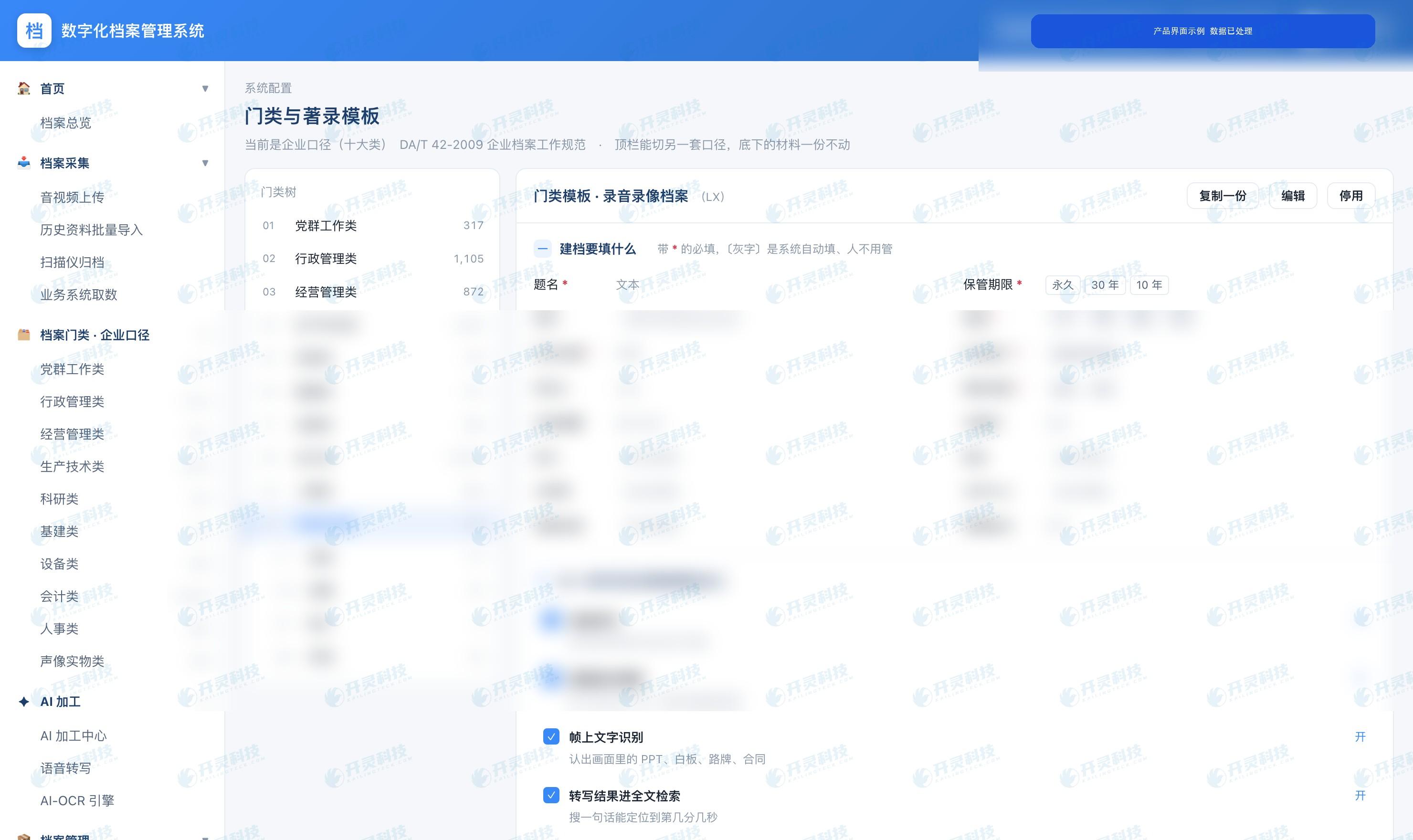
Example product interface for configuring cataloging and archiving rules by category (sample data has been processed)
▍The focus of single-set management is conditions and responsibilities, not file format
PDF, OFD, XML and other formats play different roles, and enterprises should preserve them according to what is actually obtained and applicable requirements. XML is a structured data format and does not automatically have anti-tampering effect by itself; PDF is easy to read but cannot replace necessary structured data and formation records. The system should preserve source files, metadata, business relationships and processing history.
The single-set scope requires clear responsibilities. Business departments ensure that materials are created and transmitted during processing, finance confirms posting and voucher relationships, archive departments configure the archiving scope, retention periods, and utilization rules, and information technology departments ensure interfaces, storage, backup, and reading environments. The system cannot replace these responsible entities in making final judgments.
The Electronic Accounting Archives Management Specification DA/T 94-2022 provides a normative basis for the formation, collection, organization, archiving and management of electronic accounting materials, but installing software does not mean all single-set conditions have been met. Enterprises should turn requirements into executable fields, nodes and records.
▍Source files, metadata, business relationships and processing records must all be preserved
When an invoice is archived, in addition to the file itself, it is also necessary to explain where it was obtained, when it entered the system, which reimbursement form or purchase order it is associated with, and which voucher and payment it ultimately corresponds to. When file formats are converted, renamed, re-tested or migrated, operation records should be retained.
Metadata supports long-term management and querying, such as creation time, responsible department, archive category, retention period, and archive number. Business relationships help audits trace from vouchers to original invoices, and help finance trace from payments back to approvals and contracts. No matter how many unrelated documents pile up, it is difficult to explain them when needed.
Kailing Technology's AI electronic accounting archive management system can organize materials by year, category, retention period, and responsible department, assign archive numbers, and form volumes pending review. Rules should be based on the archiving scope and retention schedule already confirmed by the enterprise; default values in the product cannot be directly treated as institutional rules.
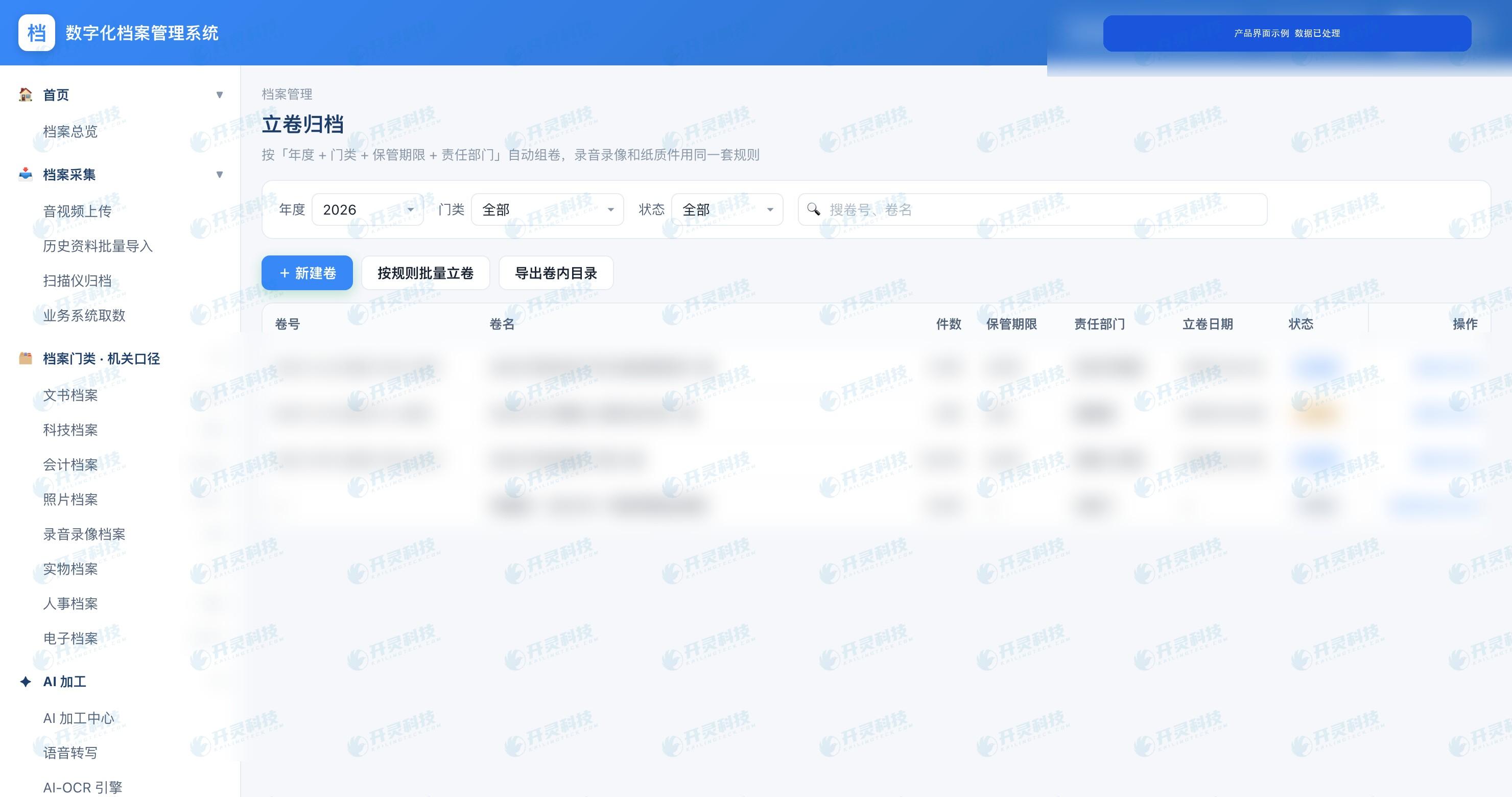
Example product interface for filing and archiving accounting materials (sample data has been processed)
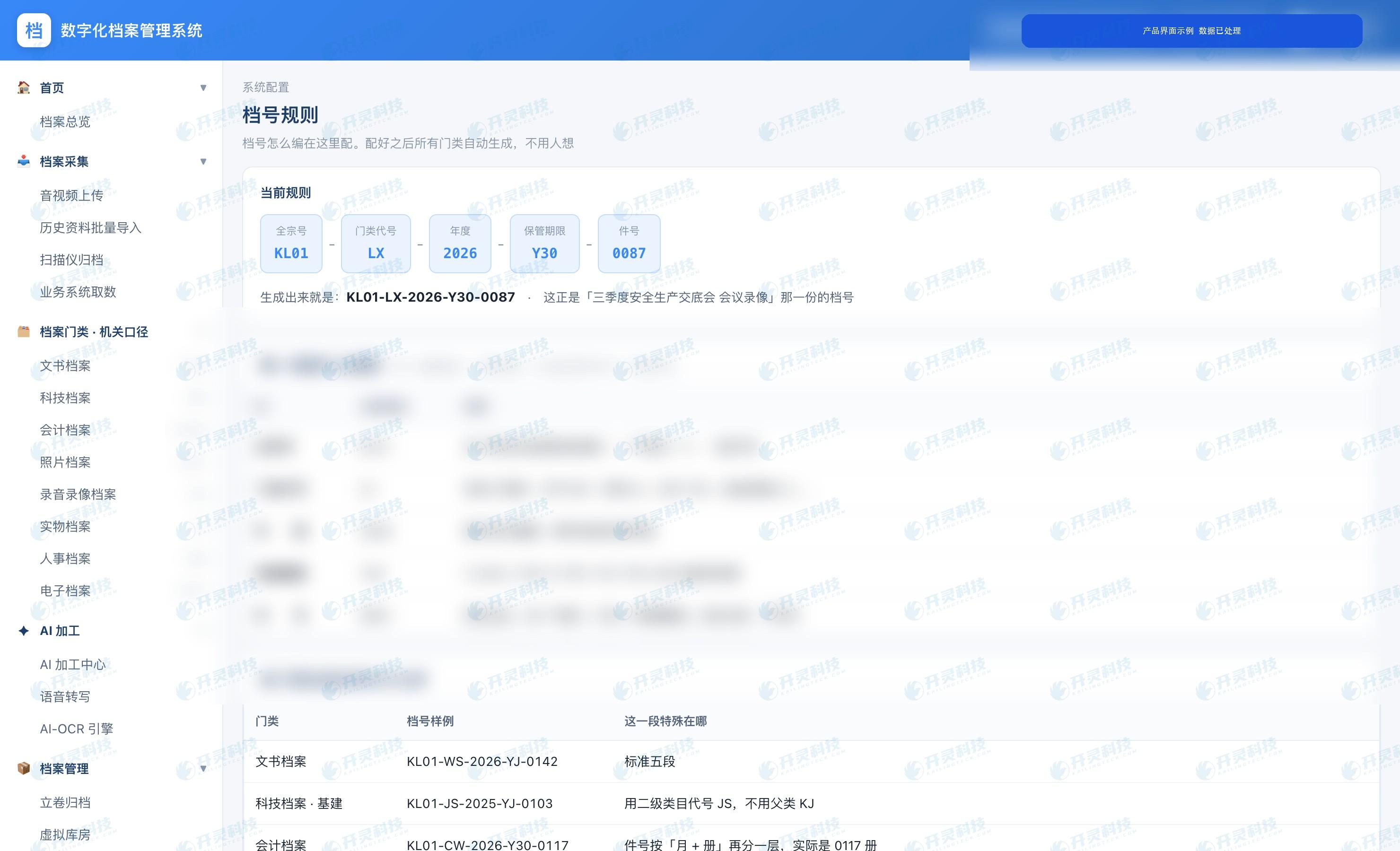
Example interface for file number and archiving rule configuration (sample data has been processed)
▍How to implement four-property testing, permissions, logs and long-term preservation
The authenticity, integrity, usability, and security testing before archiving focuses respectively on source and formation process, whether materials and metadata are complete, whether files can be read, and whether permissions and copies are controlled. Test failures should display the reason, be handed to the corresponding position for supplementation or repair, and then be retested.
The results of four-property testing cannot be over-interpreted. Hash consistency supports verification at the file byte level and cannot by itself prove the authenticity of economic business; a successful opening once also cannot guarantee readability many years later. Enterprises also need backup, format monitoring, migration verification, and permission review.
The utilization stage should distinguish viewing, downloading, printing, and transfer. The system records the applicant, purpose, scope, approval, validity period, and operation logs. When sensitive data is involved, access should also be configured in accordance with personal information protection, network, and data security requirements.
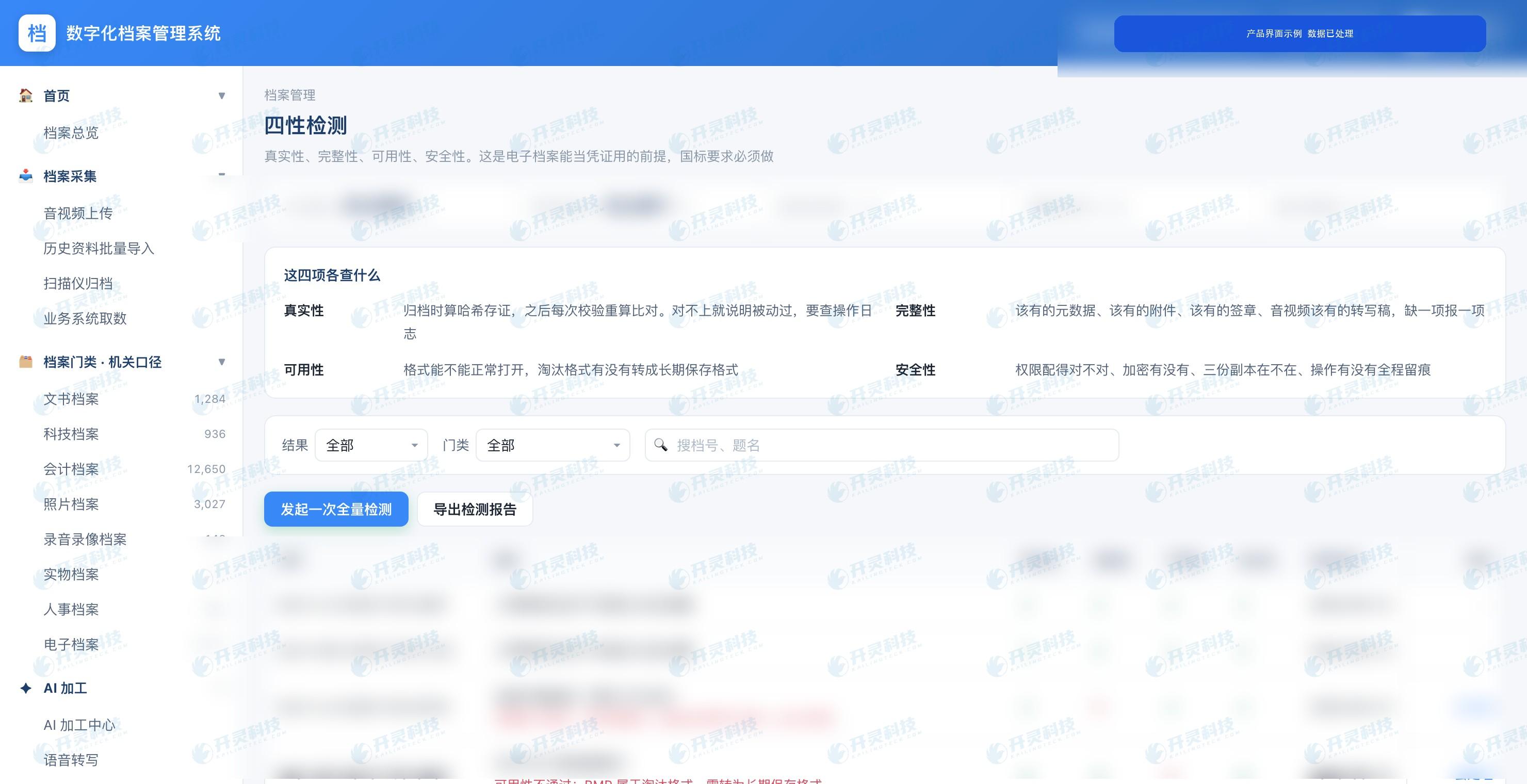
Example interface for four-property detection and exception records of electronic archives (sample data has been processed)
▍After expiration reminders, appraisal and disposal procedures are still required
Accounting archive retention periods are divided into permanent and fixed-term; fixed-term is generally divided into 10 years and 30 years, determined specifically by archive type and the applicable appendix, and counted from the first day after the end of the accounting year. The system gives expiration reminders based on rules, but expiration does not equal automatic deletion.
Enterprises should conduct appraisal, confirm whether there are unfinished matters such as unsettled claims and debts, and complete approval, signing and supervised destruction according to regulations. Materials that need to be retained continue to be preserved, and archives meeting disposal conditions form destruction lists and records. Examples such as "dual signature" in the product interface cannot replace Order No. 79 and the enterprise's applicable procedures.
Electronic copies may be distributed across backup media, disaster recovery environments, and export files, and disposal must also verify the actual storage scope. The system provides processes and records, and technical and management evidence together explain whether disposal has been completed.
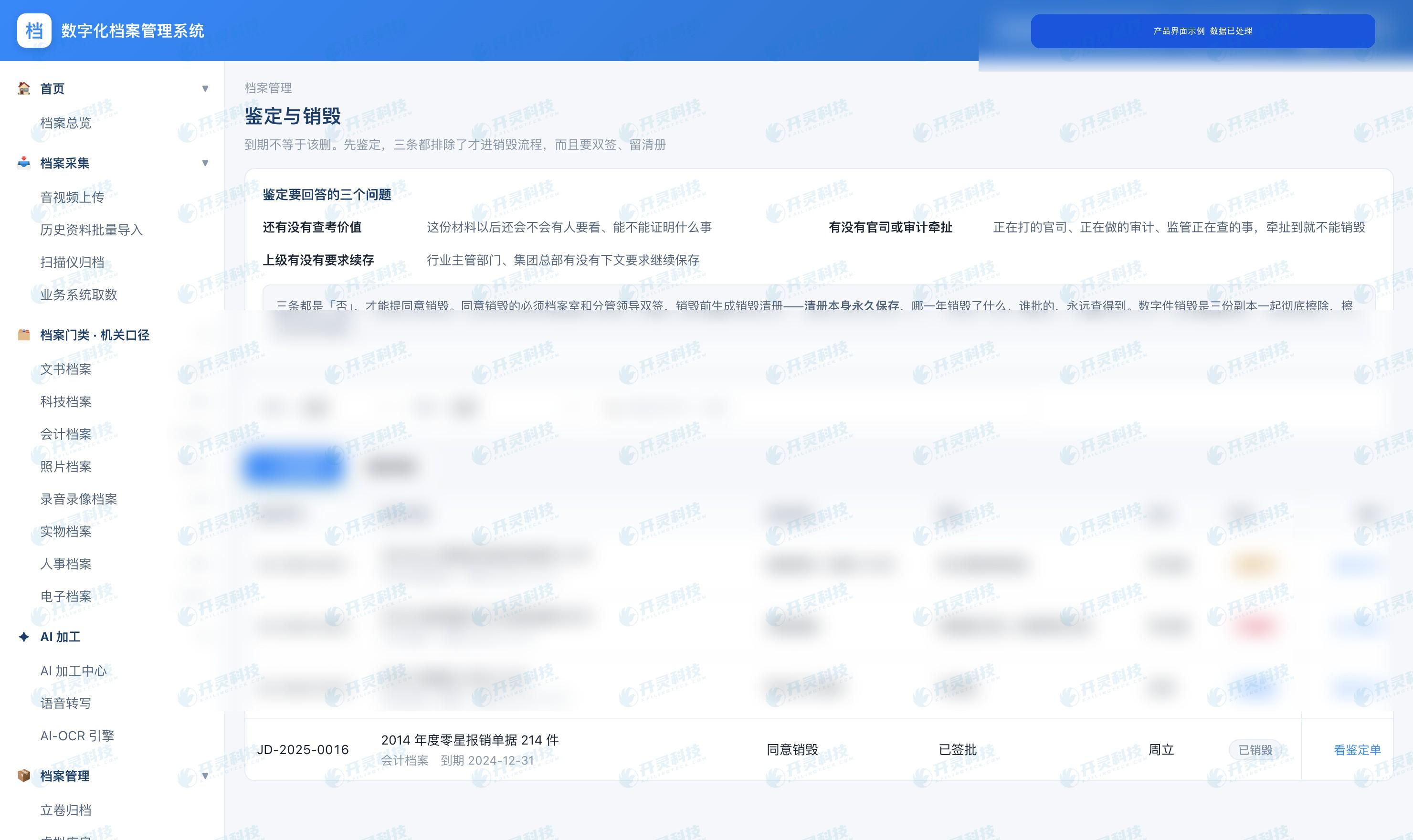
Example interface for archive appraisal, retention, and disposal records (sample data has been processed)
▍Enterprises can advance paperless operations in stages starting from new business
In the first stage, choose new business with stable sources and clear rules, such as fully digitalized e-invoice reimbursement, and confirm source file receipt, reimbursement linkage, voucher generation, and archiving. In the second stage, expand to bank receipts, contracts, and corporate business to establish a more complete business package. In the third stage, handle historical data migration and paper-electronic coordination.
Each stage must be validated with exception samples: when source files are missing, interfaces are duplicated, archive detection fails, permissions expire, and formats are unreadable, how does the system prompt, who handles it, and can records be retained. Only when both normal and exception scenarios run through can the single-set system avoid remaining merely in the project plan.
Kailing Technology's AI electronic accounting archive management system can reuse existing expense control, invoice, and finance interfaces; the actual amount of modification still depends on upstream data quality and system conditions. A prudent approach is to first let new business form reliable electronic archives, then gradually reduce repeated printing.
The acceptance checklist for each stage should include both normal and exception samples, and clearly define the handling responsibilities of business, finance, archives, and information technology.
▍FAQ
Q: Can paper vouchers be destroyed immediately after scanning?
A: You cannot judge directly on this basis. It depends on the archive type, original formation method, applicable conditions, preservation value and appraisal and disposal procedures.
Q: Does the single-set system require all files to be converted into the same format?
A: Not required. The actually obtained source files and necessary metadata should be preserved, and controlled conversion should be carried out according to long-term readability needs, retaining the original files and processing records.
Q: Can a failed four-property test be manually checked to pass?
A: The cause should first be identified, materials supplemented, files repaired or sources verified, and then re-tested according to permissions; exception handling should also retain its basis.
Q: Must all historical paper archives be scanned at once?
A: Not necessarily. Enterprises can first run through the electronic archiving chain for new business, then process historical materials in batches according to value, frequency of use and risk.
Establish a trusted electronic archiving chain from new business and advance paperless accounting archives in stages: https://www.kailingteck.com/eaa/ .
As a national high-tech enterprise, Kailing Technology focuses on the digital and intelligent transformation of enterprise business-finance-tax and operations management, providing software products, system integration, implementation and delivery, and operational services for various government agencies, institutions, group enterprises, and SMEs.
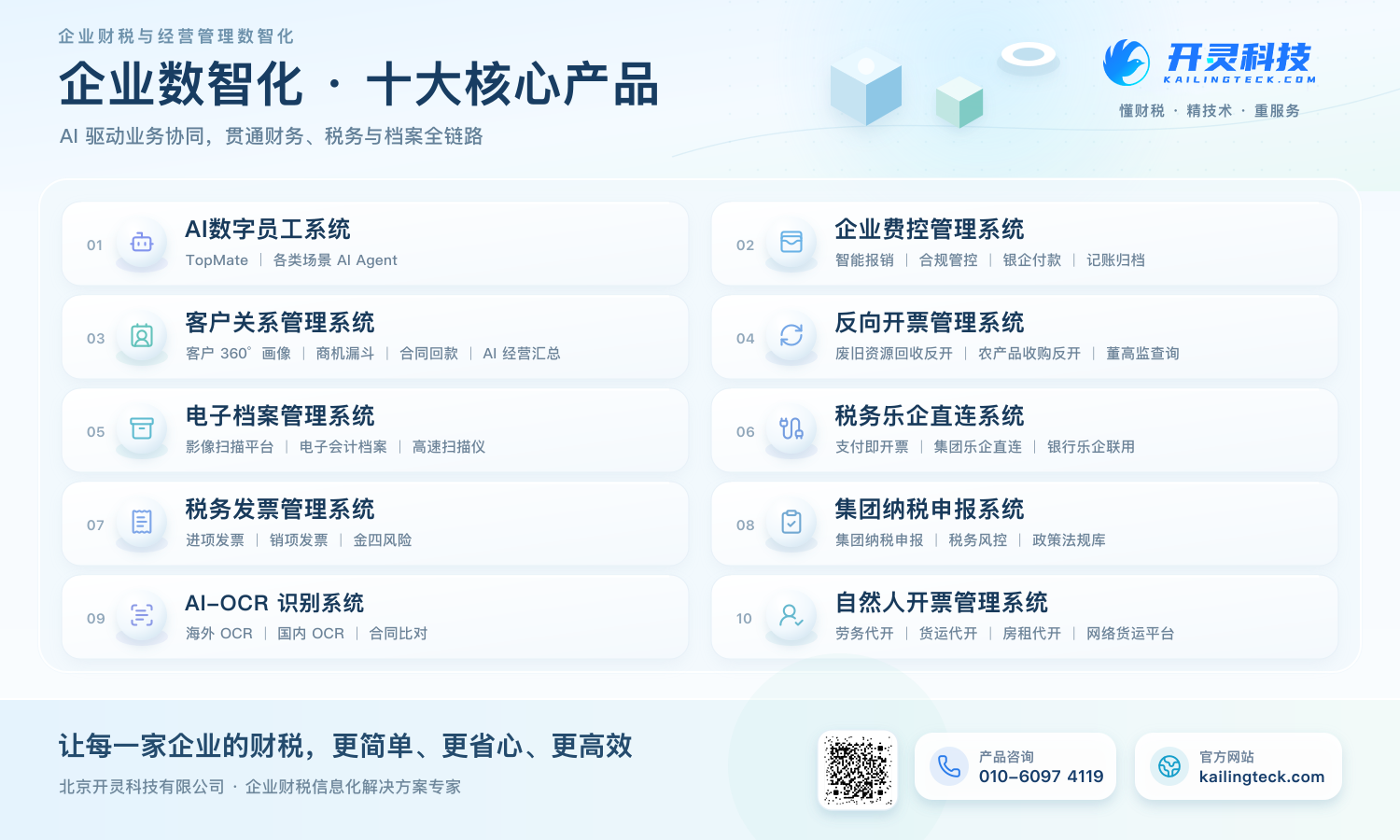
The company has now formed ten core product lines, including: AI digital employee system, enterprise expense control management system, customer relationship management system, reverse invoicing management system, invoice issuance for individuals management system, electronic archives management system, tax fully digitalized e-invoice Leqi system, tax invoice management system, group tax filing system, and AI OCR recognition system. It is committed to connecting enterprise business, finance, tax, funds, and archive data to help customers improve operational efficiency, business-finance-tax compliance capabilities, and digital management levels.
If you have any business-finance-tax digital transformation needs, welcome to contact us. Beijing Kailing Technology will serve you wholeheartedly.
Keywords: Paperless accounting archives, single-set electronic accounting archives, four-property testing, source file archiving, archive retention period, electronic archive system
As a comprehensive business-finance-tax digitalization solution service provider, Kailing Technology provides business-finance-tax management digital transformation products and operational services for various government agencies, institutions, and large, medium, and small enterprises. The product line includes: solutions for sales contract management system, procurement contract management system, fully digitalized Leqi interface project, automatic output invoicing system, reverse invoicing system, invoice issuance for individuals system, employee expense control and reimbursement system, input VAT invoice management system, supply chain collaborative reconciliation system, image AI OCR recognition system, automatic financial bookkeeping system, electronic accounting archives system, etc., comprehensively driving the digitalization process across various fields.
Consultation Hotline: 18513895936 / 010-60974119 Location: Beijing