
Detailed steps of the reverse invoicing process, so the five flows in one no longer get messy
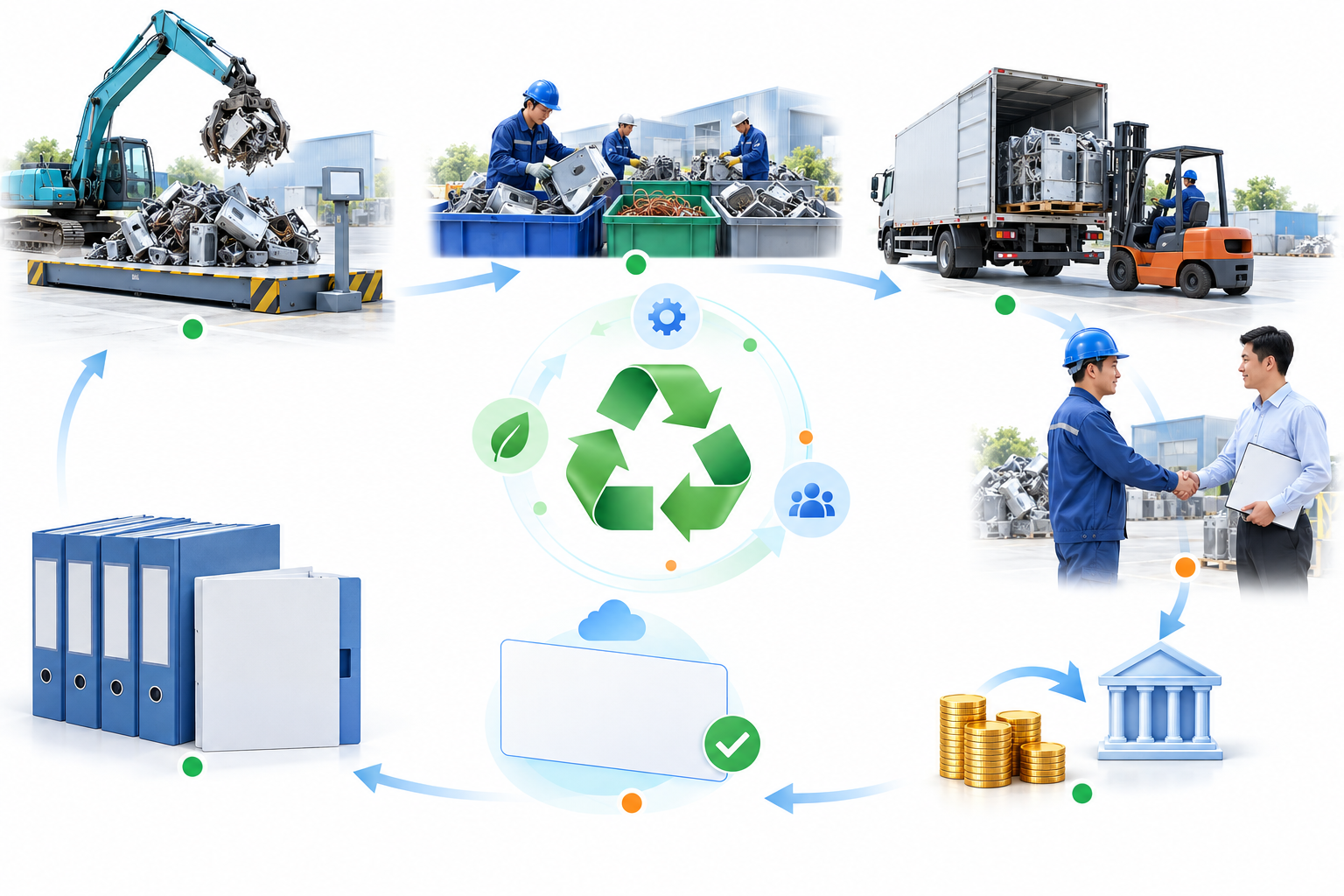
Detailed steps of the reverse invoicing process: how exactly should it be done to avoid pitfalls?
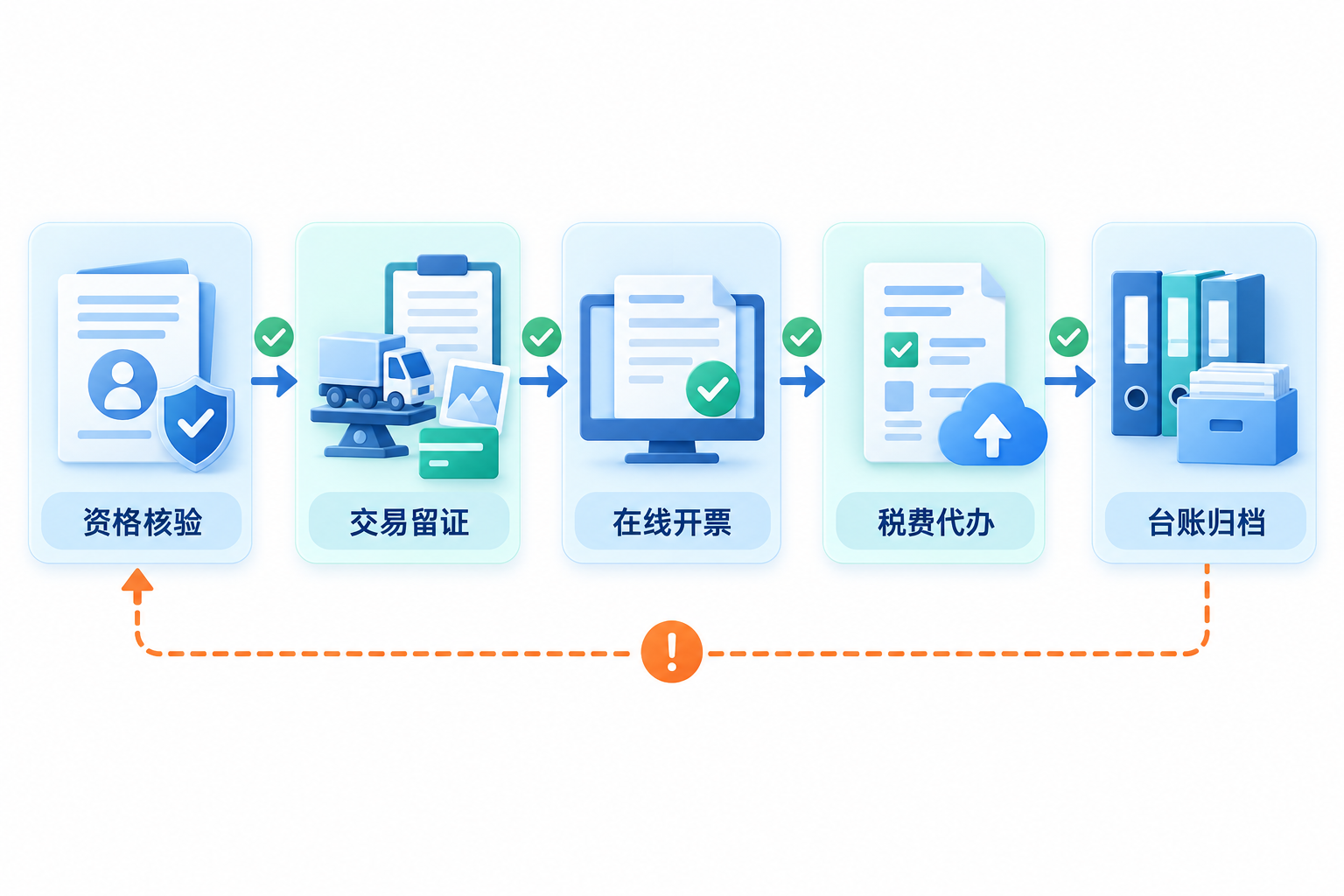
When resource recycling enterprises conduct reverse invoicing to individual sellers of scrapped products, if qualifications, sellers, goods, transaction materials, tax and fee agency services, and ledgers do not correspond transaction by transaction, invoicing and accounting can easily become disconnected. Agricultural product purchase invoices are subject to another existing set of rules and are not included in the reverse invoicing process for resource recycling described in this article. Reverse invoicing is not a general-purpose tool that lets you issue an invoice whenever one is missing; it has a process that must be followed in order. Kailing Technology uses the five-flows-in-one ledger for reverse invoicing as its foundation, linking qualification verification, transaction collection, invoicing operations, and ledger archiving into a daily closed loop, so that invoicing upon purchase truly works.
The key to reverse invoicing is not the invoicing action itself, but first proving that "this real transaction can be invoiced." |
▍1. Verify qualifications first, then talk about invoicing?
According toState Taxation Administration Announcement No. 5 of 2024, resource recycling enterprises implementing reverse invoicing should actually engage in resource recycling business and meet corresponding conditions such as a hazardous waste operating permit, end-of-life motor vehicle recycling and dismantling qualification, or business entity registration and renewable resource recycling operator filing with the commerce department. Enterprises also need to submit applications and materials to the competent tax authority and obtain approval to activate it. Agricultural product purchase invoices are subject to a different set of rules and cannot be mixed with reverse invoicing for resource recycling.
▍2. How should transaction information be collected to leave no blind spots?
After approval, each transaction still needs verification of the seller, scrapped products, and real business. Announcement No. 5 requires keeping materials that can prove business authenticity, including purchase contracts or agreements, transport invoices or vouchers, cargo weighbridge tickets, transfer payment records, etc., and establishing a purchase ledger recording time, place, seller and contact information, scrapped product name, quantity, and price. OCR can assist in extracting candidate fields, but the original materials, recognition results, and differences still need manual verification, and automatic matching cannot replace the responsibility for authenticity.
▍3. What rules must be upheld in invoicing operations?
The seller referred to in the policy is an individual who sells scrapped products they have used or purchased and whose cumulative reverse invoicing sales over 12 consecutive months do not exceed the prescribed limit. Approved enterprises should issue invoices online marked "scrapped product purchase" through the electronic invoice service platform or the VAT invoice management system, and handle them according to actual operations, tax calculation methods, and invoice type requirements. Enterprises should also, as required, handle VAT and surtax and individual income tax filing matters on behalf of sellers, submit tax and fee agency reports on time, and pay the agency taxes and fees. The system can assist in verifying fields and status, but cannot replace review of the scope of application, transaction authenticity, and tax and fee filing.
▍4. Is it over once the invoice is issued? The ledger and archiving are the closed loop
Invoicing is not the end point. Enterprises should keep application materials, proof of real transactions, reverse-issued invoices, tax and fee agency materials, and purchase ledgers as required, and are responsible for the authenticity of the submitted materials and the resource recycling business. The electronic accounting archives system can assist with linking and retrieving materials when enterprise authorization, interfaces, and archiving rule configuration meet the conditions; whether it complies with tax and archival requirements still needs enterprise review, and system collection itself does not mean a compliant evidence chain has already been formed.
Keywords: reverse invoicing process, detailed steps of reverse invoicing, reverse invoicing for resource recycling, individual sellers of scrapped products, tax and fee agency services, purchase ledger, transaction authenticity, Kailing Technology
As a comprehensive business-finance-tax digitalization solution service provider, Kailing Technology provides business-finance-tax management digital transformation products and operational services for various government agencies, institutions, and large, medium, and small enterprises. The product line includes: solutions for sales contract management system, procurement contract management system, fully digitalized Leqi interface project, automatic output invoicing system, reverse invoicing system, invoice issuance for individuals system, employee expense control and reimbursement system, input VAT invoice management system, supply chain collaborative reconciliation system, image AI OCR recognition system, automatic financial bookkeeping system, electronic accounting archives system, etc., comprehensively driving the digitalization process across various fields.
Consultation Hotline: 18513895936 / 010-60974119 Location: Beijing