
Passenger transport invoice deduction still relies on manual aggregation? Kailing Technology AI expense control reimbursement system generates deduction statistics and connects to input VAT selection
Passenger transport invoice deduction still relies on manual aggregation? Kailing Technology AI expense control reimbursement system generates deduction statistics and connects to input VAT selection

For passenger transport invoice deduction statistics, first identify the invoice type, passenger, and business purpose, then distinguish statistical results from actual input VAT handling. Kailing Technology AI expense control reimbursement system can collect invoices, organize relevant fields, and connect to applicable input VAT selection capabilities, helping finance reduce repetitive aggregation. Reimbursement approval, inclusion in system statistics, and final deductibility cannot be directly treated as the same conclusion.
▍In a single travel reimbursement form, not all amounts carry the same meaning
When employees submit transportation invoices, they focus on whether the actual expense can be reimbursed; finance also needs to identify whether the relevant invoices and expenses meet applicable tax treatment conditions. Domestic and overseas trips, different transport modes, and different invoice forms cannot use the same algorithm merely because they are all categorized under "transportation expenses."
Therefore, the expense summary table and the deduction statistics table need to each state their own basis. The former shows reimbursed or recognized expenses, while the latter organizes information usable for subsequent handling around qualifying materials. Different amounts in the two tables are not necessarily an error; they may simply answer different questions.
If finance has to pick out transportation invoices from reimbursement details every month and then identify invoice types and personnel, the repetitive work concentrates in the final days. Organizing necessary fields clearly during invoice collection and review can reduce the burden of filtering from scratch at month-end.
▍First look at invoice type and personnel, then discuss the statistics method
Passenger transport regulations set different requirements for different invoices, and historical experience cannot be applied to all new invoices without verification. Announcement No. 13 of 2026 by the Ministry of Finance and the State Taxation Administration specifies the basis for determining relevant input VAT amounts, which should be understood together with applicable conditions, not merely by memorizing a tax rate or old calculation method.
Enterprise finance should confirm handling based on the specific invoice type and business situation, and the system configures fields and rules accordingly, without replacing tax judgment with the name of a reimbursement category.
The relationship between the passenger and the enterprise, and whether the trip belongs to an applicable business, also need to be verified as required. When an employee submits materials on behalf of others, or when multiple people's invoices are mixed in the same reimbursement form, the relevant information should be identified separately, not just by the name of the reimbursement applicant.
▍Kailing Technology AI expense control reimbursement system first organizes invoices into a verifiable ledger
Lingdong Reimbursement supports invoice collection, recognition, verification, and duplicate checking, helping finance form a searchable invoice pool. For passenger transport materials, invoice type, personnel, date, and status can be organized together, giving subsequent statistics a clear source rather than relying on manually copying a new table every month.
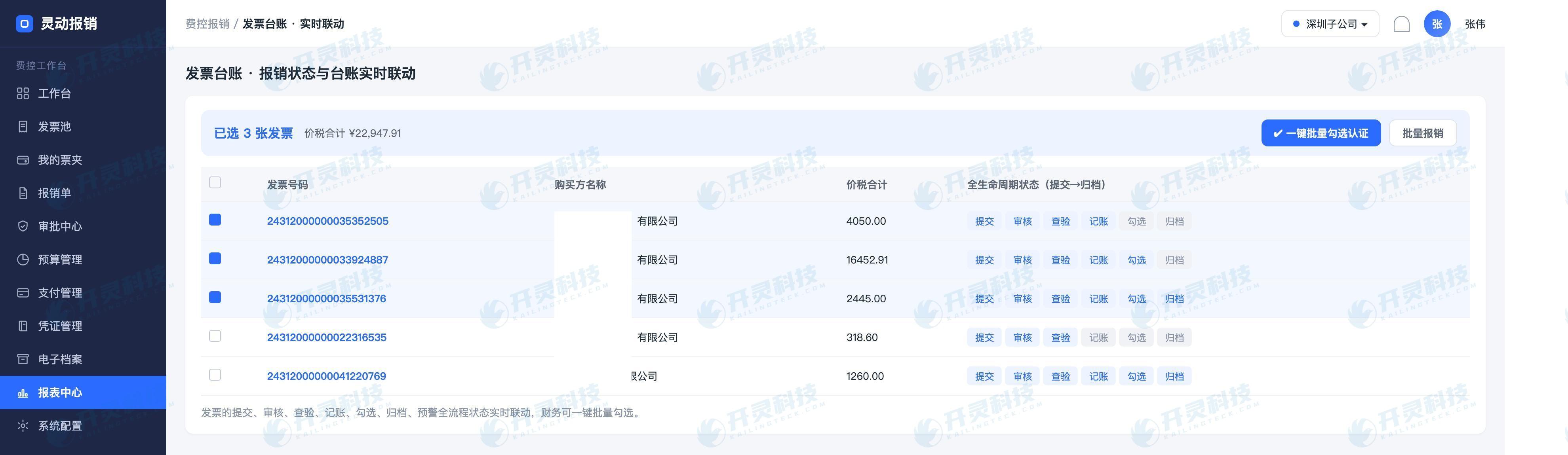
Duplicate use risk should also be monitored during collection and reimbursement. If the same invoice appears in different attachments or has already entered other documents, it cannot be treated as new material just because the file name changed. Identifying invoice information and business links helps reduce duplicate statistics, but anomalies still need to be verified by relevant personnel.
Original documents and necessary information should be retained along with the business. A value in a statistics table should ideally be traceable back to the corresponding invoice and reimbursement matter. When finance finds a question, there is no need to ask employees to resend materials, and review discussions can focus on specific items.
▍Deduction statistics and selection are two interconnected tasks
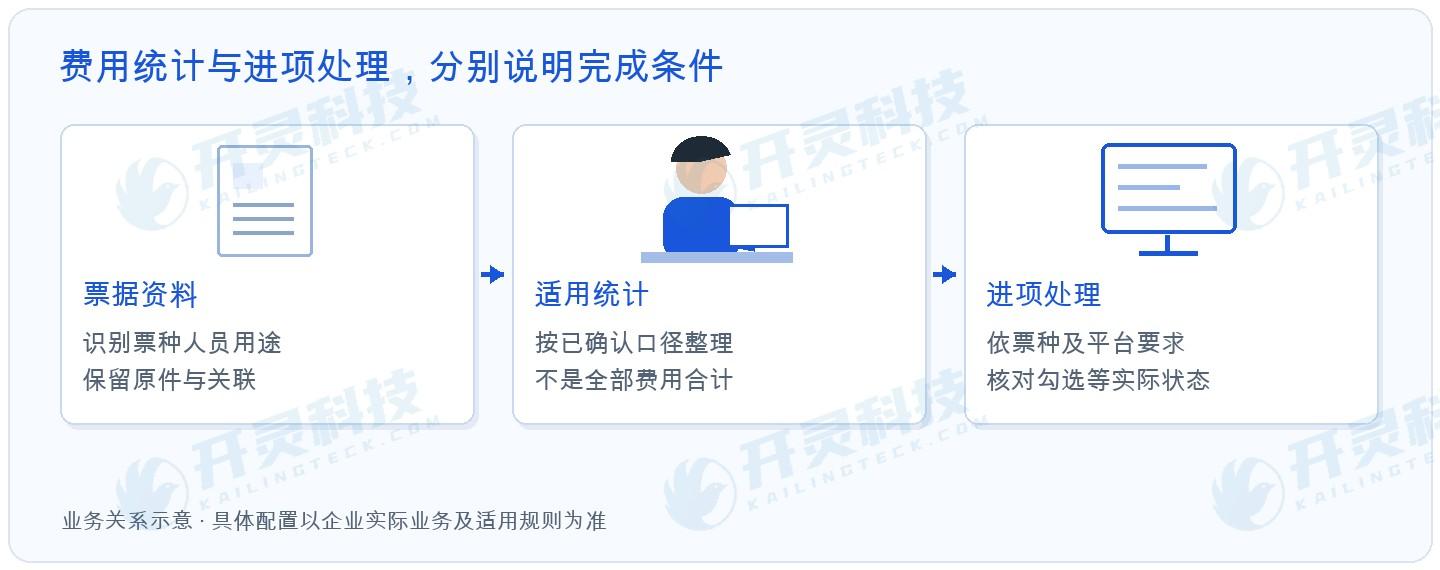
The statistics side organizes scope and amounts based on clarified conditions, while selection or other input VAT handling is executed according to the corresponding platform and invoice type rules. Not all passenger transport vouchers are handled through the same selection method, and generating a statistics table cannot be equated with completing tax filing.
Kailing Technology AI expense control reimbursement system can connect invoice management with applicable input VAT selection capabilities, reducing repeated organization of qualifying materials across different stages. Enterprises still need to verify the actual scope of handling, permissions, and relevant status, and appropriate finance roles should confirm subsequent handling.
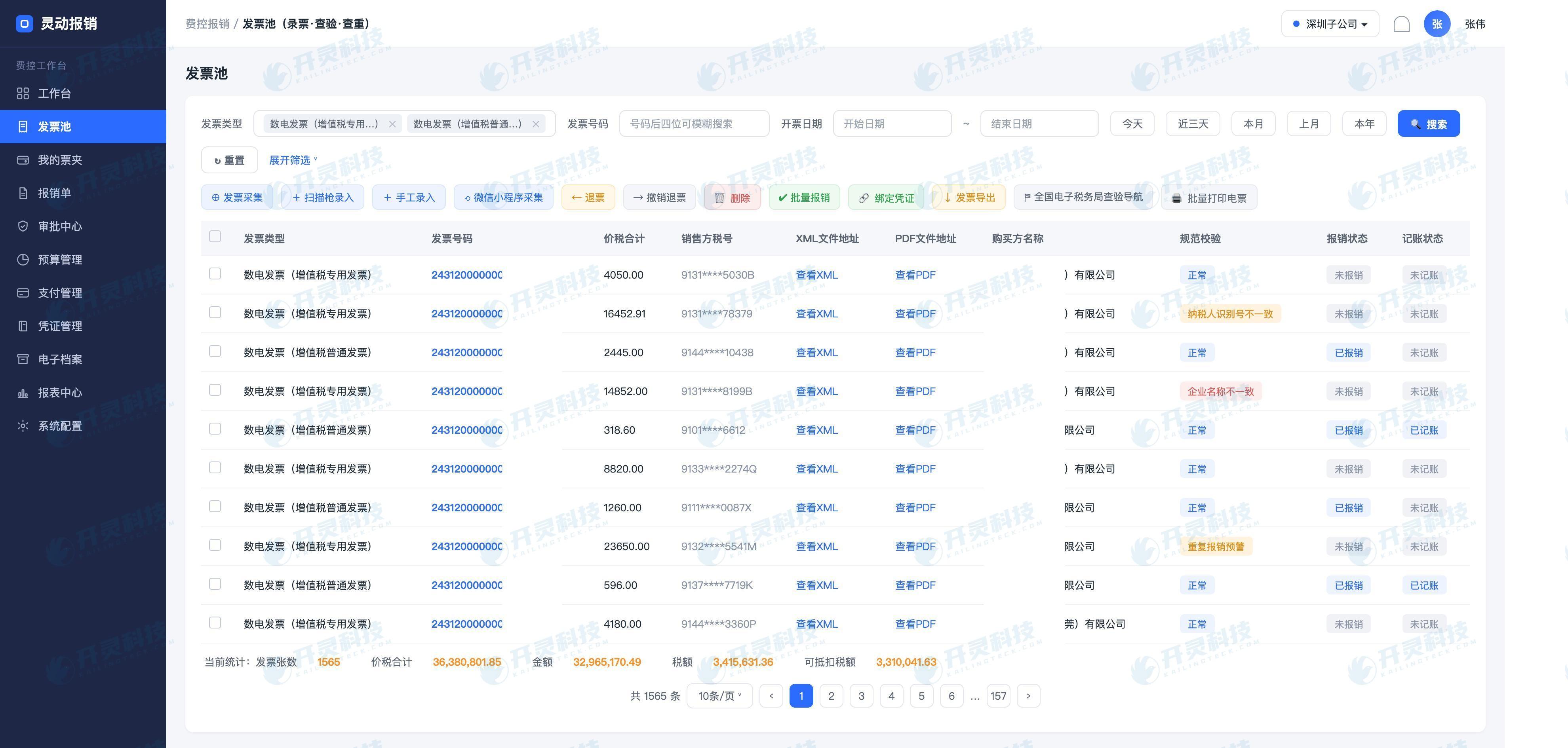
Page presentation can separate expense amounts, statistical reference results, and actual handling status. When finance sees that an invoice has entered statistics, they know which basis it was included under; when they see that relevant handling is complete, they can also query the corresponding evidence. By clarifying different completion conditions, users are less likely to mistake one button result for the completion of all work.
▍When refunds and corrections occur, let the statistics know the business has changed
Trip adjustments, refunds, or invoice information corrections may occur after the original reimbursement. Relevant business changes should remain linked to the original invoice, and finance should verify based on the actual situation whether statistics and tax treatment need adjustment, rather than only changing the employee's reimbursement status.
Materials that have already formed statistics should not be silently overwritten by new documents. Retaining original records and change explanations can explain why the current period's results differ from before; for input VAT matters already handled, the applicable procedures should be followed, and internal table updates cannot replace external corrections.
For changes occurring across months, finance also needs to determine the handling period based on the actual situation. The system can record time and status and provide a checklist for verification, but it should not rewrite real dates just to make the two tables fully consistent. Differences with a basis are more reliable than numbers that merely look neat.
▍Month-end efficiency comes from each role missing a little less information earlier on
Employees submit complete invoices as required, approvers confirm the business purpose, finance maintains applicable rules and handles doubtful points, and invoice statistics become the result of daily material accumulation rather than a separate project started hastily at month-end.
Enterprises can first organize common transportation invoice types, explain what information each requires, and then bring the rules to the collection and review entry points. For uncommon materials or unclear conditions, provide clear consultation and review paths so employees know how to supplement, without having to judge complex tax rules themselves.
Kailing Technology AI expense control reimbursement system helps connect these tasks, shifting finance from massive repetitive transcription to more valuable verification. Where data comes from, by what scope statistics are calculated, and where subsequent handling has progressed can all be explained around specific invoices, making collaboration between tax and reimbursement roles easier.
When rules are updated, statistics settings and operating instructions should be checked in sync, to avoid the front end still collecting materials under old requirements while the back end has already adopted new standards. Only by keeping systems, policies, and personnel understanding connected can convenience be preserved through continued use.
For finance teams that frequently handle travel, a document explaining invoice types and material requirements can also be prepared to help new colleagues understand the source of statistics. The explanation should be updated with policy and system arrangements, not permanently written as a default rule based on past manual algorithms. When the material entry point is accurate, subsequent verification requires fewer repeated judgments.
▍FAQ Passenger Transport Invoice Deduction Q&A
Q: Does passing reimbursement review mean deduction is definitely possible?
A: No. Expense approval and tax treatment conditions differ, and should be verified separately based on the invoice, personnel, purpose, and applicable regulations.
Q: Does the system generating deduction statistics mean selection and filing are complete?
A: Not equivalent. Statistics are the result of organizing materials; subsequent handling should follow the actual invoice type and platform requirements, and the corresponding status should be verified.
Q: If a refund occurs after reimbursement, do the invoice records still need to be updated?
A: The link to the original business needs to be retained, and finance should judge the impact on statistics and completed matters. You cannot simply update the reimbursement amount while ignoring invoice changes.
From invoice collection to deduction material organization, reduce repetitive month-end aggregation for finance. Learn about Kailing Technology AI expense control reimbursement:https://www.kailingteck.com/feikong/。
As a national high-tech enterprise, Kailing Technology focuses on the digital and intelligent transformation of enterprise business-finance-tax and operations management, providing software products, system integration, implementation and delivery, and operational services for various government agencies, institutions, group enterprises, and SMEs.
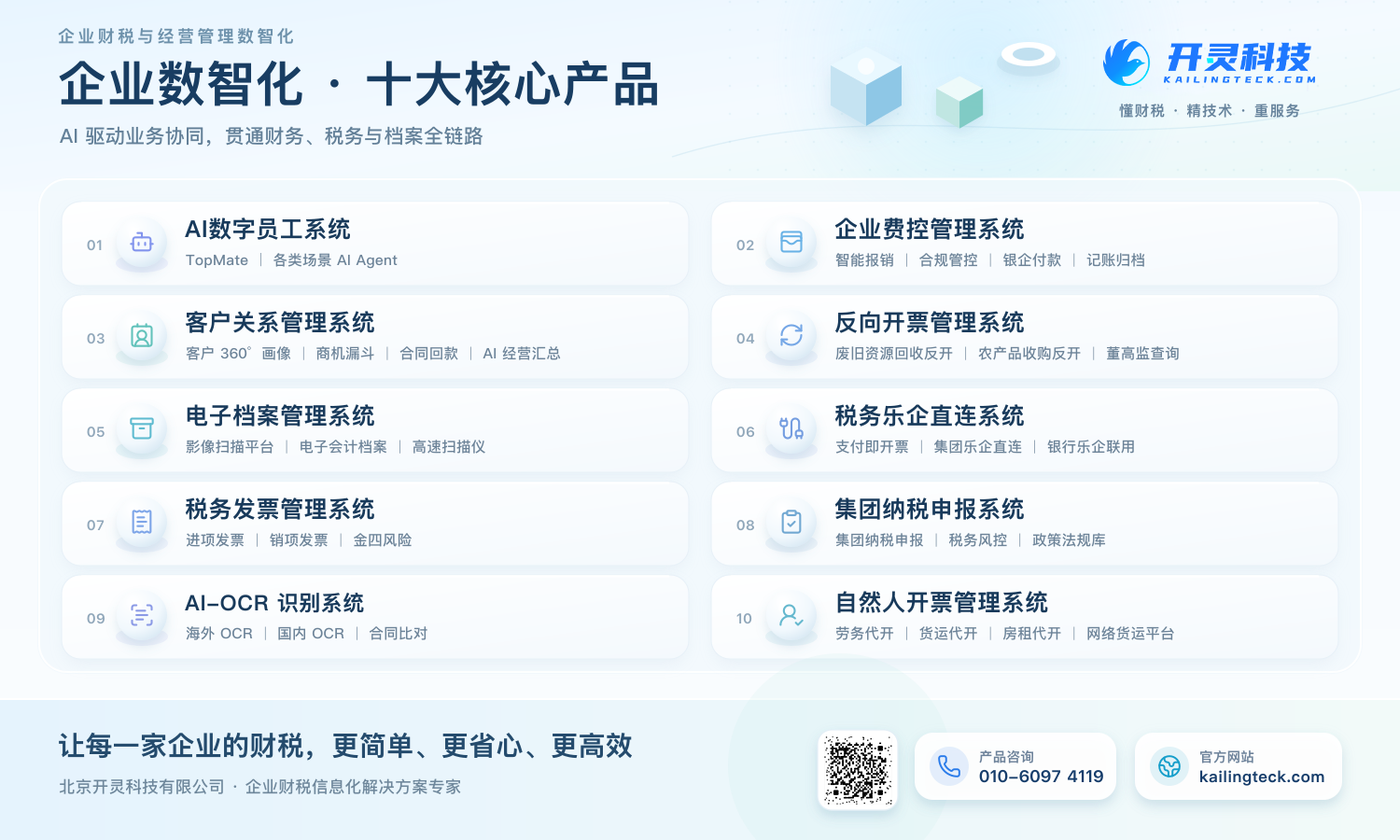
The company has now formed ten core product lines, including: AI digital employee system, enterprise expense control management system, customer relationship management system, reverse invoicing management system, invoice issuance for individuals management system, electronic archives management system, tax fully digitalized e-invoice Leqi system, tax invoice management system, group tax filing system, and AI OCR recognition system. It is committed to connecting enterprise business, finance, tax, funds, and archive data to help customers improve operational efficiency, business-finance-tax compliance capabilities, and digital management levels.
If you have any business-finance-tax digital transformation needs, welcome to contact us. Beijing Kailing Technology will serve you wholeheartedly.
Keywords: Passenger transport invoice deduction, AI expense control reimbursement system, deduction statistics table, input VAT selection, tax digital account
As a comprehensive business-finance-tax digitalization solution service provider, Kailing Technology provides business-finance-tax management digital transformation products and operational services for various government agencies, institutions, and large, medium, and small enterprises. The product line includes: solutions for sales contract management system, procurement contract management system, fully digitalized Leqi interface project, automatic output invoicing system, reverse invoicing system, invoice issuance for individuals system, employee expense control and reimbursement system, input VAT invoice management system, supply chain collaborative reconciliation system, image AI OCR recognition system, automatic financial bookkeeping system, electronic accounting archives system, etc., comprehensively driving the digitalization process across various fields.
Consultation Hotline: 18513895936 / 010-60974119 Location: Beijing