
Can taxi trips, bus coin fares, and long-distance passenger tickets share a platform? Kailing Technology public transport fully digitalized e-invoice Leqi Direct Connection solution issues invoices by scenario
Can taxi trips, bus coin fares, and long-distance passenger tickets share a platform? Kailing Technology public transport fully digitalized e-invoice Leqi Direct Connection solution issues invoices by scenario

Taxi trips, bus coin fares, and long-distance passenger tickets can share some invoicing platform capabilities, but their respective travel evidence and trigger methods need to be designed separately. Kailing Technology public transport fully digitalized e-invoice Leqi Direct Connection solution connects invoicing services around the actual operating entity and business data. Scenarios with relatively complete electronic orders directly use existing records, while scenarios such as cash supplement the necessary credentials, without assuming all travel methods are mobile payments.
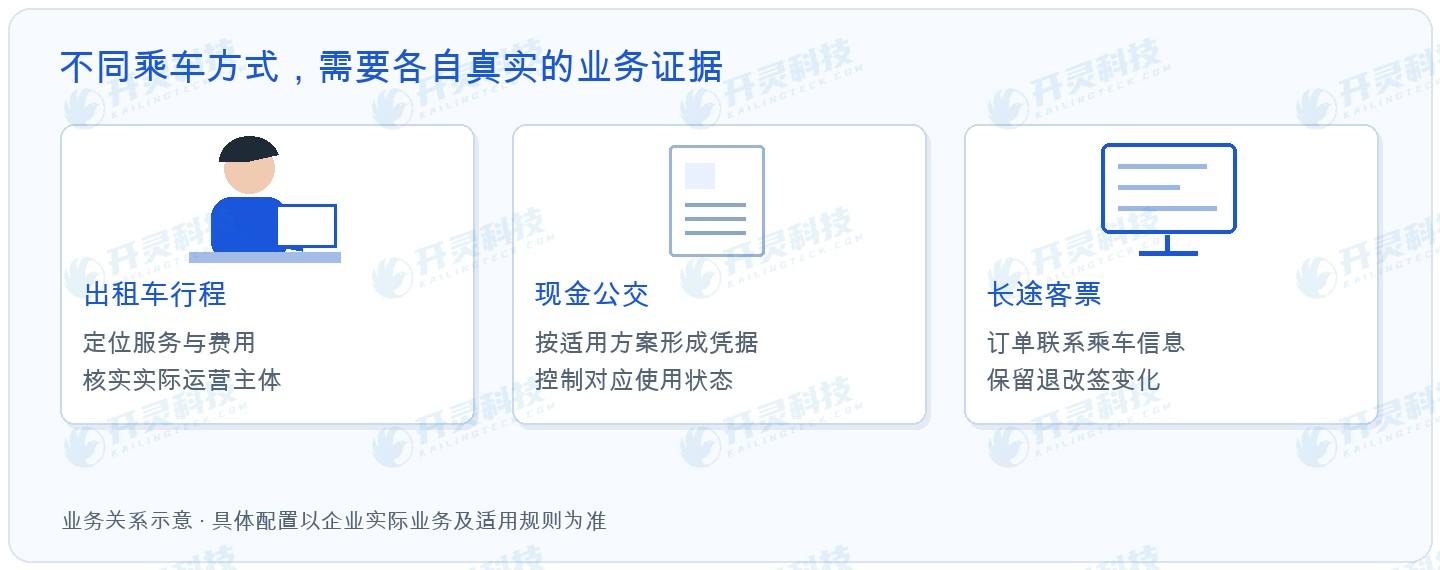
▍Taxi trips: first identify whose service this trip belongs to
Passengers hail rides and pay through different methods; the platform may store trip information, and the operating company may also have its own records. When invoicing, the service entity must be confirmed based on actual business, and the trip, fees, and payment information must be matched; the entry provider must not be assumed to be the seller merely because the passenger paid at a certain entry point.
A trip should have an identifier that can be queried continuously. When passengers retrieve tickets, change the receiving method, or ask about processing progress, customer service can locate the same service instead of requiring them to re-describe the boarding location, time, and approximate amount. Stable business association is the foundation of cross-channel query convenience.
For trips that already have tickets, query or delivery capabilities should be provided, and they must not be treated as uninvoiced again after the passenger switches entry points. When a request result is unclear, verify the original result first to avoid mistaking waiting for failure. These capabilities can be provided by the shared platform, but need to connect with the real data of the taxi business.
▍Bus coin fares: even without a mobile payment order, there must be verifiable credentials
Cash travel does not naturally form an electronic payment order, so legitimate, verifiable ticket collection credentials need to be provided in combination with the actual operating plan. One-time credentials corresponding to the travel transaction or other usable methods can be evaluated; the specific generation, collection, and usage rules should be designed according to local requirements and project conditions.
One-time credentials need usage status control to help identify whether they have already been used for the corresponding invoicing application. It is not acceptable to provide a universal QR code that everyone can scan repeatedly and then let passengers freely fill in amounts, treating unverifiable information as a genuine transaction.
The convenience of coin fare scenarios should be built on operating data and necessary confirmation. How route, operating entity, and actual travel records can be obtained needs to be clarified with the operator; data that does not exist cannot be conjured up by the platform. Technical solutions must adapt to on-site conditions and should also protect genuine passengers' right to collect tickets normally.
▍Long-distance passenger tickets: orders, travel, and refunds/changes must stay linked
Long-distance passenger transport usually has ticket purchase orders, schedule information, and refund/change records, and invoicing services can use these existing business materials. The key is to confirm the currently valid transaction scope, avoiding processing according to the old status after cancellation or change just because an order once existed.
One order may involve multiple people or different ticketing arrangements; whether splitting is needed and how invoices correspond should be confirmed based on actual business and applicable requirements. It is not acceptable to generate results solely from the order total while being unable to explain which services within it remain valid.
After a refund, funds and invoice progress should also be verified separately. If the invoice has already been issued, subsequent changes are handled according to the corresponding rules; if it has not yet been issued, processing is based on the confirmed transaction status. Keeping the original order linked to the change records makes it easier for customer service to explain the current situation to passengers.
▍Kailing Technology public transport fully digitalized e-invoice Leqi Direct Connection solution: what to share, what to retain
Shared capabilities include entity configuration, invoice requests, result queries, delivery, and exception management. What needs to retain differences is what transaction evidence each scenario provides, when processing conditions are met, and how impacts are confirmed after changes occur. The role of a unified platform is to reduce duplicate construction, not to erase the differences between real business operations.
The Leqi access method and related authorization should be verified in light of the conditions of the operating unit and the direct connection unit. Kailing Technology provides solutions and system integration; who specifically serves as the direct connection entity, which user units are served, and where the data comes from must be clarified in the project, and the technical service provider must not automatically be regarded as the transport operator.
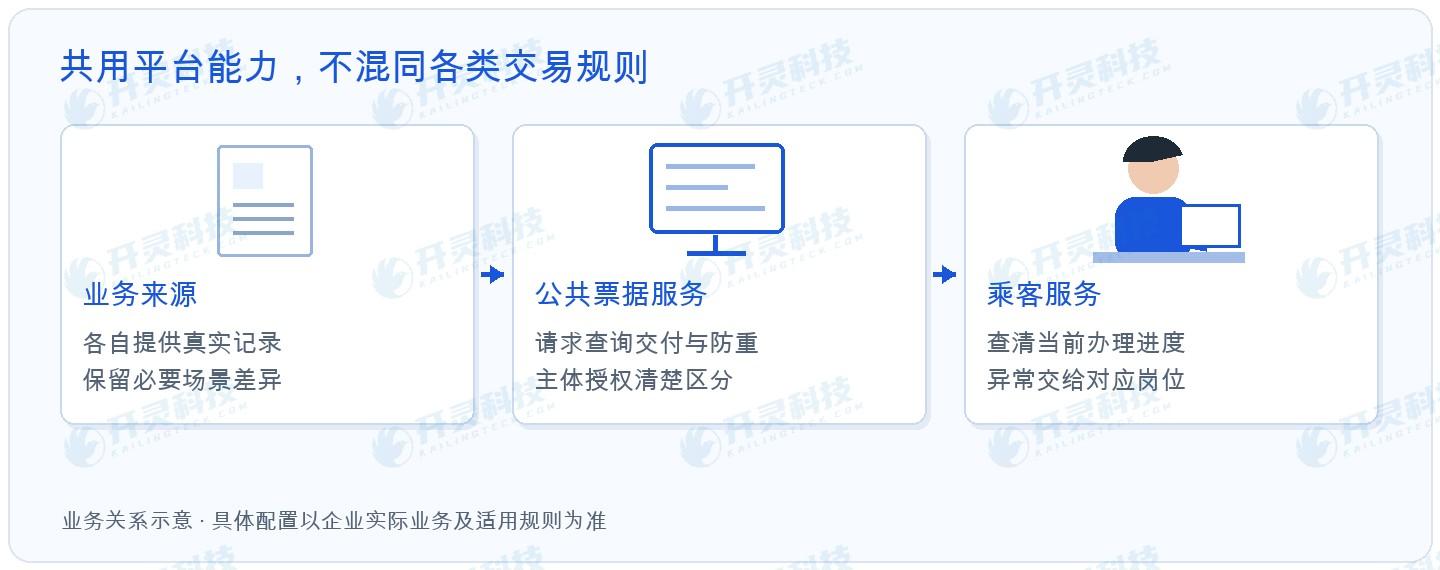
For operating companies, existing taxi, bus, or passenger transport systems can continue to handle their own business. The platform receives confirmed information through appropriate interfaces and then returns invoice results to a place convenient for serving passengers. There is no need to rebuild all upstream systems into the same interface just to unify invoicing.
▍With entity isolation done well, a shared platform is easier to expand
When one platform serves different operating units, transaction ownership, account authorization, and data visibility scope should be clearly distinguished. Identical license plate fragments, similar route names, or the same amount cannot justify incorrect cross-entity association. Each unit's invoices and business responsibilities must still be independently identifiable.
When a new operating unit is onboarded, existing connection methods and management capabilities can be reused, but entity materials, business fields, and applicable rules should be reconfirmed. Copying technical capabilities does not equal copying another unit's tax or business configuration; otherwise, as platform scale increases, errors will expand along with it.
For passengers' personal information, the platform should likewise control the scope of collection and access. Necessary invoice titles, receiving methods, and business information are used to correspond to services; unrelated roles need not see complete travel records just because multiple scenarios share a platform. Convenience and protection should be considered together at the design stage.
▍Service staff only need to understand which matter to handle
When a passenger asks "why haven't I received the ticket yet," customer service first checks the issuance status; if a ticket already exists, assist with obtaining it; if information is still needed, explain the requirements; if the result is unclear, hand it to the appropriate personnel for verification. Clear status and responsibility arrangements can reduce the need for passengers to repeatedly explain their situation across multiple windows.
If cash credentials cannot be used, trip information is inconsistent, or refund/change status is not synchronized, separate handling entry points should also be provided. Grouping different problems uniformly as "system exception" leaves the front desk unable to explain and makes it hard for the back office to discover the links that truly need improvement.
What Kailing Technology public transport fully digitalized e-invoice Leqi Direct Connection solution aims to connect is precisely these travel facts and invoice services. Operating units share suitable platform capabilities, each site retains its own feasible business paths, and passengers get an experience where tickets are easier to query and obtain.
Enterprises can start with high-frequency scenarios that have the most complete materials, while also sorting out special cases such as cash and refunds/changes. As coverage gradually expands, data quality and service feedback should be continuously checked, so the shared platform keeps adapting in actual operations rather than achieving uniformity only on a solution diagram.
▍FAQ: Public transport multi-scenario invoicing Q&A
Q: If bus coin fares have no payment order, can online ticket collection still be done?
A: Applicable transaction credentials and ticket collection options can be evaluated, but there must be a genuine, verifiable basis; the specific method needs to be confirmed in light of local requirements and operating conditions.
Q: Can one QR code be used repeatedly to issue invoices for all cash passengers?
A: It should not be designed that way. Credentials need to correspond to actual business and control the corresponding usage status, to avoid duplicate applications or unverifiable amounts entering processing.
Q: Can multiple operating companies share one platform?
A: Shared services can be evaluated provided access conditions are met, but entities, authorization, and transaction materials should be clearly isolated, and the responsibilities of different units must not be conflated.
Give different travel methods suitable ticket entry points. Learn about Kailing Technology public transport fully digitalized e-invoice Leqi integration:https://www.kailingteck.com/leqi-zhilian/ 。
As a national high-tech enterprise, Kailing Technology focuses on the digital and intelligent transformation of enterprise business-finance-tax and operations management, providing software products, system integration, implementation and delivery, and operational services for various government agencies, institutions, group enterprises, and SMEs.
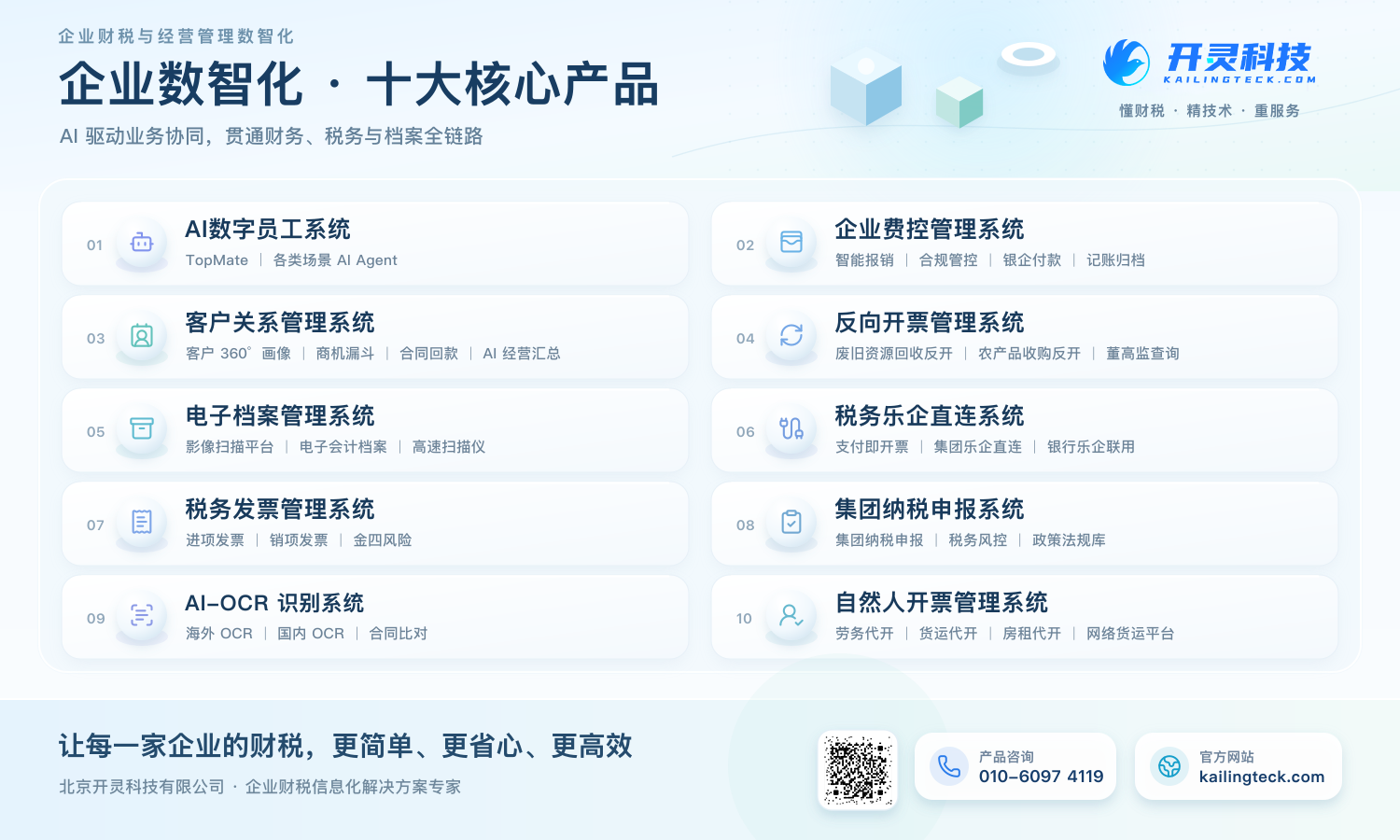
The company has now formed ten core product lines, including: AI digital employee system, enterprise expense control management system, customer relationship management system, reverse invoicing management system, invoice issuance for individuals management system, electronic archives management system, tax fully digitalized e-invoice Leqi system, tax invoice management system, group tax filing system, and AI OCR recognition system. It is committed to connecting enterprise business, finance, tax, funds, and archive data to help customers improve operational efficiency, business-finance-tax compliance capabilities, and digital management levels.
If you have any business-finance-tax digital transformation needs, welcome to contact us. Beijing Kailing Technology will serve you wholeheartedly.
Keywords: Public transport fully digitalized e-invoice Leqi, Leqi Direct Connection, bus coin fare invoicing, taxi trip invoices, long-distance passenger ticket invoicing
As a comprehensive business-finance-tax digitalization solution service provider, Kailing Technology provides business-finance-tax management digital transformation products and operational services for various government agencies, institutions, and large, medium, and small enterprises. The product line includes: solutions for sales contract management system, procurement contract management system, fully digitalized Leqi interface project, automatic output invoicing system, reverse invoicing system, invoice issuance for individuals system, employee expense control and reimbursement system, input VAT invoice management system, supply chain collaborative reconciliation system, image AI OCR recognition system, automatic financial bookkeeping system, electronic accounting archives system, etc., comprehensively driving the digitalization process across various fields.
Consultation Hotline: 18513895936 / 010-60974119 Location: Beijing