
Electronic accounting archive system solution: Say goodbye to paper vouchers, scan to archive
Electronic accounting archive system solution: Say goodbye to paper vouchers, scan to archive
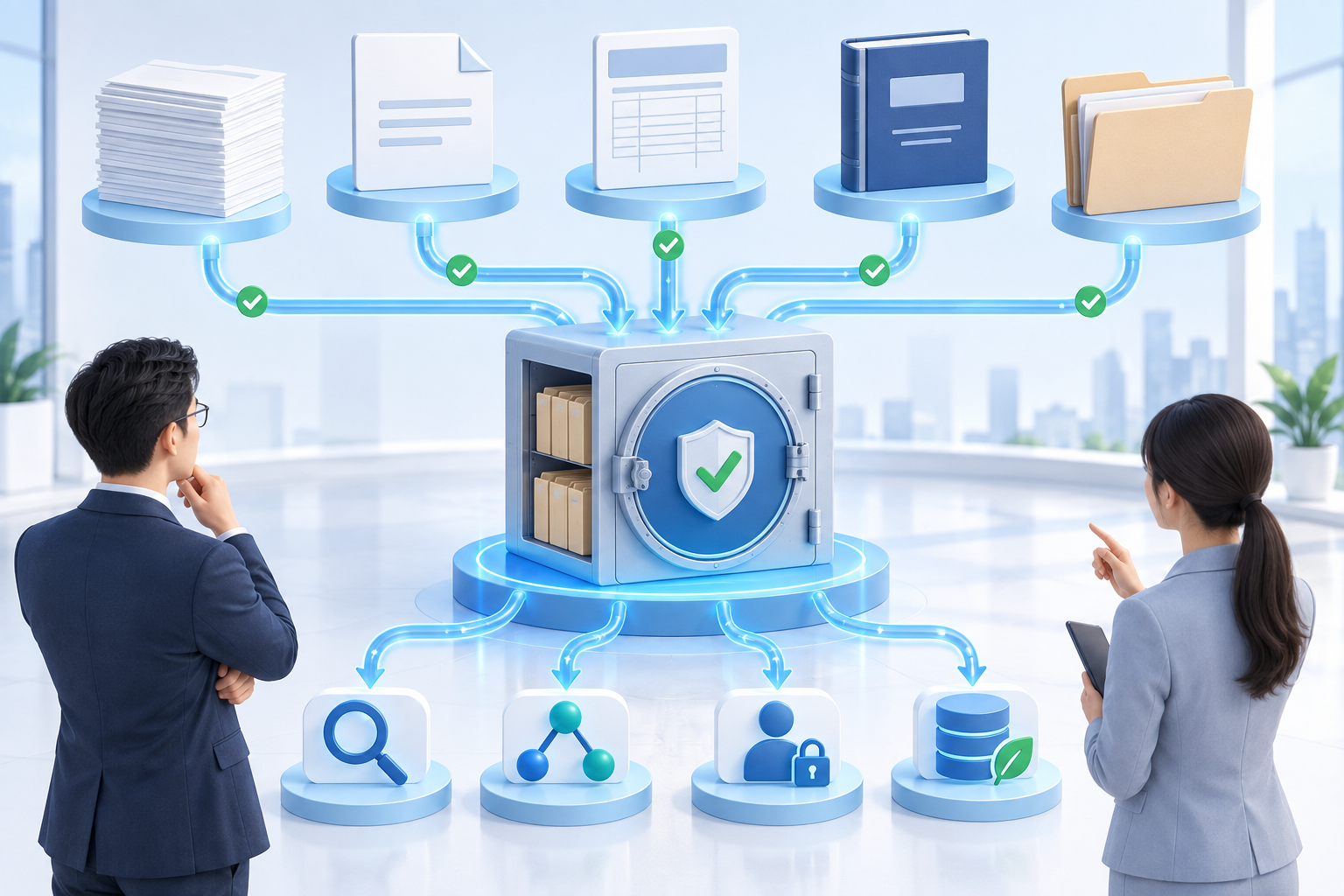
Piles of paper vouchers, scattered electronic invoices, and temporarily supplementing materials during audits are the direct reasons many enterprises build electronic accounting archive systems. But 'scan to archive' cannot be understood as automatically becoming compliant once scanning is complete. A complete solution must cover multi-source collection, signature and authenticity verification, classification and association, authenticity, completeness, usability, and security testing, as well as long-term preservation and use; links requiring accounting judgment or approval should still retain human responsibility nodes.
The value of the system is not in having fewer archive cabinets, but in ensuring that original files, metadata, business relationships, and processing responsibilities can always corroborate one another. |
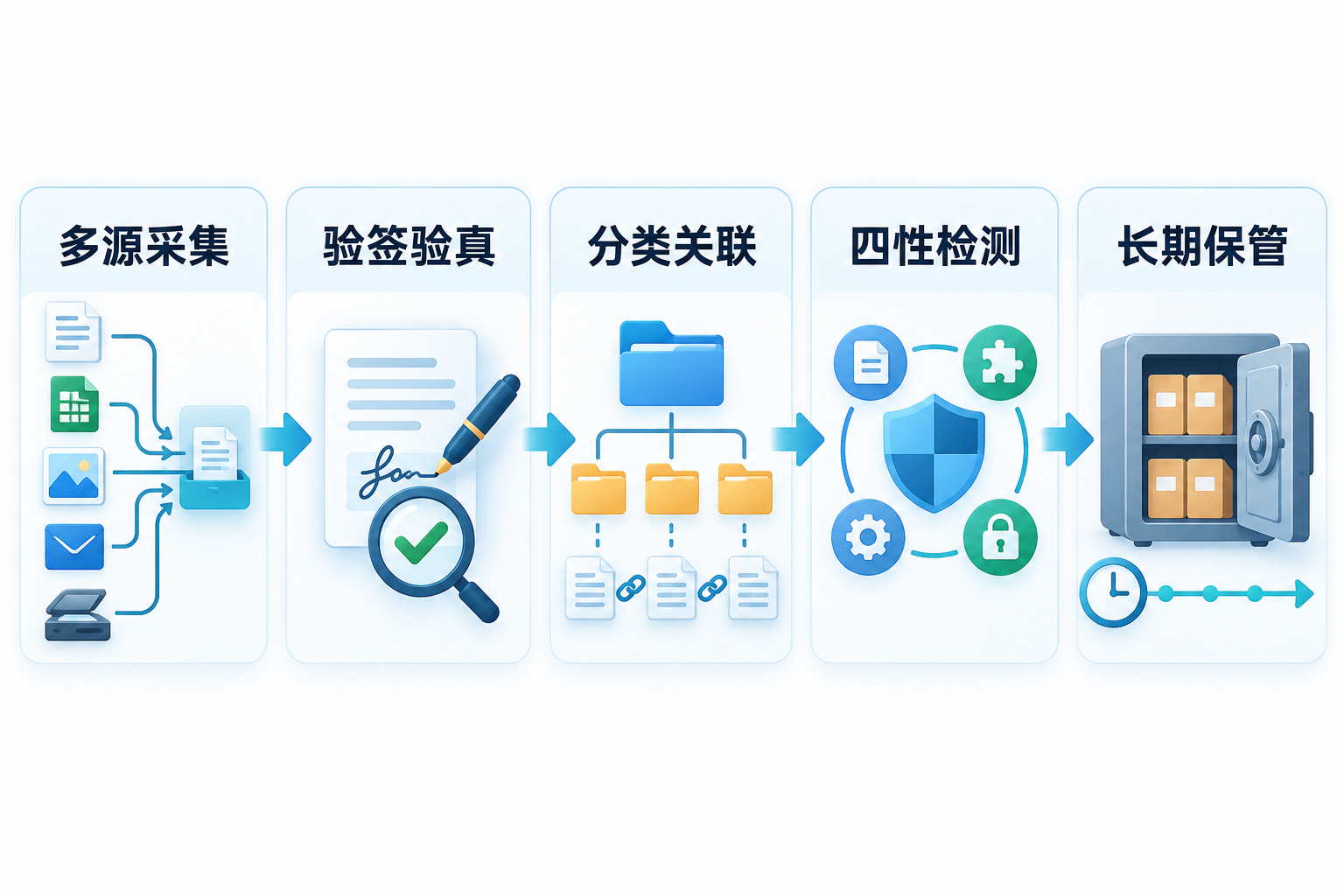
▍1. Multi-source collection: Keep the original file and also record where it came from
Materials may come from scanning devices, reimbursement systems, ERP, banks, tax digital accounts, email, or manual uploads. During collection, it is not enough to retain only one visible image; the source system, receipt time, file format, business number, and responsible entity should also be recorded. For native electronic vouchers such as e-invoices, the original electronic files and related metadata should be retained first, rather than only printing or taking screenshots and then scanning them. Which data a third-party system can synchronize depends on enterprise authorization, interface conditions, and implementation configuration. Multi-source collection must not be promoted as unconditional access to all data.
▍2. Signature and authenticity verification: Technical verification and business review each handle one layer
If externally received electronic accounting materials are to be kept in electronic form only, they should comply with"Measures for the Management of Accounting Archives"Check the applicable conditions, including electronic signatures, tamper resistance, backups, and review and approval procedures. The system can complete checks on file integrity, signature status, duplicate records, and field consistency; transaction authenticity, expense reasonableness, accounting treatment, and authorized approval are still judged by enterprise systems and responsible positions. A technical green checkmark cannot replace the final business conclusion.
▍3. Classification and association: Upgrade from 'folders' to an evidence chain
The system should establish classifications according to vouchers, ledgers, financial reports, and other accounting materials, and connect invoices, contracts, orders, acceptance, payments, reimbursements, and bookkeeping vouchers according to business relationships. Kailing TechnologyElectronic Accounting Archive Management SystemIt can be used to collect archives and metadata, establish indexes, and enable associated retrieval;AI OCR Visual Capability PlatformIt can assist in extracting bill fields. Recognition results should enter the verification and review process as candidate data to avoid misrecognized content directly entering accounting or archive indexes.
▍4. Four-property test: Verifiable results are needed before and after archiving
National Archives Administration's Measures for the Management of Electronic ArchivesElectronic archive management is required to ensure authenticity, completeness, usability, and security. The solution should specify test objects, rules, results, and responsible persons: whether files are missing, whether metadata is complete, whether formats can be read, whether permissions are correct, whether there are abnormal modifications, and whether backups can be restored. Materials that fail testing should enter correction or manual handling, rather than being archived with defects.
▍5. Long-term preservation: Focus on formats, backups, migration, and audit logs
Electronic archives will span multiple software versions and storage cycles. In addition to daily retrieval, the system should also support backup and recovery, tiered permissions, operation traceability, format management, and migration assessment. When replacing storage media or upgrading systems, it is necessary to ensure that files and metadata are migrated together, and that the migration process can be checked and traced back. This avoids the risk that 'it can be opened at launch but cannot be read a few years later.'
▍6. When selecting a system, validate with business scenarios, not just a feature list
It is recommended to prepare samples such as normal vouchers, low-quality scans, duplicate bills, missing attachments, cross-system associations, permission conflicts, and historical archive migration to verify collection, recognition, review, archiving, retrieval, export, and recovery. It is also necessary to confirm the interface boundaries, failure handling, and division of responsibilities between the system and existing ERP, expense control, and imaging platforms. Only a solution that can run both normal and exception paths is suitable for long-term operation.
Keywords: electronic accounting archive system, electronic accounting archive management system, voucher scan archiving, multi-source collection, signature and authenticity verification, four-property test, long-term preservation, Kailing Technology
As a comprehensive business-finance-tax digitalization solution service provider, Kailing Technology provides business-finance-tax management digital transformation products and operational services for various government agencies, institutions, and large, medium, and small enterprises. The product line includes: solutions for sales contract management system, procurement contract management system, fully digitalized Leqi interface project, automatic output invoicing system, reverse invoicing system, invoice issuance for individuals system, employee expense control and reimbursement system, input VAT invoice management system, supply chain collaborative reconciliation system, image AI OCR recognition system, automatic financial bookkeeping system, electronic accounting archives system, etc., comprehensively driving the digitalization process across various fields.
Consultation Hotline: 18513895936 / 010-60974119 Location: Beijing