
How to implement electronic management of accounting archives? Scan to store, no more rummaging through boxes
How to implement electronic management of accounting archives? Scan to store, no more rummaging through boxes
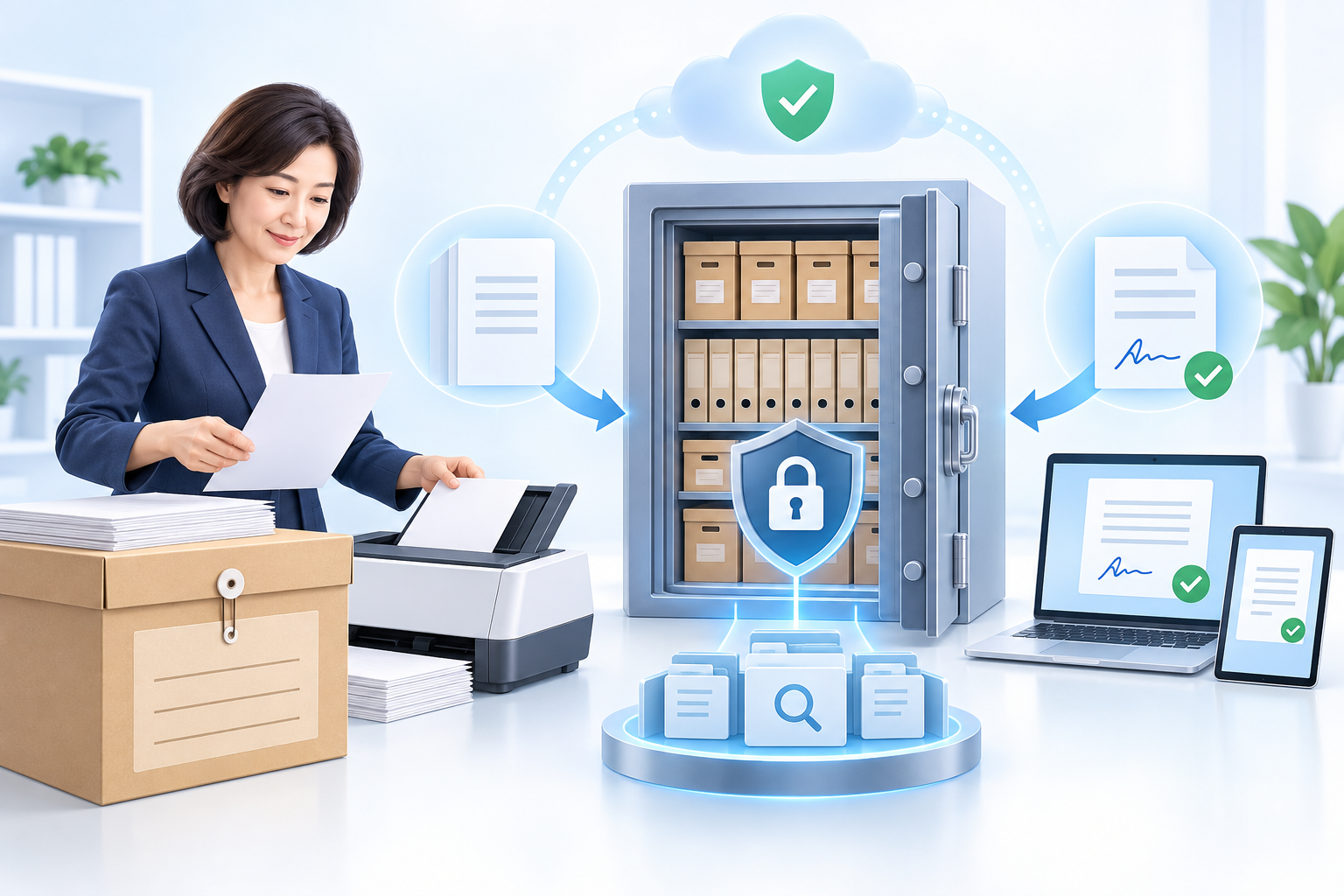
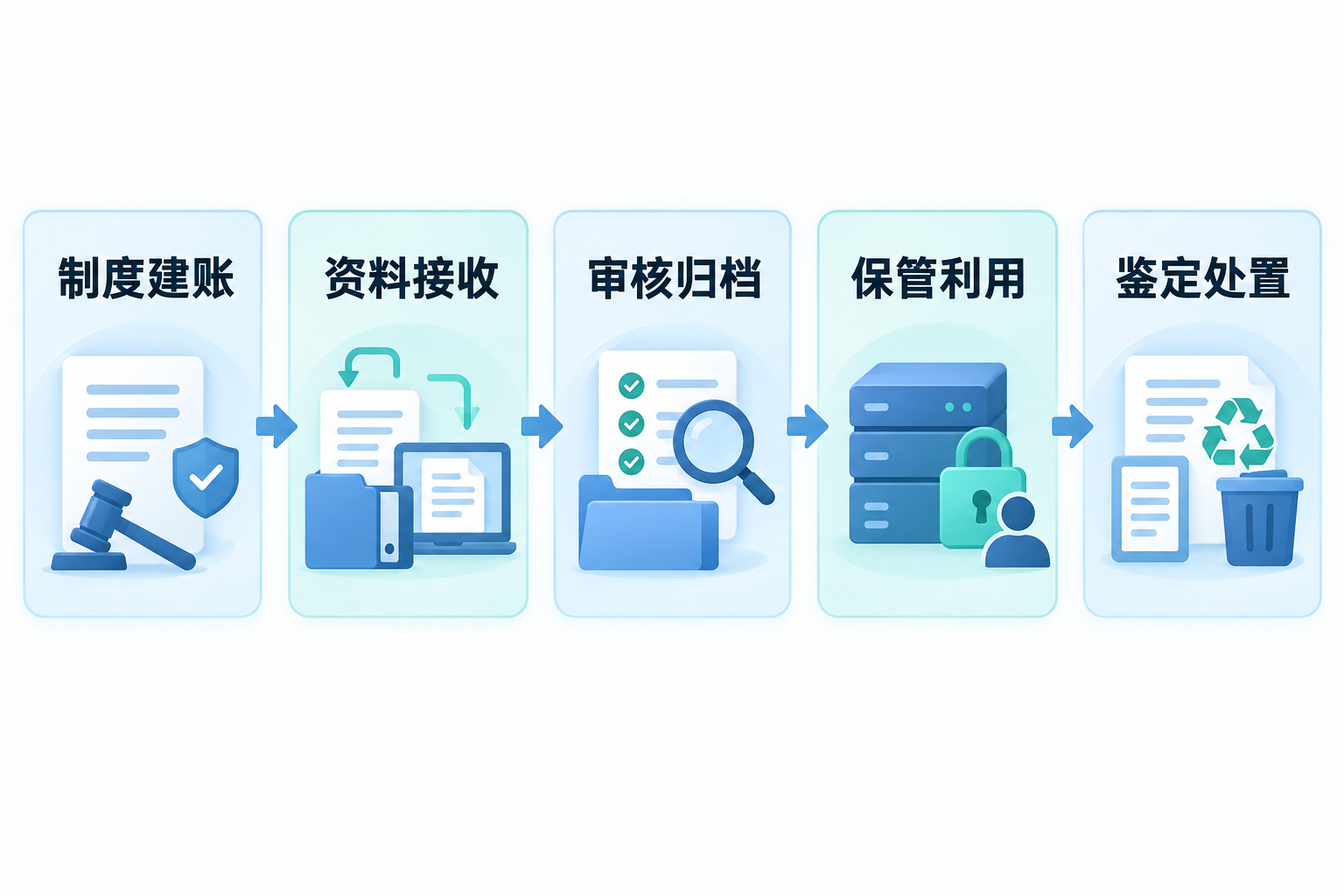
Piles of paper vouchers, borrowing relying on registration, and rummaging through boxes during audits appear on the surface to be retrieval efficiency problems, but behind them is actually that archive formation, association, preservation, and use have not entered a unified process. The electronicization of accounting archives also does not mean batch-scanning paper into images. A more reliable approach is to start with system establishment and connect material receipt, review and archiving, preservation and use, and appraisal and disposal into a complete chain, so that each archive can be quickly retrieved and also explain its source, version, responsibility, and related business.
Scanning solves 'can see it'; classification, association, testing, and traceability are what solve 'can manage it, can find it, can use it'. |
▍1. First confirm which materials can be kept in electronic form only
Ministry of Finance and National Archives Administration "Measures for the Management of Accounting Archives"It is stipulated that units may use information technology means to manage accounting archives; electronic accounting materials may be kept in electronic form only when they simultaneously meet conditions such as authentic and valid source, the system can accurately and completely receive and read them, necessary review and approval procedures are in place, long-term preservation requirements are met, tamper resistance, and backups. Externally received electronic accounting materials also involve compliant electronic signature requirements. Therefore, 'electronicization' is not simply announcing that paper will no longer be kept, but first checking material types, formation methods, preservation value, and applicable conditions.
▍2. Scan to store: First establish receiving rules and a unique identity
Paper vouchers, electronic invoices, bank receipts, contracts, and business attachments come from different sources. During receipt, the organization, accounting period, document type, business number, responsible person, and original medium should be recorded. Kailing TechnologyAI OCR Visual Capability PlatformCandidate fields can be extracted from bills and financial documents to reduce manual entry; however, recognition results should still undergo format, required-field, cross-check relationship, and low-confidence review. OCR is responsible for converting images into usable data and cannot replace accounting judgment and approval.
▍3. During review and archiving, associate archives with business evidence
Truly useful electronic archives cannot be stored only by file name. The system should associate original vouchers, bookkeeping vouchers, reimbursement forms, contracts, orders, payment records, and approval processes according to business relationships, and retain the archiver, archiving time, version, and change records. Kailing TechnologyElectronic Accounting Archive Management SystemIt can be used to collect archives and metadata, establish classification indexes, and enable associated retrieval; specific directories, permissions, and approval rules should be configured according to enterprise systems.
▍4. Preservation and use must consider both the four-property test and permission traceability
National archive management requirements emphasize the authenticity, completeness, usability, and security of electronic archives. During implementation, it is necessary to check whether files are complete, whether formats can be read long term, whether metadata is complete, whether there are abnormal changes, and to establish backup, recovery, and migration mechanisms. Access, copying, lending, and export should also be authorized by position and logged. In this way, when finance, audit, and archive personnel retrieve the same transaction, they see the same traceable evidence set, rather than multiple versions scattered across personal computers and shared drives.
▍5. Appraisal and disposal cannot be replaced by 'bulk deletion'
After archives reach their retention period, appraisal must still be carried out according to systems, opinions formed, and approval and supervised destruction procedures performed; archives that have not expired, have unsettled matters, or have continuing preservation value cannot be directly disposed of. Before electronic archive migration or system upgrades, formats, media, and technical environments should also be assessed to avoid 'the file is still there but can no longer be opened.' Only when a closed loop is formed from establishment to disposal is the electronicization of accounting archives truly implemented.
▍6. Before launch, you can use a set of real samples for acceptance testing
It is recommended to select desensitized samples from different years, different document types, and different exception situations, and verify collection, recognition, association, retrieval, permissions, export, backup, and recovery item by item. For mixed paper and electronic materials, the retrieval relationship between paper originals and electronic archives should also be verified. Acceptance results should be assigned to responsible persons and a rectification list, rather than only looking at scanning speed or OCR demo effects.
Keywords: electronic management of accounting archives, electronic accounting archives, accounting archive management system, voucher scan archiving, AI OCR recognition, four-property test, long-term archive preservation, Kailing Technology
As a comprehensive business-finance-tax digitalization solution service provider, Kailing Technology provides business-finance-tax management digital transformation products and operational services for various government agencies, institutions, and large, medium, and small enterprises. The product line includes: solutions for sales contract management system, procurement contract management system, fully digitalized Leqi interface project, automatic output invoicing system, reverse invoicing system, invoice issuance for individuals system, employee expense control and reimbursement system, input VAT invoice management system, supply chain collaborative reconciliation system, image AI OCR recognition system, automatic financial bookkeeping system, electronic accounting archives system, etc., comprehensively driving the digitalization process across various fields.
Consultation Hotline: 18513895936 / 010-60974119 Location: Beijing