
What to do when overseas invoices come in many formats and foreign-language information is hard to enter? Kailing Technology overseas invoice AI OCR automatically recognizes and verifies
What to do when overseas invoices come in many formats and foreign-language information is hard to enter? Kailing Technology overseas invoice AI OCR automatically recognizes and verifies

When overseas invoices come in many formats and foreign languages are hard to enter, you can first use AI OCR to complete text recognition, multilingual assisted understanding, and field organization, and then send data that meets business requirements to the reimbursement or accounting system. Kailing Technology overseas invoice AI OCR focuses not only on turning images into text, but also on giving materials from different sources a usable structure. Enterprises should first clarify which fields they want, so the tool can truly reduce subsequent organizing.
▍What finance receives is not one kind of invoice, but a whole desk of different materials
Materials brought by overseas business trips and cross-border business may include electronic files, mobile phone photos, and scans, and may also contain different languages and layouts. Date positions differ, amount expressions differ, and the names of merchants and expense items are also inconsistent. Employees feel the materials have been fully submitted, but finance still has to convert them into information that the internal system can accept.
The most mentally taxing part of manual entry is often not the typing itself, but constantly switching reading methods. Just as you recognize the total position on one invoice, the next one changes layout; just as you understand one expense name, another language requires looking it up again. The value of batch recognition is to help people complete these repetitive organizing tasks first, leaving attention for business meaning and key doubts.
But "recognizing a lot of text" does not equal "obtaining the desired data." Finance needs fields such as merchant, date, currency, and expense, and may not need all the text of the entire invoice in order. Clarifying the goal before using the tool is more effort-saving than manually searching through large blocks of text after recognition.
▍Kailing Technology overseas invoice AI OCR, from input materials to business fields
Kailing Technology AI OCR covers directions such as visual extraction, structuring, and multilingual processing. In overseas invoice scenarios, input forms and output fields can be determined around actual materials, organizing information with similar meanings in different layouts into a unified receiving convention.
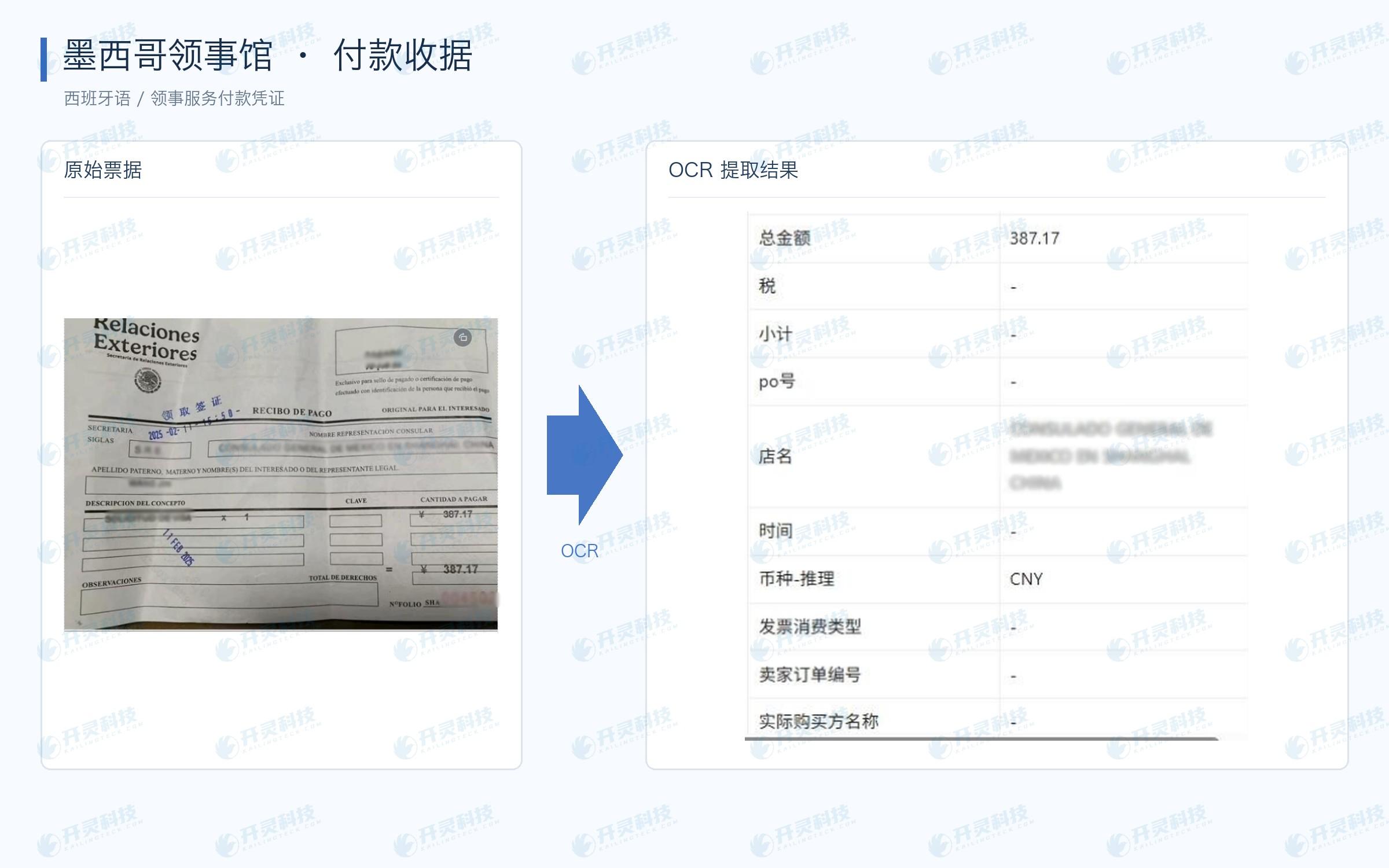
Unified structure does not mean deleting differences. For example, the original merchant name should retain a traceable source, date formats can be displayed in a standardized way, and currency needs to be clearly identified. Chinese auxiliary explanations help finance read, but translations should not quietly overwrite the original information. What is transmitted between systems is agreed fields, not a Chinese recreated document disguised as the original invoice.
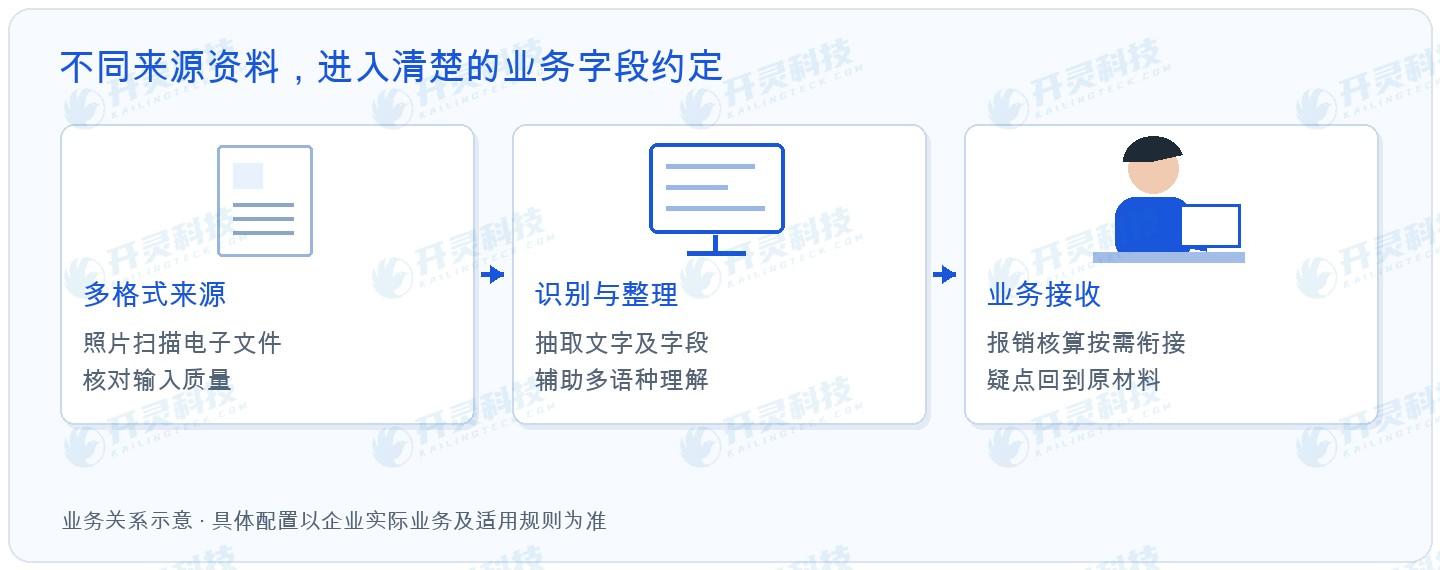
For an enterprise's existing reimbursement or ERP system, you should first confirm which fields it accepts, what the required conditions are, and how expense categories are mapped. Integration can be done through suitable interfaces or batch import methods, and specific capabilities and methods should be confirmed according to the actual environment. The agreement between the recognition tool and the business system determines how much manual handling can be reduced on the back end.
▍Don't compress country, language, and expense category into one fixed template
The more cross-border business an enterprise has, the more common material changes become. New regions, new merchants, or new expense types may all bring information different from historical materials. Field interpretations and confirmed samples can be accumulated gradually around high-frequency needs, but it is not advisable to promise that one configuration will cover all overseas documents.
The same language does not necessarily mean the same invoice rules. A word may express expenses of different natures in different documents, and date and number formats should also be understood in combination with the specific source. Classification rules need to retain necessary conditions, rather than deciding all financial handling based only on one recognized word.
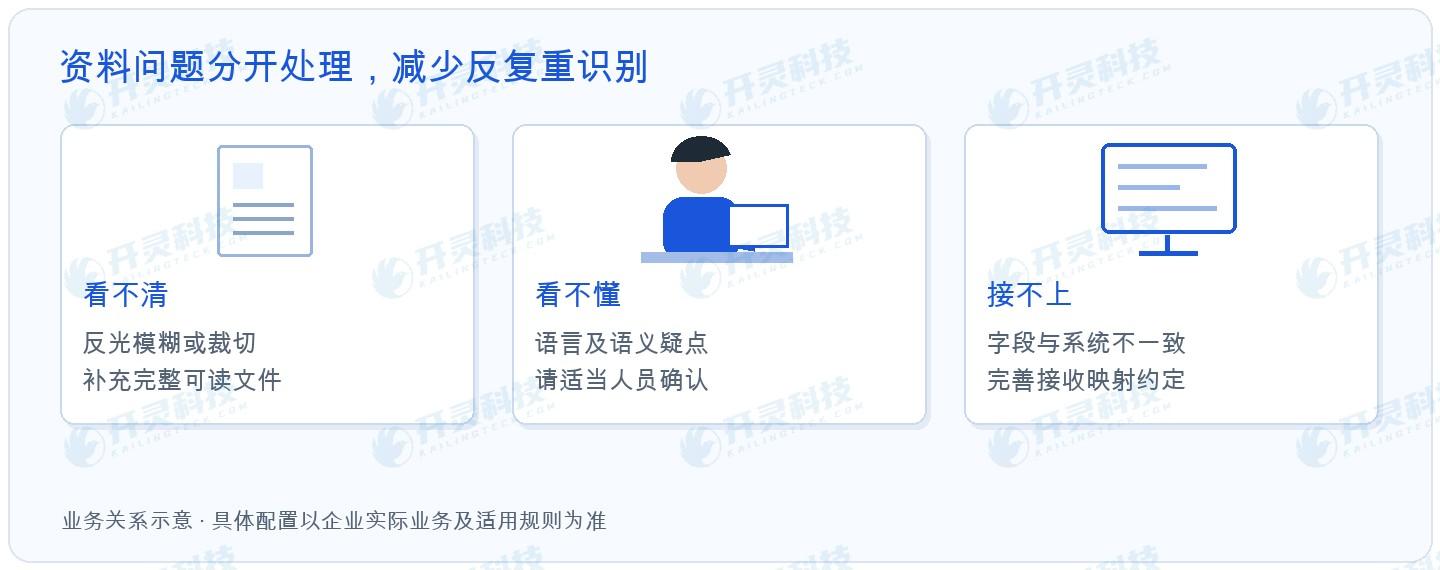
For repeatedly used supplier or merchant materials, confirmed aliases and corresponding relationships can be maintained to reduce subsequent retrieval difficulties. But the same name does not mean the same entity, and historical classification is not necessarily suitable for every transaction. Reuse of master data and verification of the current transaction each have their roles, and convenience cannot replace necessary judgment.
▍What is truly saved is the time spent repeatedly organizing across roles
After employees submit materials, they no longer need to manually create a form with the same content as the original invoice; after finance obtains structured results, they no longer need to repeatedly copy fields from images; when reviewers encounter doubts, they can return to the source for verification. What each role reduces is repetitive handling, not the business responsibility that should be borne by people.
Kailing Technology overseas invoice AI OCR can serve as an organizing step in enterprise invoice processing, connecting with existing reimbursement, accounting, and archiving work. Original materials and necessary associations should be retained so that subsequent personnel have a basis for understanding the results. Recognition accuracy, expense approval, and tax applicability should be judged separately, and one successful import cannot replace all review.
When advancing the project, you can start with common invoice types and high-frequency fields, let finance confirm which organizing is most useful, and then gradually expand the scope of materials. A small amount of capability that truly enters daily processes is easier to sustain value than a demonstration that recognizes many kinds of images at once but has no business receiving.
You can also invite employees who travel frequently to provide feedback: whether uploading is convenient, whether supplementary material prompts are clear, and whether they still need to repeatedly fill in the same information. Improving both the front-end experience and finance receiving can prevent the tool from only making one step faster while shifting the organizing burden to another role.
In long-term use, enterprises should maintain field definitions and connection methods. Changes in the receiving fields of the financial system, the addition of new expense categories to the policy, or changes in invoice sources may all require synchronized updates. Clear maintenance responsibilities allow recognition capabilities to keep up with real business, rather than remaining as they were at initial configuration.
▍FAQ: Q&A on handling overseas multi-format invoices
Q: Can photographed invoices and electronic files be processed directly mixed together?
A: You should first confirm the input forms and quality requirements supported by the solution. Different sources can enter a unified business process, but collection checks and original file retention methods may differ.
Q: If a tax field is recognized, does that mean it can be deducted?
A: No. Recognition only extracts invoice information; business-finance-tax handling must be judged in combination with the business and applicable regulations, and deduction or credit conclusions cannot be derived directly from field names.
Q: Do we need to replace our existing reimbursement system as well?
A: Not necessarily. You can evaluate interface or import integration to let recognition results enter the original system; whether to adjust the system should be decided by the actual business gap.
Q: If a new type of overseas invoice is added, can the original rules definitely still be used?
A: Format and meaning need to be verified. Existing field conventions can be reused, but for new language expressions, layouts, or expense types, additional confirmation and adaptation arrangements should be made.
Overseas materials do not need to be translated and copied one by one by finance. Learn about Kailing Technology AI OCR's multilingual invoice organizing capabilities:https://www.kailingteck.com/ai-ocr/ 。
As a national high-tech enterprise, Kailing Technology focuses on the digital and intelligent transformation of enterprise business-finance-tax and operations management, providing software products, system integration, implementation and delivery, and operational services for various government agencies, institutions, group enterprises, and SMEs.
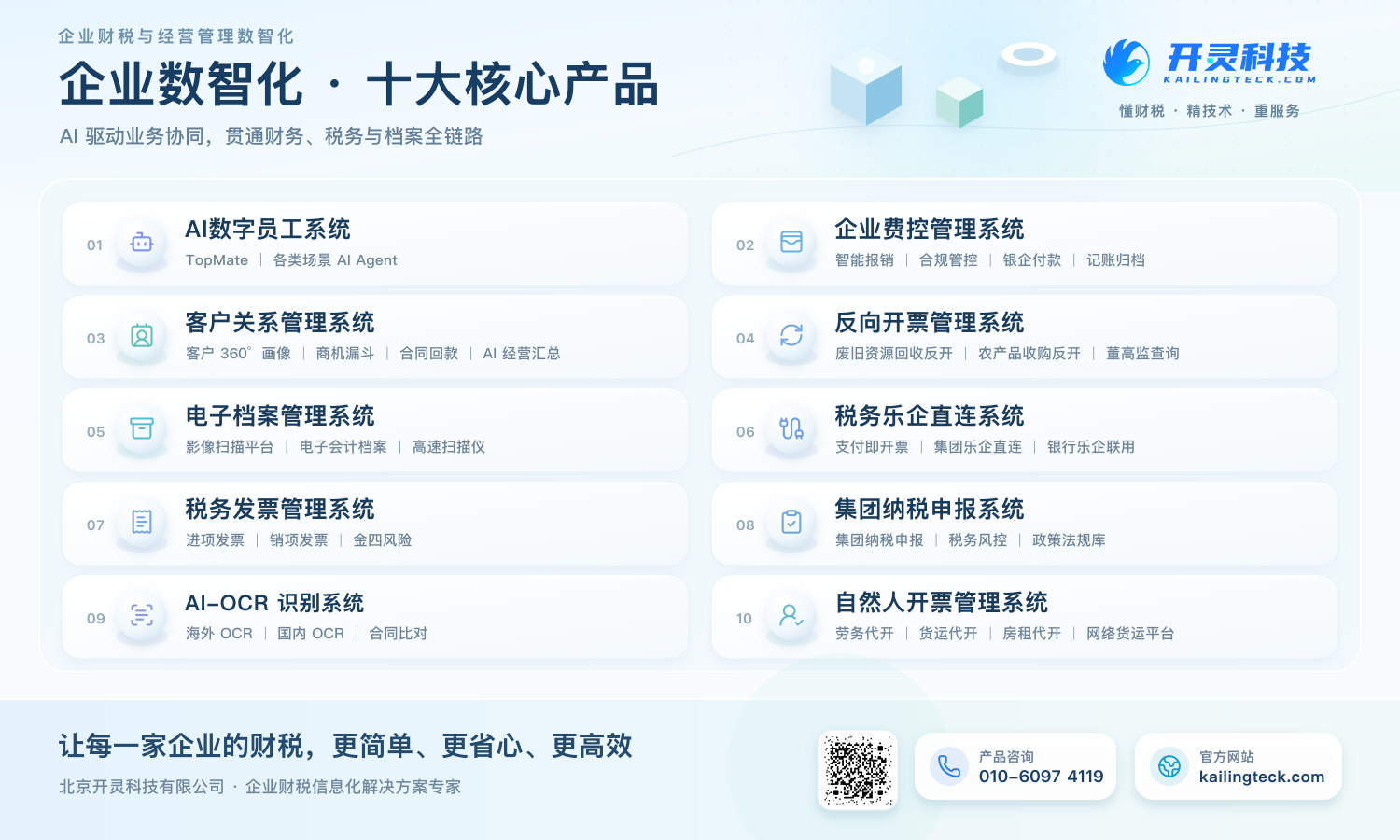
The company has now formed ten core product lines, including: AI digital employee system, enterprise expense control management system, customer relationship management system, reverse invoicing management system, invoice issuance for individuals management system, electronic archives management system, tax fully digitalized e-invoice Leqi system, tax invoice management system, group tax filing system, and AI OCR recognition system. It is committed to connecting enterprise business, finance, tax, funds, and archive data to help customers improve operational efficiency, business-finance-tax compliance capabilities, and digital management levels.
If you have any business-finance-tax digital transformation needs, welcome to contact us. Beijing Kailing Technology will serve you wholeheartedly.
Keywords: Overseas invoice AI OCR, foreign-language invoice recognition, multilingual OCR, overseas invoice automatic entry, invoice field verification
As a comprehensive business-finance-tax digitalization solution service provider, Kailing Technology provides business-finance-tax management digital transformation products and operational services for various government agencies, institutions, and large, medium, and small enterprises. The product line includes: solutions for sales contract management system, procurement contract management system, fully digitalized Leqi interface project, automatic output invoicing system, reverse invoicing system, invoice issuance for individuals system, employee expense control and reimbursement system, input VAT invoice management system, supply chain collaborative reconciliation system, image AI OCR recognition system, automatic financial bookkeeping system, electronic accounting archives system, etc., comprehensively driving the digitalization process across various fields.
Consultation Hotline: 18513895936 / 010-60974119 Location: Beijing