
Kailing Technology resource recycling reverse invoicing system: for waste paper and waste plastics received in many small batches every day, how do you settle and issue invoices by person?

Kailing Technology resource recycling reverse invoicing system: for waste paper and waste plastics received in many small batches every day, how do you settle and issue invoices by person?

For waste paper and waste plastics received in small amounts and multiple batches every day, settling by person does not mean kneading all receipt records into one total. The Kailing Technology Resource Recycling Reverse Invoicing System can aggregate transactions around the seller while retaining the category, quantity, and confirmation basis of each receipt. The enterprise can see clearly whom it should settle with today and can also return from the total to specific batches, reducing omissions, mixed records, and duplicate processing in frequent delivery scenarios.
▍When the same person delivers goods several times, how should the ledger be read
Daily operations at a recycling station often do not involve a seller coming only once. Someone delivers waste paper in the morning and another batch of plastic in the afternoon; someone delivers goods over several consecutive days and agrees to settle at a suitable time. The site remembers each trip clearly, but if finance only receives a few small slips without stable identity links, it is still difficult to determine which belong to the same seller.
On the contrary, if the site keeps only one person's cumulative total for convenience, then when objections arise later it is difficult to explain which batches were included. The seller remembers a certain weight, while finance can only see the final total, and the two sides lose a common entry point for verification.
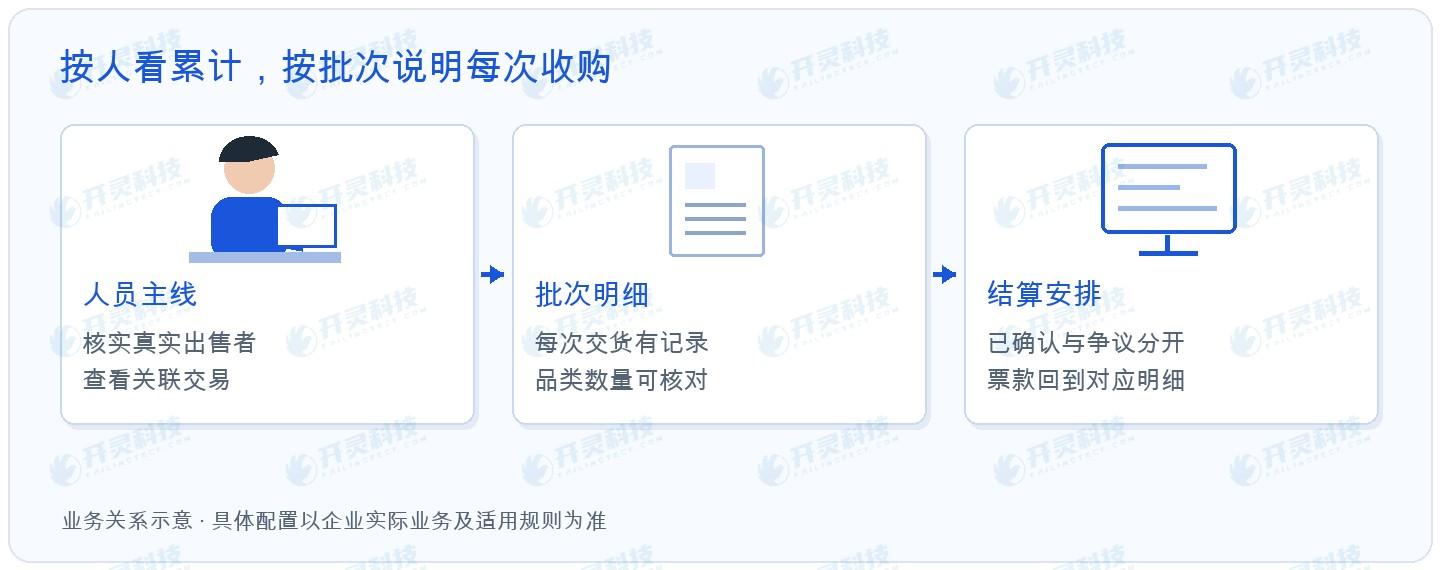
A more suitable ledger has two reading levels: cumulative totals by person and details by batch. Personnel records provide identity and transaction attribution, while batch records retain each actual acquisition. Finance does not have to choose between the two perspectives, but can let them exist simultaneously through clear relationships.
▍Kailing Technology Resource Recycling Reverse Invoicing System keeps details attributed to the real seller
The premise of aggregation is reliable identity. The same name, the same contact phone number, or contact through another person should not be directly treated as proof of the same seller. During receipt, the real seller should be verified, identity and transaction materials required for the applicable business should be retained, and each record should then be attributed to the corresponding subject.
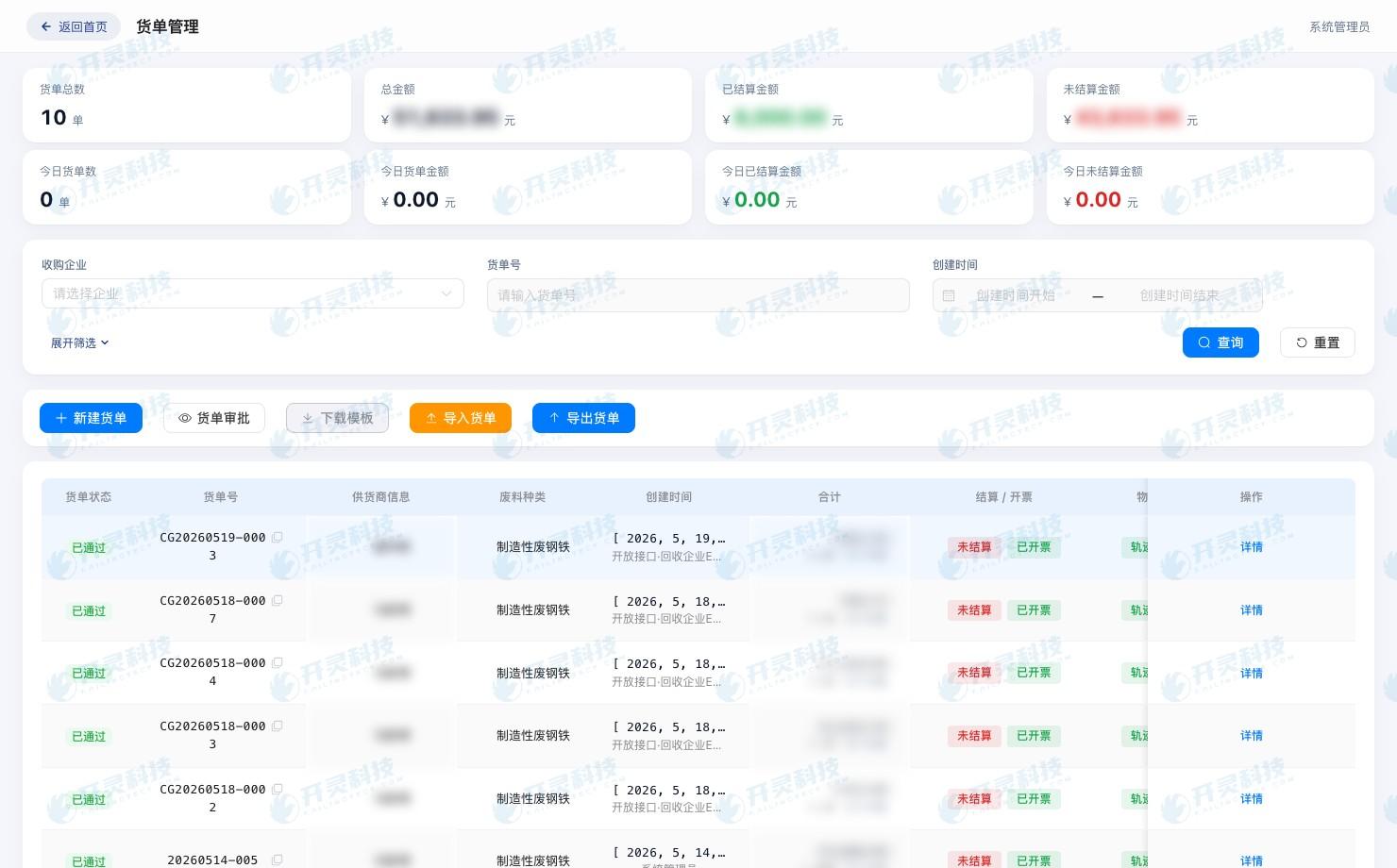
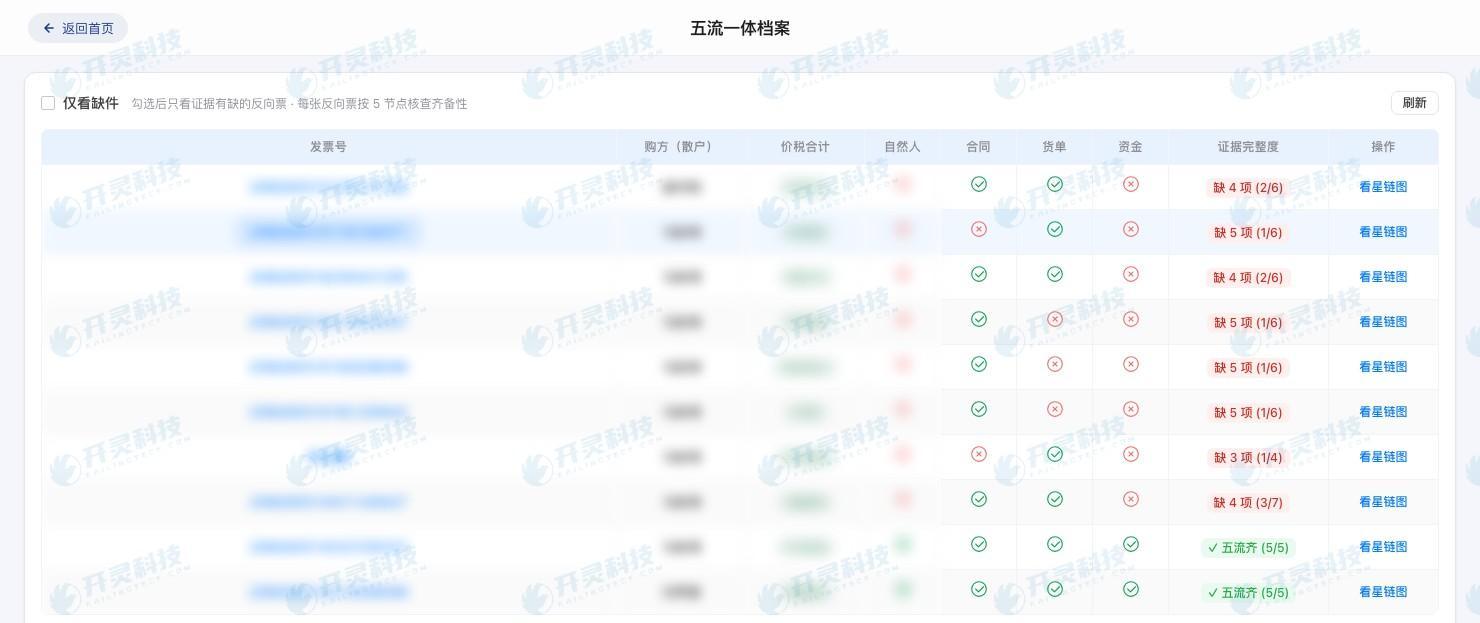
Kailing Technology's reverse invoicing solution organizes receipt, settlement, invoice, and fund ledgers, enabling staff to query around personnel or business records. During implementation, batch numbering and detail fields can be determined in combination with receipt frequency, agreed settlement methods, and existing equipment, so that on-site records can be directly understood by the back end.
"Aggregating by person" does not mean encouraging expansion of the scope of policy application. Whether an enterprise and a seller meet the conditions for resource recycling reverse invoicing needs to be checked against current regulations; attention should be paid to the relevant cumulative sales conditions, and requirements must not be circumvented by changing accounts, splitting orders, or recording by separate sites. Statistics within a system should also clearly define the scope of data they cover.
▍One disputed batch should not cause other receipts to lose their trail
Moisture content in waste paper, mixed plastic categories, or differences in quantity confirmation may all cause a certain batch to be temporarily unsettled. At this time, the ledger should keep the disputed details in an independent state, rather than simply marking all of one person's transactions as "problematic," leaving subsequent staff unsure where exactly the blockage is.
The enterprise may, according to the agreement between the parties and applicable requirements, handle the portion already confirmed and retain records still pending review. Whether settlement in installments is allowed and how invoices correspond should be clearly configured; a partial payment first cannot justify arbitrarily cutting up the facts or writing unconfirmed goods into the invoicing basis in advance.
After the dispute is resolved, what is supplemented is the confirmation conclusion for that batch, rather than rebuilding an apparently brand-new receipt, which would cause two records for the same delivery. Keeping the original batch link also helps the seller verify "that unsettled transaction from last time, where has it been handled now."
▍From one settlement list back to the receipt details of the day
For high-frequency receiving sites, a clear settlement list can reduce a large amount of verbal verification. The list should state the batches included in this settlement, the confirmation results for each type of goods, and matters not yet included. What the seller cares about is whether each delivery has been counted, while what finance cares about is whether the total has a traceable source; both can be answered in the same information.
When issuing invoices, the confirmed real acquisition data should be used and truthfully reflected according to applicable rules. It cannot be assumed that the same summary invoicing method is allowed for any transaction simply because it is convenient to view multiple batches together. The aggregation view for management and the specific invoicing arrangement for tax purposes should be distinguished.
Payment results should also return to the corresponding settlement relationship. Which details a payment covers, whether there are failures or returns, and whether unsettled matters remain afterward should all be verifiable. In this way, the personnel cumulative total is not just "how much goods were received this month," but can also explain why there is a time gap between receipt, settlement, and payment.
▍Recycling stations do not need to rely on one big month-end reconciliation to maintain order
When daily receipt records are aggregated in a timely manner, finance can discover earlier matters such as missing identity, unconfirmed batches, or unclear invoice-payment relationships, without having to wait until month-end to press the sites for answers all at once. The closer a problem is to the site where it occurred, the easier it is to find someone familiar with the situation, and the more accurate the supplementary explanation will be.
The site manager can view which batches have had no conclusion for a long time, which seller profiles need updating, and which paid transactions still require follow-up invoices. Different statuses have their own responsible parties, so pending tasks no longer all become "finance should follow up." For frequently cooperating sellers, this also means clearer settlement expectations.
Retention of materials should match actual management needs. Resource recycling enterprises need to keep relevant acquisition and payment materials according to regulations; the system can help aggregate them, but it does not replace verification of real transactions.
When expanding to multiple receiving points, record attribution and sharing scope must also be clarified. Unified personnel identification helps observe cumulative situations, and each site still needs to be responsible for the receipts it generates. The goal of a shared ledger is to reduce scattered information, not to blur on-site responsibility as data becomes centralized.
For managers, continuously available details can also help arrange on-site work. Which categories need clearer confirmation standards and which time periods have more supplementary entries can all be gleaned from daily records. Such improvement is built on real records, does not require fabricating exaggerated efficiency figures, and can still let the team feel the convenience brought by the tool.
During on-site shift handover, the same list of unsettled matters can also be used. What the incoming staff sees are specific batches pending confirmation and the reasons for handling, rather than a vague statement that "this person still has several transactions not settled." Matters not completed that day can be picked up by the next shift, and the significance of continuous recording lands in a very practical work experience.
The expression in the list should also be as close as possible to the seller's habits. If category names are clear, receipt times are identifiable, and confirmation and pending matters are displayed separately, communication between the two sides does not need to rely on financial terminology. The system organizes complex relationships in the background, while the front end can present easy-to-understand settlement information.
▍FAQ Settlement questions on receiving small amounts in multiple batches
Q: If the same seller comes multiple times in one day, does a receipt record need to be created each time?
A: Business records that can explain each actual delivery should be retained. Basic identity information may be reasonably reused, but each receipt should have corresponding evidence for its time, goods, and confirmation result.
Q: If only the daily total is retained, can subsequent verification be satisfied?
A: Totals cannot explain batch differences. It is recommended to retain the detailed source in addition to the summary view, especially for business that may involve review, refunds or supplementary payments, or settlement in installments.
Q: Does aggregating by person mean one invoice can be issued uniformly?
A: The two are not the same concept. Aggregation is a management method; the specific invoicing should be determined according to the actual transaction and applicable requirements, and tax treatment cannot be inferred from the display format of the interface.
Establish a personnel and batch ledger for high-frequency receipts that is comprehensive and traceable, and learn about the Kailing Technology reverse invoicing system: www.kailingteck.com .
As a national high-tech enterprise, Kailing Technology focuses on the digital and intelligent transformation of enterprise business-finance-tax and operations management, providing software products, system integration, implementation and delivery, and operational services for various government agencies, institutions, group enterprises, and SMEs.
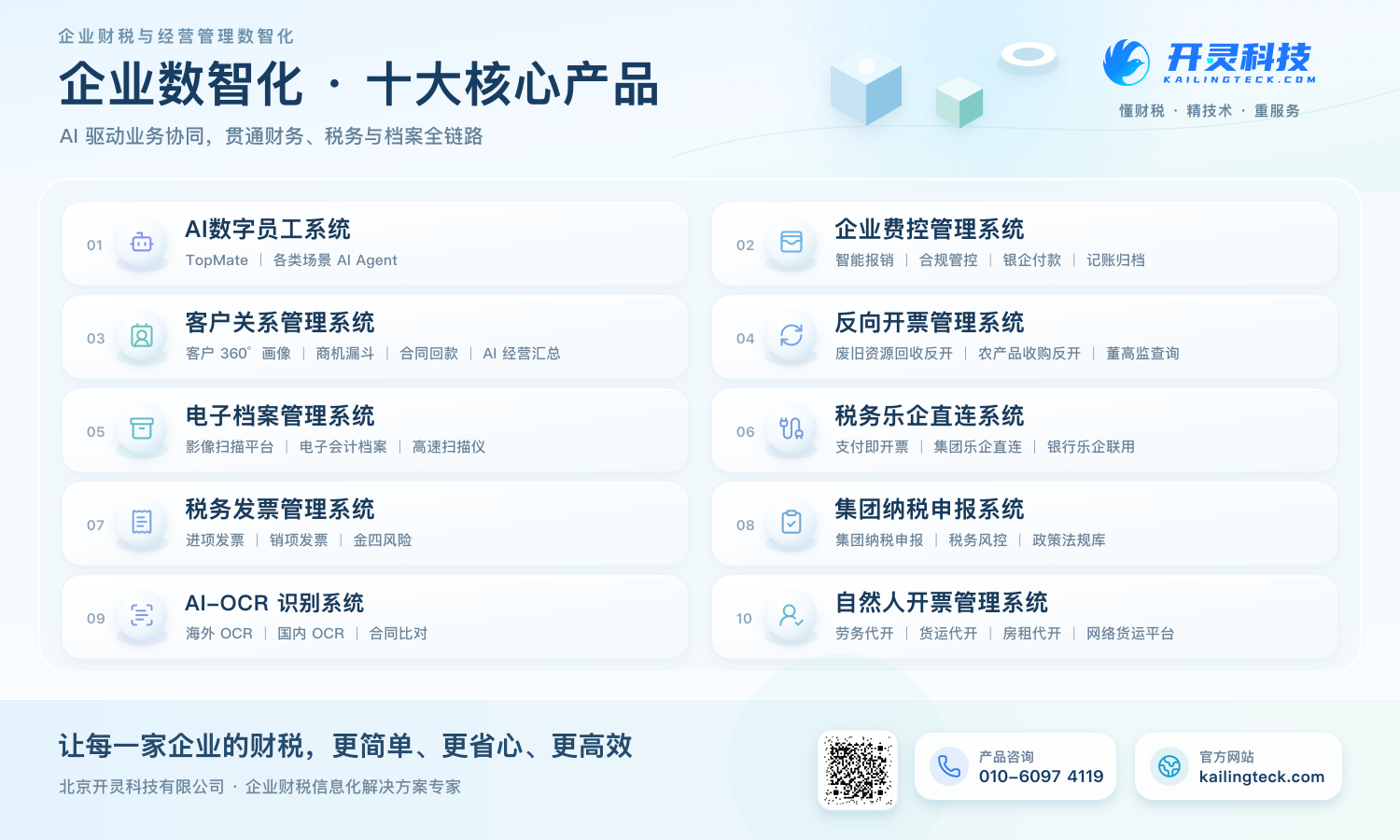
The company has now formed ten core product lines, including: AI digital employee system, enterprise expense control management system, customer relationship management system, reverse invoicing management system, invoice issuance for individuals management system, electronic archives management system, tax fully digitalized e-invoice Leqi system, tax invoice management system, group tax filing system, and AI OCR recognition system. It is committed to connecting enterprise business, finance, tax, funds, and archive data to help customers improve operational efficiency, business-finance-tax compliance capabilities, and digital management levels.
If you have any business-finance-tax digital transformation needs, welcome to contact us. Beijing Kailing Technology will serve you wholeheartedly.
Keywords: Resource recycling reverse invoicing system, waste paper reverse invoicing, waste plastic reverse invoicing, settlement by person, small-amount multi-batch receipt of goods
As a comprehensive business-finance-tax digitalization solution service provider, Kailing Technology provides business-finance-tax management digital transformation products and operational services for various government agencies, institutions, and large, medium, and small enterprises. The product line includes: solutions for sales contract management system, procurement contract management system, fully digitalized Leqi interface project, automatic output invoicing system, reverse invoicing system, invoice issuance for individuals system, employee expense control and reimbursement system, input VAT invoice management system, supply chain collaborative reconciliation system, image AI OCR recognition system, automatic financial bookkeeping system, electronic accounting archives system, etc., comprehensively driving the digitalization process across various fields.
Consultation Hotline: 18513895936 / 010-60974119 Location: Beijing