
When should fuel card top-ups, scan-to-pay, and cash transactions be invoiced? Kailing Technology's invoice-on-transaction solution for gas stations sets trigger points by transaction type.
Fuel card top-ups, QR code refueling, and cash fuel sales should not share a simple rule of "issue the same type of invoice once payment succeeds." Kailing Technology's invoice-on-transaction solution for gas stations identifies transaction types based on real fuel sales data, then connects to the corresponding invoice processing. According to Announcement No. 11 of 2026 of the State Taxation Administration, relevant gas stations should implement invoice-on-transaction before November 1, 2026; current preparation work especially needs to clearly distinguish the invoicing choices for top-ups and consumption.
▍A sum of money entering the fuel card does not mean the fuel has been sold
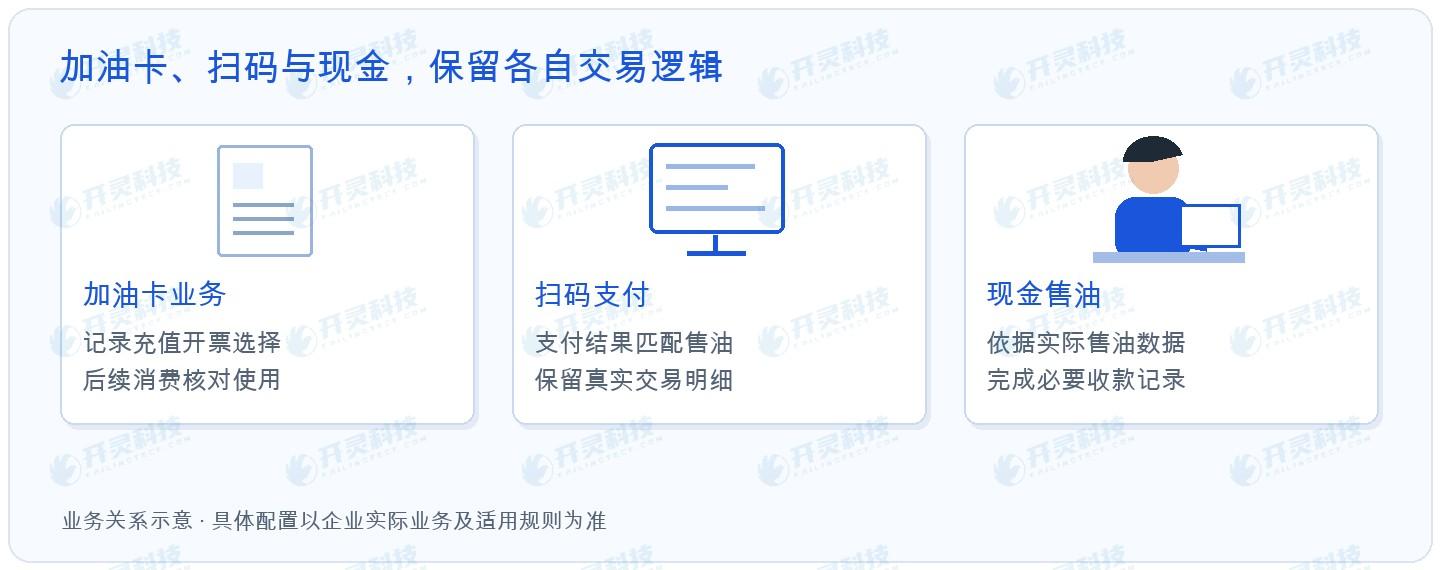
A top-up provides funds for subsequent consumption, while actual refueling forms the corresponding fuel sales details. The two may be separated by a period of time, or may occur in multiple installments. If the system only recognizes funds entering the account and treats each top-up as fuel sales invoicing, it will confuse the nature of the transaction; after a top-up has been invoiced, issuing invoices again for each consumption must likewise be avoided.
Announcement No. 11 of 2026 clarifies that the purchaser of a fuel card may choose to obtain a non-taxable ordinary invoice at the time of top-up, or choose to obtain the corresponding ordinary invoice or special VAT invoice at the time of refueling. The applicable choices and purchaser conditions shall be implemented in accordance with the regulations.
Therefore, the card system needs to let subsequent consumption know which invoicing arrangement was used for the relevant top-up. For vehicle owners, this should be an understandable choice; for stations, it needs to become queryable business information. It cannot be confirmed only verbally at the top-up counter without passing the choice on to the station and invoicing entry point where consumption later occurs.
▍QR code payment is connected to a confirmed refueling transaction
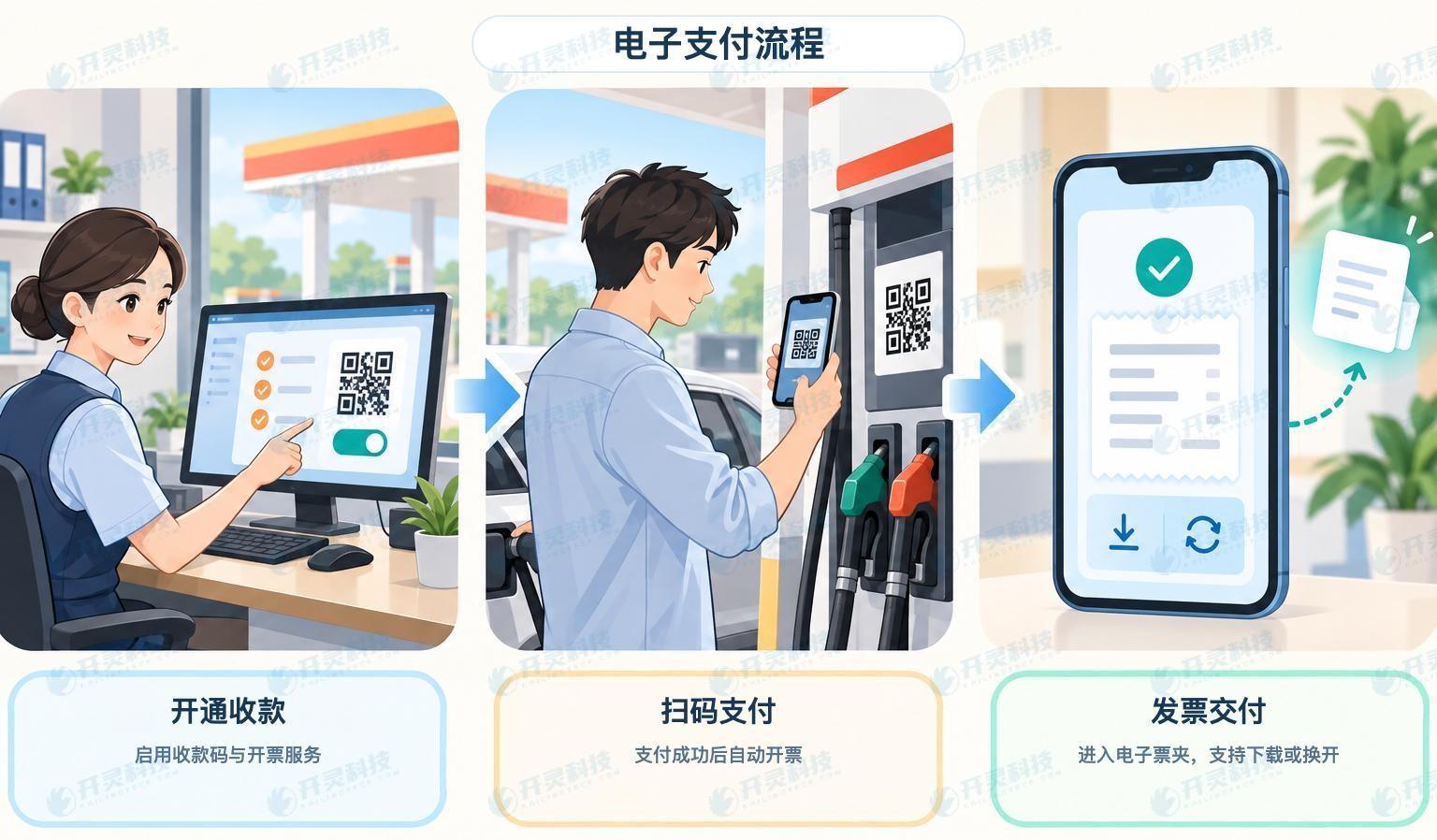
When a vehicle owner completes payment through a payment platform, the system also needs to identify the corresponding fuel product, quantity, unit price, and sales station. With only the receipt amount and no real fuel sales record, it is difficult for finance to explain which refueling this money belongs to. The convenience of transaction-based invoicing comes from the connection between payment and business details, not from simply forwarding the payment notification to the invoicing end.
Kailing Technology's fuel station transaction-based invoicing solution can integrate with existing retail or cashier systems to match source transactions with payment results. For internet platform entry points, the actual selling entity should also be clearly identified; the platform cannot automatically be regarded as the fuel seller simply because consumers pay on the platform.
If the same payment notification is delivered repeatedly, or the vehicle owner clicks again while the page is waiting, the back end should identify the same business request and query the existing result. Successful invoicing and successful delivery via SMS, download, etc. should also be recorded separately. When the vehicle owner has not received the invoice, helping them obtain the existing invoice first is more appropriate than creating a new one.
▍Cash transactions have no electronic payment notification, but still have a real business basis
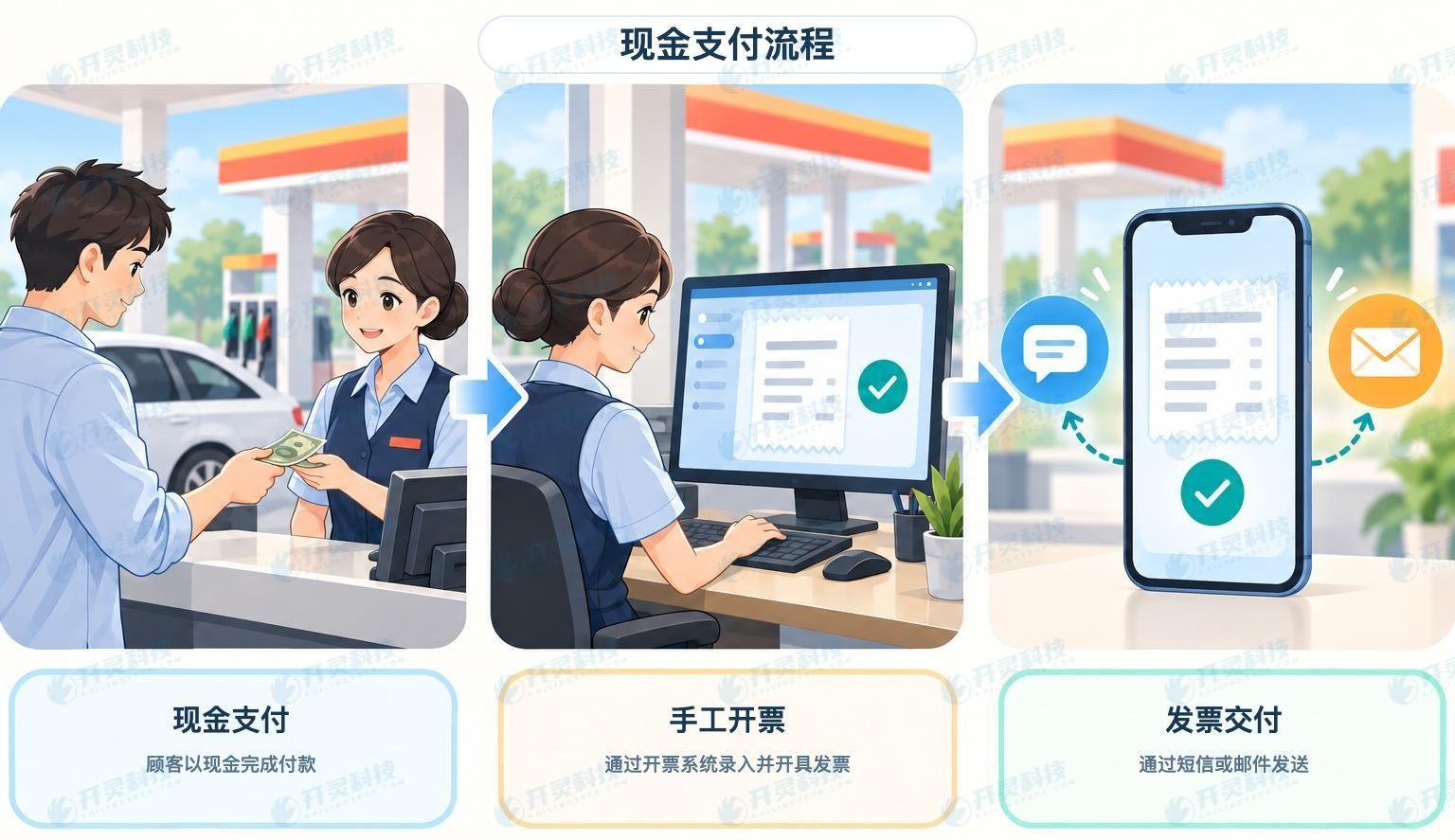
Cash receipts cannot become a blank spot where fuel sales transactions are omitted. Stations need to complete the corresponding invoice processing based on actual sales data, and the cashier's confirmation, payment records, and fuel sales details should correspond to one another. The specific entry and connection method depends on existing equipment and system conditions; it should not be assumed that all stations naturally have the same data interface.
For frontline staff, the interface can clearly explain the necessary operations for different payment methods. QR code transactions wait for payment confirmation, cash transactions record the corresponding receipt fact, and fuel card consumption checks the established invoicing arrangement. Once responsibilities are clear, cashiers do not need to guess after each transaction whether "this type can still be invoiced."
▍Kailing Technology's invoice-on-transaction solution for gas stations unifies the ledger rather than smoothing over differences
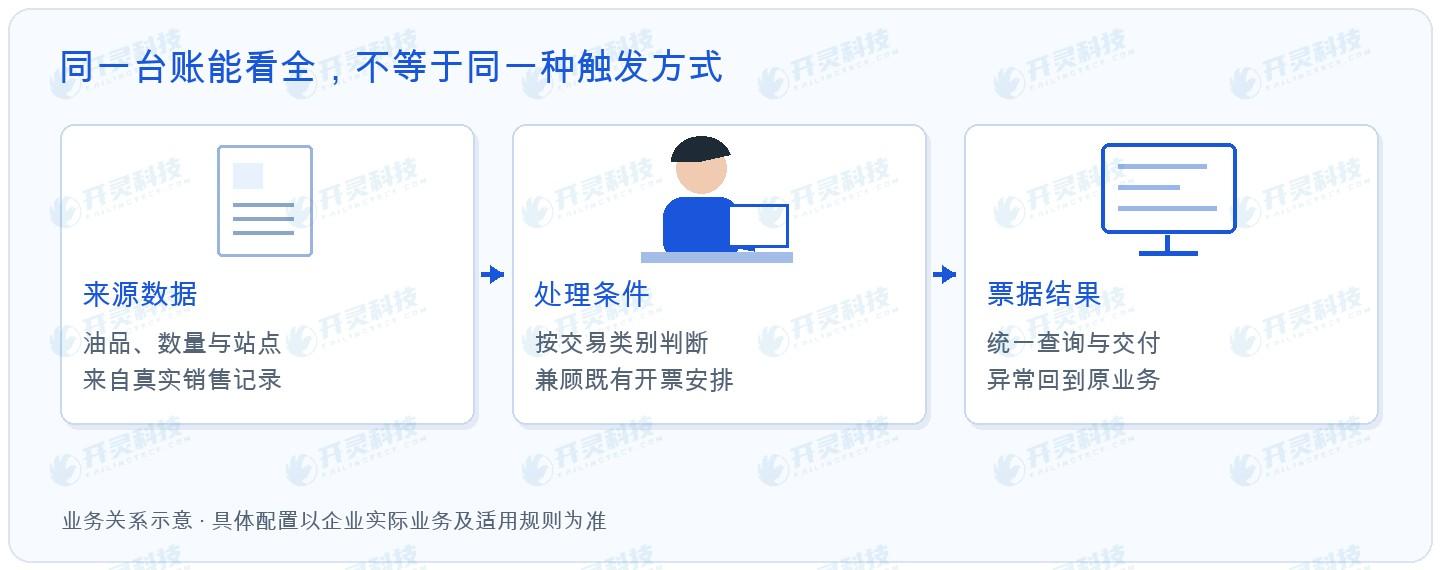
The three types of business can share transaction queries, invoice results, and exception management, but data sources and trigger conditions retain their own characteristics. The point of a unified platform is to let managers understand transactions from different channels in one place, not to force all business to pretend to be QR code payments.
For a station's existing fuel dispenser management, retail, cashier, and card systems, it should first be clarified who provides which part of the data. Where fuel product information comes from, who confirms payment status, which page the invoice result returns to, and which role handles exceptions—these relationships determine the actual user experience after system integration.
Choosing Leqi for self-use or joint use should also be determined in light of station conditions and applicable regulations. Kailing Technology provides solution design and integration services, and the specific access entity and authorization relationships must be clarified in the project. Enterprises do not need to tear down and rebuild all existing software first; instead, they should identify which connections can be retained and which gaps need to be filled.
▍Give cashiers a clear entry point, and give finance an explainable record
The more convenient the front-desk operation, the more accurate the back-end classification needs to be. What consumers see is the invoice acquisition experience after payment, while what finance sees should be the complete fuel sales basis, invoicing choices, and results. Stations can design prompts around actual work to clearly explain easily misunderstood top-up, consumption, and supplementary invoice retrieval situations, rather than filling the screen with technical status codes.
Exception handling should also follow the real transaction relationship. After a refund or business correction occurs, it should be determined which sale and which invoice are affected, and the corresponding fund and invoice changes should be handled according to the facts. The original record cannot be deleted and re-entered, creating a new transaction whose before-and-after relationship cannot be seen; nor should it be repeatedly resent just because an invoice request times out.
For managers, what is most worth sorting out during the preparation stage is whether all types of transactions can fully enter the ledger. If only the QR code path is made smooth while cash, card consumption, or other methods remain outside the system, it is difficult to form complete management. Organizing high-frequency scenarios together with rare but real situations can benefit both the on-site experience and financial records.
▍FAQ: Invoicing Q&A for multiple transaction methods at gas stations
Q: If an invoice was already issued at the time of top-up, can another one be issued at the time of consumption?
A: The two arrangements corresponding to the same top-up funds cannot be used repeatedly. The official interpretation clearly distinguishes top-up invoicing from consumption invoicing; the choice should be recorded and verified in subsequent transactions.
Q: If a payment callback is received, does that mean the invoicing materials are already complete?
A: Necessary data such as actual fuel sales information and entity details must also be matched. Payment results are only part of the business basis; when details are missing, the corresponding supplementary or exception handling should be triggered.
Q: Should cash transactions wait for unified month-end processing?
A: Real-time transaction records should not be ignored just because there is no electronic payment notification. Processing should be set up based on current announcements and actual transaction methods; manual month-end aggregation cannot be treated as the default rule for all cash business.
From recharge choices to fuel sales details, configure a clear transaction invoicing path for the site. Welcome to consult Kailing Technology: https://www.kailingteck.com/leqi-lianyong/ .
As a national high-tech enterprise, Kailing Technology focuses on the digital and intelligent transformation of enterprise business-finance-tax and operations management, providing software products, system integration, implementation and delivery, and operational services for various government agencies, institutions, group enterprises, and SMEs.
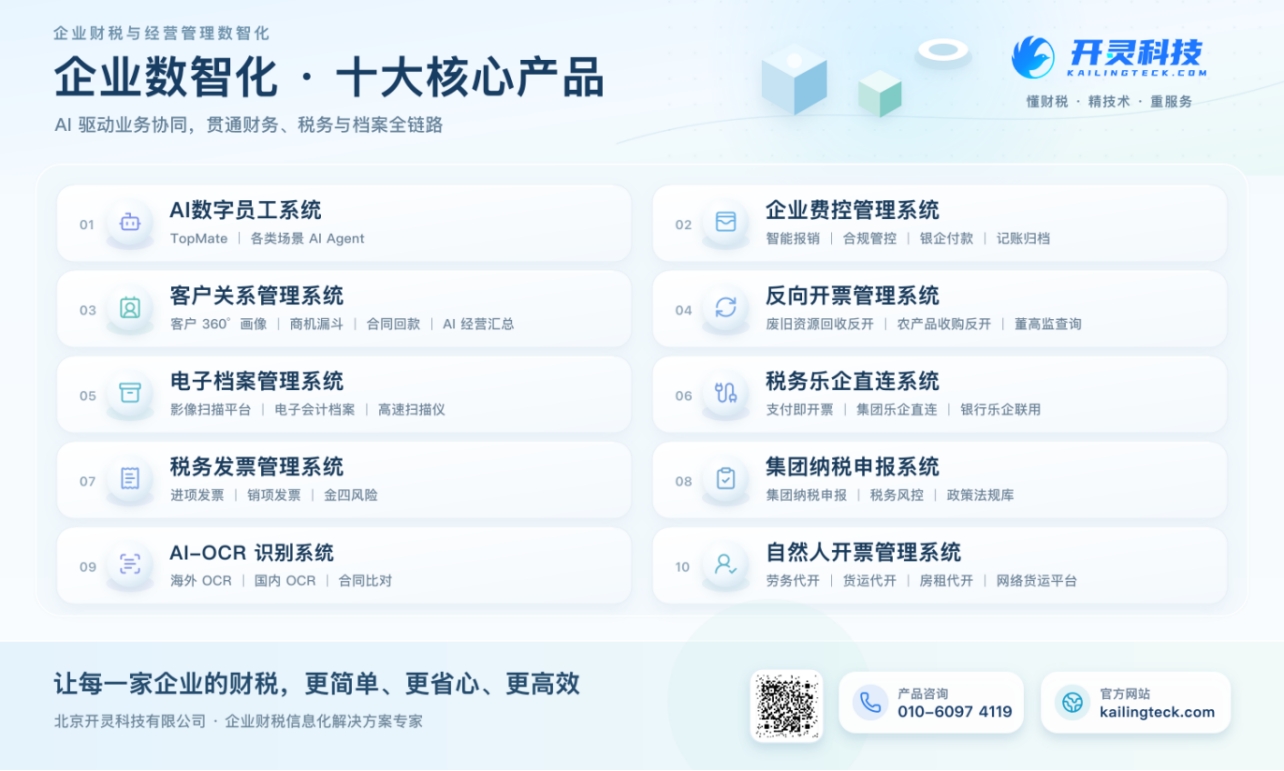
The company has now formed ten core product lines, including: AI digital employee system, enterprise expense control management system, customer relationship management system, reverse invoicing management system, invoice issuance for individuals management system, electronic archives management system, tax fully digitalized e-invoice Leqi system, tax invoice management system, group tax filing system, and AI OCR recognition system. It is committed to connecting enterprise business, finance, tax, funds, and archive data to help customers improve operational efficiency, business-finance-tax compliance capabilities, and digital management levels.
If you have any business-finance-tax digital transformation needs, welcome to contact us. Beijing Kailing Technology will serve you wholeheartedly.
 Keywords: Gas station invoice-on-transaction, fuel card top-up invoicing, QR code payment invoices, cash refueling invoicing, automated invoicing solutions
As a comprehensive business-finance-tax digitalization solution service provider, Kailing Technology provides business-finance-tax management digital transformation products and operational services for various government agencies, institutions, and large, medium, and small enterprises. The product line includes: solutions for sales contract management system, procurement contract management system, fully digitalized Leqi interface project, automatic output invoicing system, reverse invoicing system, invoice issuance for individuals system, employee expense control and reimbursement system, input VAT invoice management system, supply chain collaborative reconciliation system, image AI OCR recognition system, automatic financial bookkeeping system, electronic accounting archives system, etc., comprehensively driving the digitalization process across various fields.
Consultation Hotline: 18513895936 / 010-60974119 Location: Beijing