
Deducting input VAT with agricultural product purchase invoices: never step on these 3 pitfalls
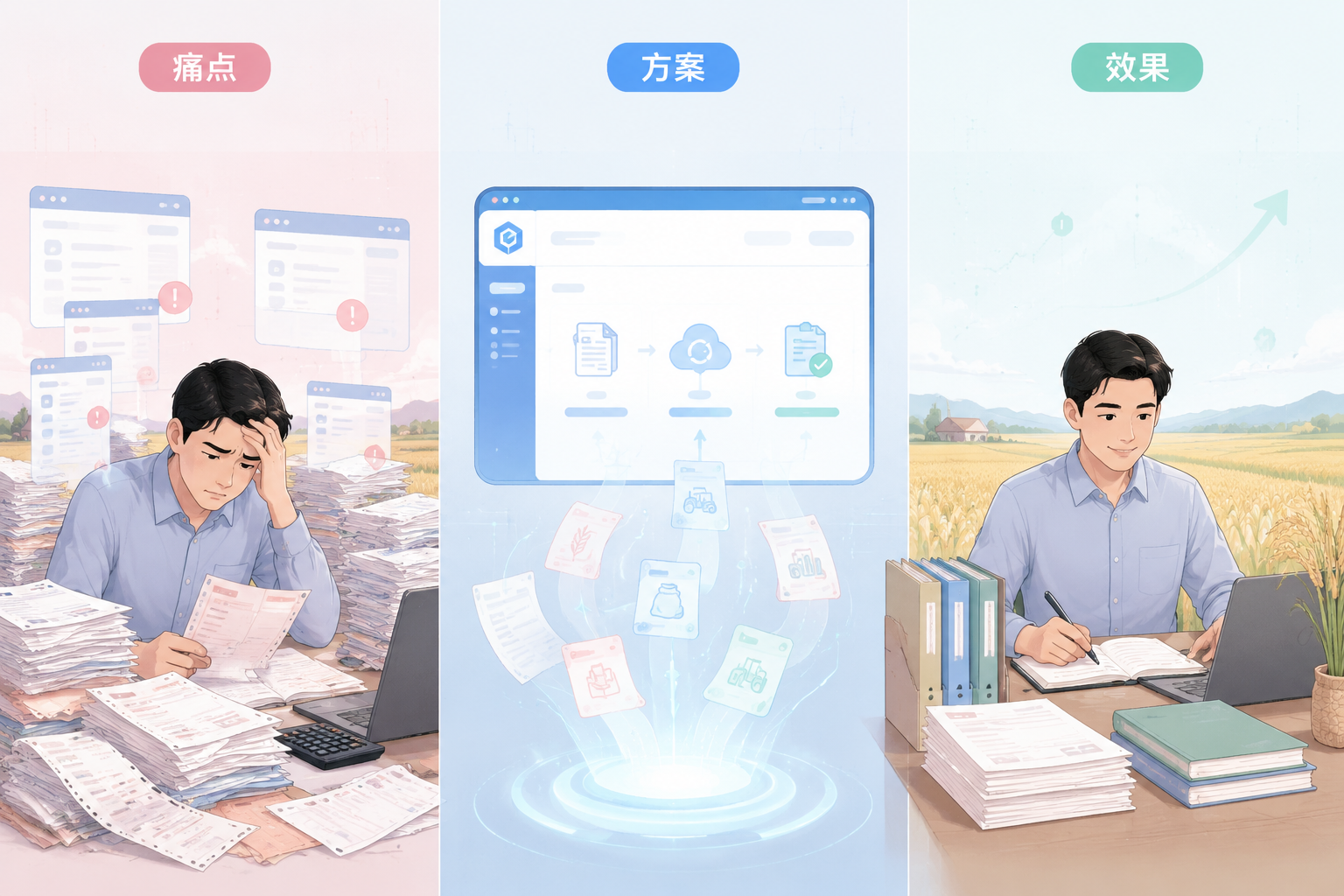
Agricultural product purchase invoices are an important voucher for many agriculture-related enterprises to deduct input tax, but the policies are complex and the operations are strict; a slight lapse may trigger tax risks. Many enterprises pay more tax or face audits because they do not understand the "self-issued and self-deducted" rules, use incorrect calculation methods, or improperly manage vouchers. Kailing Technology combines the latest policies to break down the core points for you.
| "Agricultural product purchase invoices can be self-issued and self-deducted, but they must be authentic, compliant, and traceable." |
▍1. What is an agricultural product purchase invoice? Why can it be deducted?
Agricultural product purchase invoices refer to invoices self-issued by the purchasing unit when purchasing self-produced tax-exempt agricultural products from individual agricultural producers. According to Article 8 of the Interim Regulations on Value-Added Tax, purchased agricultural products may calculate input tax based on the purchase price and a 9% deduction rate (for those used to produce goods at the 13% tax rate, an additional 1% is added). This is a special policy established by the state to reduce the tax burden on agriculture-related enterprises and encourage the circulation of agricultural products.
▍II. What are the "three elements" for deducting input VAT?
First, the purchase target must be an individual agricultural producer, and the products sold must be self-produced agricultural products; copies of ID cards, self-production certificates, etc. must be retained. Second, invoice issuance must be authentic, including purchase date, product name, quantity, unit price, amount, etc., and fraudulent invoicing is strictly prohibited. Third, the capital flow must be consistent; bank transfers are recommended to avoid cash transactions. At the same time, purchase invoices must be truthfully issued in the invoice management system and filed in accordance with regulations.
▍III. What mistakes are easily made when calculating deductions?
Common errors include: directly treating the acquisition invoice amount as the input tax amount (it should be purchase price × 9%); confusing agricultural products with agricultural by-products; failing to distinguish between situations used for producing 13% tax rate goods and direct sales. For example, acquired apples sold directly are deducted at 9%, while those processed into canned apples are deducted at 10% (additional 1%). In addition, if used simultaneously for taxable and tax-exempt projects, input tax amounts must be accurately allocated.
▍IV. How to avoid risks with digital tools?
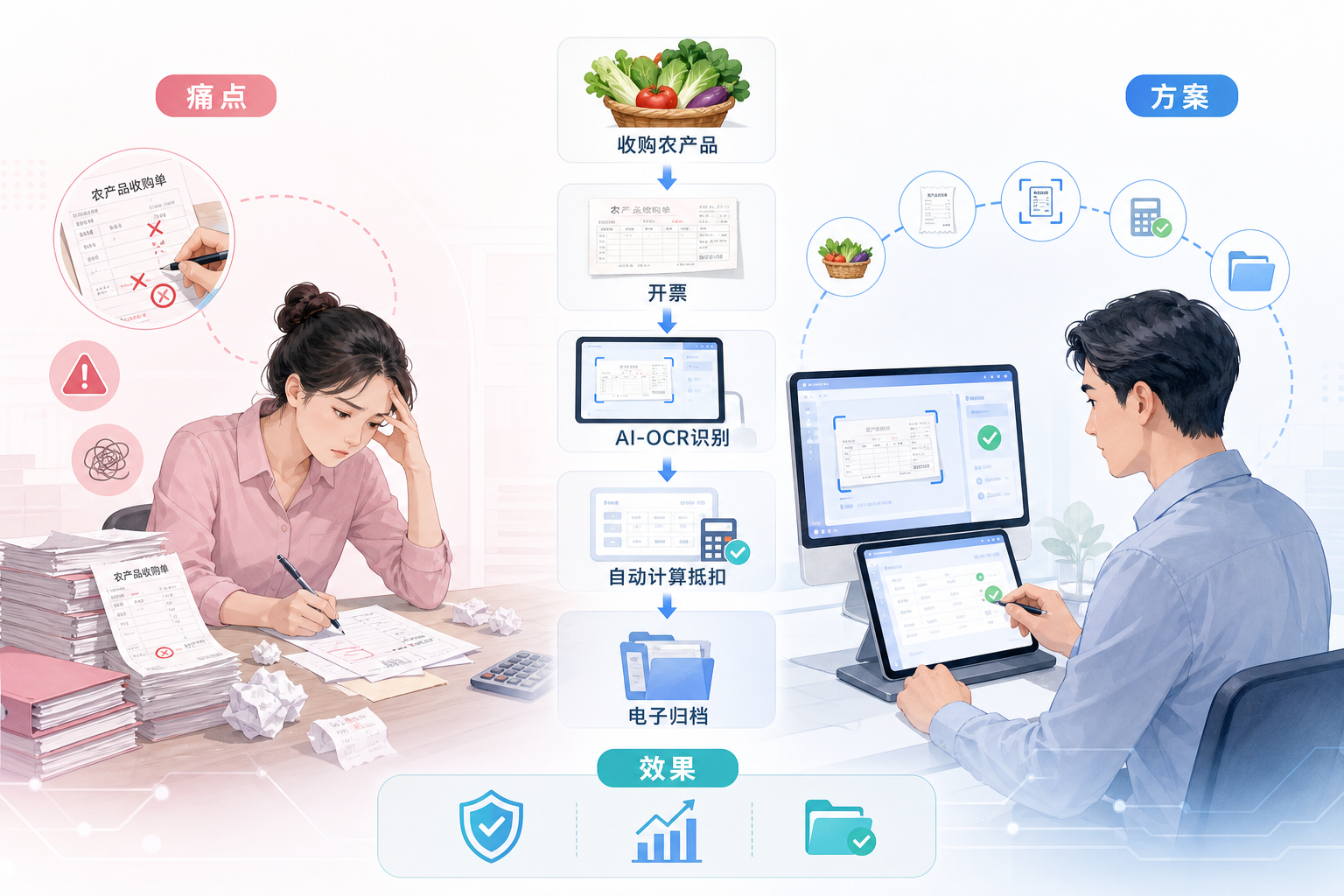
Traditional manual invoicing is error-prone and hard to trace. Kailing Technology provides a "reverse invoicing" + "AI OCR" solution: OCR automatically recognizes purchase voucher information, and the system automatically verifies invoice elements and deduction rates to generate compliant purchase invoices. At the same time, the electronic accounting archives module can archive all vouchers and support one-click retrieval during tax audits. In addition, AI digital employees can automatically calculate deductible input tax and warn of abnormal data, giving enterprises worry-free compliance.
Keywords: agricultural product procurement invoice, input VAT deduction, reverse invoicing, self-issued self-deducted, deduction rate, AI OCR, electronic accounting archives, Kailing Technology
As a comprehensive business-finance-tax digitalization solution service provider, Kailing Technology provides business-finance-tax management digital transformation products and operational services for various government agencies, institutions, and large, medium, and small enterprises. The product line includes: solutions for sales contract management system, procurement contract management system, fully digitalized Leqi interface project, automatic output invoicing system, reverse invoicing system, invoice issuance for individuals system, employee expense control and reimbursement system, input VAT invoice management system, supply chain collaborative reconciliation system, image AI OCR recognition system, automatic financial bookkeeping system, electronic accounting archives system, etc., comprehensively driving the digitalization process across various fields.
Consultation Hotline: 18513895936 / 010-60974119 Location: Beijing