
During reverse invoicing, what if the same individual has both an employment relationship and an individual business registration? Kailing Technology's individual director/supervisor/senior management inquiry platform returns multiple types of risks at once
If the same individual is found before reverse invoicing to have both an employment relationship and individual registration, the two types of information should not be merged into one vague label, nor should business personnel be left to guess on their own. Kailing Technology's individual director/supervisor/executive inquiry platform can return risk clues such as employment, director/supervisor/executive, legal representative, and individual industrial and commercial household registration in categories within the same inquiry, then handle them separately according to the entity rules of the reverse invoicing scenario, preserving the inquiry time and decision basis.
At the recycling site, it is common for one person to bring goods, enter an ID card, and wait for settlement. But "currently trading as an individual" cannot be established by an on-site declaration alone: the person may serve as a director or executive at a company, or may already be registered as a self-employed individual. If the system only returns "at risk," the site does not know whether to change the entity, supplement materials, or stop.
▍I. Why a vague "entity abnormality" cannot guide on-site business
The first breakpoint is that "a single risk label obscures the facts." Employment, directors and senior executives, legal representative, and individual registration belong to different dimensions. Showing only red/green lights prevents reviewers from seeing specific relationships, statuses, and query dates. It makes it difficult to trace natural person real-name information, employment relationships, individual registration, query time points, and business handling results.
What is more easily overlooked is that "a single transaction requires manually opening multiple query portals." Procurement, finance, or risk control query different information separately, screenshots are passed around in chats, and multiple types of results for the same person are difficult to merge and difficult to explain which result was used at the time. Once the relationship is broken, procurement, finance-tax, and risk control personnel at resource recycling enterprises have to find leads again, and subject classification, risk triage, and evidence retention before reverse invoicing are also delayed.
and so on. Once business piles up, "after a hit is found, there is no business outlet" will be amplified. The system tells the user "not passed" but does not explain whether to switch to invoicing as an individual entity, supplement the relationship explanation, hand it to business-finance-tax review, or terminate directly, and the business stalls on site. If "after a hit is found, there is no business outlet" is not closed out, you will have to make up for it later.
▍II. Multi-identity verification returns facts first, then decides based on the reverse invoicing scenario
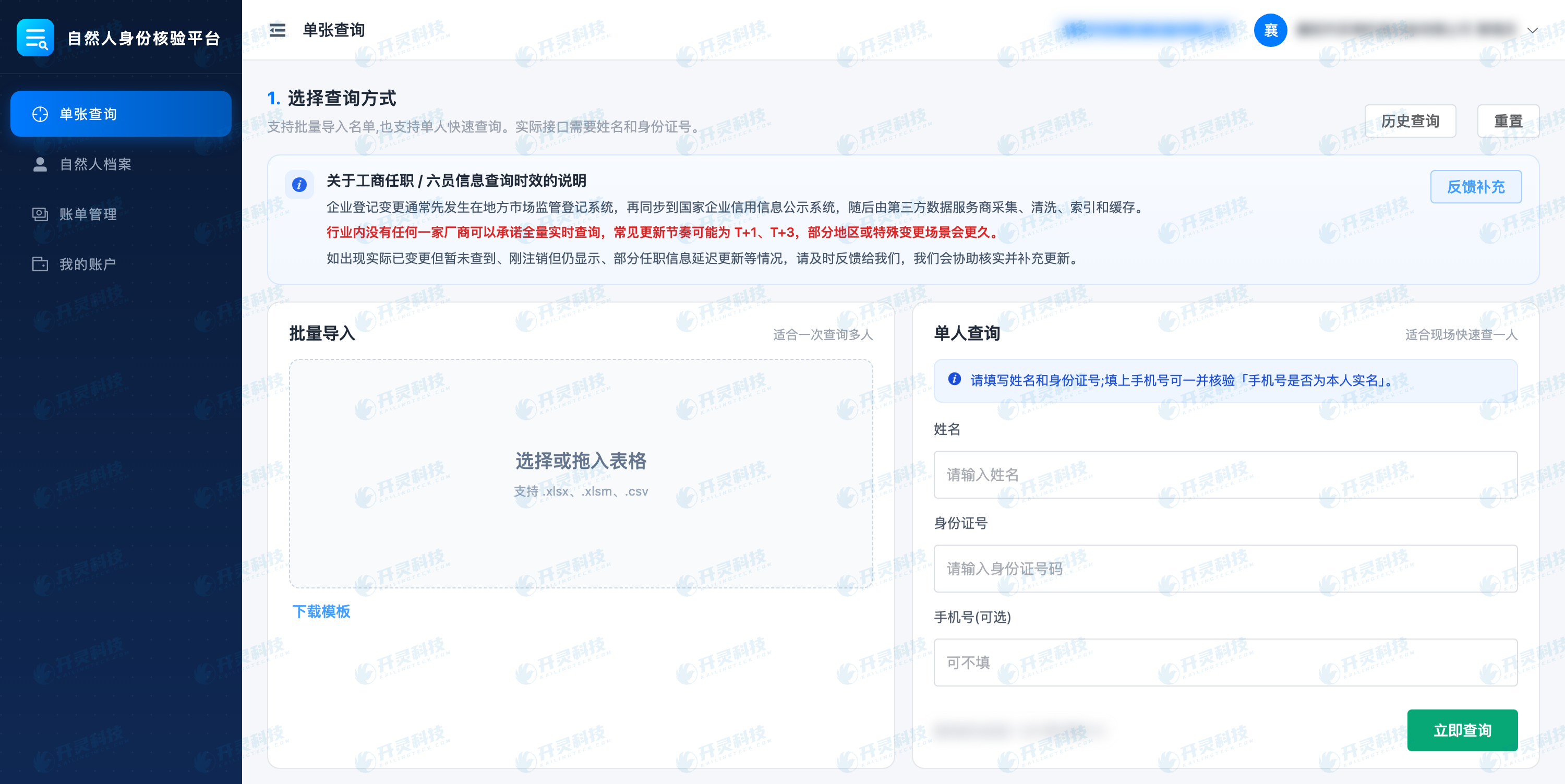
Multi-identity verification for natural persons uses the same real-name subject to initiate a query, returning information such as legal representative, director, supervisor, senior manager, employment relationship, and individual industrial and commercial household registration in categories, then binding it to the current transaction type, entity rules and invoicing path. It answers "what relationships require attention", rather than simply drawing a legal or illegal conclusion about a person.
For multi-identity verification of individuals in reverse invoicing, what is truly worth connecting is not an isolated button, but the business relationships among individual real-name information, employment relationships, individual registration, query time points, and business handling results. The Kailing Technology individual director, supervisor, and senior management query platform organizes data and operations around multi-identity verification of individuals in reverse invoicing, allowing users to see the next step in their original work context and allowing managers to review the entire path.
The Kailing platform consolidates multiple types of query results in the same record, linked to individual profiles, goods receipt notes and invoicing applications. Entities clearly not meeting the conditions are blocked before invoicing, situations requiring explanation are forwarded to authorized personnel, and the query time and handling opinions are retained.
▍III. How the Kailing Technology individual director, supervisor, and senior management inquiry platform runs key processes end to end
Collect real-name subjects once. Obtain the individual identifier from the current goods receipt or invoicing application, avoiding discrepancies introduced by repeated manual entry. It turns the temporary action in multi-identity verification of individuals for reverse invoicing into a stateful step.
Parallel querying of multiple types of relationships. Within the scope of authorization and compliance, obtain categorized leads on employment, directors and senior executives, legal persons, and individual registrations. It turns temporary actions in multi-identity verification of natural persons for reverse invoicing into a stateful step.
Display details by risk type. It does not use one overall conclusion to cover all situations, but displays related objects, status, source and query time point. It turns temporary actions in multi-identity verification of natural persons for reverse invoicing into stateful steps.
Match with invoicing scenario rules. According to the target conditions of specific businesses such as resource recycling reverse invoicing, release, interception, or manual handling is generated. It turns temporary actions in multi-identity verification of individuals for reverse invoicing into a stateful step.
Retention decisions and subsequent changes. Query results, manual opinions, entity replacement and final invoicing status are written back to the same business record. It turns temporary actions in the multi-identity verification of natural persons for reverse invoicing into a stateful step.

▍IV. From manual inquiry to explainable routing: what business staff see
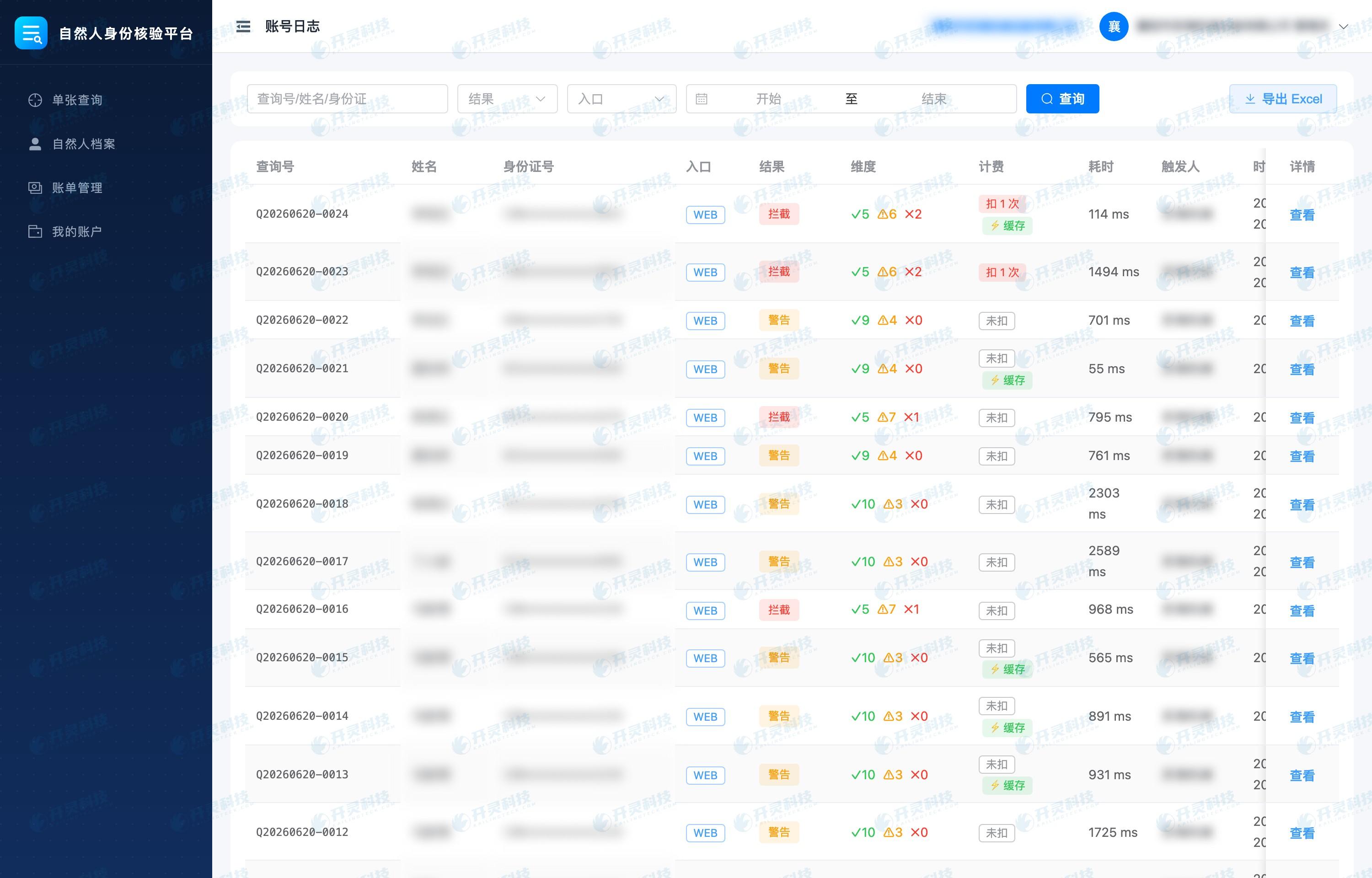
One of the capability priorities is that multiple types of risk results are returned at once. If a natural person hits multiple types of information at the same time, the page can display them in sections, avoiding repeated searches across multiple web pages by procurement and finance-tax staff. Procurement, finance-tax, and risk control personnel at resource recycling enterprises can therefore directly see the next step.
One of the capability priorities is that query results are bound to business documents. Results are not left in temporary screenshots, but are linked to receipt, contract, payment, and invoice records, allowing later reverse lookup by document. When anomalies occur, handlers can see the context of query results bound to business documents.
One of the capability priorities is that different hits correspond to different processing routes. Explicit prohibitions are intercepted before invoicing, cases with complex relationships or information timeliness requiring confirmation are transferred to humans, and clues such as individual registration can also prompt re-confirmation of the invoicing entity. This allows natural person real-name information, employment relationships, individual registration, query time points, and business handling results to naturally accumulate in the business.
One of the capability priorities is that query time and manual opinions are traceable. Entity information changes, and the system retains the result and handler for that instance, so future users do not need to overwrite the business judgment at that time with today's status. Users feel fewer steps, while the back end completes the coordination of traceable query time and manual opinions.
▍V. After moving entity validation upstream, how site operations, business-finance-tax, and risk control all benefit
For frontline users, the most direct change comes from no longer having to ask back and forth on site. Procurement staff can directly see the hit type and the next action, without having to take a vague red label and explain it level by level. Ultimately, entity classification, risk triage and evidence retention before reverse invoicing rely less on individual experience.
From a management perspective, business-finance-tax review focuses on specific relationships, making originally hidden processes visible. The review page already carries the object, relationship, status, and query time point, allowing professionals to spend time on judgment and handling rather than repeatedly searching for materials. Ultimately, entity classification, risk triage, and evidence retention before reverse invoicing rely less on individual experience.
In long-term operations, the fact that entity risks can be continuously managed determines whether the system becomes smoother with use. Multiple transactions by the same person, information changes, or processing route adjustments all remain in the history, and entity verification is no longer a one-time operation. Ultimately, entity classification, risk routing, and evidence retention before reverse invoicing rely less on personal experience.

▍VI. Which types of reverse invoicing business most need multiple risk types returned at once
For recycling enterprises with many individual suppliers, many procurement sites, and the need for rapid on-site settlement, where entity queries still rely on multiple websites and manual screenshots, it is suitable to move multi-identity queries earlier, between natural person file creation and invoice application. First make hit information explainable, then let clear rules automatically route.
If an enterprise has repeatedly encountered "a single risk label obscuring the facts" and "one transaction requiring manual opening of multiple query portals," it usually indicates that multi-identity verification of individuals for reverse invoicing is no longer suitable to continue relying on manual connection. Starting from the highest-frequency business chain with the clearest responsible person, first connect individual real-name information, employment relationships, individual registration, query time points, and business handling results, then gradually expand the scope. This is often easier to turn into a sustainable business experience than merely adding another tool.
The value of entity verification is not an extra "query" button, but enabling the business to understand the source of risk and how to handle it before invoicing. Kailing Technology connects identity clues, rules, and documents so that subsequent processing is traceable.
▍FAQ
Q: If employment relationship and individual registration are both matched, which should prevail?
A: The two types of information are not mutually overriding single-choice options. The object, status, and time should be viewed separately, and then handled according to the entity conditions of the current reverse invoicing business.
Q: After matching an individual business registration, can invoicing still be done directly as an individual?
A: It should not proceed directly based on on-site declarations alone. The handling method needs to be confirmed based on the actual entity of the current transaction, business rules, and the competent tax authority's position.
Q: Do query results need to be saved every time?
A: It is recommended to retain the query time point, hit type, status, handler, and final result, because entity information changes over time.
Q: Will returning multiple risk types at once make the page more complex?
A: The key lies in categorized display and configured handling routing. The page should first tell users which category of hits affects the current business, then provide details and follow-up actions.
Let every reverse invoicing proceed only after the entity risk is clearly explained. Welcome to visit Kailing Technology: https://www.kailingteck.com/ziranren-chayan/ .
As a national high-tech enterprise, Kailing Technology focuses on the digital and intelligent transformation of enterprise business-finance-tax and operations management, providing software products, system integration, implementation and delivery, and operational services for various government agencies, institutions, group enterprises, and SMEs.
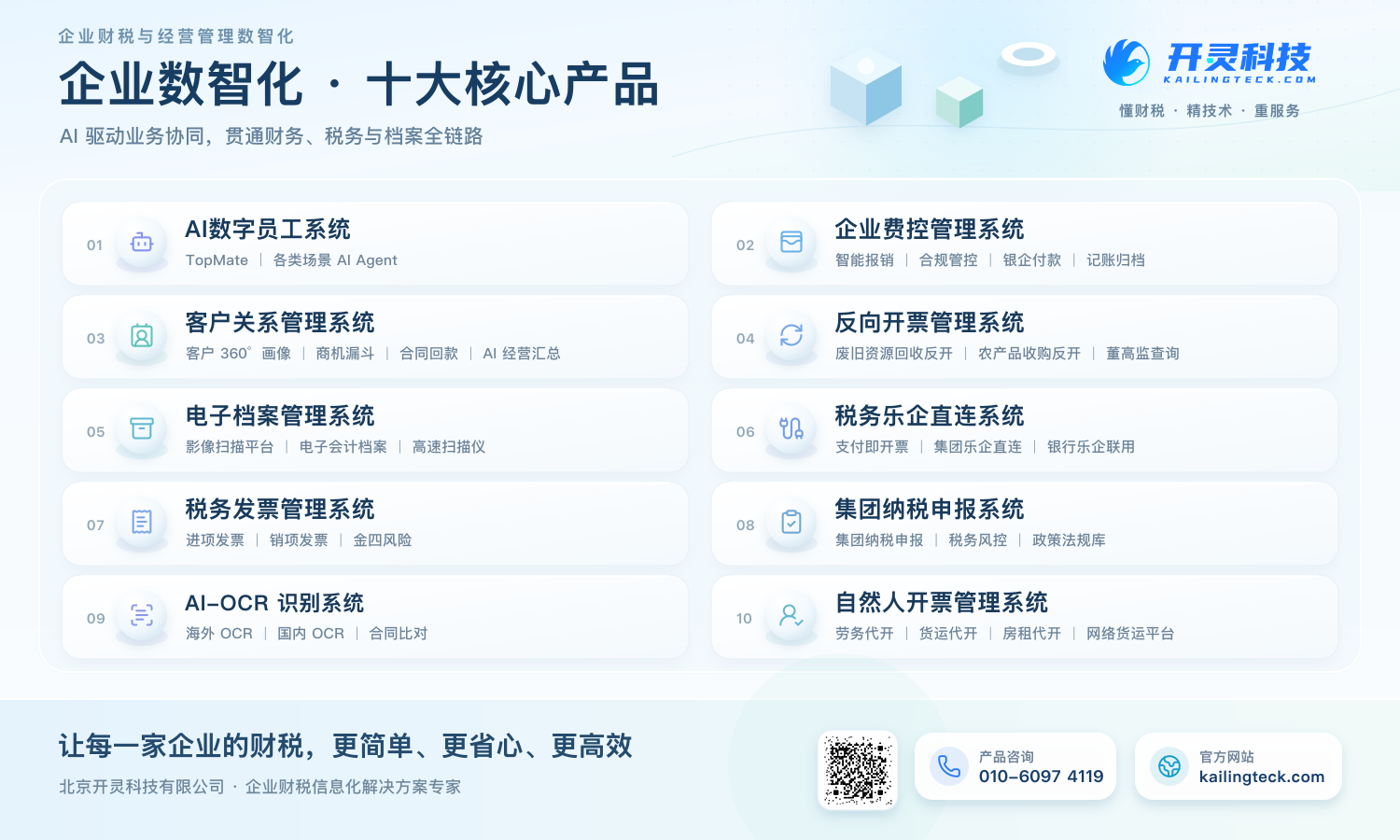
The company has now formed ten core product lines, including: AI digital employee system, enterprise expense control management system, customer relationship management system, reverse invoicing management system, invoice issuance for individuals management system, electronic archives management system, tax fully digitalized e-invoice Leqi system, tax invoice management system, group tax filing system, and AI OCR recognition system. It is committed to connecting enterprise business, finance, tax, funds, and archive data to help customers improve operational efficiency, business-finance-tax compliance capabilities, and digital management levels.
If you have any business-finance-tax digital transformation needs, welcome to contact us. Beijing Kailing Technology will serve you wholeheartedly.
Keywords: reverse invoicing, individual director/supervisor/executive inquiry, employment relationship, individual industrial and commercial household registration, invoicing entity verification
As a comprehensive business-finance-tax digitalization solution service provider, Kailing Technology provides business-finance-tax management digital transformation products and operational services for various government agencies, institutions, and large, medium, and small enterprises. The product line includes: solutions for sales contract management system, procurement contract management system, fully digitalized Leqi interface project, automatic output invoicing system, reverse invoicing system, invoice issuance for individuals system, employee expense control and reimbursement system, input VAT invoice management system, supply chain collaborative reconciliation system, image AI OCR recognition system, automatic financial bookkeeping system, electronic accounting archives system, etc., comprehensively driving the digitalization process across various fields.
Consultation Hotline: 18513895936 / 010-60974119 Location: Beijing