
Agricultural product procurement vouchers never match? How Kailing Technology's reverse invoicing Leqi joint use solution connects weighing, payment, and invoicing
In agricultural product procurement, weighbridge tickets, payment receipts, and procurement invoices are handled by different positions, making it easy for the numbers to match while not referring to the same batch of goods. What Leqi Direct Connection integration must solve is not placing the three vouchers in one folder after the fact, but allowing a confirmed procurement order to enter the bank or payment platform, synchronously triggering the agricultural product procurement invoice when the enterprise pays online, with the invoice and payment results returning to the original order.
Kailing Technology's reverse invoicing Leqi joint use solution runs through the site and platform with the procurement business identifier. Weighbridges, log scaling, or acceptance provide the quantity basis, the enterprise system forms procurement orders, the partner platform generates original transaction and payment data and calls Leqi capabilities for invoicing, and Kailing receives payment and invoice results and then completes business write-back and five-flow archiving. Every result can be traced to its source.
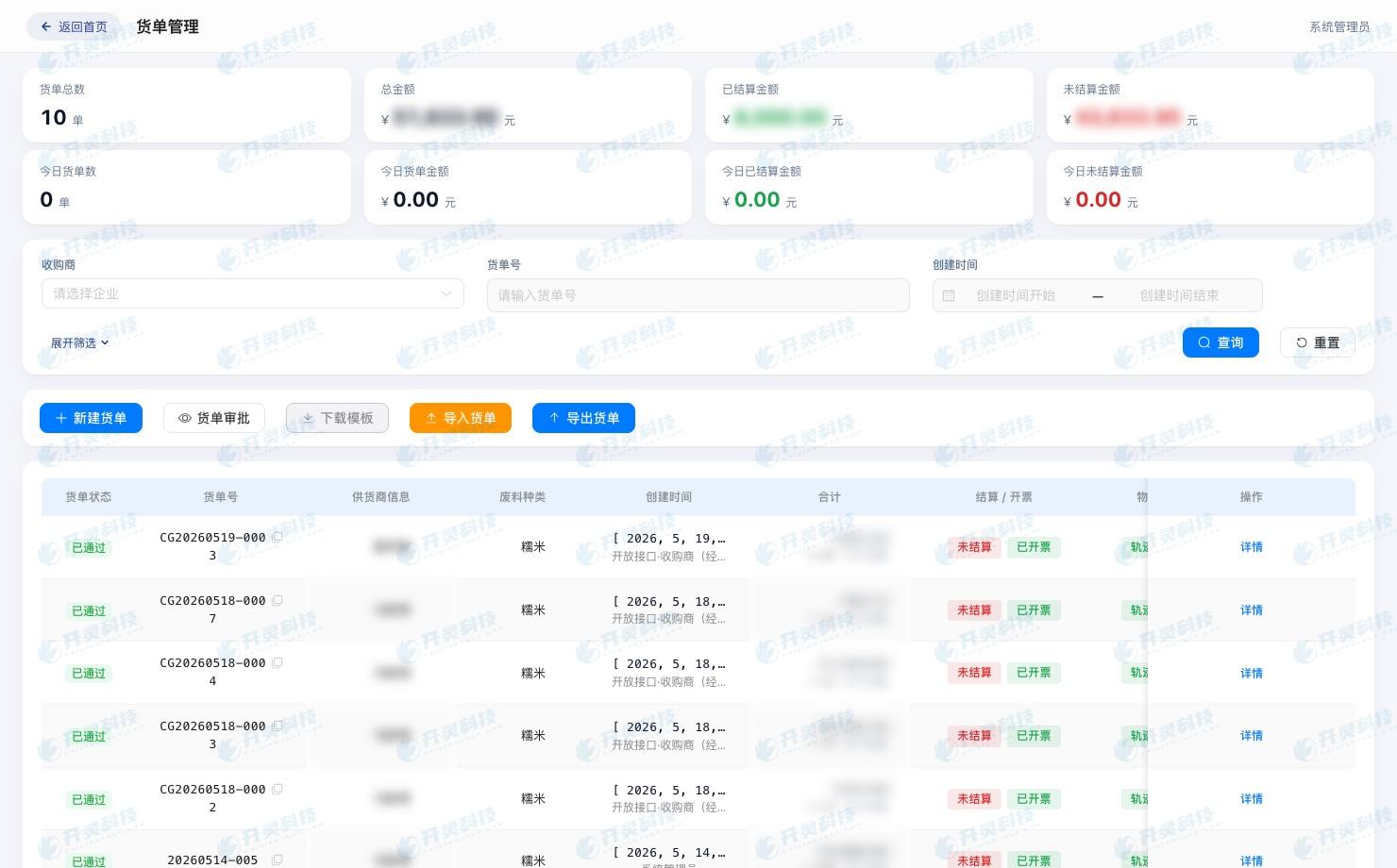
▍1. On-site data first forms a payable purchase order
After agricultural products arrive on site, the system records the farmer, category, gross weight, tare weight, net weight, grade, unit price, time, location, and handler. Log scaling, piece counting, or manual acceptance scenarios also use the corresponding original records. After impurity deduction, quality adjustment, and warehousing confirmation are completed, Kailing forms a pending-payment procurement order according to enterprise rules.
Original weighing or acceptance data and final settlement data are stored separately. When equipment re-transmits, manual corrections, returns or re-grading occur, the system records the reason for the change and the confirming person. Only orders with complete status, valid farmer profiles, and amounts derivable from details enter the Leqi Direct Connection platform.
▍II. The platform generates original transaction and fund payment/receipt data
After an acquiring enterprise is invited by a bank or payment platform to become a Leqi user unit, Kailing transmits the confirmed order fields to the designated platform. Based on transaction or fund receipt/payment data formed by the platform's own system, the platform establishes a platform order number and keeps it corresponding to the enterprise purchase order number, farmer platform identifier, and payable amount.
If farmers, amounts, or categories need to change, the enterprise should withdraw or update the order according to platform rules before payment, while retaining adjustment records on the enterprise side. After the platform has completed payment, it must not only modify the weighbridge ticket or purchase order to make up the amount; this would cause the business flow to lose a common source with the funds and invoice records.

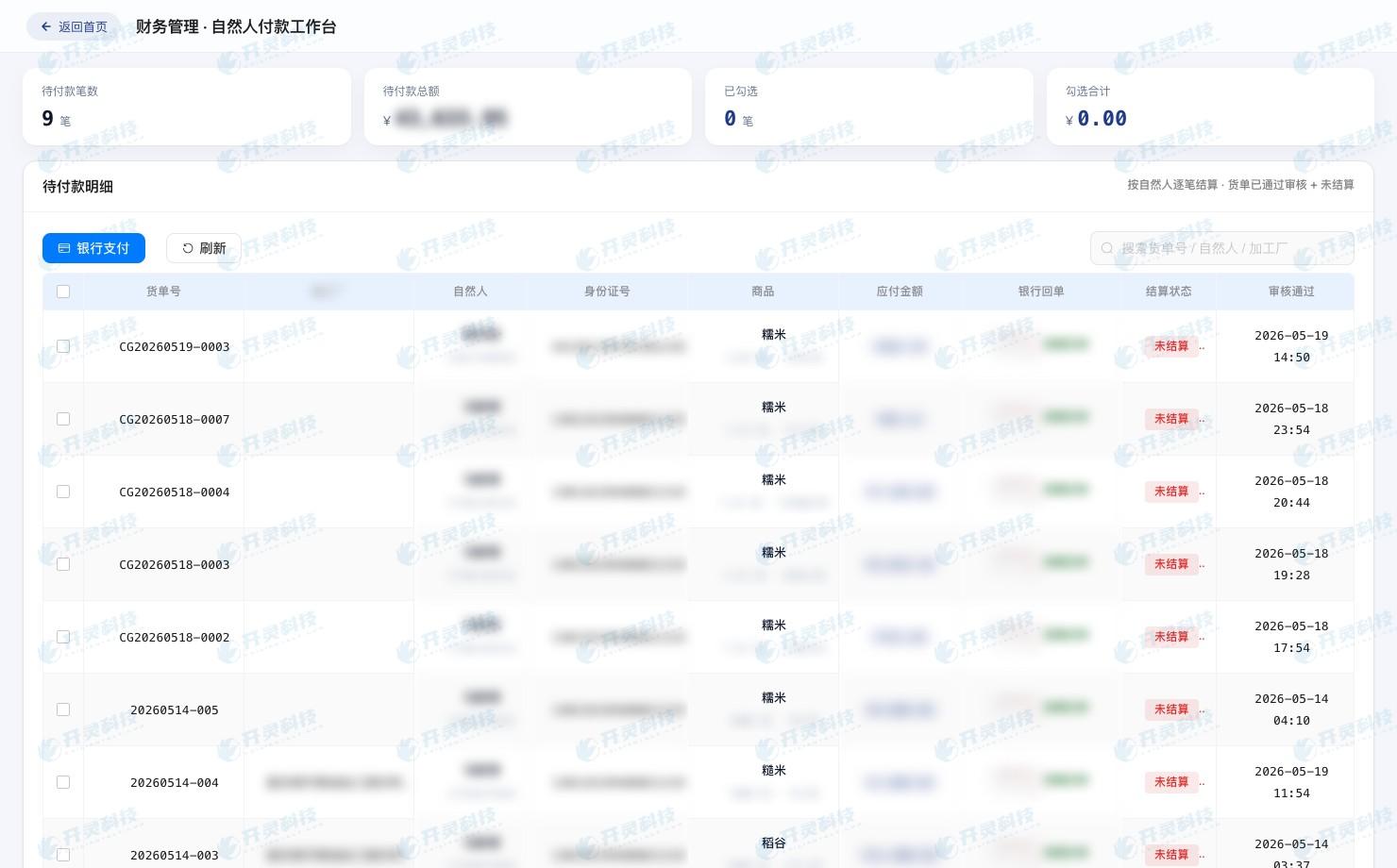
▍3. Payment actions bring out invoicing information
Finance selects pending payment orders on the partner platform, verifies the farmer, goods, and amount, and then initiates payment. Farmers confirm according to the platform process, payment data and invoicing information are processed in sync, and the platform calls Leqi capabilities to issue agricultural product purchase invoices. Enterprises do not need to re-enter the payment list into the invoicing system; the invoice amount directly inherits the already confirmed platform transaction.
When merging payments for multiple batches, both the platform batch number and the enterprise's order-by-order relationship must be retained; when splitting payments for a single acquisition, each payment and corresponding invoice status must also be recorded. The summary view facilitates financial operations, while the order-by-order relationship is used to explain which goods an invoice comes from and which orders a payment covers.
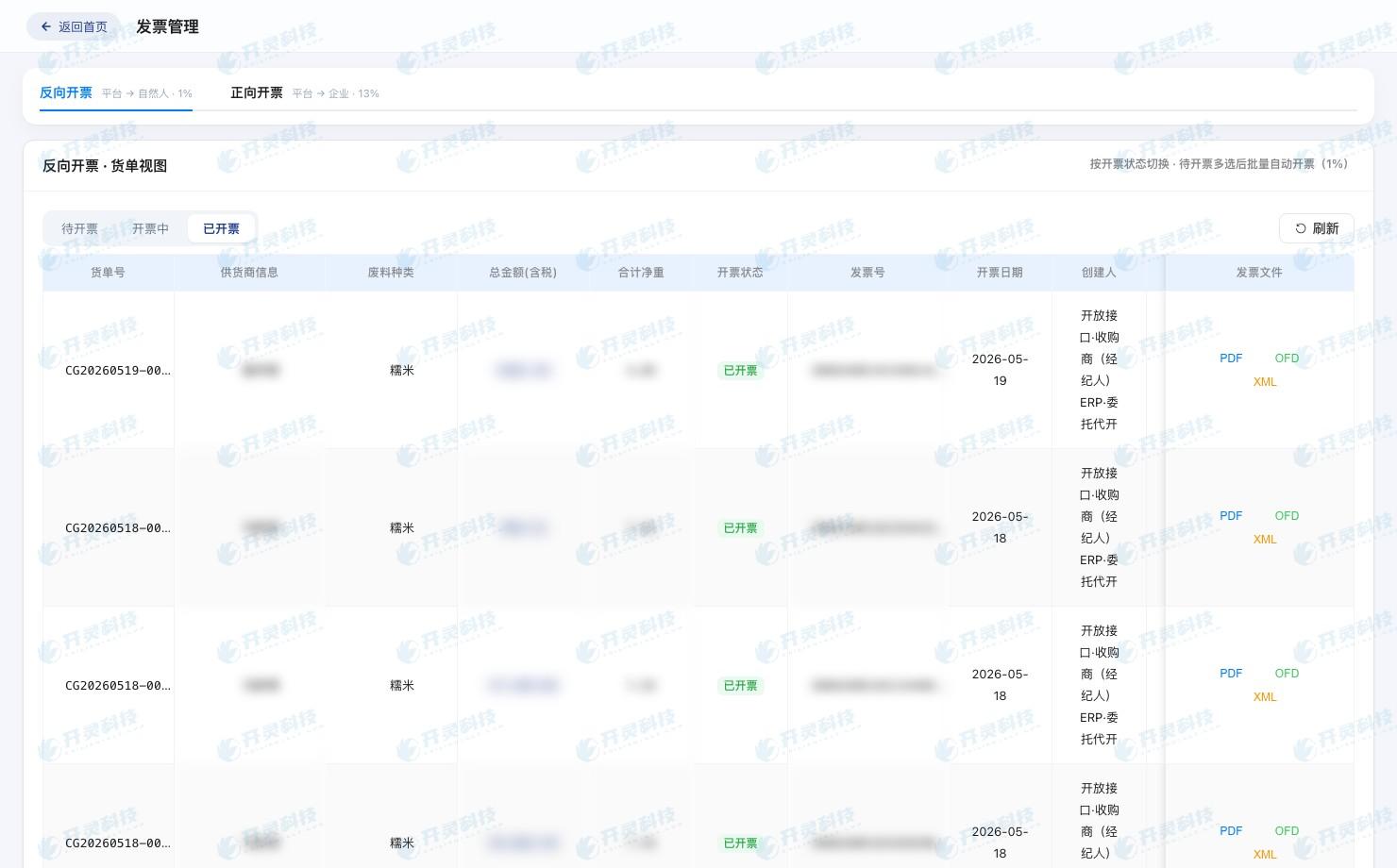
▍IV. Invoicing results return to weighing and acceptance records
Kailing receives the platform order number, payment transaction, receiving account, actual paid amount, invoice number, invoicing time, and electronic file, and writes them back to the original purchase business. From the invoice entering the system, it can locate the farmer profile, original weighing value, adjustment records, and payment; from the weighbridge ticket, it can also see whether the platform order and documents are complete.
Payment success but invoice return timeout does not mean payment can be made again. The system first queries the actual status using the original platform order number, and only after confirming that the invoice has not yet been generated does it compensate according to platform rules. Blocked invoicing, unconfirmed farmers, or returned payments should enter different queues, and the reason returned by the platform should be given to the corresponding role.
▍V. After three-flow linkage is implemented, five-flow archiving is formed
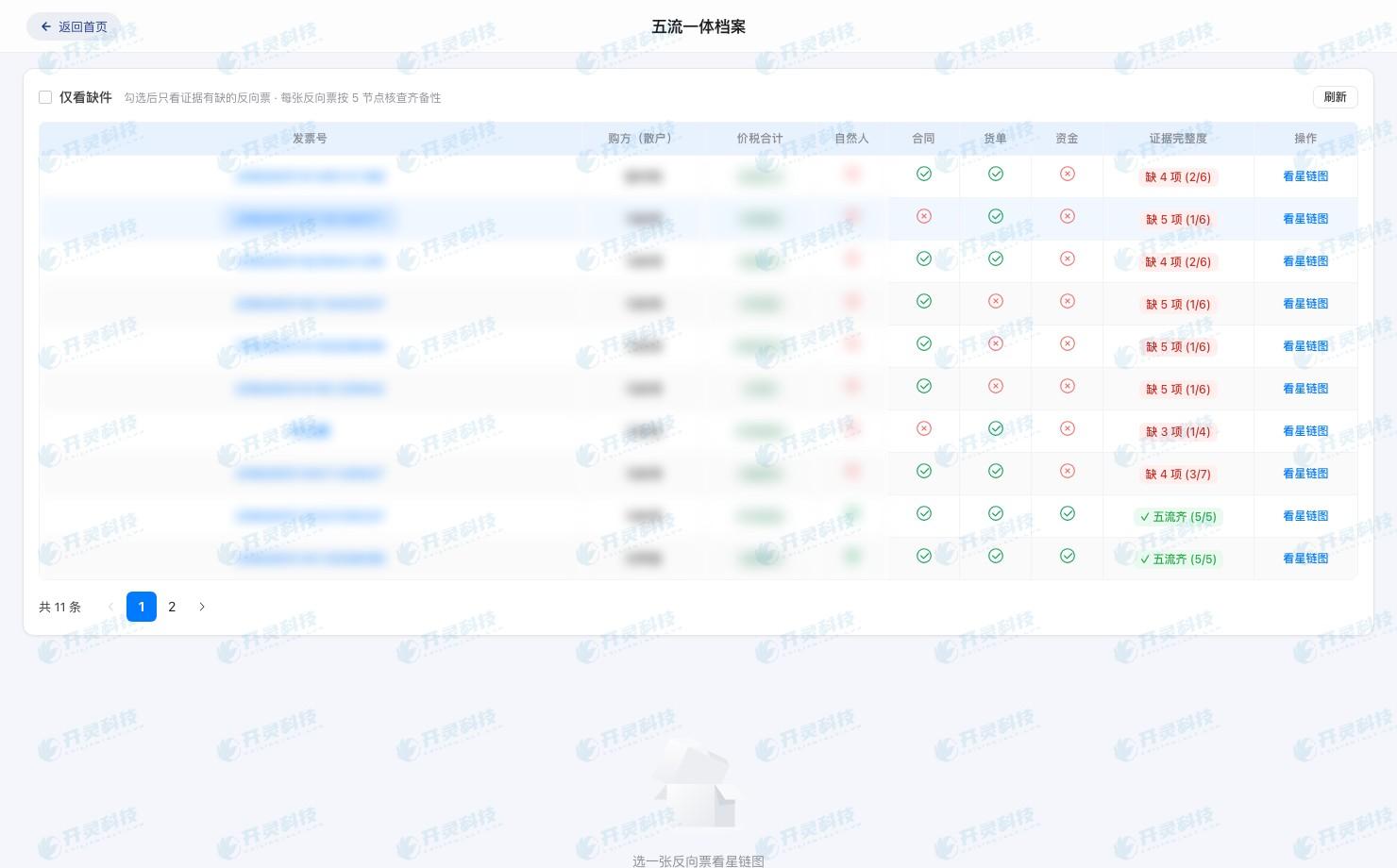
Leqi Joint Use places the relationship between enterprises and farmers, platform payments, and purchase invoices into the same online processing flow, reducing manual matching between vouchers. On this basis, Kailing forms a five-flow integrated ledger: farmer and self-produced material information, contracts or purchase agreements, weighing and acceptance into inventory, purchase invoices, and payment records each enter their corresponding evidence category.
Five flows in one does not mean building another set of data parallel to the platform. The payments and invoices returned by the platform directly enter the fund flow and tax flow, while the enterprise's existing farmer, contract, and on-site records constitute the other three types of materials. They share the purchase order number and platform order number, satisfying both daily reconciliation and convenient retrieval by farmer, batch, and document.
▍FAQ
Q: Will an invoice be issued automatically once weighing is completed?
A: No. Farmer and business verification must also be completed, a platform order formed, and actual payment made; the specific trigger method is subject to the partner platform's rules.
Q: Can multiple acquisitions be combined into one payment?
A: Yes, it can be handled according to platform and enterprise rules, but the allocation relationship between platform batches and the enterprise's transaction-by-transaction acquisitions and invoices must be retained.
Q: What if payment succeeds but no invoice is received?
A: First use the original platform order number to check payment and invoicing status, then decide whether to compensate or transfer to manual handling. Direct duplicate payment is not allowed.
Q: Do employees need to re-enter data for the five-flow ledger?
A: No repeated transcription is needed. Kailing automatically collects and establishes associations from on-site business and platform-returned results.
Let every agricultural product purchase invoice trace back to weighing, platform orders, and actual payment. Welcome to visit Kailing Technology: www.kailingteck.com .
As a national high-tech enterprise, Kailing Technology focuses on the digital and intelligent transformation of enterprise business-finance-tax and operations management, providing software products, system integration, implementation and delivery, and operational services for various government agencies, institutions, group enterprises, and SMEs.
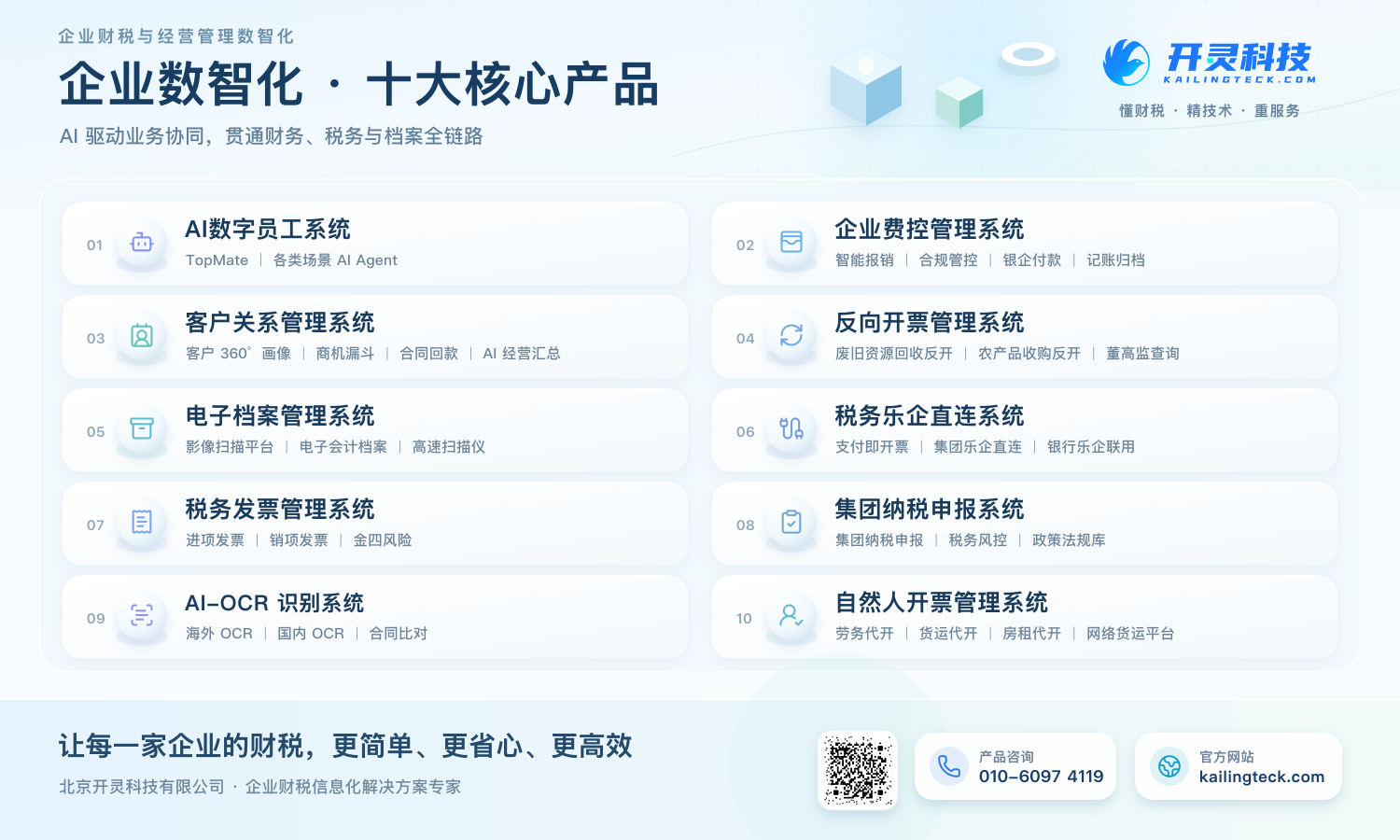
The company has now formed ten core product lines, including: AI digital employee system, enterprise expense control management system, customer relationship management system, reverse invoicing management system, invoice issuance for individuals management system, electronic archives management system, tax fully digitalized e-invoice Leqi system, tax invoice management system, group tax filing system, and AI OCR recognition system. It is committed to connecting enterprise business, finance, tax, funds, and archive data to help customers improve operational efficiency, business-finance-tax compliance capabilities, and digital management levels.
If you have any business-finance-tax digital transformation needs, welcome to contact us. Beijing Kailing Technology will serve you wholeheartedly.
 Keywords: Agricultural product procurement weighing, payment and invoicing, payment-triggered invoicing, Leqi integration, five flows in one, Kailing Technology
As a comprehensive business-finance-tax digitalization solution service provider, Kailing Technology provides business-finance-tax management digital transformation products and operational services for various government agencies, institutions, and large, medium, and small enterprises. The product line includes: solutions for sales contract management system, procurement contract management system, fully digitalized Leqi interface project, automatic output invoicing system, reverse invoicing system, invoice issuance for individuals system, employee expense control and reimbursement system, input VAT invoice management system, supply chain collaborative reconciliation system, image AI OCR recognition system, automatic financial bookkeeping system, electronic accounting archives system, etc., comprehensively driving the digitalization process across various fields.
Consultation Hotline: 18513895936 / 010-60974119 Location: Beijing