
Always searching for files during temporary audit archive retrieval? How Kailing Technology's AI Electronic Accounting Archives Management System enables full-text search and traceable retrieval

Slow temporary audit archive retrieval is often not because the archives do not exist, but because query conditions are scattered, files cannot be full-text searched, and the borrowing scope must be confirmed on the spot. Kailing Technology's Electronic Accounting Archives Management System can uniformly index archive metadata and searchable text, support combined location by entity, period, voucher, amount, invoice, and keywords, and record application, authorization, viewing, and export actions.
Fast retrieval does not mean everyone can freely download. Audit access requires putting search capability, access permissions, material delivery and expiration recovery into one process: the clearer the authorization scope, the less temporary communication; the more traceable each access, the more archive security and audit efficiency can both be achieved.
▍1. First translate audit questions into combinable search conditions
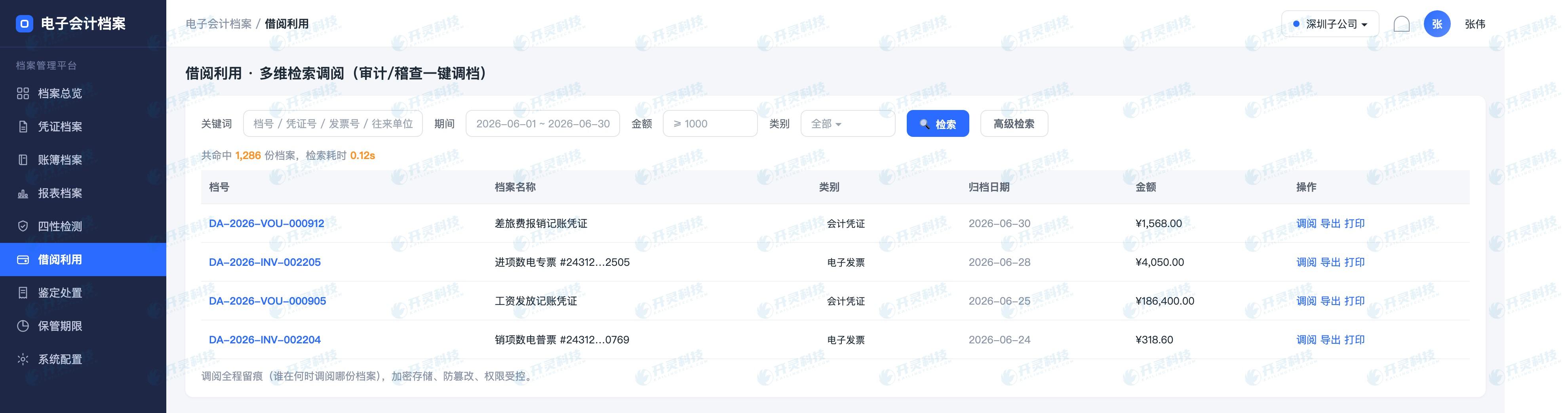
Auditors may ask by supplier, time period, amount range, expense type, or contract keyword, while archive catalogs are usually managed by category and period. The system must enable combined queries across business fields, accounting fields, and archive fields, and display the hit location of each result.
A keyword hit can only serve as a clue. For structured conditions such as amounts, dates, and voucher numbers, controlled metadata filtering should be used first; for contract clauses, summaries, or image text, full-text indexing should then be used as a supplement. Combining the two can reduce false hits caused by homophones, typos, or OCR deviations.
▍II. The Kailing Technology electronic accounting archives management system lets hit results trace back to the original document
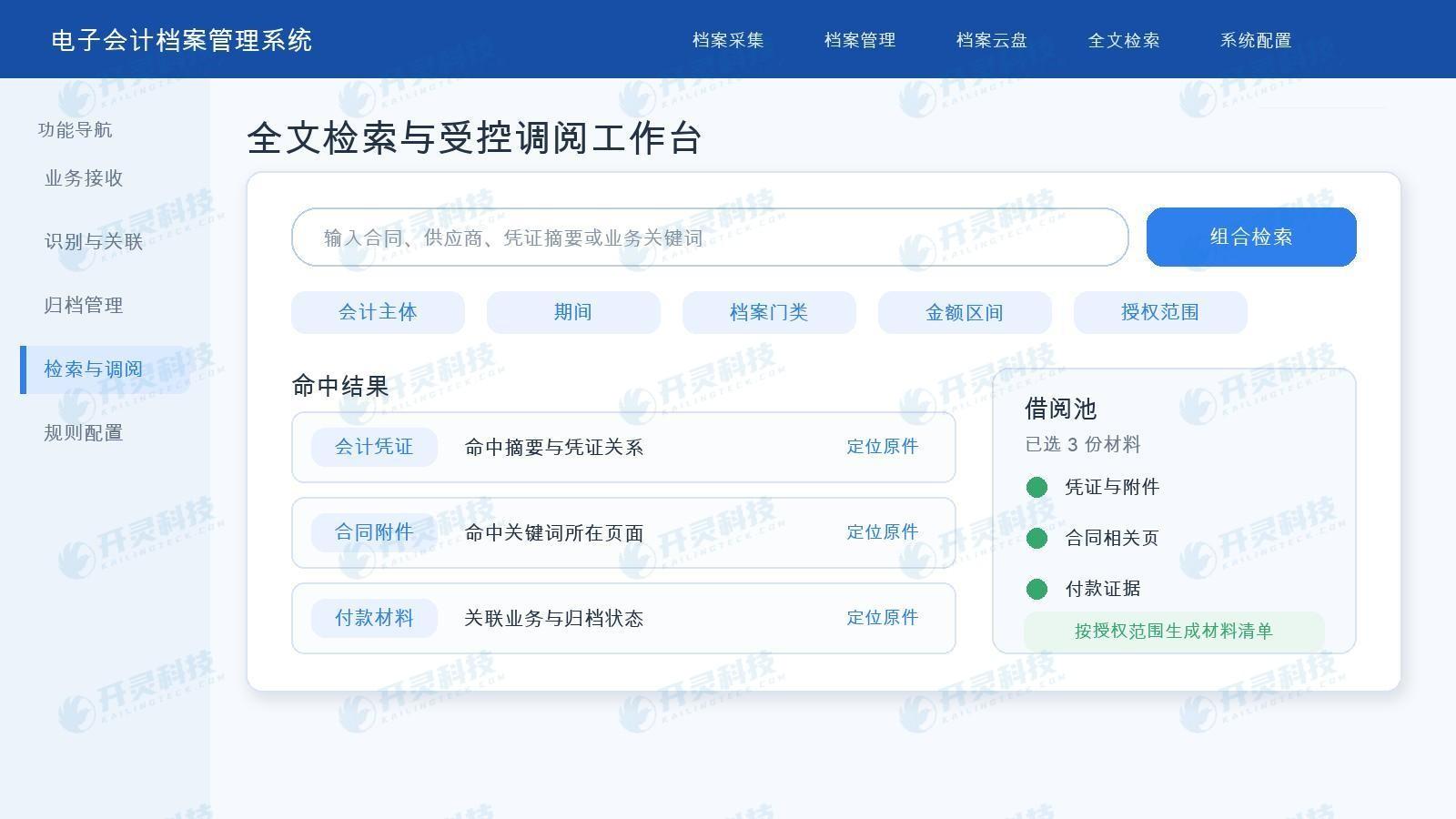
Search results should display the archive number, voucher relationships, document type, matched snippets, and retention status; clicking a result locates the original document or the corresponding page. If search only returns a file name, auditors still need to download and review each document one by one, and the value of full-text search never reaches the actual work action.
OCR text, structured data, and the original file must remain associated. When manually correcting index text, the original electronic voucher should not be modified; the index version and the corrector should be recorded. This improves subsequent search quality while preventing auxiliary recognition results from being mistaken for original evidence.

▍III. Access permissions must be detailed to scope, action, and validity period
Internal audit, external audit, business review, and regulatory inspection have different authorization boundaries. Access applications should specify the organization, period, archive category, purpose, and duration, and distinguish actions such as viewing, printing, downloading, and exporting lists. Temporary accounts must not be retained long-term just because a project has ended.
When personal information, trade secrets, or other sensitive content is involved, desensitization, masking, or minimum-scope delivery may be carried out according to the system. Authorized persons need to see the application target and the estimated result scope, avoiding a single request to "check a certain supplier" actually exposing a large number of archives unrelated to the task.
| "High-quality file retrieval is not exporting more files at once, but accurately delivering the required evidence within the minimum authorization scope. |
▍IV. Every view, download, and handover should leave an understandable record
Logs cannot just record "user access successful." Traceable records should include the application form, authorizer, query conditions, viewed objects, download or print actions, time, and terminal information. Batch exports also need to save a result list, making it easy to confirm afterward exactly which materials were delivered.
If the access scope is expanded, the period is extended, or materials are supplemented, changes should be made through the original application and the differences before and after should be retained. It is not advisable to directly open access after oral consent. After expiration, the system withdraws permissions and confirms the disposal status of temporary files, which is considered completion of a closed-loop access.
▍V. Retrieval quality needs continuous calibration with missed-detection and false-detection samples
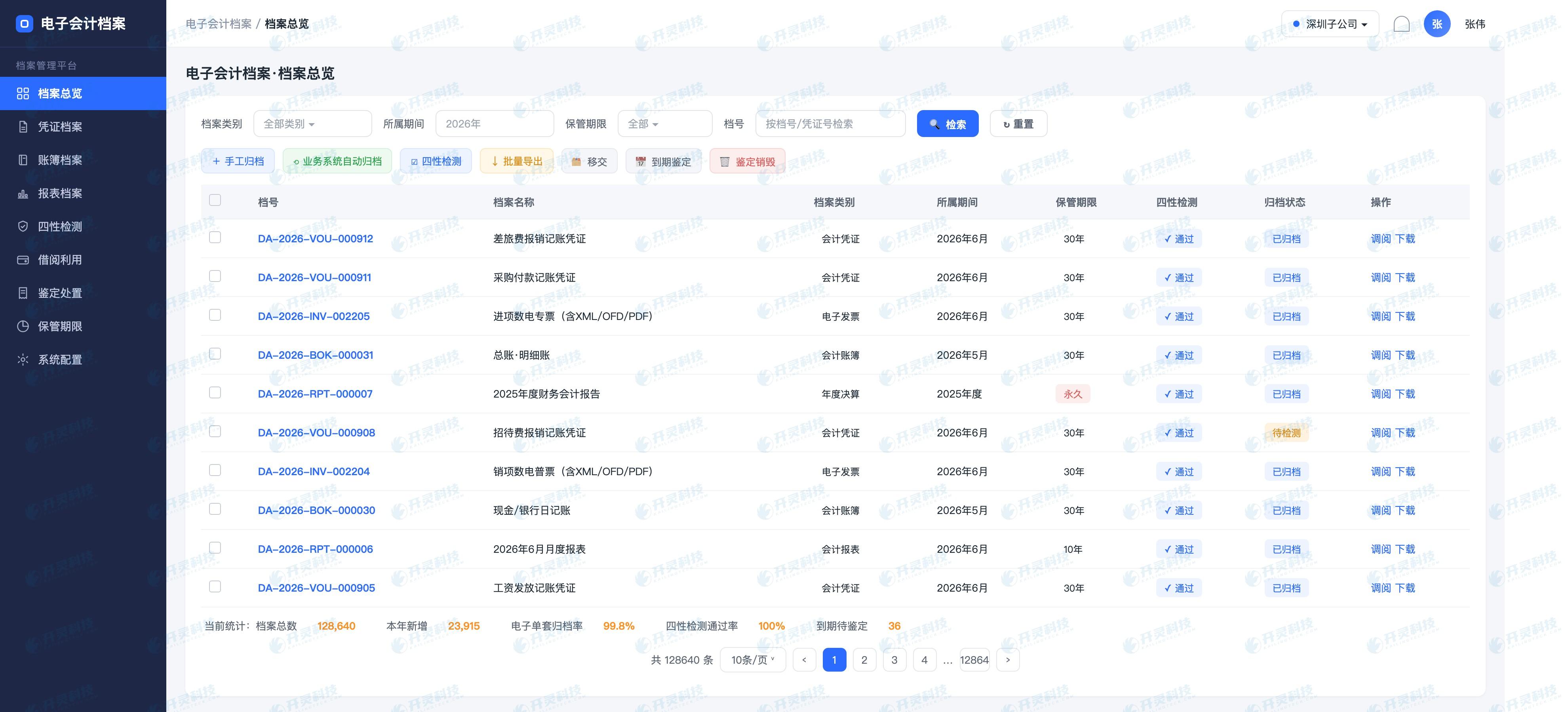
Image skew, seal obstruction, old scans, and abbreviations can affect full-text indexing. Materials of different quality and sources should all be included in index management, with separate attention to hit rates for structured filtering, full-text search, and combined queries, rather than relying only on clear electronic documents.
During operation, no-result queries, frequently rewritten keywords, and archives ultimately found manually can be recorded to analyze whether the problem comes from missing metadata, OCR errors, synonyms, or permission scope. Indexes can be optimized, but every adjustment must be regression-tested to avoid expanding other false detections after improving one type of query.
▍VI. Understand end-to-end retrieval through a simulated audit
Simulated audits can set five types of tasks: sampling by amount, finding vouchers related to a contract, tracing the full chain of a payment, searching summary keywords, and checking a user's historical access. Each task records query time, hit results, authorization actions and delivery list.
Consultation must also focus on unauthorized scenarios: whether unauthorized users can see result summaries, whether expired accounts can continue downloading, whether export lists omit files, and whether logs can reconstruct a consultation. Being able to find quickly without giving too much or missing records is what makes reliable audit retrieval capability.
- Query conditions cover accounting, business and archive fields.
- Hit snippets can be traced to the original file.
- Authorization defines the scope, actions, and duration.
- Exported lists and access logs can be cross-checked in reverse.
▍VI. The key to archive retrieval is finding the needed materials without providing too much
Full-text search must cover fields such as accounting period, voucher number, contract, and summary, and must also be restricted by roles and authorized directories. Auditors search within their authorized scope, archive administrators are responsible for delivery, and ordinary users cannot see original files beyond their permissions just because of a keyword match. Search capability and permission control must both hold true.
Consultation must also retain records of application, authorization, query, viewing, download, and transfer. When there are no results, check metadata, OCR, and synonyms; when there are false hits, adjust the scope; when permissions expire, stop delivery. Only after these states are recorded will archive retrieval efficiency not come at the cost of expanding the scope of leakage.
- Retrieval results are limited by role and authorization scope.
- Hit objects can be traced to the original file and business relationship.
- The download list can be checked against actual delivery.
- No results, unauthorized access, and expired permissions all have handling records.
▍7. Search results must also return to the original file and context
A keyword hit is only the entry point; users also need to see the original file containing the matched snippet, the voucher it belongs to, and the business relationship. Summaries or OCR text are suitable for helping with screening, but cannot replace the original archive; when the original file cannot be opened, pages are missing, or text recognition is incorrect, a clear prompt should be given.
Viewing, downloading, printing, and transferring during the consultation process are all part of archive utilization. Recording actions and scope not only facilitates later reconstruction, but also helps enterprises discover which materials are repeatedly queried over the long term and which keywords often return no results, thereby improving metadata and catalogs.
Retrieval results should also support further narrowing by archive category, period, organization and permissions. Seeing available summaries first, then entering authorized original files, can reduce mistaken downloads and repeated inquiries; keeping query conditions, viewed objects and delivered materials associated makes the access process easier to explain.
- Hit snippets can be traced to the original page number or file.
- The summary remains linked to the original archive.
- Actions and scope of use are recorded.
- When there are no results, possible reasons can be prompted.
▍FAQ
Q: Will full-text search modify the original archives?
A: No. Full-text indexes and OCR text are used for searching and should be managed in association with the original files; manual correction should also not rewrite the original electronic voucher.
Q: Can external auditors log in to the system directly?
A: Yes, restricted accounts or controlled material packages can be provided according to enterprise policy; the key is to limit scope, actions, and duration and to record delivery.
Q: If it cannot be found by search, does that mean the archive does not exist?
A: A conclusion cannot be drawn directly; metadata, OCR quality, synonyms, permission scope, and whether materials have been archived must also be checked.
Q: How can we prove who downloaded a certain document?
A: Associate and verify through retrieval applications, authorization, access, and export logs. Batch operations should also retain a specific file list.
Make audit file retrieval both quickly locatable and able to explain authorization and usage. Welcome to visit Kailing Technology: https://www.kailingteck.com/eaa/ .
As a national high-tech enterprise, Kailing Technology focuses on the digital and intelligent transformation of enterprise business-finance-tax and operations management, providing software products, system integration, implementation and delivery, and operational services for various government agencies, institutions, group enterprises, and SMEs.
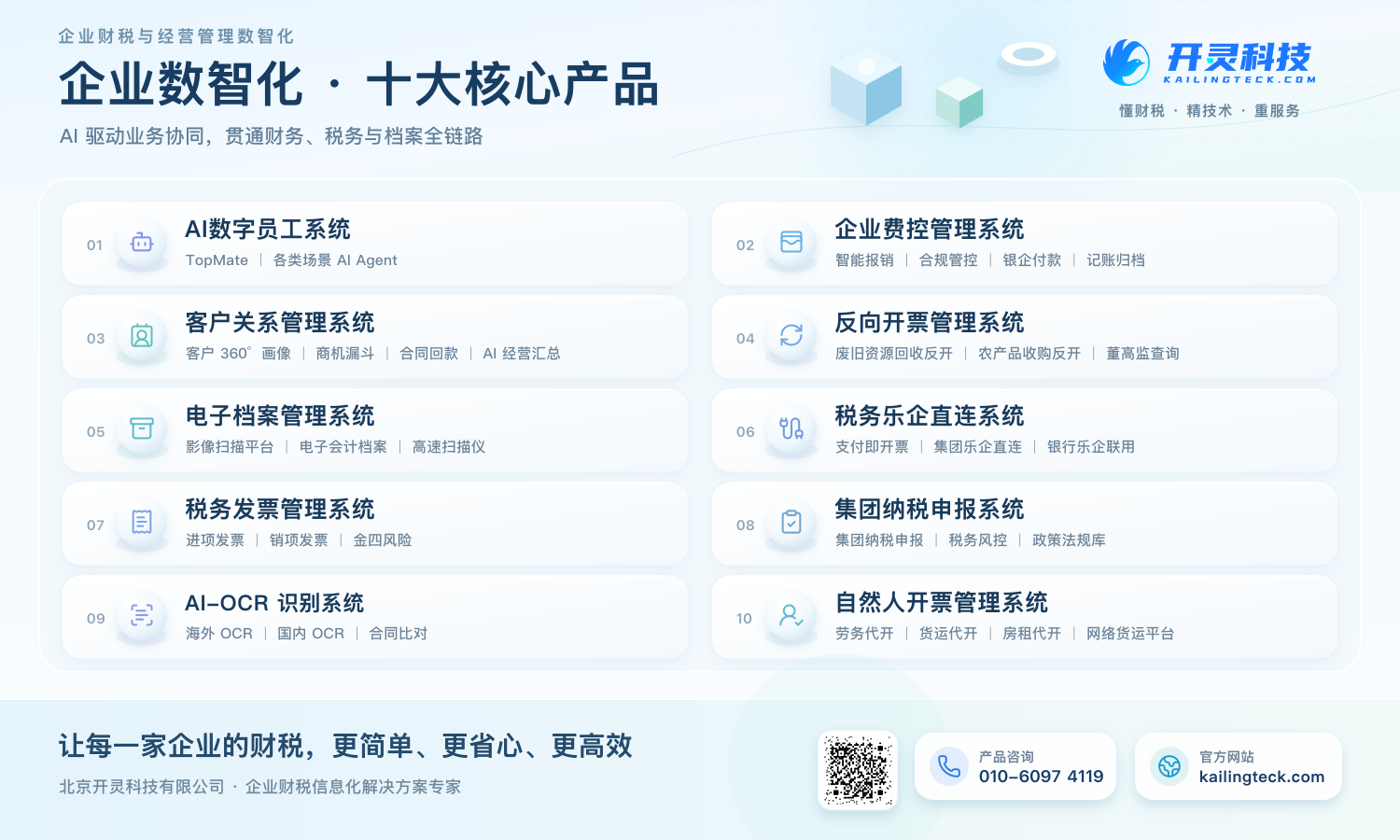
The company has now formed ten core product lines, including: AI digital employee system, enterprise expense control management system, customer relationship management system, reverse invoicing management system, invoice issuance for individuals management system, electronic archives management system, tax fully digitalized e-invoice Leqi system, tax invoice management system, group tax filing system, and AI OCR recognition system. It is committed to connecting enterprise business, finance, tax, funds, and archive data to help customers improve operational efficiency, business-finance-tax compliance capabilities, and digital management levels.
If you have any business-finance-tax digital transformation needs, welcome to contact us. Beijing Kailing Technology will serve you wholeheartedly.
Keywords: Full-text retrieval, audit archive access, access traceability of electronic accounting archives, Kailing Technology electronic accounting archive management system
As a comprehensive business-finance-tax digitalization solution service provider, Kailing Technology provides business-finance-tax management digital transformation products and operational services for various government agencies, institutions, and large, medium, and small enterprises. The product line includes: solutions for sales contract management system, procurement contract management system, fully digitalized Leqi interface project, automatic output invoicing system, reverse invoicing system, invoice issuance for individuals system, employee expense control and reimbursement system, input VAT invoice management system, supply chain collaborative reconciliation system, image AI OCR recognition system, automatic financial bookkeeping system, electronic accounting archives system, etc., comprehensively driving the digitalization process across various fields.
Consultation Hotline: 18513895936 / 010-60974119 Location: Beijing