
Too many sources of accounting materials and difficult to organize? Kailing Technology AI Electronic Accounting Archives Management System intelligent OCR collection and recognition

Accounting materials are difficult to organize, often not because there are too many files, but because they remain separately in ERP, expense control, bank-enterprise, invoicing platforms, email, and scanning directories. The Kailing Technology electronic accounting archives management system can receive materials through interfaces, file exchange, and controlled supplementary entry, identify voucher types and key metadata, and then send missing items, duplicates, and unmatched content into an exception queue.
Intelligent collection does not mean moving files in bulk into a folder. Archivable data must also indicate where it comes from, which accounting period it belongs to, which business documents it is associated with, and whether it is currently complete. Only when collection, recognition, verification, and handover form the same status chain will subsequent filing and retrieval no longer rely on manual guesswork.
▍1. First inventory materials by source rather than building a directory first
Accounting vouchers, reimbursement attachments, bank receipts, invoice source files, and contracts or verification materials are generated in different systems and updated at different rhythms. At project initiation, the material name, responsible system, transmission method, generation time point, unique identifier, and supplementary collection responsible person should be listed, and classification should not be based only on file extensions.
The same type of material may also exist in multiple versions. For example, payment receipts may be returned by bank interface or uploaded by the handler; reimbursement attachments may be supplemented during the process. Which source takes priority, when replacement is allowed, and whether historical versions are retained should be determined in advance. Without source rules, automatic collection will amplify both duplicates and conflicts.
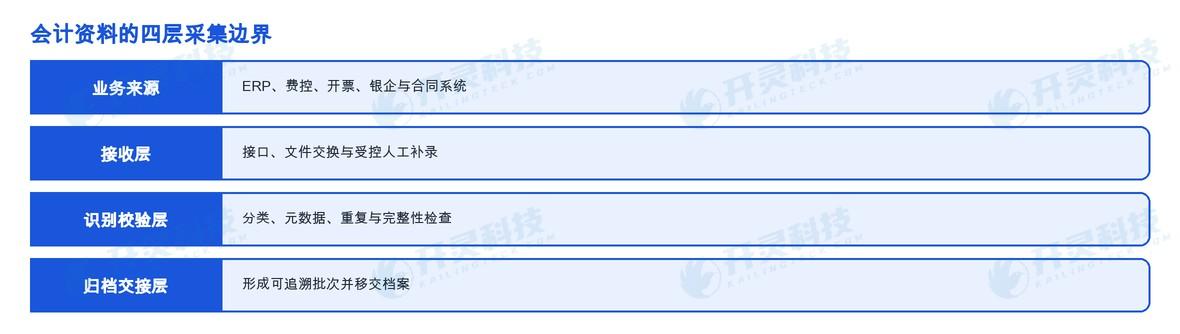
▍II. The Kailing Technology electronic accounting archives management system recognizes files and also recognizes context
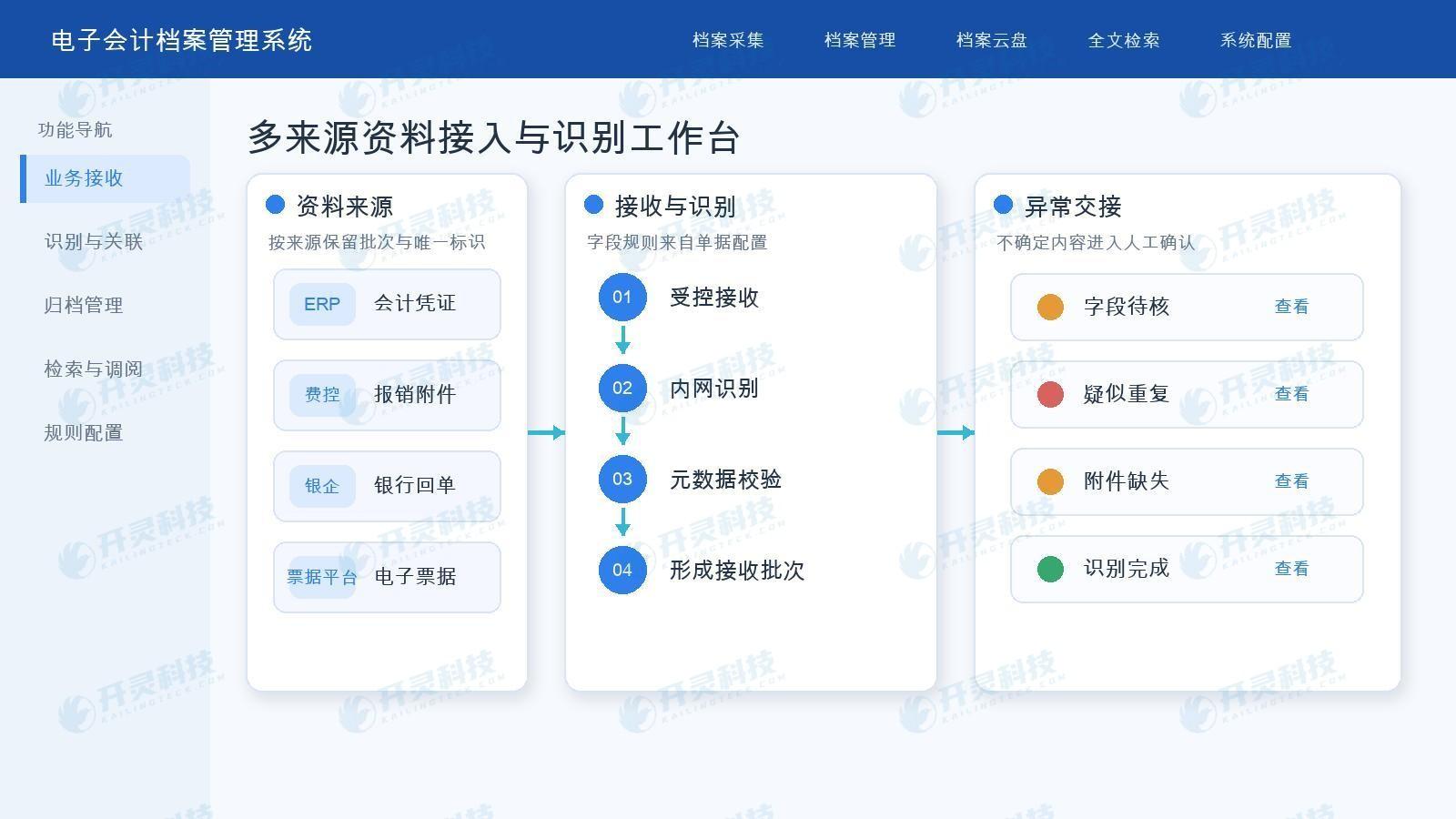
OCR can help read dates, amounts, numbers, and other content from images, while structured electronic files should prioritize reading the original data. The system also needs to combine the accounting entity, period, voucher number, business document number, and source batch to form metadata, avoiding files with the same name losing their business context.
Recognition results must retain confidence status and source. Fields that cannot be determined must not be silently completed and should be marked for verification; when one file corresponds to multiple candidate vouchers, the matching basis should be displayed for the responsible person to confirm. The goal of recognition is to reduce manual character-by-character entry while allowing manual effort to focus on the truly uncertain parts.
▍III. Duplicate determination must distinguish the same file, the same business, and legitimate multiple versions
Checking duplicates by file name alone is not reliable. The system can determine suspected duplicates based on file digest, business number, document number, amount, period, and source, and then distinguish between identical duplicate transmissions, different attachments of the same business, and revised versions that need to be retained.
For suspected duplicate materials, the exception queue should display the source, receipt time, associated documents, and differences of the two files. Confirming deletion, merging, or retaining multiple versions must all leave processing records; legitimate evidence must not be erased just to make the directory look tidy.
| "The standard for successful collection is not "the file has been uploaded," but "the source is clear, metadata is usable, and anomalies have someone taking over." |
▍IV. Integrity checks must be configured around the business closed loop
Different businesses require different sets of materials. Travel reimbursement may require applications, itineraries, tickets, and approval records; procurement payment may require contracts, reconciliation, invoices, and receipts. The system should configure the required materials by business type, rather than applying the same attachment list to all vouchers.
Missing item alerts must point to specific objects and responsible persons: which document is missing, from which system, in what status it should be generated, and whether late submission is allowed. If the upstream system itself has not generated the material, the archives system cannot replace it with a blank placeholder; the issue should be fed back to the business process and the completion result recorded.
▍V. Collection batches should be rerunnable without creating new chaos
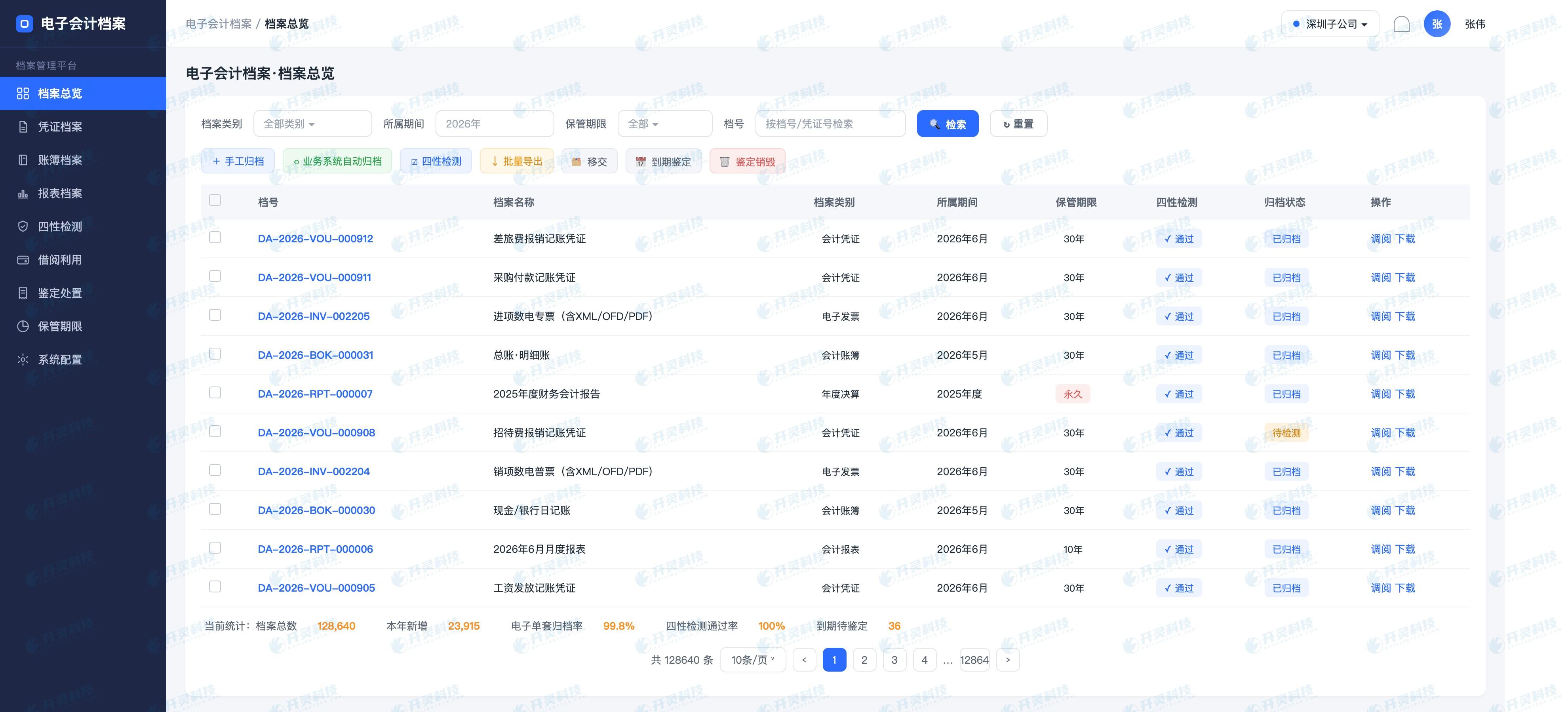
Interface interruptions, network timeouts, or upstream data supplementation may all require re-collection. Each batch should record the time range, source system, file count, successful items, failed items, and retry count, and use stable identifiers to avoid generating another set of duplicate archives after rerunning.
Retries cannot conceal the original failure. Operations staff need to see the failure reason, manual operations, and recovery results; for metadata that has already been manually corrected, it is also necessary to determine whether overwriting is allowed during reruns. Only when idempotent reception and version control are both present can batch collection run over the long term.
▍VI. Understand document relationships in reverse from one archive
Open an archive and trace back each file's source system, receiving batch, and business document; then view the status of successful, failed, duplicate, and pending items from a source batch—only then is the material more than a simple pile.
Situations such as structured files, scanned images, same name with different content, complete duplicates, supplementary attachments, and missing sources all require different identification and handling methods. Identification values, manual corrections, association results, and operation logs correspond to each other, providing a basis for later review.
- Check the source, batch, and unique identifier.
- Check recognition fields and manual correction records.
- Missing items, duplicates, and conflicts all have handling paths.
- Reruns will not create duplicate archives or overwrite legitimate versions.
▍VI. After collection, materials must still retain the original business relationships
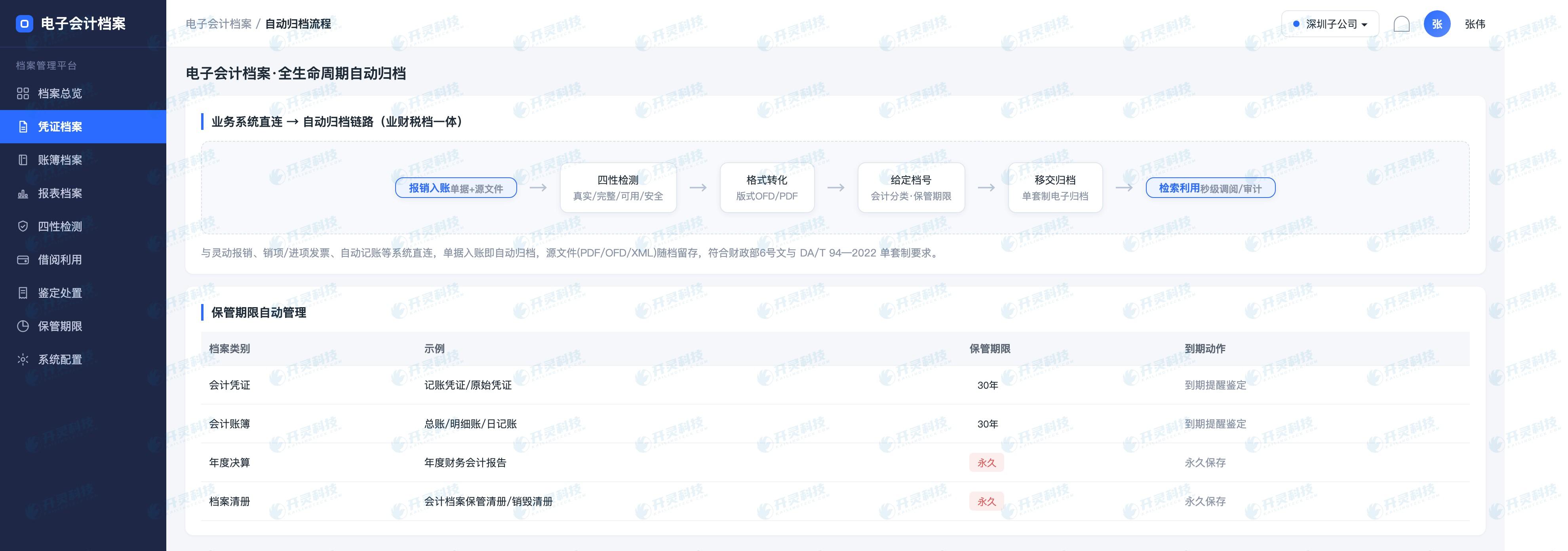
After materials enter the archive, they cannot be left with only a file name and a few recognition fields. The source system, acquisition time, voucher or business document, attachment relationships, and necessary processing records should be preserved together with the file. In this way, when finance staff retrieve it, they see not only the file itself but can also understand why it entered this archive scope.
The same material may undergo supplementation, replacement, re-recognition, or manual correction. The system should distinguish these changes from the original file and retain the source, version, and processing reason. Only after missing, duplicate, and unmatched materials enter the corresponding status can subsequent personnel accurately determine whether the problem comes from collection, recognition, or business association.
- Define receivable documents and key metadata by source.
- Receipt, recognition, supplementary entry, and review statuses are queryable.
- Anomalous materials have a responsible person and a handling deadline.
- Collection batches can be traced back to the original source and archiving target.
▍7. Recognition results must serve archive utilization
The purpose of recognizing fields is to help classification, retrieval, and association, rather than mechanically converting all content into tags. For high-frequency fields such as amounts, dates, entities, voucher numbers, and business keywords, the relationship between the original text and recognized values should be preserved; for content that cannot be confirmed, display a pending verification status to prevent erroneous fields from spreading to directories and reports.
Different users focus on different content. Finance looks at vouchers and amounts, archivists look at categories and custody relationships, and auditors look at sources and processing records. After unified collection, different views should still be provided according to permissions, so that recognition results can improve search efficiency without obscuring the original materials.
- Original text, recognized value and corrected value can be distinguished.
- Key fields can be traced back to their location in the original file.
- Different roles only view authorized information.
- Content that cannot be confirmed remains in pending verification status.
▍FAQ
Q: Must all materials be collected through interfaces?
A: Not necessarily. Stable sources are suitable for interface or file exchange, and scattered materials can be supplemented under control, but all must record source, responsible person and receipt time.
Q: After scanned copies are recognized, can the original images be deleted?
A: Recognition results should not replace the original carrier. Recognized data is used for retrieval and association, while original files should still be managed according to policies and retention requirements.
Q: What happens if the same invoice is uploaded repeatedly?
A: The system should flag suspected duplicates based on files and business identifiers, and have them confirmed by rules or the responsible person. It cannot automatically delete based only on file names.
Q: How can collection failures be remedied?
A: Retain the failure reason in the original batch and retry in a targeted way; when manual supplementation is needed, it should also be linked to the original task to avoid isolated files.
Turn scattered materials into archiving inputs with clear sources and exception takeover. Welcome to visit Kailing Technology: https://www.kailingteck.com/eaa/ .
As a national high-tech enterprise, Kailing Technology focuses on the digital and intelligent transformation of enterprise business-finance-tax and operations management, providing software products, system integration, implementation and delivery, and operational services for various government agencies, institutions, group enterprises, and SMEs.
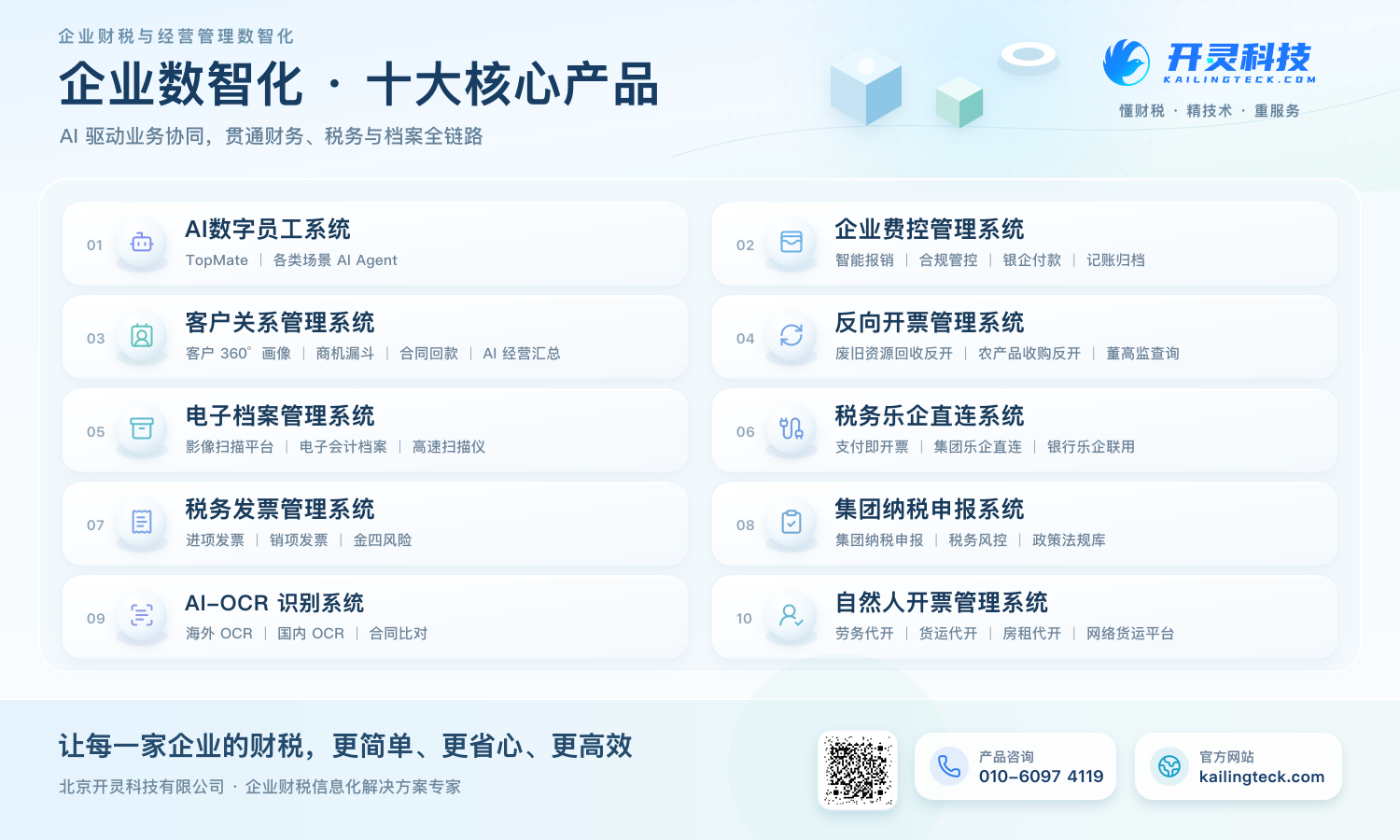
The company has now formed ten core product lines, including: AI digital employee system, enterprise expense control management system, customer relationship management system, reverse invoicing management system, invoice issuance for individuals management system, electronic archives management system, tax fully digitalized e-invoice Leqi system, tax invoice management system, group tax filing system, and AI OCR recognition system. It is committed to connecting enterprise business, finance, tax, funds, and archive data to help customers improve operational efficiency, business-finance-tax compliance capabilities, and digital management levels.
If you have any business-finance-tax digital transformation needs, welcome to contact us. Beijing Kailing Technology will serve you wholeheartedly.
Keywords: Intelligent collection of accounting materials, electronic accounting archives, archive OCR recognition, Kailing Technology electronic accounting archives management system
As a comprehensive business-finance-tax digitalization solution service provider, Kailing Technology provides business-finance-tax management digital transformation products and operational services for various government agencies, institutions, and large, medium, and small enterprises. The product line includes: solutions for sales contract management system, procurement contract management system, fully digitalized Leqi interface project, automatic output invoicing system, reverse invoicing system, invoice issuance for individuals system, employee expense control and reimbursement system, input VAT invoice management system, supply chain collaborative reconciliation system, image AI OCR recognition system, automatic financial bookkeeping system, electronic accounting archives system, etc., comprehensively driving the digitalization process across various fields.
Consultation Hotline: 18513895936 / 010-60974119 Location: Beijing