
How do I perform reverse invoicing on the Electronic Tax Bureau? 2026 practical guide
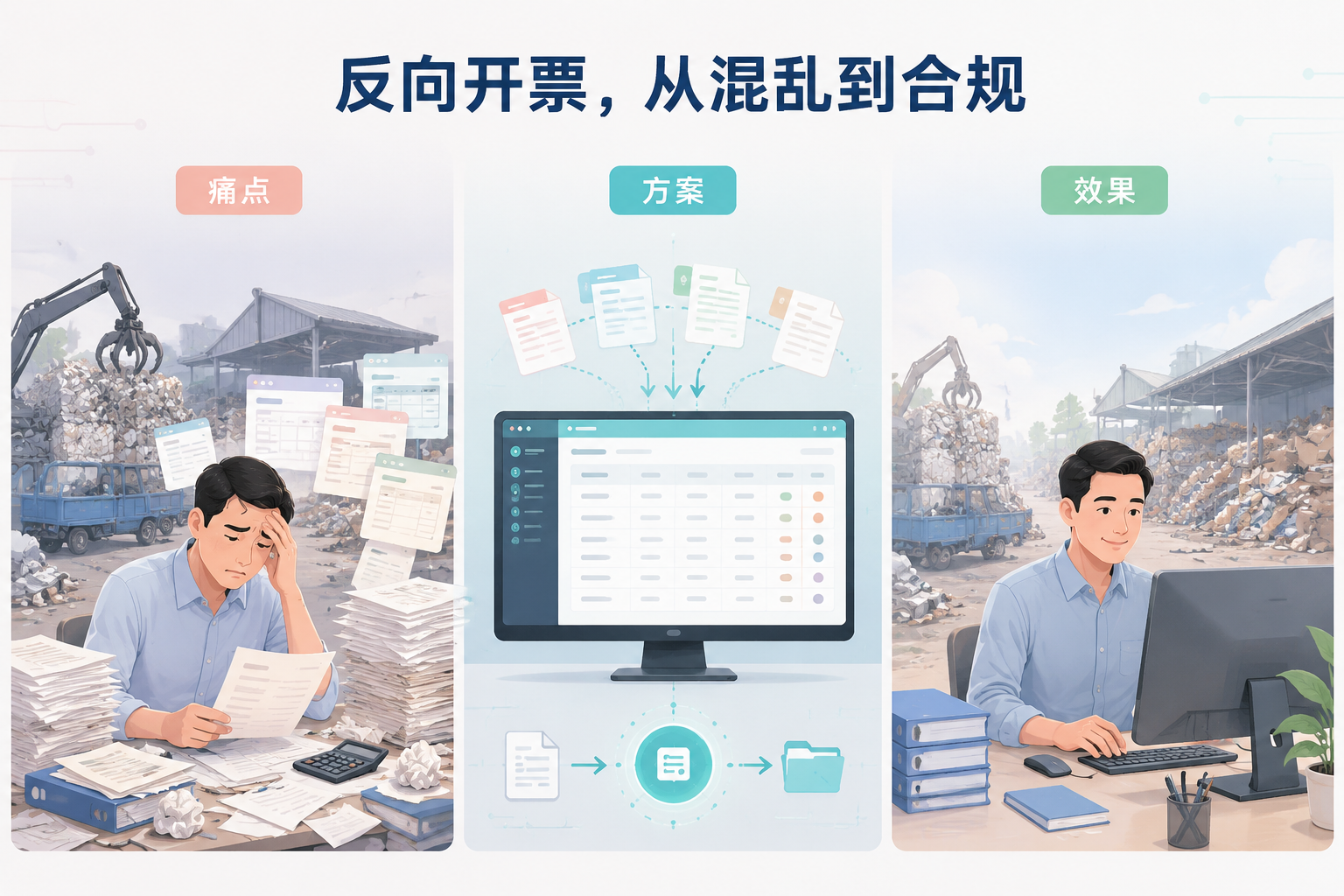
How do I perform reverse invoicing on the Electronic Tax Bureau? From policy understanding to system implementation, this article explains the full 2026 compliant invoicing process.
Many recycling enterprises and agricultural product purchasing enterprises, when facing supply from scattered sellers, are most troubled by "being unable to issue invoices, having no basis for costs, and finding risks hard to control." The reverse invoicing policy provides a way out, but operations get stuck on cumbersome processes, difficult-to-complete vouchers, and chaotic ledgers. Don't worry—by combining the operating logic of the electronic tax bureau with Kailing Technology's systematic solution, you can turn complex processes into standard actions.
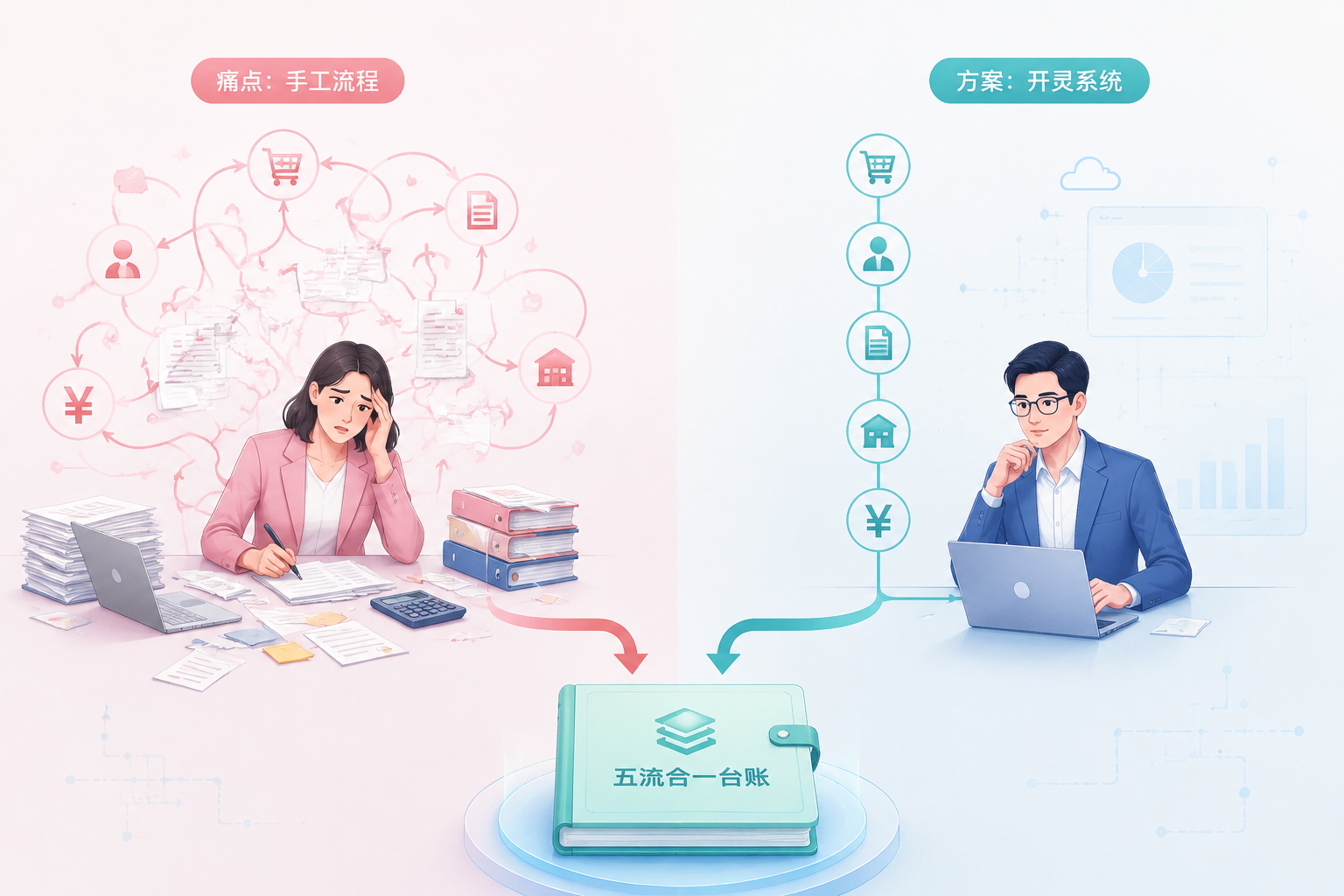
"Reverse invoicing is not simply 'issuing an invoice in reverse,' but a systematic project rooted in business authenticity and taking the five-flow integration ledger as its lifeline." |
▍1. Which scenarios exactly apply to reverse invoicing? What is the policy basis?
Reverse invoicing mainly targets two scenarios: first, renewable resource recycling enterprises purchasing scrap materials from individual sellers; second, agricultural product procurement enterprises purchasing self-produced agricultural products from farmers. The policy basis is the State Taxation Administration Announcement on Matters Concerning "Reverse Invoicing" by Resource Recycling Enterprises to Individual Sellers of Scrapped Products (No. 5 of 2024) and other documents. The core is to solve the problem of enterprises having no invoices for costs because individuals cannot issue invoices, but the premise is that the business is authentic and the vouchers are complete. Enterprises must first complete tax registration and industry recognition, and apply for reverse invoicing qualification in the electronic tax bureau before operating.
▍II. What are the specific operation steps for reverse invoicing on the electronic tax bureau?
Step 1: Log in to the electronic tax bureau, enter the "Invoicing Business" module, and select the "Reverse Invoicing" function. Step 2: Enter the identity information, transaction category, quantity, amount, etc. of the individual seller, and the system will automatically verify whether the reverse invoicing policy applies. Step 3: Upload business vouchers, such as purchase contracts, weighbridge tickets, payment records, etc. Step 4: Confirm the invoicing information, generate a reverse invoice, and deliver it to the seller. The entire process requires authentic data and consistent logic; otherwise, risk warnings may be triggered. Enterprises are advised to prepare relevant materials in advance to avoid repeated returns due to incomplete information.
▍III. Many individual suppliers and mixed batches, what is the biggest difficulty in operations?
Individual supplier deliveries often involve small amounts per transaction, high frequency, and rapidly changing identity information. Manual entry by finance staff is prone to errors, and monitoring cumulative quotas and multiple deliveries by the same person is difficult. More troublesome is that business documents, weighbridge tickets, settlement statements, and invoices each have their own numbering system, so ledgers do not match up and risks are easily exposed on inspection. Therefore, the operational difficulty of reverse invoicing is not the act of "invoicing," but the data collection and verification before invoicing. If done manually, efficiency is low and risk is high; digital tools must be used to lock down the process.
▍IV. How does Kailing Technology make reverse invoicing simpler and more compliant?
Kailing Technology's reverse invoicing product is designed precisely for the above pain points. It moves seller identity verification forward to the filing stage, automatically blocking inapplicable entities; each procurement order, weighing slip, settlement statement, and payment record is automatically associated to form a five-flow-in-one ledger; during batch invoicing, the system automatically verifies data consistency, handles abnormal orders separately, and reduces manual intervention. At the same time, combined with AI OCR recognition technology, paper documents are entered upon scanning, and the electronic accounting archives system automatically archives them, giving every invoice a complete evidence chain. In this way, finance personnel only need to confirm in the system to efficiently complete reverse invoicing, and it can withstand tax inspections.
Keywords: reverse invoicing, electronic tax bureau, renewable resource recycling, agricultural product procurement, five flows in one, AI OCR, electronic accounting archives, Kailing Technology
As a comprehensive business-finance-tax digitalization solution service provider, Kailing Technology provides business-finance-tax management digital transformation products and operational services for various government agencies, institutions, and large, medium, and small enterprises. The product line includes: solutions for sales contract management system, procurement contract management system, fully digitalized Leqi interface project, automatic output invoicing system, reverse invoicing system, invoice issuance for individuals system, employee expense control and reimbursement system, input VAT invoice management system, supply chain collaborative reconciliation system, image AI OCR recognition system, automatic financial bookkeeping system, electronic accounting archives system, etc., comprehensively driving the digitalization process across various fields.
Consultation Hotline: 18513895936 / 010-60974119 Location: Beijing