
Source files, printouts, and multi-channel invoices for fully digitalized e-invoices scattered everywhere? Kailing Technology's enterprise expense control and reimbursement management system provides unified collection, authenticity verification, and duplicate checking.
In 2026, fully digitalized e-invoices have been fully implemented, The same employee may obtain fully digitalized e-invoice source files (XML/PDF/OFD) from the electronic tax bureau, receive data pushed via interface from business systems, and also photograph and upload printed copies of electronic invoices. As entry points multiply, the real challenge is not the file format itself, but whether the enterprise can recognize "is this the same invoice, is it authentic and valid, has it been used by someone else, and which reimbursement form did it ultimately enter." If each entry point stores its own copy, duplicate reimbursement and missing source files will both be hidden.
Through invoice collection, OCR recognition, verification and duplicate checking, invoice pool, and reimbursement association, Kailing Technology enterprise expense control and reimbursement management system converts invoices of different forms into uniformly manageable objects. Unification is not changing PDFs, XML, and photos into the same file, but establishing stable primary keys, retaining original carriers, and making verification, occupation, booking, and archiving statuses run through the entire process.
▍1. Many formats are not scary; inconsistent document identity is what is dangerous
Source files of fully digitalized e-invoices have three national standard formats: XML, PDF, and OFD. Whether downloaded directly from the electronic tax bureau, obtained through the Leqi interface, or obtained from business systems, they may include these formats. Printouts in employees' hands all need to be OCR-recognized and linked back to the original electronic invoices.
If the system determines invoices based on uploaded file names, employee name changes, repeated downloads, or forwarding through multiple channels will all generate new records, making duplicate identification unreliable. Unified identity needs to combine key fields such as invoice type, invoice number, invoicing date, buyer and seller information, and amount, and retain the relationship between the acquisition source and the original file. The valid fields of different invoice types are not completely consistent. Enterprises should not create an overly simplified number rule on their own, but should establish a primary key within the invoice types and verification standards supported by the product.
- Structured files (XML) are used to read fields, and layout files (PDF/OFD) are used for viewing and retention, The two serve different purposes.
- OCR of printed copies is only a recognition entry point, Recognition results still need to be combined with verification and manual exception review.
- Multiple files of the same invoice should be grouped under the same object, They cannot each occupy one reimbursement quota.
▍II. Three types of entry points enter the same invoice pool
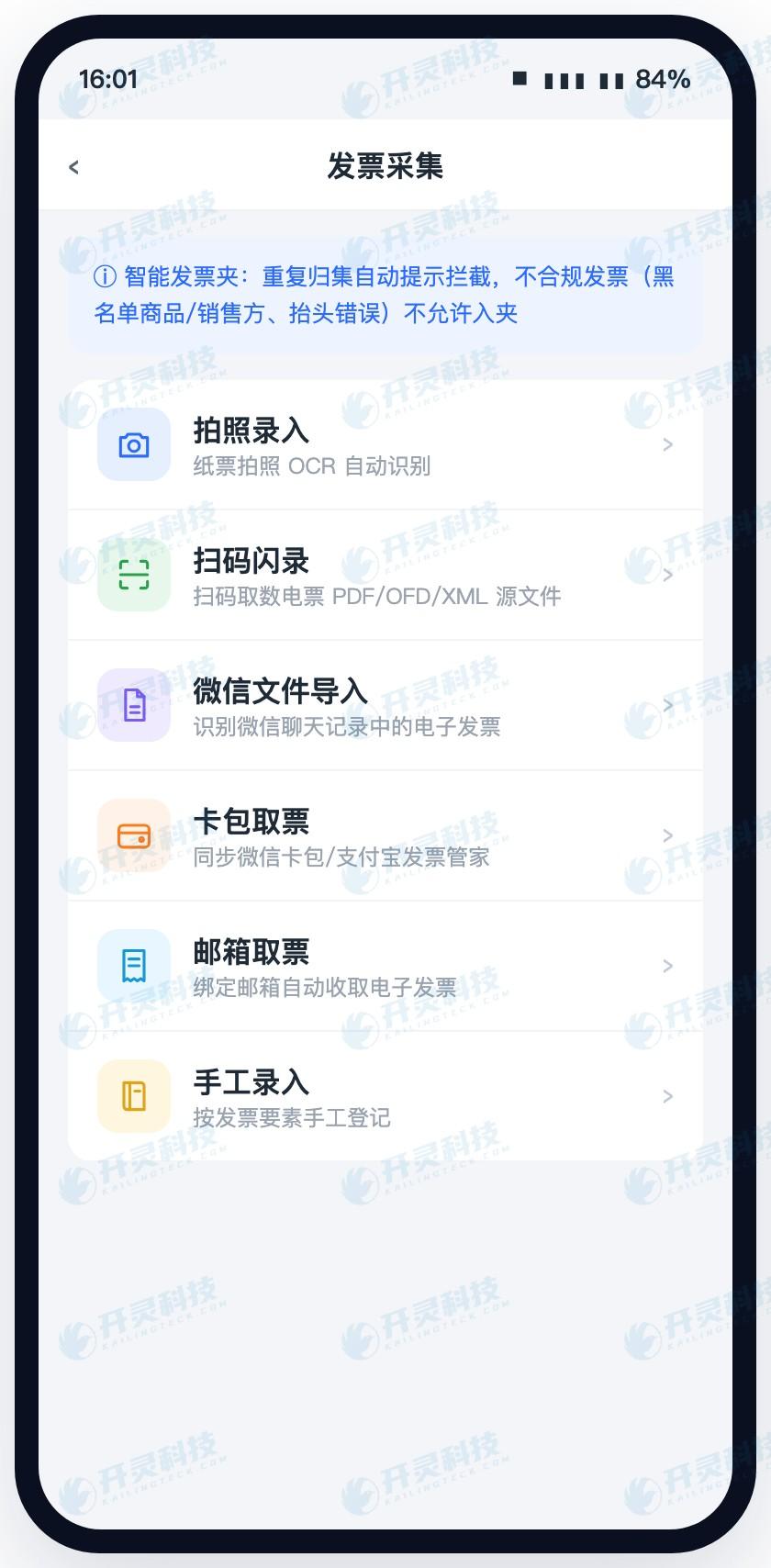
Employees can collect invoices via mobile photos, scan-and-flash entry, WeChat or email, and fully digitalized e-invoice source files (XML/PDF/OFD) and traditional e-invoices (PDF) can also enter the invoice pool according to the company's access method. The system reads recognizable fields at the entry point, completes preliminary standardized validation, and establishes a unified status for each invoice. What users see is a searchable list in one place, rather than attachments scattered across chat records and local folders.
Kailing Technology enterprise expense control and reimbursement management system supports collection methods such as fully digitalized e-invoice source files, traditional electronic invoices, and OCR of printed copies. After collection, it is still necessary to distinguish "received" from "reimbursable": invoices with damaged files, missing fields, mismatched buyers, or verification exceptions should enter a pending queue and cannot directly participate in expense reimbursement just because upload succeeded.
| "The goal of multi-entry management is not to collect more files, but to ensure an invoice always has only one traceable identity within the enterprise. |
▍III. Verification and duplicate checking must be answered as two separate questions
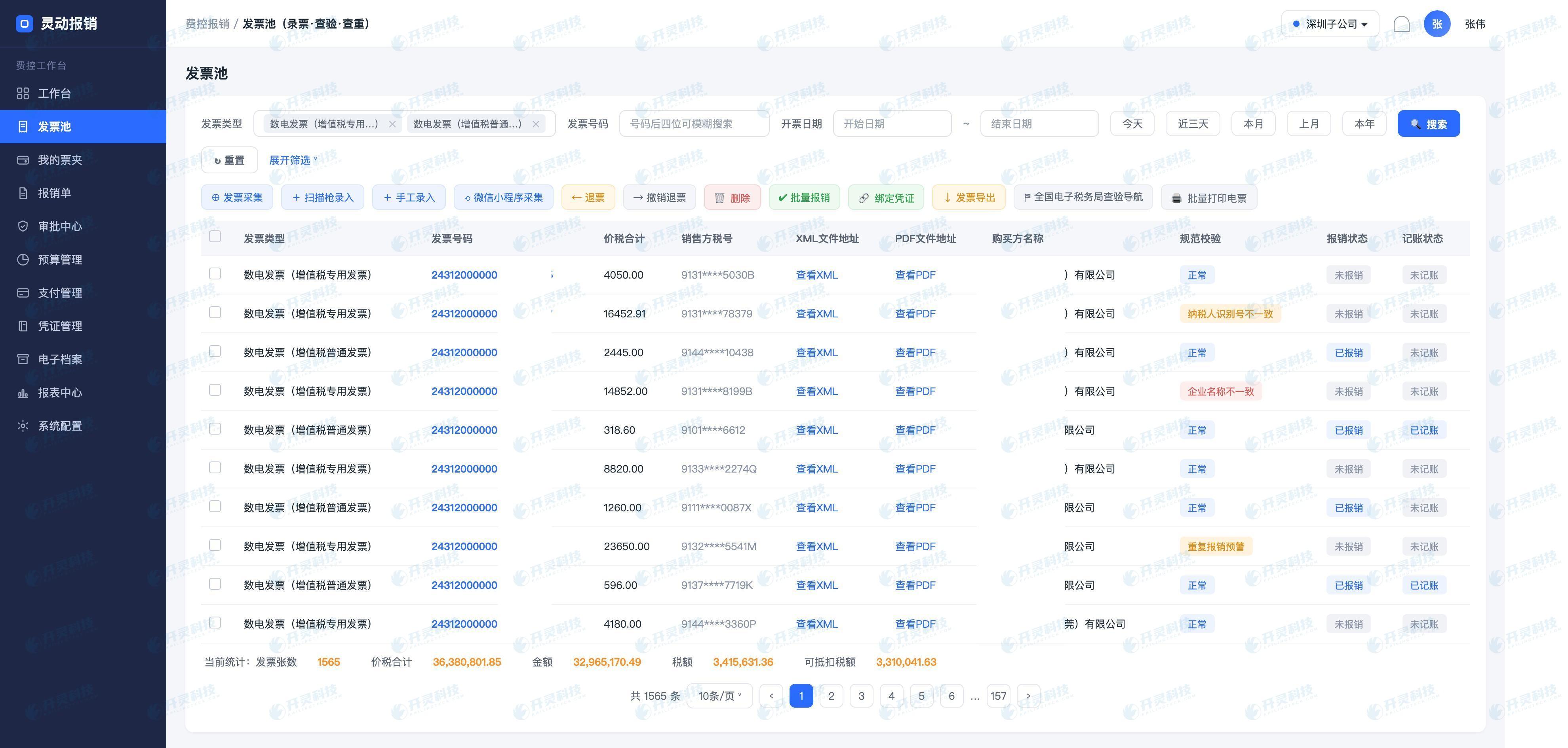
Verification focuses on whether the invoice information is consistent with authoritative verification results, while duplicate checking focuses on whether this invoice has already been submitted by other personnel, other documents, or other entry points within the enterprise. A genuine invoice may also be reimbursed repeatedly, and failure to find internal duplication does not mean the invoice is necessarily valid, so the two checks cannot replace each other.
Enterprises can also set risk alerts based on dimensions such as invoice title, tax number, seller, and goods content. After a rule is matched, the reason should be displayed, and based on the degree of risk, choose to prohibit use, return for supplementation, or manual review. Management requirements such as blacklisted goods and inconsistent buyers need to be configured in accordance with enterprise policies, and not all alerts should simply be regarded as tax violations.
- Verification solves invoice authenticity, duplicate checking solves non-repeated use within the enterprise
▍IV. Document occupation and release must follow the reimbursement form status
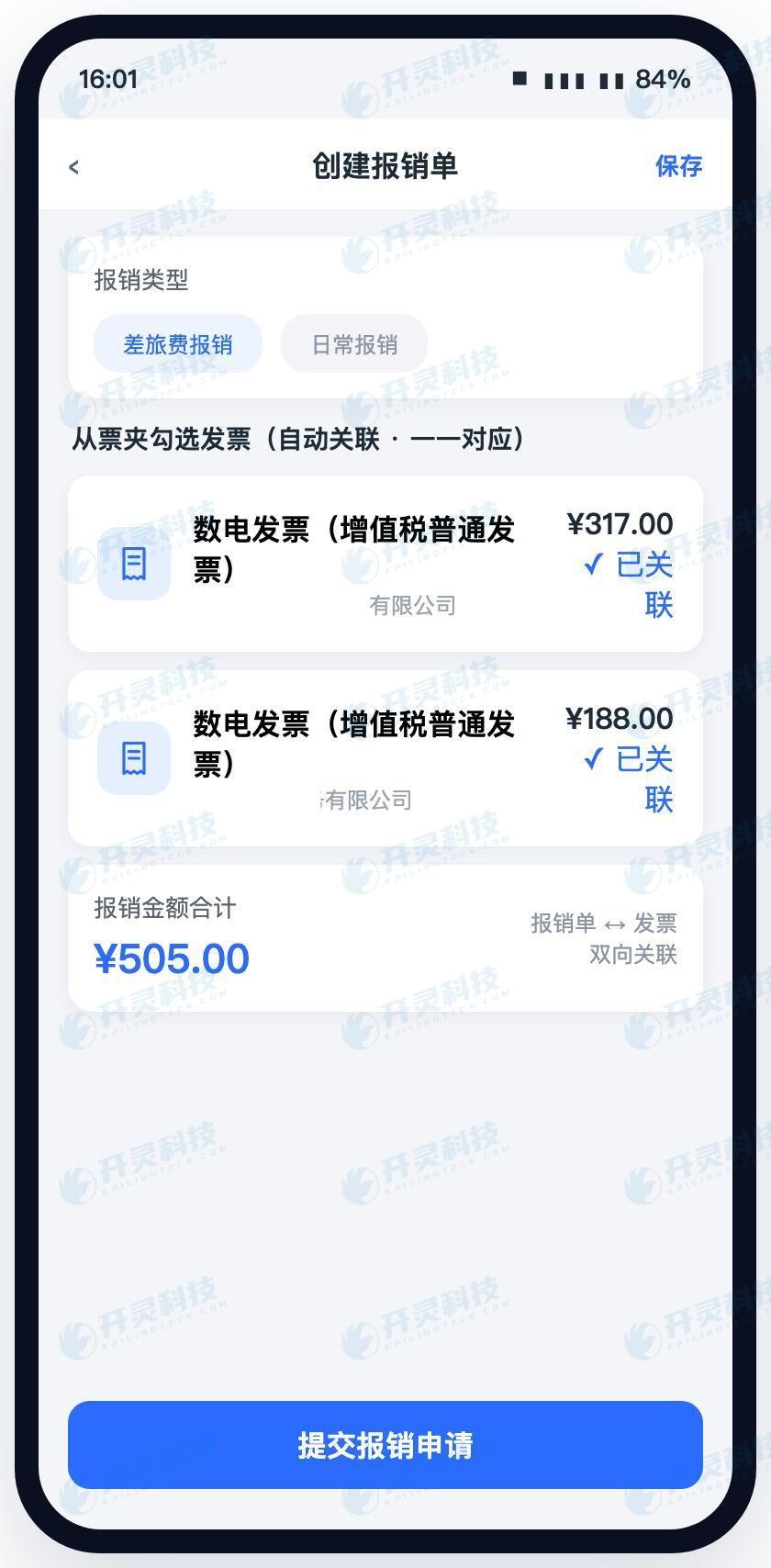
After employees check invoices from the invoice pool to create a reimbursement form, the system should establish a two-way association and mark the invoices as occupied or in process to prevent another form from referencing them again. When reimbursement is withdrawn or rejected, whether to release immediately should depend on the process status; if it is only supplementary materials, retaining the occupation better avoids concurrent duplication, and availability is restored only after the entire form is terminated.
After reimbursement is completed, invoice status must also connect with bookkeeping and tax booking management. The system can record booked, pre-tax deduction, or other configured statuses to prevent electronic invoices from being maliciously red-flushed without anyone noticing. Specific tax treatment is judged by finance according to applicable rules; what the system provides is status, verification results, and associated evidence.
- Lock the invoice upon submission, Prevent the same invoice from entering two approval chains simultaneously.
- Record the release reason when the process changes, Do not let invoices change from used to available without reason.
- After completion, retain reimbursement, voucher, and archiving destinations, Convenient for reverse lookup from any step.
▍V. Month-end management should look for unused invoices, abnormal invoices, and missing source files
At month-end, you should not only count reimbursement amounts but also review invoices that have been collected but unused for a long time, invoices with verification anomalies not yet handled, records that have been reimbursed but have incomplete source files, and items still in occupied status after withdrawal. These lists correspond respectively to employee to-dos, finance review, archive supplementation, and system status correction.
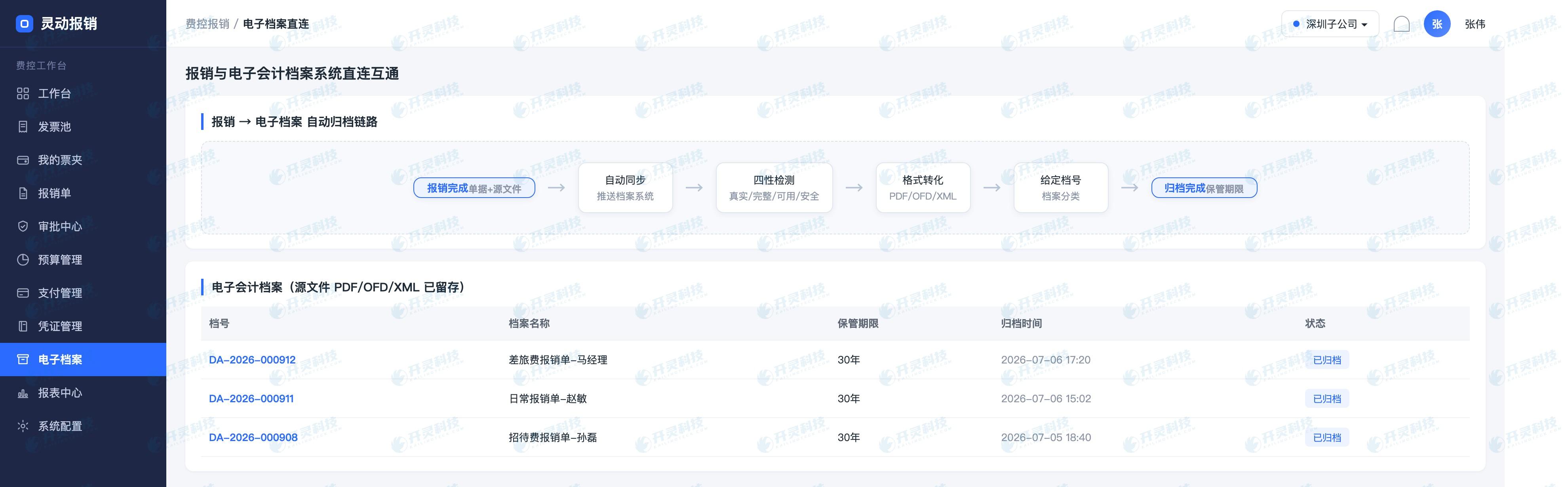
Kailing Technology enterprise expense control and reimbursement management system can connect invoice source files with reimbursement, booking, and electronic accounting archives. When archiving, the original electronic files and their business relationships should be retained, not only printed copies or screenshots; for printed copies corresponding to original electronic invoices, the correspondence between source files and images should be retained according to the enterprise's applicable requirements.
- Count recognition failure reasons by entry point, Optimize employee operation prompts instead of repeated manual supplementary entry.
- Assign responsibility by exception type, Distinguish among issues with the invoice itself, enterprise rules, and interface status.
- Randomly reverse-check the invoice pool and reimbursement forms from the archives, Confirm that the document, fields, and status are consistent with each other.
▍VI. During operation, interface resubmission and file updates also need attention
When unified primary keys, authenticity verification and duplicate checking, and state machines are implemented simultaneously, no matter how many document forms there are, management will not be cut into islands. Employees submit from the most convenient entry point, the system completes normalization and verification in the background, and finance works around exceptions and archiving completeness. Only then can enterprises truly upgrade invoice collection from "receiving files" to "managing evidence."
During operation, attention should also be paid to interface resubmission and file updates. For example, if the same XML arrives repeatedly due to network reasons, it should be identified as a duplicate event of the same document; when a document undergoes a lawful status change, a new status should be appended rather than overwriting the old record. Only by retaining time and source can subsequent reviews explain when a document was received, when it was verified, and why it changed.
Permissions also need to be set around status. Regular employees can view their own invoices and exception reasons, invoice administrators handle enterprise-level conflicts, and system administrators maintain access parameters but should not arbitrarily change business conclusions. Separating operational scopes reduces mistaken deletions and releases while leaving a clear responsibility trail.
▍FAQ
Q: Can only one of the three source file formats (XML/PDF/OFD) of a fully digitalized e-invoice be retained?
A: Not recommended. Structured data (XML) facilitates processing, while layout files (PDF/OFD) serve viewing and retention functions. Enterprises should retain the complete relationship according to the relevant requirements for reimbursement, accounting, and archiving of electronic accounting vouchers and the system's archiving design.
Q: Does successful OCR recognition mean the invoice is authentic?
A: Not equivalent. OCR is responsible for reading invoice fields, but verification, compliance checks, and internal duplicate checking are still required, and anomalies should enter review. Moreover, after recognizing a printout, it must be associated back to the original electronic invoice; the printout cannot be treated as an independent invoice.
Q: When are invoices released after a reimbursement form is rejected?
A: A distinction should be made between supplementary materials and process termination. The former usually continues to occupy to prevent duplication, while the latter can be released according to configuration, with status change records retained.
Q: Can printouts and e-invoices be queried in the same invoice pool?
A: Yes, they can be managed under a unified invoice object. Printed copies should be linked to the corresponding original electronic invoice after AI OCR recognition, and the system should indicate the source when displaying them, but the recognition fields, verification methods, and original document management requirements for different invoice types should still be retained separately.
Q: Will traditional tax-control electronic invoices (electronic special invoices, electronic ordinary invoices) still be received?
A: In 2026, fully digitalized e-invoices have been fully implemented, and traditional tax-controlled electronic invoices are transitional legacies that will gradually decrease. However, during the transition period, enterprises may still receive them, and the system should support the collection and management of both fully digitalized e-invoices and traditional electronic invoices.
Let fully digitalized e-invoice source files, printouts, and multi-channel invoices enter the same searchable, verifiable, and archivable chain. Welcome to visit Kailing Technology: https://www.kailingteck.com/feikong/ .
As a national high-tech enterprise, Kailing Technology focuses on the digital and intelligent transformation of enterprise business-finance-tax and operations management, providing software products, system integration, implementation and delivery, and operational services for various government agencies, institutions, group enterprises, and SMEs.
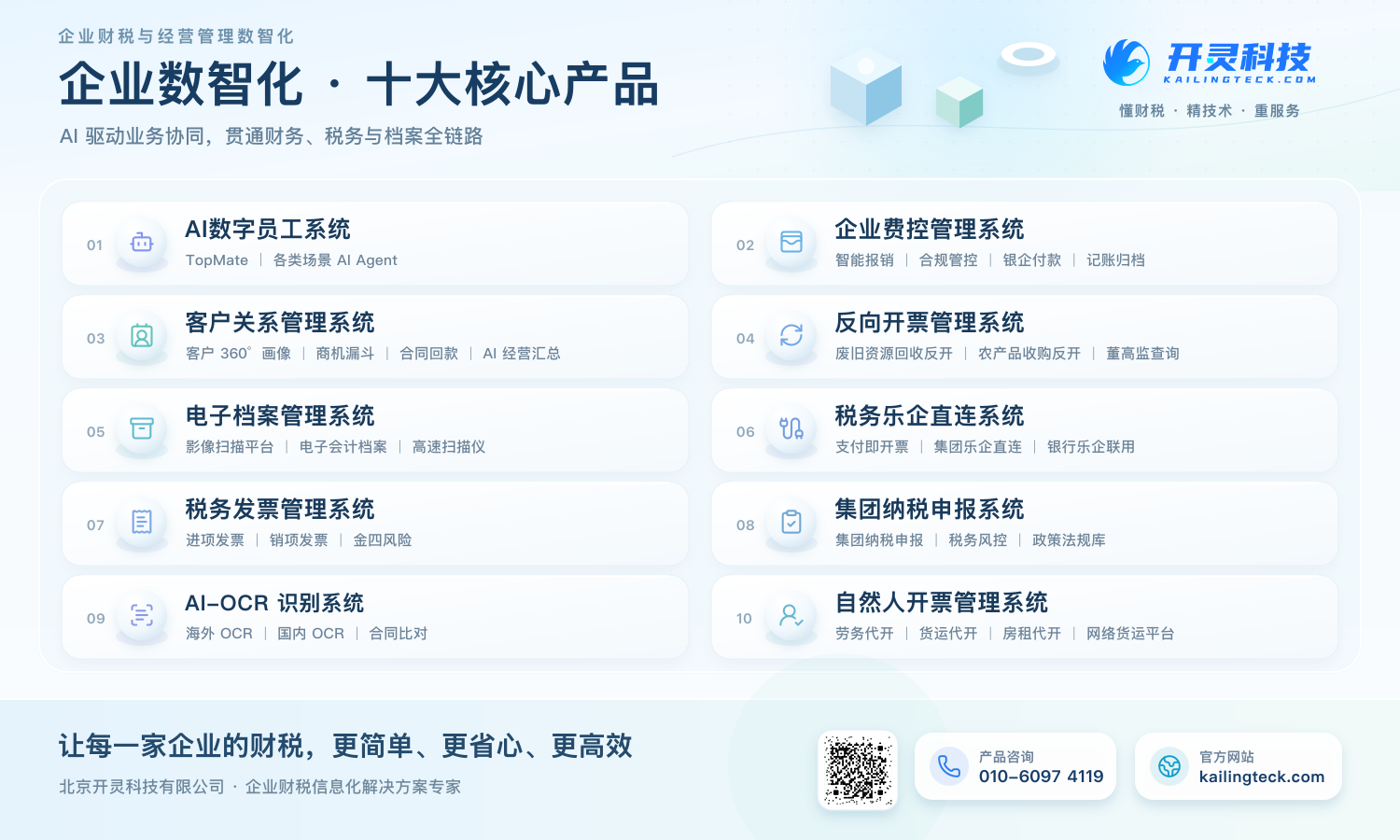
The company has now formed ten core product lines, including: AI digital employee system, enterprise expense control management system, customer relationship management system, reverse invoicing management system, invoice issuance for individuals management system, electronic archives management system, tax fully digitalized e-invoice Leqi system, tax invoice management system, group tax filing system, and AI OCR recognition system. It is committed to connecting enterprise business, finance, tax, funds, and archive data to help customers improve operational efficiency, business-finance-tax compliance capabilities, and digital management levels.
If you have any business-finance-tax digital transformation needs, welcome to contact us. Beijing Kailing Technology will serve you wholeheartedly.
Keywords: fully digitalized e-invoice, fully digitalized e-invoice source files, invoice authenticity verification and duplicate check, printout recognition, Kailing Technology, enterprise expense control reimbursement management system
As a comprehensive business-finance-tax digitalization solution service provider, Kailing Technology provides business-finance-tax management digital transformation products and operational services for various government agencies, institutions, and large, medium, and small enterprises. The product line includes: solutions for sales contract management system, procurement contract management system, fully digitalized Leqi interface project, automatic output invoicing system, reverse invoicing system, invoice issuance for individuals system, employee expense control and reimbursement system, input VAT invoice management system, supply chain collaborative reconciliation system, image AI OCR recognition system, automatic financial bookkeeping system, electronic accounting archives system, etc., comprehensively driving the digitalization process across various fields.
Consultation Hotline: 18513895936 / 010-60974119 Location: Beijing