
With many individual suppliers, how should scrap iron recycling manage risks? Kailing Technology's resource recycling reverse invoicing system automatically verifies identity, quota, and invoicing ledger

When scrap iron recycling faces a large number of natural person sellers, risk often lies not in a single document, but in the same person supplying multiple times, changes in identity information, scattered cumulative transaction bases, and anomalies masked by bulk business. Verifying the ID card only once on site and summarizing at month-end in finance will cause inapplicable entities or quota status changes to surface only at invoicing time. Around "1. With many individual suppliers, the real difficulty is continuous identity validity and cumulative consistency," the Kailing Technology resource recycling reverse invoicing system needs to bring the related relationships into the same business chain.
Kailing Technology's resource recycling reverse invoicing system moves entity verification forward to filing and transactions, and updates the ledger with each goods receipt, settlement and invoicing. The system supports automatic interception of inapplicable entities, recording quotas and business vouchers, and connecting payments and archives; specific policy thresholds and applicable standards should be based on effective regulations and enterprise verification, and figures must not be treated as marketing promises.
▍1. The real difficulty with many individual sellers is keeping identity continuously valid and cumulative consistency
The same seller may use different mobile numbers, appear multiple times, or trade at different receiving points; if each site creates its own file, the system will split one person into multiple entities, distorting the cumulative ledger. Conversely, merging by name alone may mistakenly treat people with the same name as one person. Entity identification should rely on compliantly collected stable identity information and verification results, not empirical judgment.
Identity can also change. Meeting the conditions at initial filing does not mean that every subsequent transaction requires no further check; when the entity registration status or other applicable conditions change, re-verification should be performed before invoicing. High-frequency supply makes such changes more likely to span multiple batches, so verification must be linked to the status of each transaction.
- Unify entity archives to avoid duplicate archive creation across sites causing cumulative dispersion.
- Each transaction references the verification result valid at that time, and records the time and source.
- Suspected same person or conflicting information first enters review, without automatic merging by fuzzy rules.
▍II. Kailing Technology resource recycling reverse invoicing system: first-time filing must check the entity, not just record contact information
For eligible individual sellers, resource recycling enterprises may issue VAT invoices in reverse according to regulations, with the institutional basis coming from Announcement No. 5 of 2024 of the State Taxation Administration. When creating records in the system, verification should focus on real identity and applicable conditions; for registered individual business operators, as well as inapplicable situations such as legal persons or their directors and supervisors, Kailing's capabilities can automatically verify and intercept.
File creation materials should have a minimum necessary scope, access permissions, and update responsibilities. On-site personnel are responsible for verifying sources and initiating, while business-finance-tax positions handle exceptions; ordinary operators should not be allowed to modify key identity conclusions that have already taken effect. Kailing Technology's resource recycling reverse invoicing system retains subject status and subsequent business relationships, allowing one file to serve multiple transactions without overwriting history.
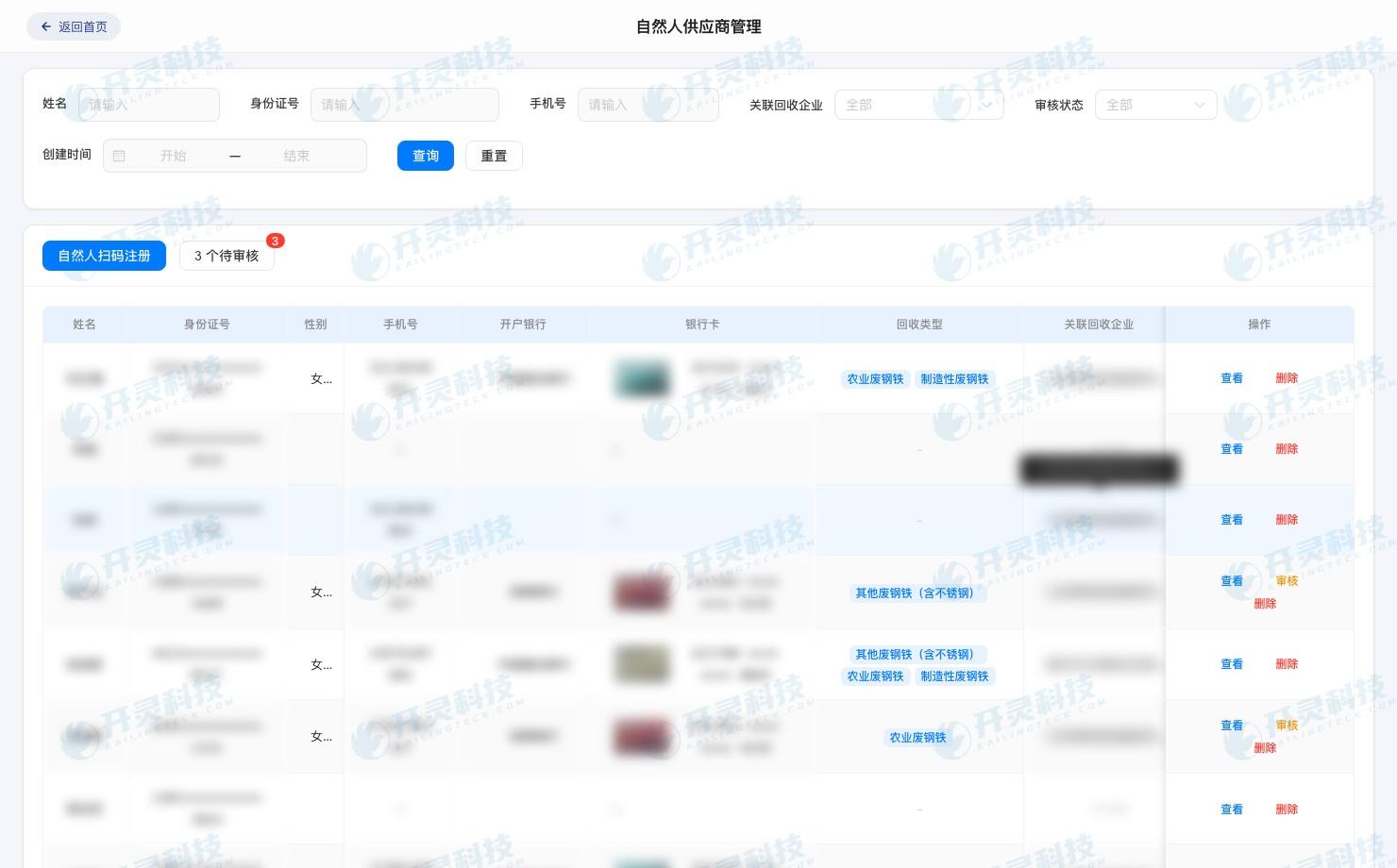
▍III. Every receipt of goods must refresh the business and quota ledgers
After the individual profile is approved, the receiving business still needs to record category, quantity, weighbridge ticket or other vouchers, time, receiving organization, and settlement relationship. The system updates the cumulative ledger when the business takes effect, and reversals, adjustments, or red-letter reversals should also produce opposite changes; it cannot only accumulate successfully invoiced amounts while ignoring in-transit and reversed items.
Quota judgment must have a clear point in time. Before a transaction, the current status can be indicated, and before invoicing, it should be rechecked with the latest data; when multiple people process the same seller concurrently, in-transit occupation should be considered to prevent each transaction from appearing usable individually while conflicts arise in aggregate. This article does not cite specific thresholds that have not undergone necessary verification; during implementation, configure according to the currently effective rules and enterprise policies.
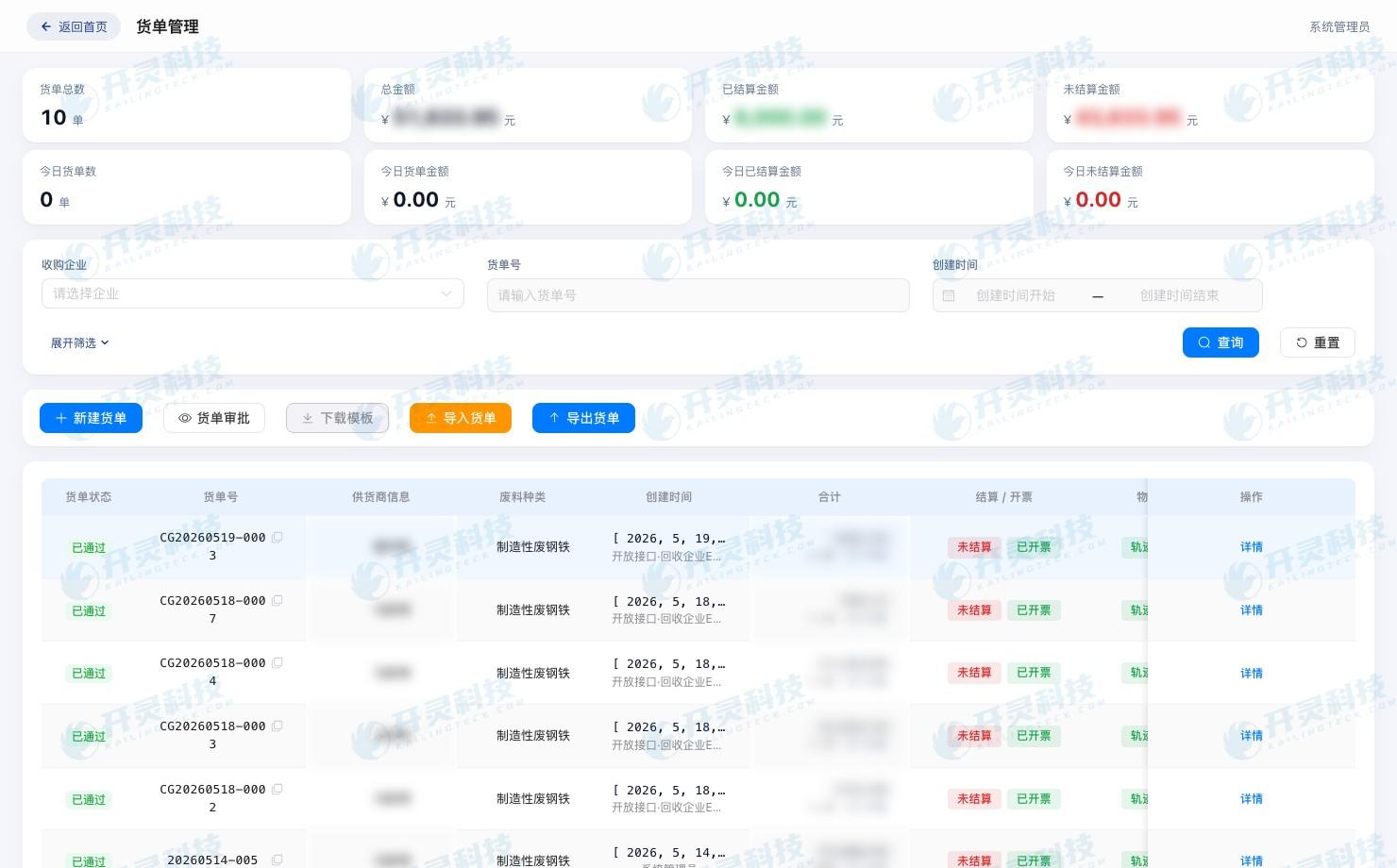
- The cumulative basis should clearly state whether tax is included, the statistical period, and success and in-transit status.
- Withdrawal or voiding releases the occupation synchronously, while red-letter reversal retains the correspondence with the original invoice.
- Cross-organization transactions are accumulated by unified entity while retaining the business source of each organization.
▍IV. Exceptions pause a single transaction, not the whole batch
When there is a conflict in entity information, an abnormal ledger status, incomplete business materials, or an interface verification failure, the corresponding detail should be suspended and the reason displayed. Other entities and businesses that have passed verification can continue, avoiding one problematic transaction among high-frequency individual sellers blocking the entire batch. Suspension is not deletion; after correction, it still continues along the original business order.
After reverse invoicing succeeds, the invoice status and source files are linked back to the original transaction; the payment task then rechecks the seller and settlement results. The Kailing Technology resource recycling reverse invoicing system supports one-click issuance, red-letter reversal, and bank-enterprise direct connection, but tax returns and bank returns must be recorded separately, and sending an instruction cannot be treated as final success.
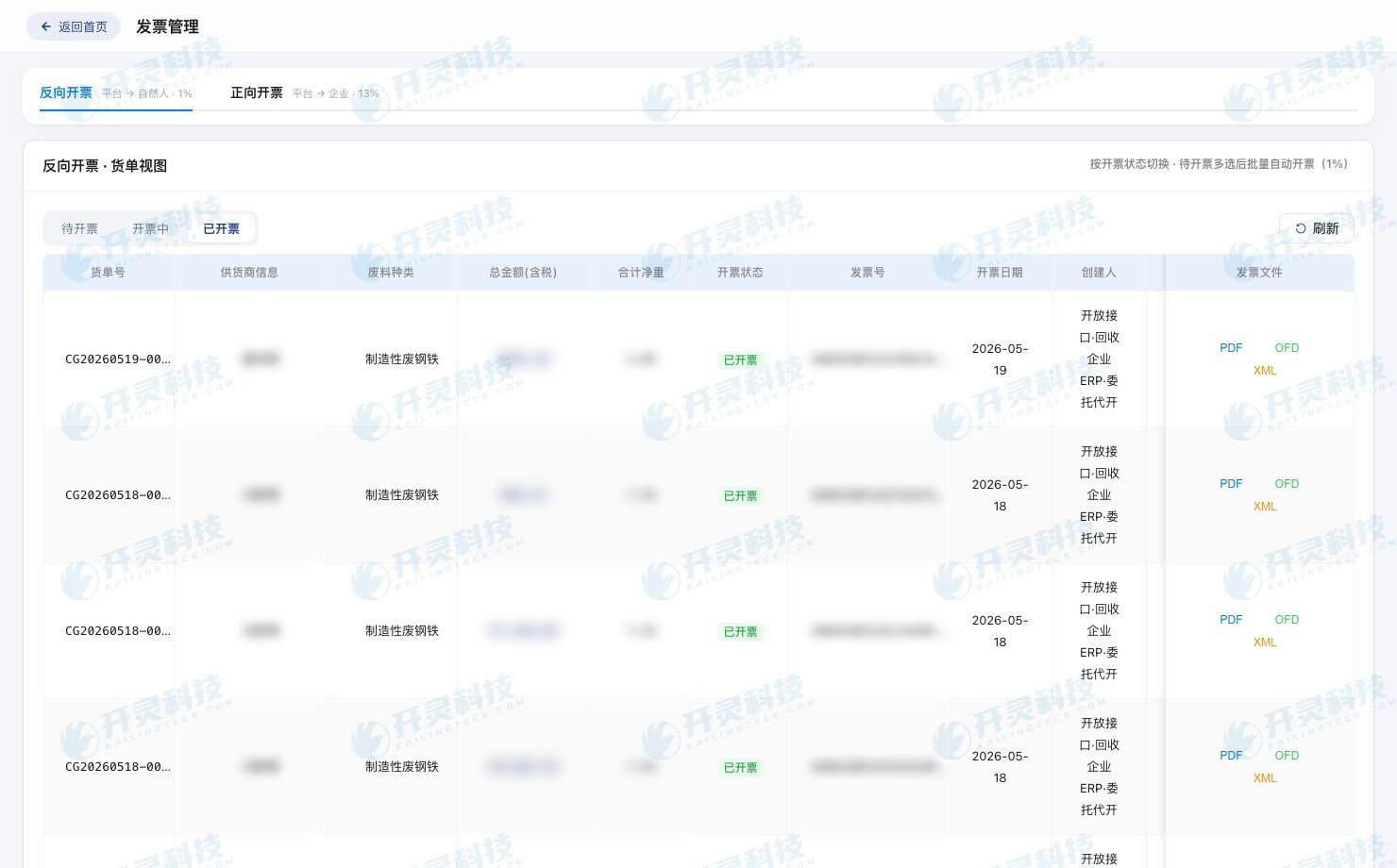
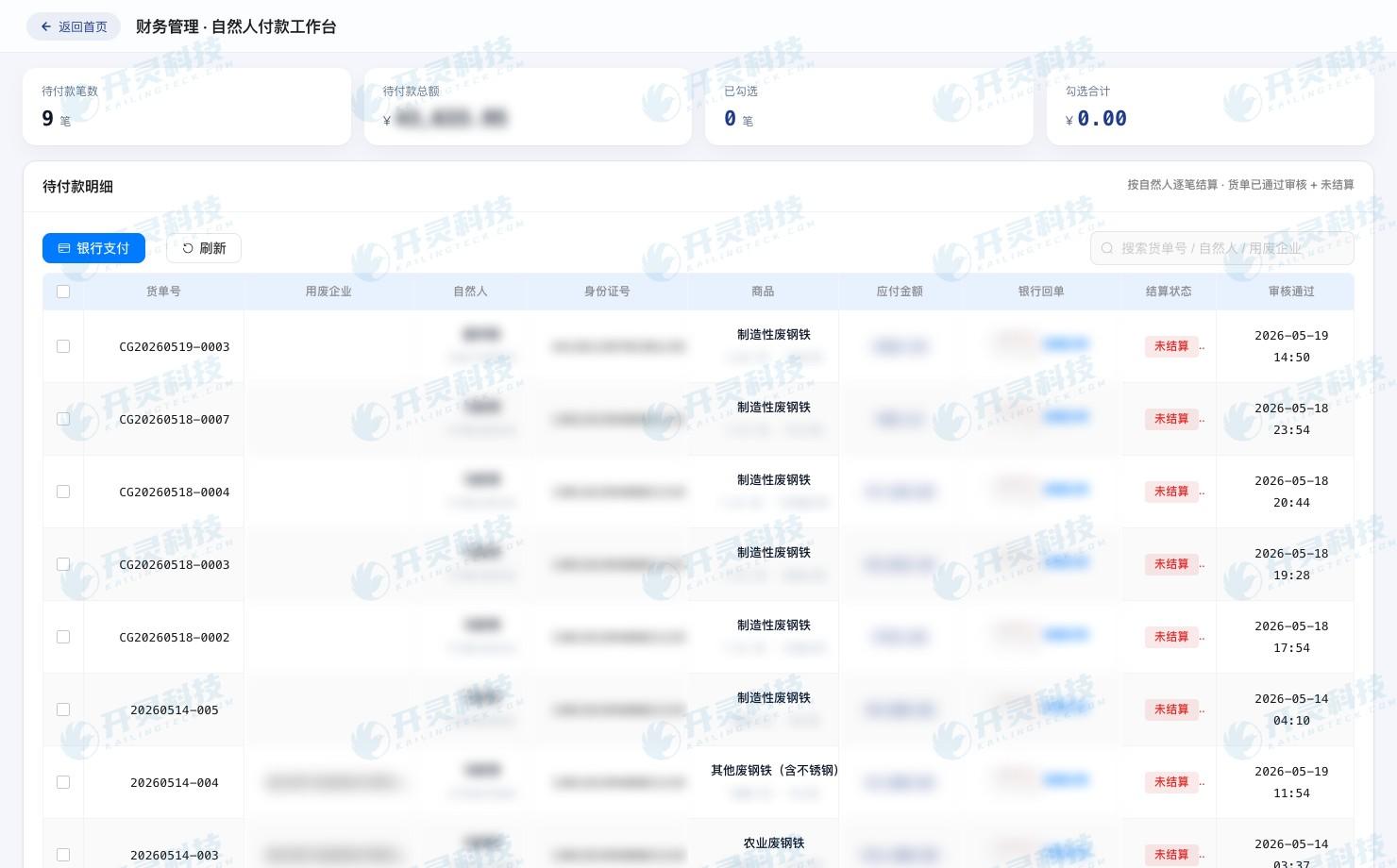
| "The goal of retail investor risk management is to precisely suspend a suspicious transaction, not to trade full-batch shutdown for superficial safety. |
▍V. Ledger review must examine entity, business, and status changes at the same time
Daily review can establish queues based on conditions such as multiple tiers for the same person, cross-site transactions, short-term high frequency, verification status changes, long in-transit periods without closure, and no update after red-flushing. Alerts are only a review entry point; frequent transactions should not be directly judged as violations without institutional basis; personnel need to confirm in conjunction with business vouchers and entity information.
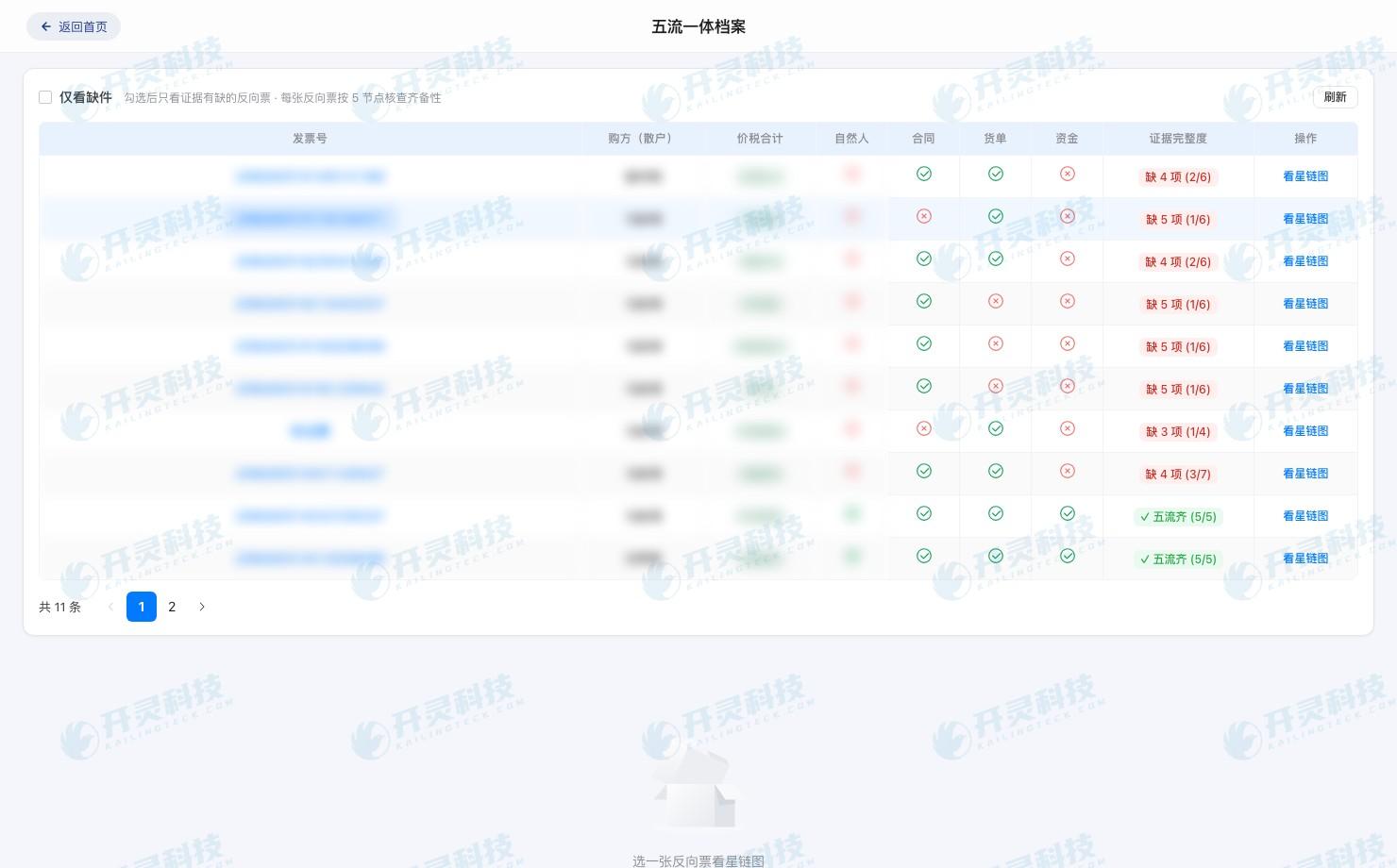
During archiving, entity self-certification, receiving business, invoices, payments, and processing records are combined into five-flow evidence. The system should allow viewing historical transactions from the entity, and also allow returning from a single invoice to the corresponding receiving transaction, with permissions and exports controlled. In this way, the cumulative ledger is not just a number, but can also explain which items compose the number.
- Use samples of the same seller across sites to verify whether entities are correctly merged.
- Use changes in verification status to verify whether subsequent transactions enter review in a timely manner.
- Use concurrent invoicing and red-letter reversal to test in-transit occupation and cumulative rollback.
After launch, responsibility for exceptions must be clarified: on-site staff supplement business materials, business-finance-tax positions determine the entity and invoicing conditions, and system maintenance personnel handle interface or data issues. Mixing different causes into a single "invoicing failure" queue only lengthens processing time and fails to form a basis for improvement.
When the three lines of identity, business, and cumulative amount are updated synchronously on every transaction, scrap metal recycling enterprises can maintain a consistent basis even when facing a large number of retail sellers. Regular sellers quickly complete receiving, invoicing, and payment; the few exceptions have reasons, responsible persons, and closing conditions, so risk control no longer relies on manual spreadsheet assembly at month-end.
Data quality monitoring can also flag phenomena such as expired identity documents, frequent changes in contact information, and multiple entities corresponding to the same account. However, these signals are only used for review reminders and cannot replace factual judgment. Sensitive information should be used on a minimal necessary basis, with queries and exports leaving audit trails, to avoid risk management itself creating new data exposure.
When policies or enterprise standards are adjusted, the system rules indicate the effective date and formulate transitional measures for in-transit business. Old transactions retain the verification and cumulative basis adopted at the time, and new transactions use new rules, without rewriting history using current settings. In this way, the ledger can continue to operate and also explain the differences in handling at different stages.
After an exception is closed, the reason data should be recovered. If duplicate file creation occurs repeatedly at a certain site, prioritize improving entry identification; if a large number of failures come from missing materials, adjust on-site guidance; if interface status is delayed, optimize queries and alerts. The risk queue should ultimately drive source improvement rather than accumulate over the long term.
▍FAQ
Q: After an individual passes verification for the first time, is there no need to verify again later?
A: Not recommended to use permanently. The latest valid status should be used at key transactions or invoicing, and the verification result at that time should be retained.
Q: How are cumulative totals calculated when the same seller supplies goods at different sites?
A: Associate transactions at each site through a unified entity archive, with a unified cumulative standard, while retaining the organization and weighbridge ticket source of each business transaction.
Q: Can high-frequency transactions be directly judged as risky?
A: Conclusions cannot be drawn based on frequency alone. It can trigger review, but the final judgment still needs to combine entity status, business vouchers, and applicable rules.
Q: Will one abnormal entity hold up the entire batch of invoicing?
A: A reasonable design will isolate abnormal detail lines while normal items continue processing; after the anomaly is corrected, retry along the original business key.
Let every supply delivery by scrap iron individual sellers verify identity, check ledgers, and track status. Welcome to visit Kailing Technology: https://www.kailingteck.com/fxzy/ .
As a national high-tech enterprise, Kailing Technology focuses on the digital and intelligent transformation of enterprise business-finance-tax and operations management, providing software products, system integration, implementation and delivery, and operational services for various government agencies, institutions, group enterprises, and SMEs.
The company has now formed ten core product lines, including: AI digital employee system, enterprise expense control management system, customer relationship management system, reverse invoicing management system, invoice issuance for individuals management system, electronic archives management system, tax fully digitalized e-invoice Leqi system, tax invoice management system, group tax filing system, and AI OCR recognition system. It is committed to connecting enterprise business, finance, tax, funds, and archive data to help customers improve operational efficiency, business-finance-tax compliance capabilities, and digital management levels.
If you have any business-finance-tax digital transformation needs, welcome to contact us. Beijing Kailing Technology will serve you wholeheartedly.
Keywords: Scrap iron recycling, individual supplier supply, identity and quota verification, Kailing Technology, resource recycling reverse invoicing system
As a comprehensive business-finance-tax digitalization solution service provider, Kailing Technology provides business-finance-tax management digital transformation products and operational services for various government agencies, institutions, and large, medium, and small enterprises. The product line includes: solutions for sales contract management system, procurement contract management system, fully digitalized Leqi interface project, automatic output invoicing system, reverse invoicing system, invoice issuance for individuals system, employee expense control and reimbursement system, input VAT invoice management system, supply chain collaborative reconciliation system, image AI OCR recognition system, automatic financial bookkeeping system, electronic accounting archives system, etc., comprehensively driving the digitalization process across various fields.
Consultation Hotline: 18513895936 / 010-60974119 Location: Beijing