
How to reduce ledgers for multiple scrap aluminum categories and batches? Kailing Technology's resource recycling reverse invoicing system issues invoices in batches and automatically links weighbridge tickets
Scrap aluminum recycling sites often simultaneously face situations such as one truck with multiple materials, multiple trucks with the same material, and re-settlement after sorting different categories. Business staff record trip numbers, warehousing records batch numbers, finance records settlement statements, and the invoicing staff creates task numbers—four sets of numbers that don't recognize each other, so ledgers naturally multiply. If batch invoicing is built on such a foundation, it will only amplify a single mismatch into multiple invoices. Centering on "1. Duplicate ledgers come from four sets of numbers each growing on their own," Kailing Technology's resource recycling reverse invoicing system needs to bring the relevant relationships into the same business chain.
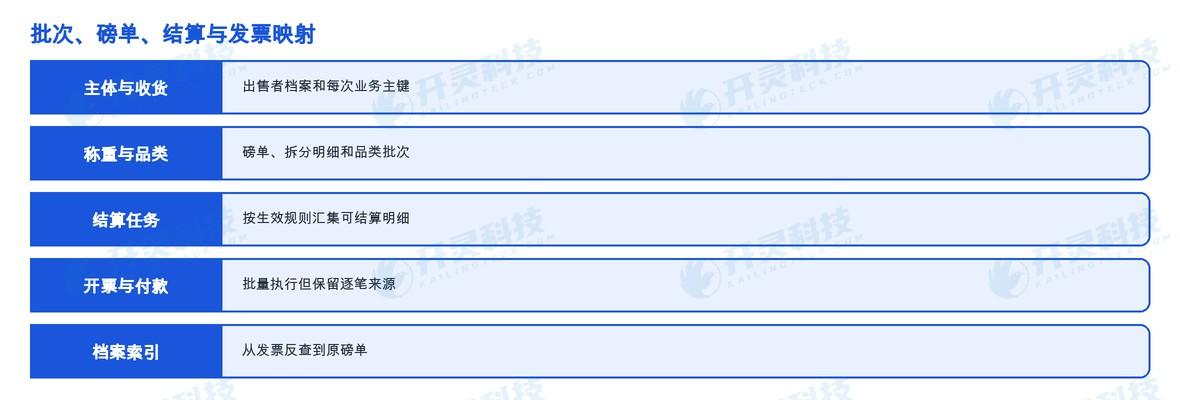
Through the association of sellers, goods receipt business orders, weighbridge tickets, category batches, settlement, invoices and payments, Kailing Technology's resource recycling reverse invoicing system routes mergeable items into batch tasks according to rules, while details that cannot be merged or fail verification are handled separately. The premise of reducing ledgers is not merging all records, but establishing a numbering system that can express split and merge relationships.
▍1. Ledger duplication comes from four sets of numbers each growing on their own
When a vehicle arrives, an entry or weighbridge ticket number is generated; after sorting, categories and batches are formed; finance generates settlement statements according to the settlement object; and the invoicing position then creates invoice records based on tasks. If each stage can only reference the previous number in remarks, staff need to manually maintain a mapping table, and any order splitting, merging, or adjustment will cause synchronization in multiple places.
Number governance should distinguish business primary keys from process numbers. The primary key represents a traceable receiving event, while weighbridge tickets, batches, settlements, and invoices retain their own professional numbers and are interconnected through system relationship tables. In this way, even if one weighbridge ticket is split into multiple categories, or multiple eligible settlements enter the same batch task, the source will not be lost.
- The main business number runs through the transaction and does not change due to subsequent changes in invoicing method.
- The batch number indicates the goods classification and processing set, and cannot replace the seller's identity.
- Invoicing task number management for batch execution, with each detail within a task retaining its original business relationship.
▍II. Kailing Technology resource recycling reverse invoicing system: one vehicle with multiple materials and multiple vehicles with the same material must be expressed separately
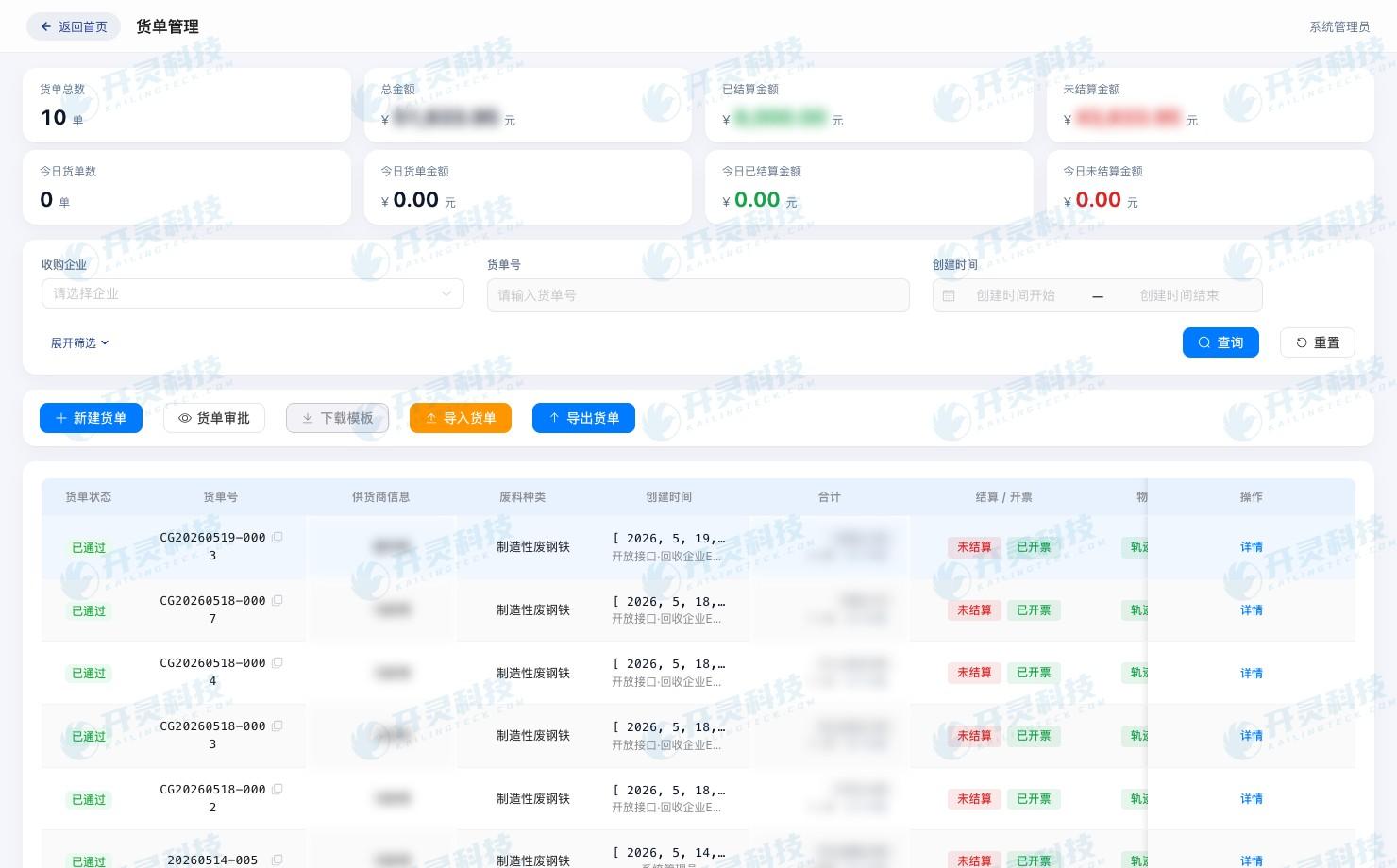
One vehicle with multiple materials means that the same arrival and weighing fact may be split into multiple category details, and the system must retain the reconciliation between total weight and allocation results; multiple vehicles with the same material means multiple independent receipts enter the same category or settlement batch, and each vehicle's seller, weighbridge slip, and time still cannot be merged away. Although both situations appear to be called batches, the data relationships are completely different.
Kailing Technology's resource recycling reverse invoicing system supports linking goods receipt business orders and weighbridge tickets. Enterprises should configure existing category, weighing, sorting and adjustment rules as fields and approvals. Any split or adjustment records the source, reason and approver before entering settlement.
▍III. Before batch invoicing, pass through the entity and consolidation condition gate
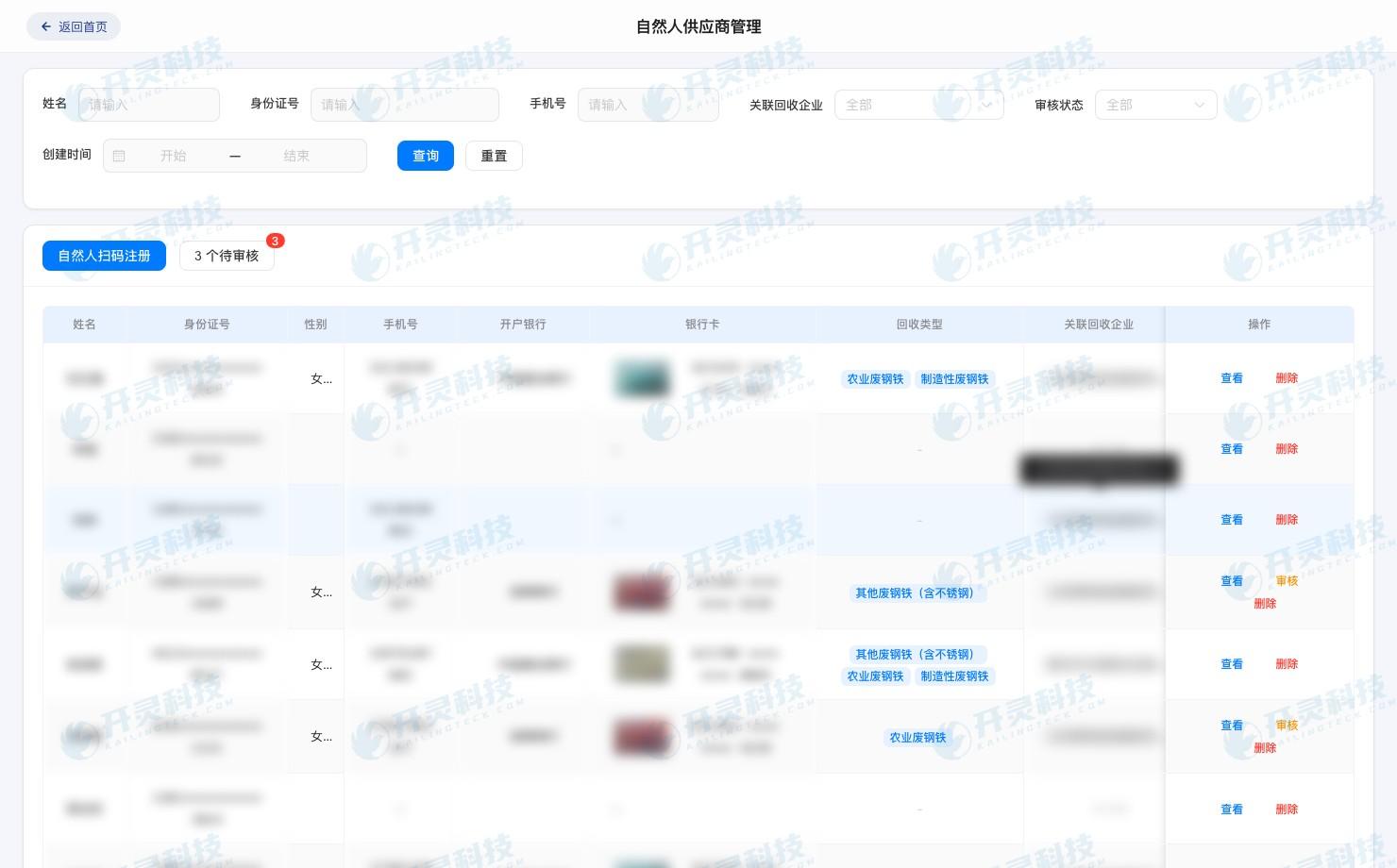
Announcement No. 5 of 2024 of the State Taxation Administration forms the basis for resource recycling enterprises to reverse invoice qualifying natural person sellers. Before invoicing, it is necessary to confirm the entity verification status, enterprise qualifications, whether the business and settlement are completed, and whether ledger conditions are met. Different sellers, different inapplicable statuses, or disputed transactions should not be forcibly merged for batch convenience.
The conditions for entering the same task should be determined by business and invoicing rules, such as the same invoicing entity, valid seller identity status, effective settlement, no duplicate invoicing, and complete required fields. The system can process in batches and call interfaces, but cannot claim that any batch can be directly merged into one invoice. The merge result should be able to list which original business orders are included.
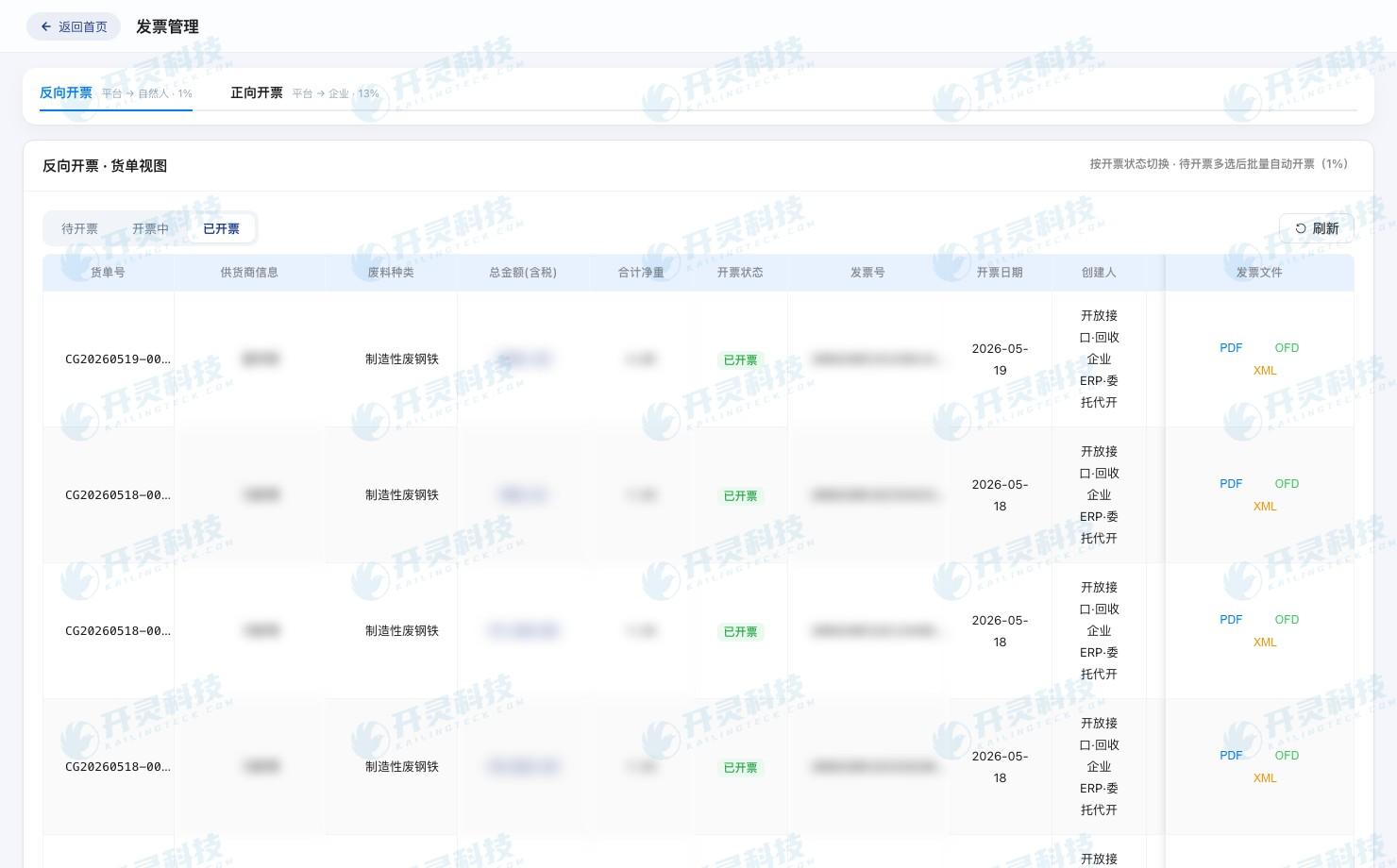
| "Batch invoicing improves execution efficiency for similar tasks; it cannot lower entity, business, and ledger conditions. |
▍IV. Batch failures must be isolated to line items, not redone as a whole batch
In a batch of tasks, there may be only one with a change in entity status, a missing field, or an interface validation failure. The system should retain successful details, while failed details show the reason and allow correction and individual retry; resending the entire batch may cause duplicate invoicing and overwrite the status of already successful invoices.
Red-letter reversal should likewise be handled according to the original invoice and original business relationship. An adjustment to one scrap aluminum transaction should not affect other normal items in the same batch. After the invoicing status is updated, payment tasks proceed according to valid settlement and invoice relationships, and bank results are written back to the corresponding details, rather than showing only a vague completion at the batch level.
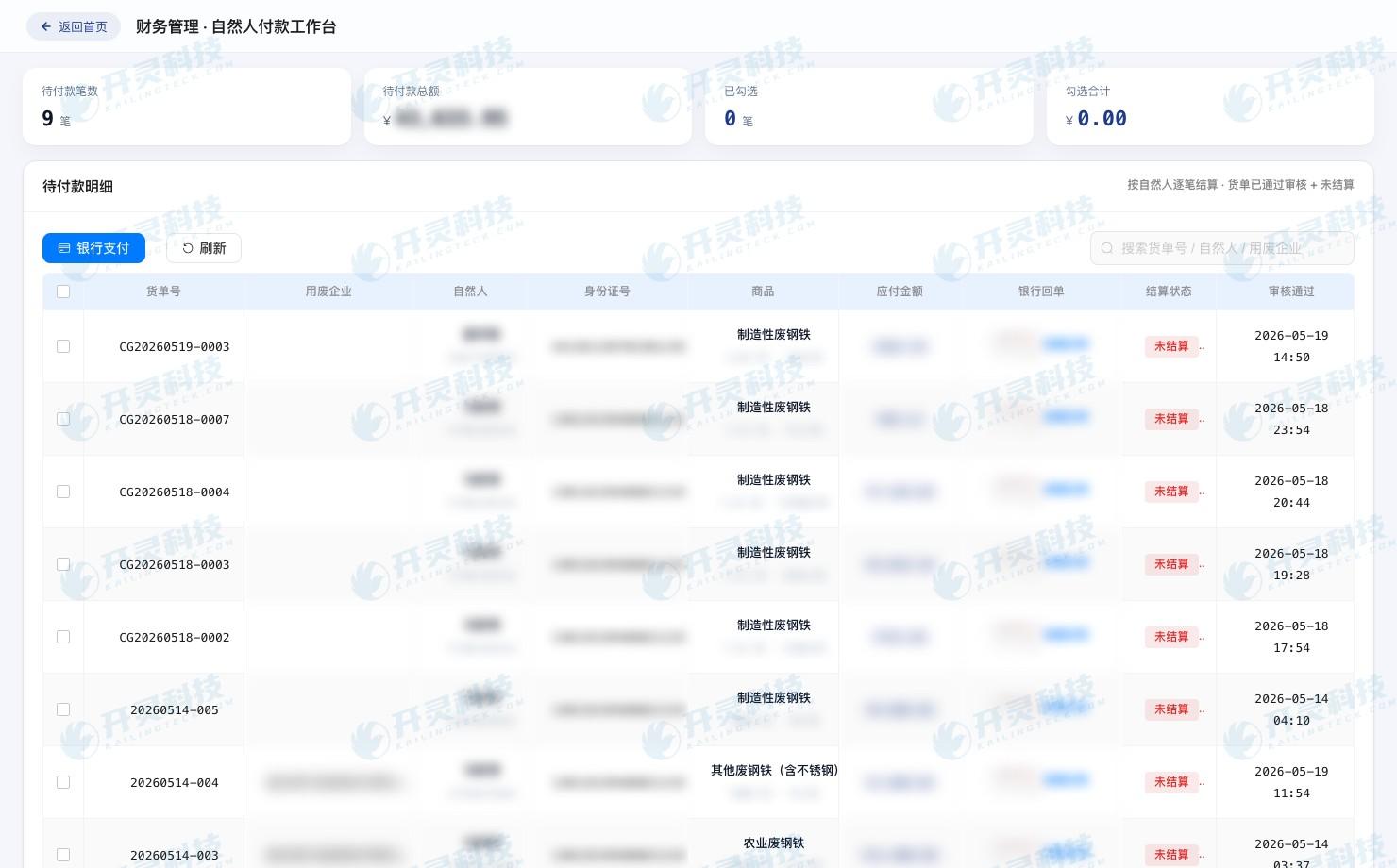
- The task layer displays overall progress, and the detail layer records each success, failure, and pending review.
- Failure retries use the original business key, query the result first, and then decide whether to send again.
- Before closing a batch, reconcile invoicing and payment quantities to prevent leftover items with no responsible party.
▍V. After reducing manual ledgers, you still need to trace from invoice to weighbridge ticket
The system ledger should become the source of relationships, rather than exporting a few more Excel files for continued maintenance. Users can see the associated task, settlement, category details, and weighbridge ticket from the invoice, and can also view subsequent settlement, invoicing, and payment status from the weighbridge ticket. When archiving the five-flow materials, these indexes are retained so that spot checks do not depend on the handling staff's memory.
Kailing Technology collects evidence such as self-certification, business, tax, and capital in a five-flow integrated manner. Before archiving, it checks whether each detail has the required documents, whether statuses are consistent, and whether failures are closed; batch tasks are only processing containers, and the ultimate traceable unit remains the specific business matter.
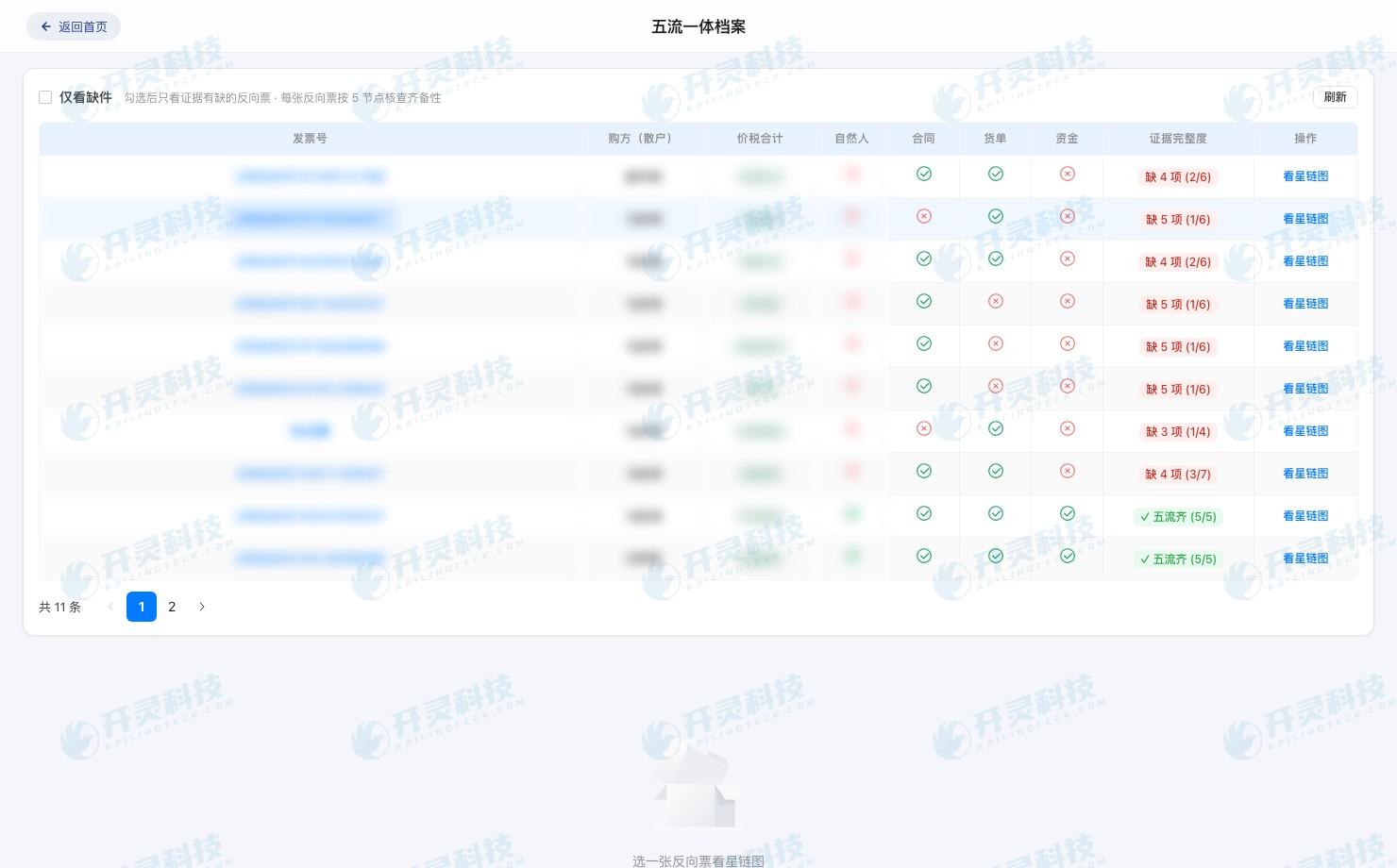
- Use one vehicle split into multiple categories to test the linkage between weight and amount.
- Use multi-vehicle merged tasks to verify that each weighbridge ticket remains independently traceable.
- Use a single failed transaction and red-letter reversal to verify that other details are not processed repeatedly.
In the early stage after go-live, you can compare the quantity and status of the four queues — goods receipt, settlement, invoicing, and payment — daily to quickly find numbering breakpoints. Once stable, business roles enter data around the original matter, invoicing roles execute in batches according to conditions, and finance completes reconciliation from system relationships, so duplicate ledgers will truly decrease.
Enterprises should also limit the permission to manually remove associations. When it is truly necessary to rebind a weighbridge ticket or adjust a batch, the reason must be explained, reviewed, and both the before and after versions retained; if anyone can directly change the mapping, even the best numbering design will return to manual splicing.
Batch tasks need clear closing conditions. A task can only be closed after all details succeed, failed details have been moved to a follow-up queue, quantity and amount reconciliation shows no discrepancies, and necessary payments are completed. Simply concluding after seeing most invoices succeed will leave a few leftover items until month-end.
The personnel dashboard should separately display pending filing, pending receipt confirmation, pending settlement, pending invoicing, and pending payment, so that the invoicing role does not bear the burden of upstream documentation issues. After queues are routed by reason, business personnel know what to supplement, finance and tax personnel know what to verify, and system issues can be assigned to maintenance roles.
When migrating historical Excel files, it is not necessary to move every old table in as-is. First confirm business that is still unsettled and necessary relationships, and establish primary keys and source descriptions for them; records that have ended should be retained according to archive indexes. Only with a clear migration scope can the new system avoid continuing to carry duplicate ledgers.
▍FAQ
Q: Can multiple batches all be combined into a single invoice?
A: It cannot be generalized. It must comply with entity, business, settlement, and invoicing rules; batch processing by the system does not mean any matter can be combined into one invoice.
Q: How is traceability retained when one truckload of scrap aluminum contains multiple categories?
A: Retain the same receipt primary key and weighbridge ticket source, then record category splitting, reconciliation results, adjustment reasons, and approved version.
Q: What should be done if one item in a batch task fails?
A: Successful details are retained, and failed items are isolated by reason and corrected and retried using the original business key, avoiding duplicate invoicing for the entire batch.
Q: After canceling the Excel ledger, how do we conduct spot checks?
A: Through system relationships, query bidirectionally from invoices, payments, or weighbridge tickets, and retain a transaction-by-transaction business index and status during archiving.
Let multi-category, multi-batch scrap aluminum be processed in bulk by rules without losing per-transaction sources. Welcome to visit Kailing Technology: https://www.kailingteck.com/fxzy/ .
As a national high-tech enterprise, Kailing Technology focuses on the digital and intelligent transformation of enterprise business-finance-tax and operations management, providing software products, system integration, implementation and delivery, and operational services for various government agencies, institutions, group enterprises, and SMEs.
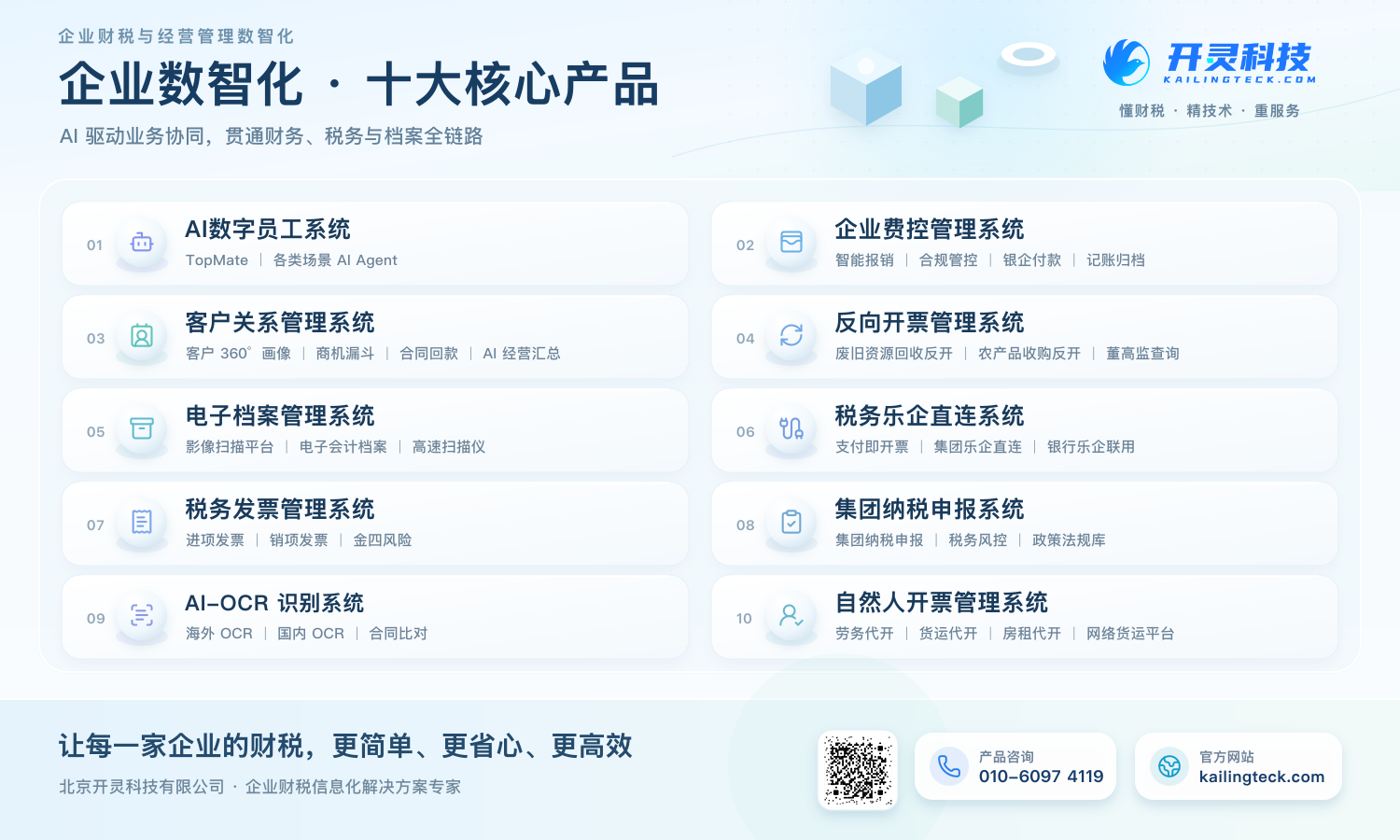
The company has now formed ten core product lines, including: AI digital employee system, enterprise expense control management system, customer relationship management system, reverse invoicing management system, invoice issuance for individuals management system, electronic archives management system, tax fully digitalized e-invoice Leqi system, tax invoice management system, group tax filing system, and AI OCR recognition system. It is committed to connecting enterprise business, finance, tax, funds, and archive data to help customers improve operational efficiency, business-finance-tax compliance capabilities, and digital management levels.
If you have any business-finance-tax digital transformation needs, welcome to contact us. Beijing Kailing Technology will serve you wholeheartedly.
Keywords: Scrap aluminum recycling, batch reverse invoicing, weighbridge ticket linking, Kailing Technology, resource recycling reverse invoicing system
As a comprehensive business-finance-tax digitalization solution service provider, Kailing Technology provides business-finance-tax management digital transformation products and operational services for various government agencies, institutions, and large, medium, and small enterprises. The product line includes: solutions for sales contract management system, procurement contract management system, fully digitalized Leqi interface project, automatic output invoicing system, reverse invoicing system, invoice issuance for individuals system, employee expense control and reimbursement system, input VAT invoice management system, supply chain collaborative reconciliation system, image AI OCR recognition system, automatic financial bookkeeping system, electronic accounting archives system, etc., comprehensively driving the digitalization process across various fields.
Consultation Hotline: 18513895936 / 010-60974119 Location: Beijing