
How to issue invoices in renewable resource recycling? Full analysis of 2026 compliance points
How to issue invoices in renewable resource recycling? Full analysis of 2026 compliant operations and risk prevention
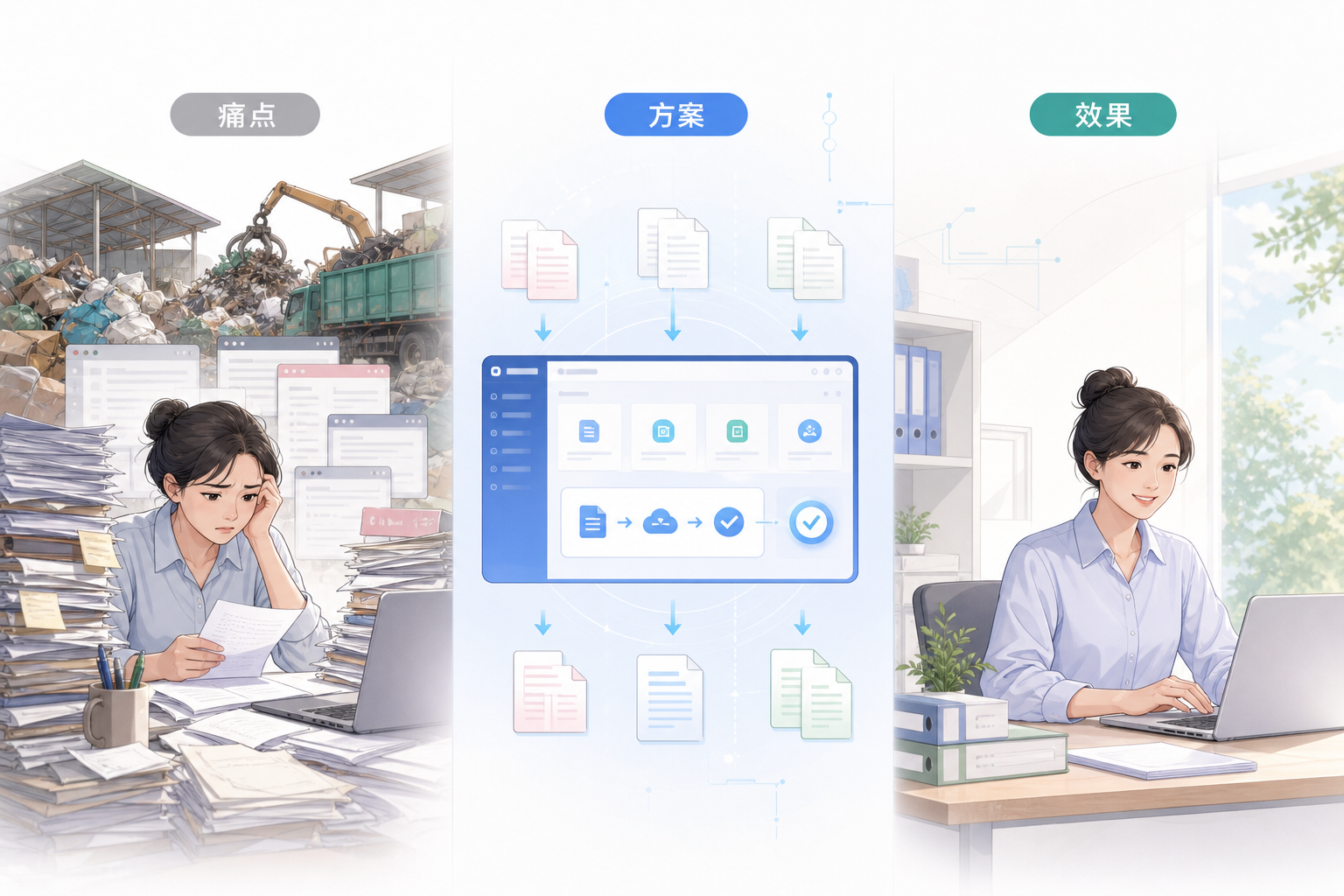
For recycling stations, scrap stations, and renewable resource processing enterprises, the biggest headache is purchasing scrap steel, waste paper, and waste plastic from individual sellers, who are individuals and cannot issue invoices, so costs cannot be booked and the tax burden remains high. Reverse invoicing is precisely the compliant channel for solving this challenge, but the process is complex and the voucher requirements are strict, so a single misstep can trigger tax risks. With its reverse invoicing product at the core, combined with AI OCR and electronic accounting archives, Kailing Technology helps you standardize and digitize the complex process, achieving both compliance and efficiency.
"Reverse invoicing is not simply 'issuing an invoice in reverse,' but a systematic project rooted in business authenticity and taking the five-flow integration ledger as its lifeline." |
▍1. Which scenarios apply to reverse invoicing for renewable resource recycling? What is the policy basis?
According to current policy, reverse invoicing mainly applies to two scenarios: first, purchasing agricultural products, and second, recycling renewable resources. Specifically for renewable resource recycling, when the seller is an individual and sells used waste materials or recycled renewable resources, the purchaser (i.e., the recycling enterprise) may issue procurement invoices itself. Policy bases include the Interim Regulations on Value-Added Tax and relevant announcements of the Ministry of Finance and the State Taxation Administration. In 2026, as the "reverse invoicing" pilot expands, more recycling enterprises will be included in the compliant channel, but they must meet the hard requirements of "authentic business, complete vouchers, and traceable processes."
▍II. Why is the five-flows-in-one ledger the lifeline of reverse invoicing?
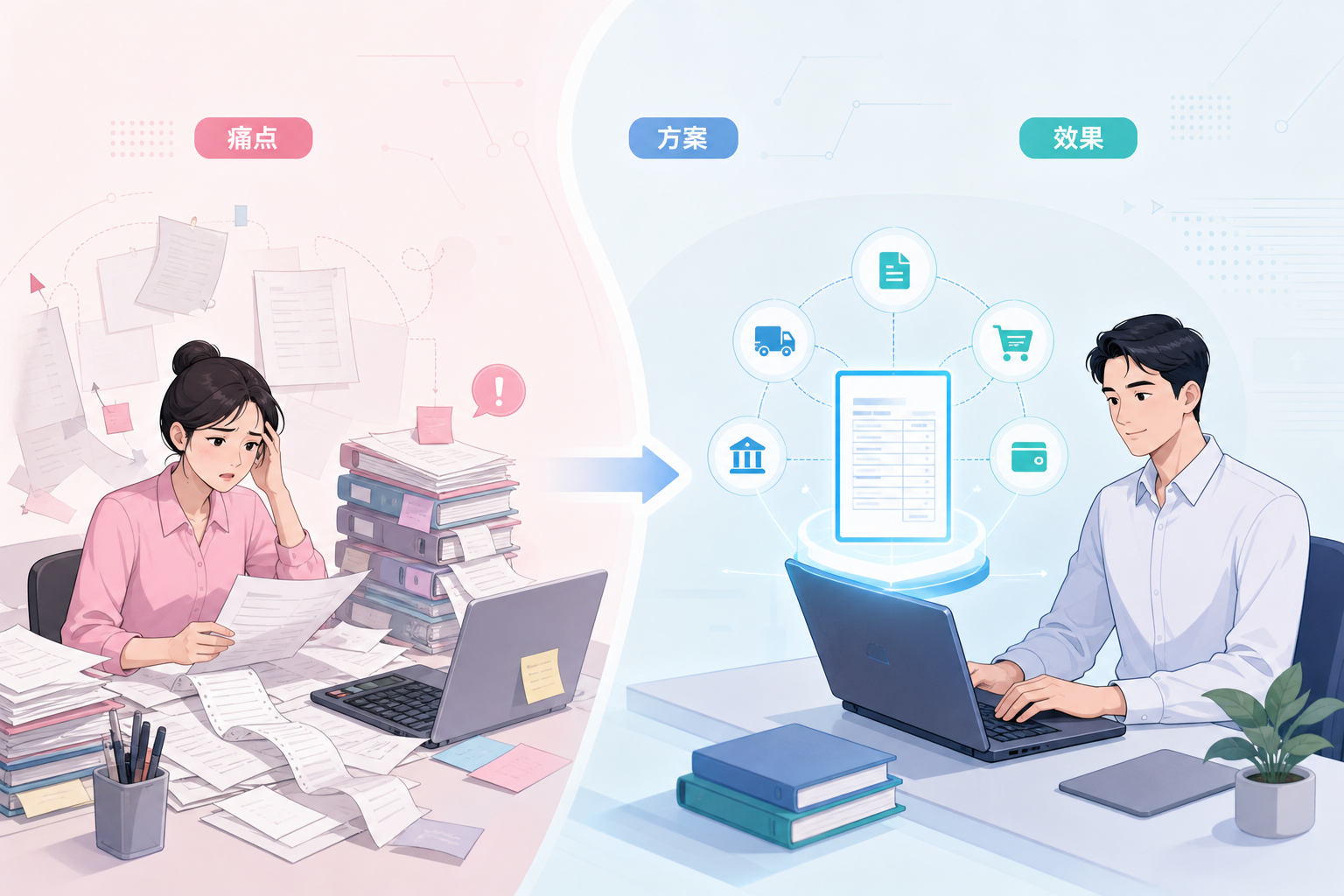
The core risk of reverse invoicing lies in "false invoicing," so tax authorities require enterprises to establish a "five-flow integration" ledger, meaning contract flow, goods flow, capital flow, invoice flow, and information flow corroborate one another. For example, when purchasing scrap steel, it is necessary to retain purchase and sales contracts, weighbridge tickets, payment vouchers, purchase invoices, and vehicle transportation tracks. Manual ledgers are highly prone to omissions or errors. Kailing Technology's reverse invoicing product has a built-in five-flow integration ledger template and supports automatic collection of electronic contracts, weighbridge data, bank receipts, and more, ensuring every transaction can withstand scrutiny.
▍III. How to use digital tools to make reverse invoicing more efficient and compliant?
Traditional manual invoicing is inefficient and error-prone, while digital tools can standardize the process. Kailing Technology's reverse invoicing system supports "invoicing upon purchase," connects to the fully digitalized e-invoice platform, and automatically generates purchase invoices; at the same time, AI OCR can recognize ID cards, weighbridge tickets, bank receipts, etc., automatically extract key information, and associate it with ledgers. The electronic accounting archives system enables voucher scanning as storage, recognition as archiving, and association as binding, meeting the requirement of "complete vouchers." The combination of three products frees finance from cumbersome paper documents to focus on business review.
▍IV. What are the common risks of reverse invoicing? How to prevent them?
Common risks include: business being unreal and deemed false invoicing, missing vouchers preventing pre-tax deduction, and chaotic ledgers triggering audits. There are three preventive measures: first, ensure the seller is an individual and the business is real, retaining on-site photos, transport records, etc.; second, obtain and keep all vouchers in a timely manner, including ID card copies, weighbridge tickets, payment vouchers, etc.; third, use digital tools to achieve full-process traceability. Kailing Technology's tax risk control product can conduct compliance scanning on filing data, provide early warning of risk indicators, and help enterprises prevent problems before they occur.
Keywords: Renewable resource recycling, reverse invoicing, five-flow-in-one, purchase invoices, invoice issuance for individuals, AI OCR, electronic accounting archives, tax risks
As a comprehensive business-finance-tax digitalization solution service provider, Kailing Technology provides business-finance-tax management digital transformation products and operational services for various government agencies, institutions, and large, medium, and small enterprises. The product line includes: solutions for sales contract management system, procurement contract management system, fully digitalized Leqi interface project, automatic output invoicing system, reverse invoicing system, invoice issuance for individuals system, employee expense control and reimbursement system, input VAT invoice management system, supply chain collaborative reconciliation system, image AI OCR recognition system, automatic financial bookkeeping system, electronic accounting archives system, etc., comprehensively driving the digitalization process across various fields.
Consultation Hotline: 18513895936 / 010-60974119 Location: Beijing