
Kailing Technology assists Dongguan Yinzhou Group's document OCR-AI recognition and ERP system integration project in successfully passing acceptance and going live
A delivery note records both the delivery of goods and serves as an important voucher for enterprises to complete business reconciliation, customer sign-off, and system sign-back. Whether paper documents returned from the site to the enterprise can be promptly converted into queryable and traceable business records directly affects subsequent reconciliation and exception handling.
In August 2026, the project of OCR-AI recognition of delivery notes connected to the ERP system for Dongguan Yinzhou, undertaken by Kailing Technology, passed acceptance and was put into use. The project partner is Dongguan Yinzhou Environmental Protection Packaging Co., Ltd. (hereinafter referred to as "Dongguan Yinzhou"). The project adopts private deployment and covers the scanning and collection of paper delivery notes, OCR recognition, ERP interface write-back, document query and exception alerts.
I. Client enterprise and business scenarios
Dongguan Yinzhou's daily operations involve issuing paper delivery notes, moving them with goods, customer signing, and return receipt management. After delivery is completed, signed documents need to return to the enterprise, where relevant positions verify the customer, order number, and business status, and establish a corresponding relationship with business records in ERP.
Such management scenarios connect multiple links such as business, warehousing, logistics, and customers. Paper documents are the carrier of business facts, but paper itself does not have the ability to automatically summarize, query by condition, and remind on status. The focus of project construction is to establish a unified data entry point for subsequent processing while retaining original vouchers.
II. Project Background: Delivery Note Return Signing Needs to Shift from Paper-Based Circulation to System Management
The project acceptance video reviewed the business situation before implementation. Delivery notes circulate among drivers, customers, business personnel, and warehouse staff. There are many paper receipts and long processing steps, and whether receipts are returned and whether verification is completed often requires manual confirmation.
When reconciliation mainly relies on paper and offline records, the same document may be processed repeatedly; the relevant data is also scattered among different positions and personnel, and once a discrepancy arises, the original paper documents need to be found again and verified party by party. Although the enterprise already uses ERP, before paper vouchers enter ERP there is still connecting work such as scanning, recognition, entry, and status confirmation.
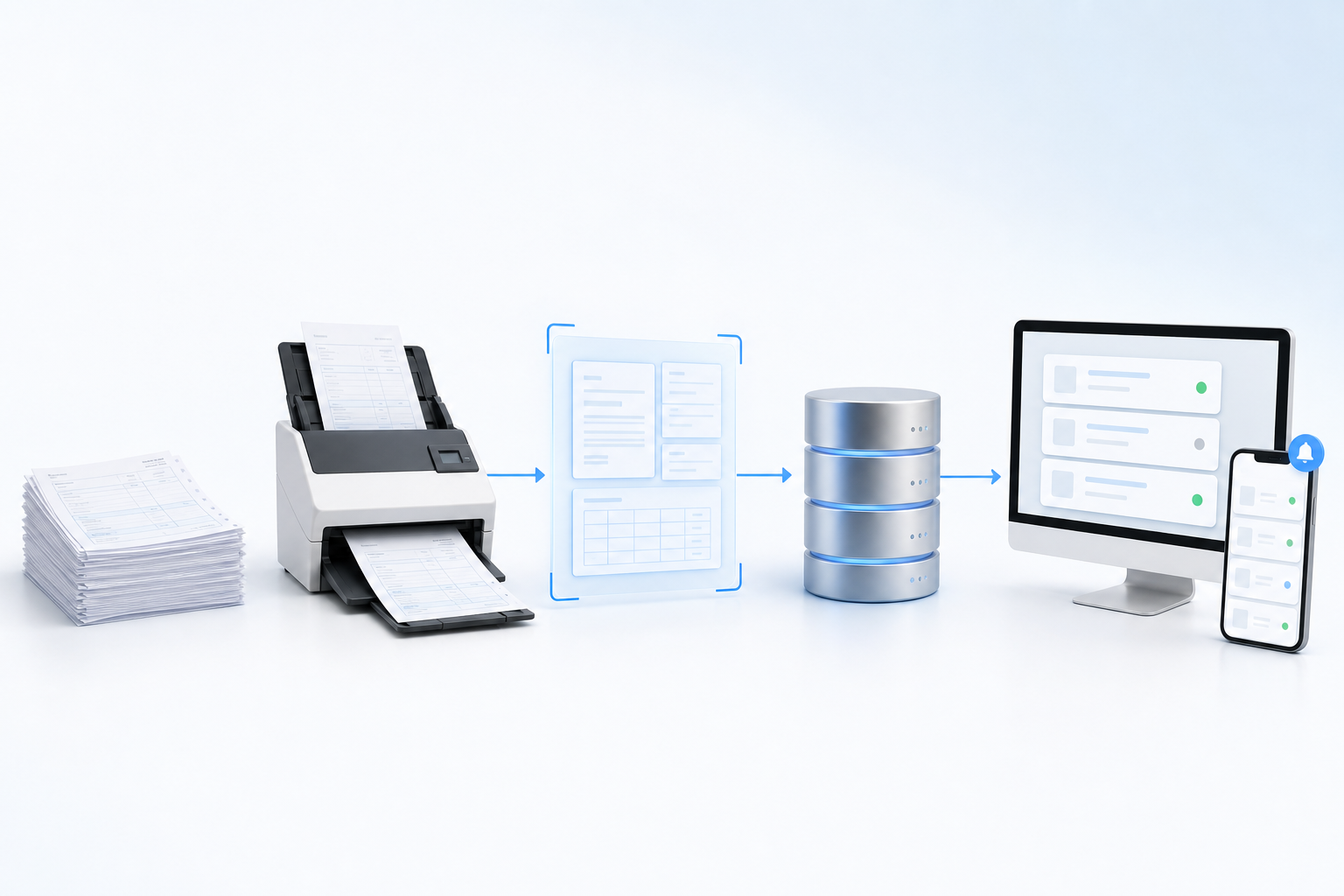
Therefore, this project did not treat OCR as a standalone text recognition tool, but instead built it into the delivery note return signing process: the front end connects scanning devices and paper documents, the middle completes recognition, parsing, and archiving, and the back end connects to ERP through agreed interfaces and retains returned information on the delivery note management page.

III. Project Construction Content: Form a Complete Chain Around Scanning, Recognition, ERP Sign-Back, and Query
According to the requirements confirmed by both parties, the project construction content covers the main processing steps after the delivery note enters the system, and simultaneously completes equipment adaptation, interface integration testing, deployment and launch, and personnel training.
1. Build privatized delivery note management software
The delivery note management software is deployed in the enterprise's internal environment to receive scan data, recognition results, document attachments, and processing status. The system is bounded by the document management process required by actual business operations, providing a unified entry point for subsequent ERP transmission, querying, and exception handling.
2. Support scanning, uploading, and OCR recognition of normal and abnormal delivery notes
The system connects to supporting scanning equipment, supports continuous scanning and uploading of paper delivery notes, and performs OCR recognition based on the document samples and fields confirmed by the project. Both normal and abnormal delivery notes can enter the management process, and the original scanned attachments and recognition records are retained together for online viewing and subsequent verification.
3. Complete ERP data transmission and return signing according to the agreed interface
Recognition results are transmitted to ERP through the interface agreed by both parties. The system also receives business information such as salesperson, customer, and WeChat ID returned by ERP and the corresponding processing results, establishing associations among paper vouchers, recognition data, and ERP business records. Kailing Technology undertakes interface development and joint debugging within the scope agreed for this project, and does not involve the development, maintenance, or upgrade of the ERP itself.
4. Establish multi-condition query and permission control
The system supports retrieval of delivery notes by salesperson, customer, date, order number, status, and other conditions, and sets corresponding query permissions based on position. Sales personnel can scan the delivery note QR code on mobile to query, or search records and view document attachments and processing status on the computer.
5. Configure exception alerts and complete go-live training
For abnormal delivery notes, the system can push reminders to relevant personnel through the WeChat official account, helping business positions promptly discover pending matters. During project implementation, both parties also completed scanner adaptation, ERP interface joint debugging, WeChat official account push configuration, private deployment, go-live support, and operation training.
IV. Project implementation and acceptance: reviewing the complete process with real paper delivery notes
Project implementation is not a one-time document recognition demonstration, but a step-by-step verification of equipment, software, interfaces, and role operations around real paper delivery notes. In the early stage, document types, recognition fields, normal and abnormal statuses, and the scope of ERP data interaction are confirmed first, and then actual samples are used to test scanning quality, field parsing, and data transmission.
The acceptance video starts with organizing paper delivery notes. After the operator places the documents into the scanning device, the device feeds paper continuously, and the computer page displays the scanning service connection status and real-time progress simultaneously. After scanning is completed, the documents enter the management page, where previews, recognition channels, document types, and processing progress can later be viewed.
The video also shows statuses such as upload, parsing, archiving, transmission, and ERP write-back, as well as operations such as QR code recognition, AI recognition, and online attachment browsing. It can thus be confirmed that the on-site acceptance covered the continuous processing of paper vouchers after entering the system, rather than only verifying a single recognition result.
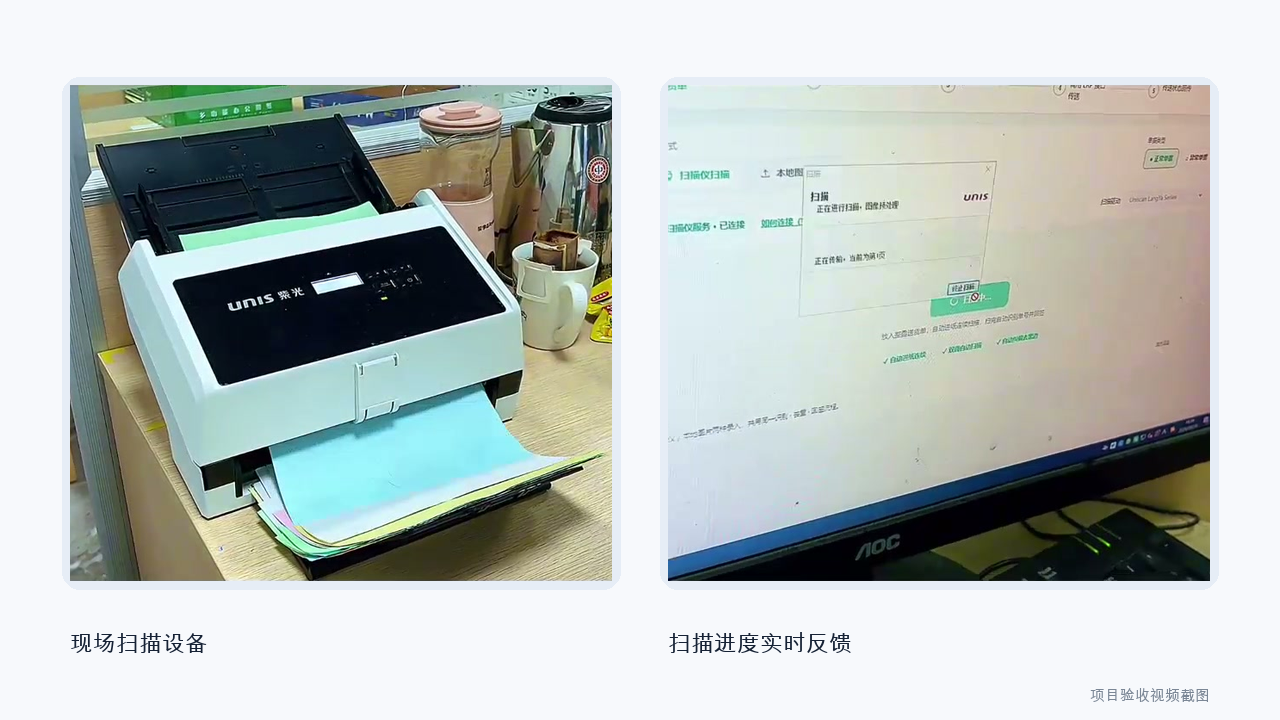
The contract stipulates that acceptance requires confirming that the system can stably and accurately execute the requirements confirmed by both parties, including normal and abnormal delivery note scanning and upload, OCR recognition, ERP data transmission and return signing, receipt of ERP return information, multi-condition queries, mobile and PC queries, attachment viewing, and abnormal WeChat official account reminders. Serious defects should be repaired; general defects require a handling plan confirmed by both parties. After the relevant functional tests pass, the project completes acceptance and goes live.
V. Core project highlight: OCR becomes the front-end entry point of ERP business processes
The feature of this project is first that recognition results directly enter the business process. After paper documents are scanned and OCR-recognized, data is passed to ERP through agreed interfaces, reducing situations where recognition results remain on independent pages and still require manual re-handling.
Second, the document processing process forms a traceable status. Links such as upload, parsing, archiving, transmission, and write-back are retained on the management page, and relevant positions can check the current progress against the original attachments, providing a basis for business verification.
Third, combine query methods with job usage scenarios. The computer end is used for multi-condition retrieval and attachment viewing, while the mobile end is used for QR code queries; role permission control limits the visible scope of different personnel. Abnormal statuses are pushed to relevant personnel via the WeChat official account, and the reminder mechanism connects with subsequent manual handling.
Together these functions form a processing chain from paper input to ERP write-back. OCR serves as the digitization entry point for documents, and the ultimate goal remains enabling delivery note records to enter the enterprise's existing management system.

VI. Project Implementation Value
After the project goes live, paper delivery notes are still retained as original business vouchers, but their management shifts from decentralized circulation to system records. Scanned attachments, recognition information, and processing status are centralized at a single entry point, so business staff no longer need to rely solely on paper or offline messages to determine the status of signed returns.
After recognition data is linked with the information returned by ERP, delivery notes can be queried by dimensions such as customer, salesperson, date, document number, and status. When an exception occurs, the system sends reminders by status, and the relevant personnel then complete verification and handling based on attachments and business records.
The project value is mainly reflected in document collection, status traceability, unified query, and system integration. Because different enterprises have different document formats, business volumes, and ERP interface conditions, this article does not use recognition accuracy or efficiency improvement ratios that have not been verified by dedicated statistics.

VII. Project Summary
The Dongguan Yinzhou project was based on the actual delivery note return-signing process and completed scanner adaptation, OCR recognition, ERP agreed interface integration testing, private deployment, exception alerts, go-live support, and personnel training. At project acceptance, the complete chain was reviewed using real paper documents to confirm that each step could operate according to agreed requirements.
This project also shows that enterprise document digitalization is not only about converting paper content into text, but also requires clarifying which system the data enters, how processing status is returned, which positions can query it, and how exceptions are reached. Only when these links are connected can OCR become a basic capability in daily business processes.
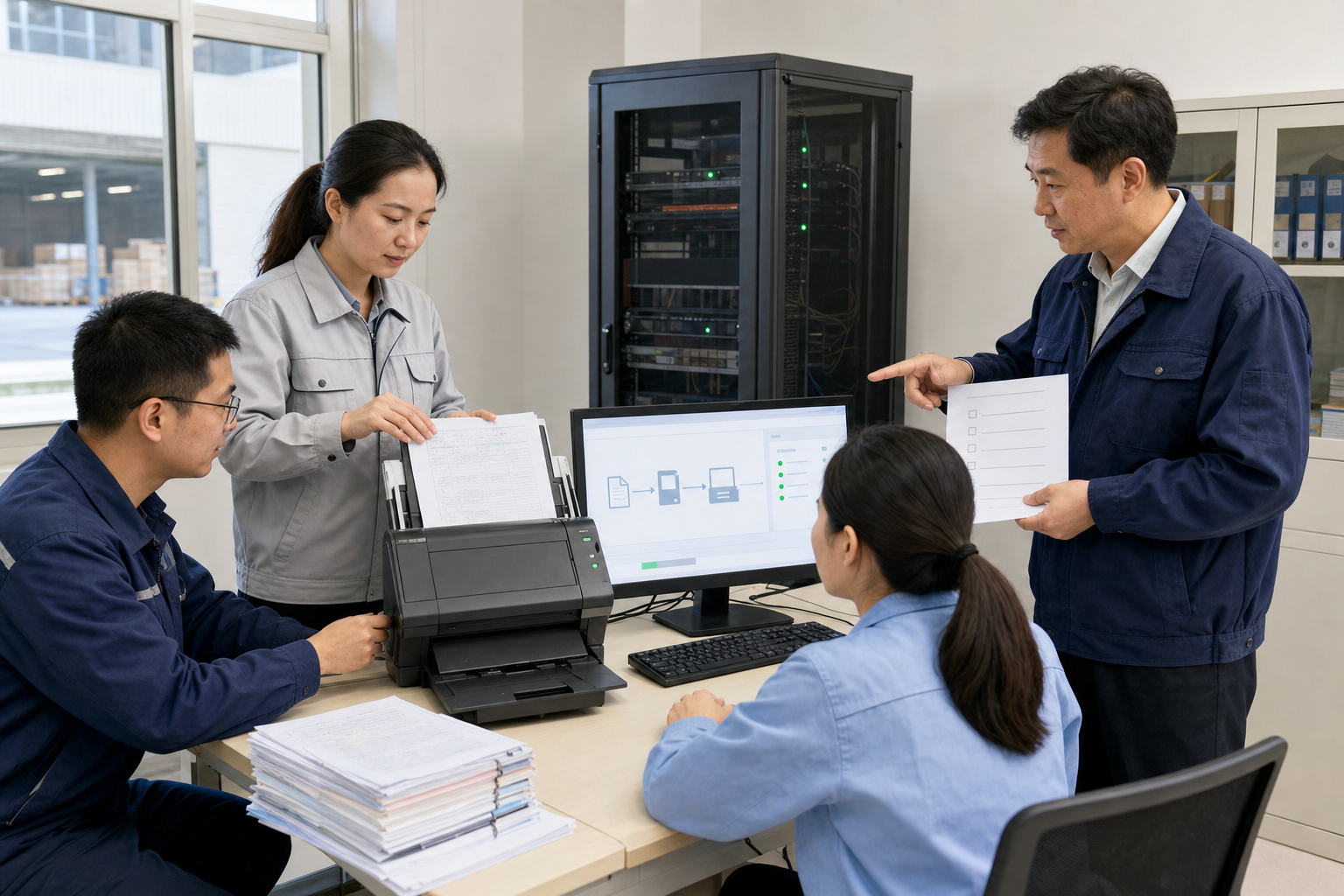
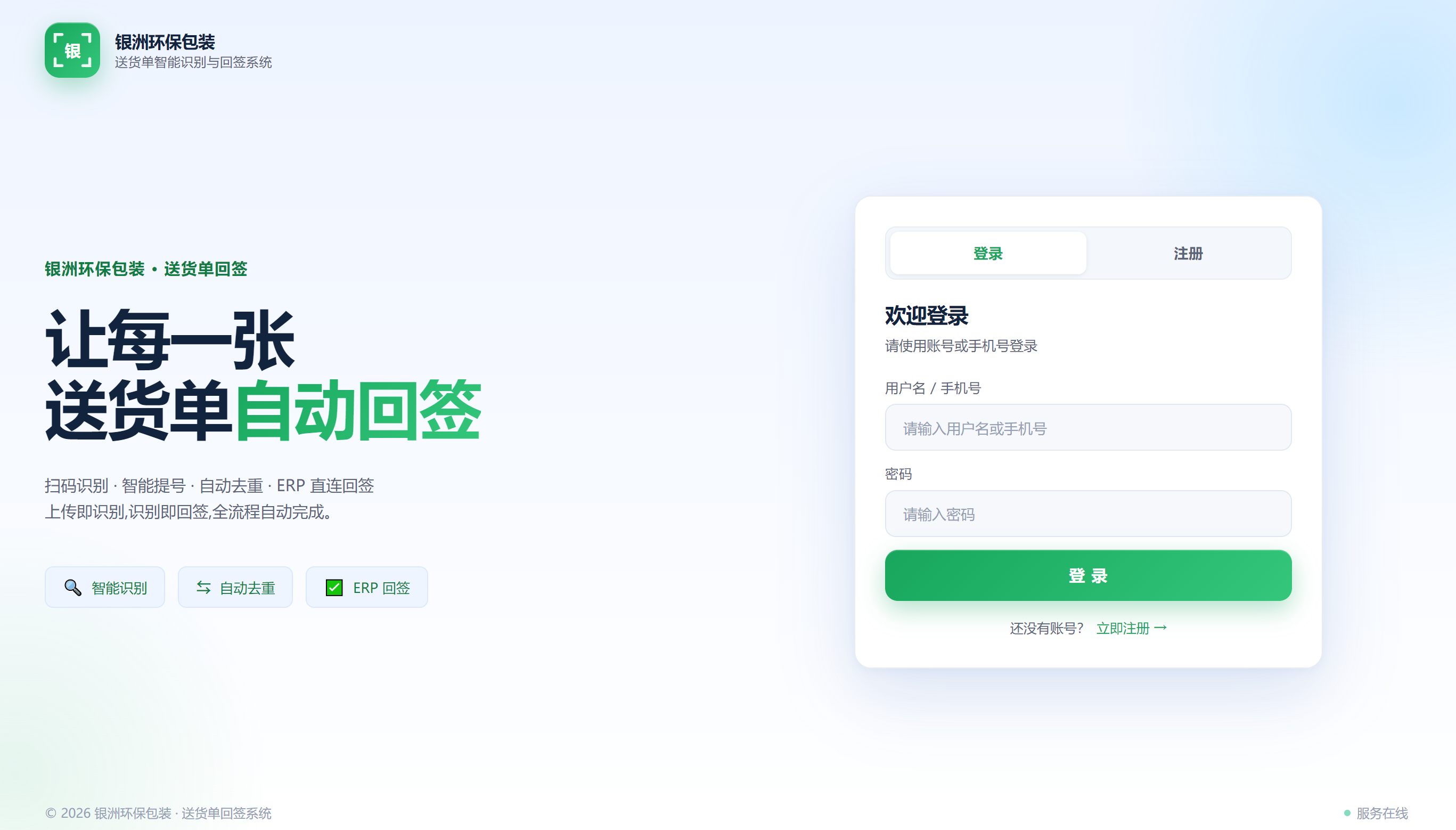
Image note: The system screenshots and project site images in this article are taken from the acceptance video; other business scenario images are illustrative content images and are not evidence of customer sites or system interfaces. The images and video are used solely for illustrative purposes in this article, and their copyright belongs to the original content sources. If there are any copyright issues or objections to the use of the images, please contact us promptly and we will handle them as soon as possible.
As a national high-tech enterprise, Kailing Technology focuses on the digital and intelligent transformation of enterprise business-finance-tax and operations management, providing software products, system integration, implementation and delivery, and operational services for various government agencies, institutions, group enterprises, and SMEs.
The company has now formed ten core product lines, including: AI digital employee system, enterprise expense control management system, customer relationship management system, reverse invoicing management system, invoice issuance for individuals management system, electronic archives management system, tax fully digitalized e-invoice Leqi system, tax invoice management system, group tax filing system, and AI OCR recognition system. It is committed to connecting enterprise business, finance, tax, funds, and archive data to help customers improve operational efficiency, business-finance-tax compliance capabilities, and digital management levels.
If you have any business-finance-tax digital transformation needs, welcome to contact us. Beijing Kailing Technology will serve you wholeheartedly.
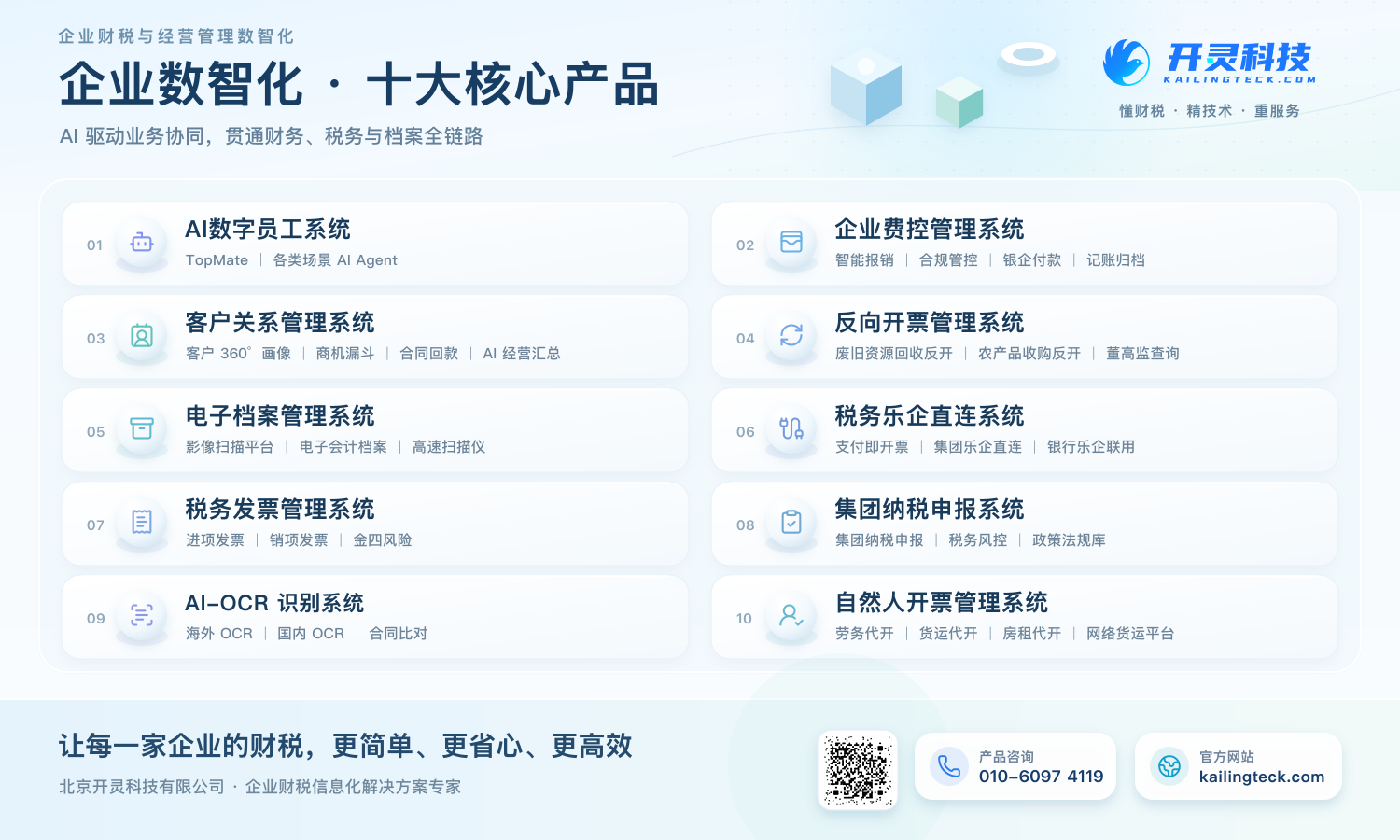
As a comprehensive business-finance-tax digitalization solution service provider, Kailing Technology provides business-finance-tax management digital transformation products and operational services for various government agencies, institutions, and large, medium, and small enterprises. The product line includes: solutions for sales contract management system, procurement contract management system, fully digitalized Leqi interface project, automatic output invoicing system, reverse invoicing system, invoice issuance for individuals system, employee expense control and reimbursement system, input VAT invoice management system, supply chain collaborative reconciliation system, image AI OCR recognition system, automatic financial bookkeeping system, electronic accounting archives system, etc., comprehensively driving the digitalization process across various fields.
Consultation Hotline: 18513895936 / 010-60974119 Location: Beijing