
Can invoices be issued automatically once payment is completed? How does Kailing Technology's Leqi joint-use solution for the banking and financial industry land?
After a merchant successfully collects payment, consumers still need to scan a code, fill in the title, and wait for manual invoicing; although banks control the payment entry point, it is difficult to directly turn transaction information into invoice services.Kailing Technology banking and financial industry Leqi combined application solution Connect bank payments, original transaction data, merchant invoicing qualifications, Leqi interfaces, and invoice delivery, so that transactions meeting the rules enter an automatic invoicing process after payment completion, and results are returned to the bank or merchant service entry point.

▍1. Why are there still five system actions between payment and invoice?
Completion of a payment only indicates that funds have reached the merchant from the consumer; it does not mean the system already has all the conditions required for invoicing. Invoicing also requires confirmation of information such as the merchant entity, transaction item, amount, tax classification code, buyer title, and invoicer identity.
Under the traditional approach, orders are usually recorded by the cashier system, payment results are returned by payment institutions, and merchants then export data from the backend to hand over to invoicing personnel. Consumers need to separately scan codes or submit emails, and after invoices are issued, there is no automatic correspondence with the original transaction. As a result, multiple waits and repeated data entry occur among banks, merchants, consumers, and tax systems.

The value of Leqi Joint Use is to bring transactions occurring through a bank's own payment or acquiring system into the direct connection platform, where the system completes data matching and fully digitalized e-invoice services according to rules. It is not "payment means instant invoicing" that bypasses review, but rather turns previously scattered verification and transmission into continuous online actions.
▍II. After bank payment is triggered, how does the original transaction data enter the invoicing chain
Kailing Technology banking and financial industry Leqi combined application solution First, connect to the bank's aggregated payment, acquiring or merchant service system. After successful payment, the system receives raw data such as transaction serial number, merchant identifier, order amount, time and business item, and associates subsequent invoicing tasks with a unique identifier.

The system also checks transaction status. Records of cancellation, refund, duplicate notification, or inconsistent amounts cannot directly generate normal invoice tasks; when business items, commodity codes, and other information are missing, mapping should be supplemented or transferred to exception handling. This avoids invoicing solely based on payment amount and losing the true transaction content.
For high-frequency scenarios such as gas stations, parking lots, supermarkets, catering and scenic spots, industry business systems can be connected together with payment data. Merchants complete transactions at the checkout, consumers do not need to copy amounts again, and invoicing requests continue to flow along the original order.
▍3. After transaction information matching, what verifications must Leqi invoicing pass?
Before entering Leqi invoicing, merchants should complete access as required, and relevant invoicing personnel need to complete real-name authentication and filing. The system matches the invoicing account, invoice type, item, and tax classification code according to the merchant entity and business rules, and checks whether there is duplicate invoicing, insufficient quota, or missing key fields.
Tasks that meet the rules apply for the issuance of fully digitalized e-invoices through the Leqi interface, and the platform returns acceptance and invoicing results. Failed tasks cannot simply be discarded; error information must be retained, and based on the cause, they should enter retry, supplementary materials, or manual processing. For subsequent changes such as refunds and transaction reversals, red-offset or adjustment paths should also be established.
Therefore, the core of automatic invoicing is not to reduce all manual work, but to let normal transactions be processed continuously according to unified rules and let abnormal tasks stop at nodes that are explainable and reviewable. Banks and merchants can view whether each task is currently pending issuance, being issued, issued, or failed.
▍IV. After an invoice is issued, how is it sent back to the bank, merchant, and consumer?
After the invoice result is returned, the system writes the invoice number, issuance status, and delivery information back to the original transaction record. Banks can display the invoicing result at their own merchant service entry, merchants can view the correspondence between orders and invoices, and consumers obtain fully digitalized e-invoices through QR codes, download entries, or other compliant methods.
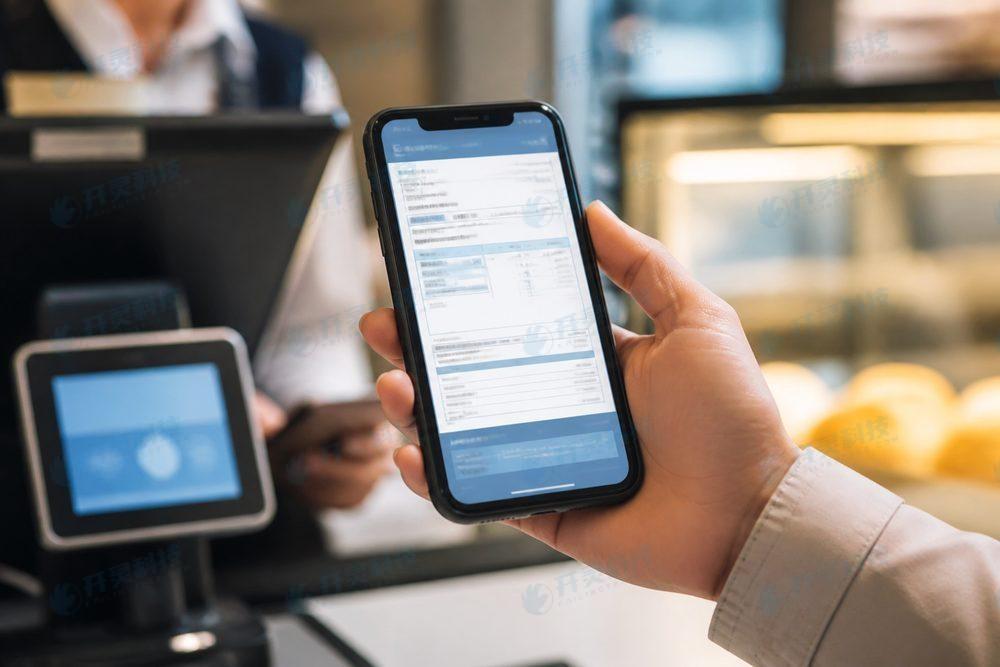
If the consumer is an individual, a convenient invoice delivery method should be provided, and email should not be the only option. Banks can also treat "payment + invoice" as part of merchant operation services, forming a continuous experience with accounts, acquiring, reconciliation, and other services.
Result write-back also needs to handle duplicate notifications and network anomalies. Even if the bank or merchant system is temporarily unavailable, invoice status should be able to be synchronized compensatorily, avoiding the situation where the tax side has already issued it but the business side still shows it as pending.
▍V. How Kailing Technology's Leqi joint solution for banking and financial institutions completes front-end implementation
After a bank obtains Leqi joint-use capability, it still needs industry scenarios, merchant-side products, technical integration, and operational support. Kailing Technology can provide a pay-and-invoice product, presented under the corresponding brand as required by the bank; connecting upward to Leqi and tax capabilities, and downward to fuel retail, cashier, acquiring, and merchant systems.
On the operations side, the solution must also cover merchant onboarding, real-name filing of invoicing staff, installation training, reconciliation, and exception handling. Banks control the merchant network and payment entry points, while Kailing Technology provides the technical foundation and scenario implementation; before the project begins, both parties clarify the boundaries of responsibility for qualifications, data, security, operations and maintenance, and invoicing.

A certain local bank hopes to upgrade its existing acquiring merchants from "collection only" to "invoice issuance after collection." The pilot first selects high-frequency industries with clear transaction structures to fully validate payment triggering, merchant matching, invoice issuance, and result feedback, then gradually expands to other merchant types.
▍FAQ
Q: Will all successfully paid transactions be automatically invoiced?
A: No. Transactions must come from the agreed business system, merchants and invoicing personnel must meet access requirements, and key fields must pass verification before entering invoicing; abnormal transactions should be suspended and handled.
Q: Do consumers still need to re-enter the transaction amount?
A: Original order and payment data can usually be reused to reduce duplicate entry. How to collect information such as the purchaser's title should be designed in conjunction with the specific business and delivery method.
Q: Will a failed invoice issuance lose the transaction?
A: The system should retain the original transaction and the reason for failure, and complete the closed loop through retries, supplementary materials, or manual handling. It cannot just return a failure message.
Q: If the bank already has Leqi Direct Connection qualification, what else needs to be built?
A: It is also necessary to complete the merchant-side product, industry scenarios, upstream and downstream interfaces, operational processes, and responsibility boundaries. The specific scope should be assessed in conjunction with the bank's existing systems.
Upgrade the bank payment entry point into a traceable pay-and-invoice service. Learn about Kailing Technology's Leqi joint-use solution for the banking and financial industry: https://www.kailingteck.com/leqi-bank/ .
As a national high-tech enterprise, Kailing Technology focuses on the digital and intelligent transformation of enterprise business-finance-tax and operations management, providing software products, system integration, implementation and delivery, and operational services for various government agencies, institutions, group enterprises, and SMEs.
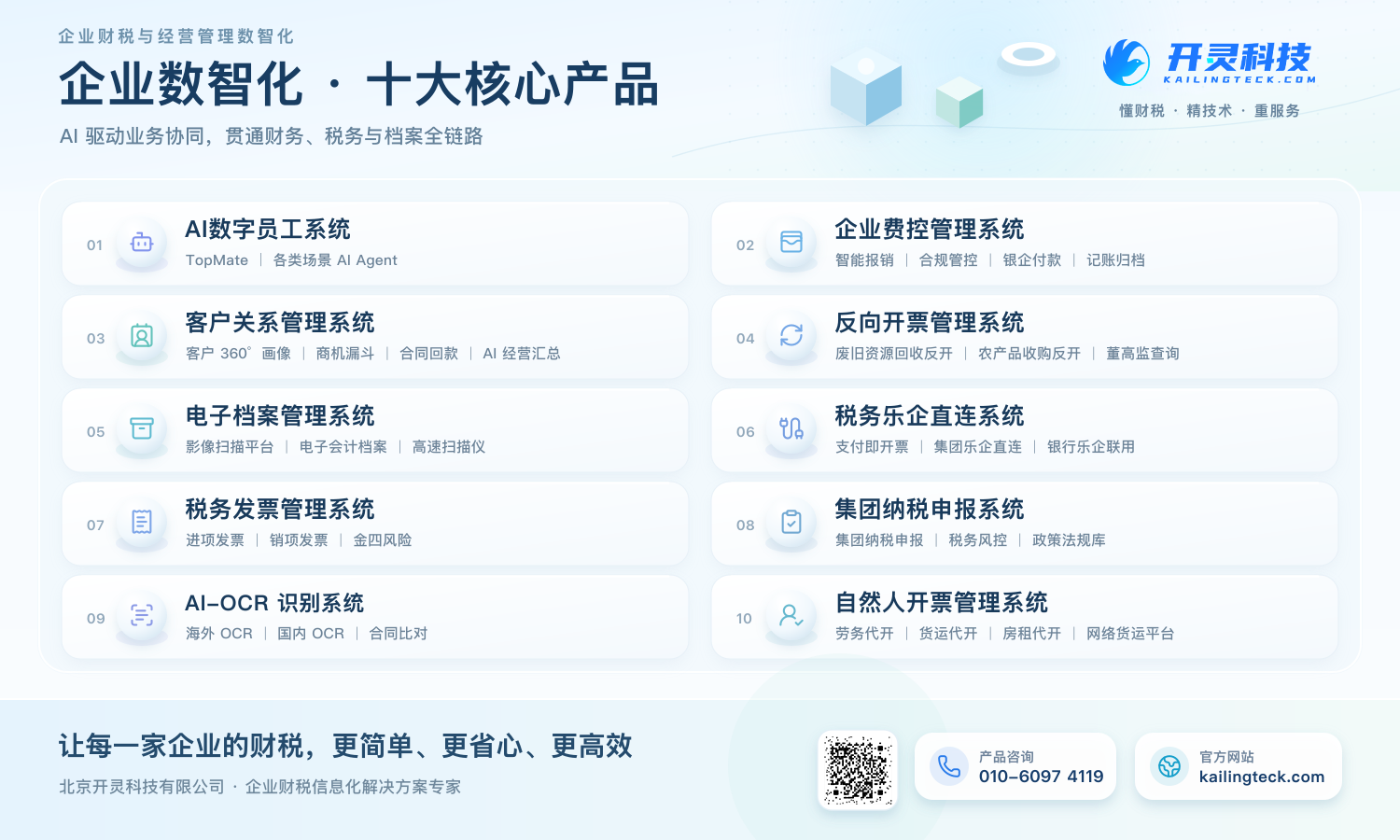
The company has now formed ten core product lines, including: AI digital employee system, enterprise expense control management system, customer relationship management system, reverse invoicing management system, invoice issuance for individuals management system, electronic archives management system, tax Leqi Direct Connection system, tax invoice management system, group tax filing system, and AI OCR recognition system. It is committed to connecting enterprise business, finance, tax, funds, and archive data to help customers improve operational efficiency, business-finance-tax compliance capabilities, and digital management levels.
If you have any business-finance-tax digital transformation needs, welcome to contact us. Beijing Kailing Technology will serve you wholeheartedly.
Keywords: Kailing Technology banking and financial industry Leqi combined application solution, invoicing upon payment, bank Leqi combined application, transaction-triggered invoicing, fully digitalized e-invoice, merchant invoicing, invoicing result callback, bank merchant services
As a comprehensive business-finance-tax digitalization solution service provider, Kailing Technology provides business-finance-tax management digital transformation products and operational services for various government agencies, institutions, and large, medium, and small enterprises. The product line includes: solutions for sales contract management system, procurement contract management system, fully digitalized Leqi interface project, automatic output invoicing system, reverse invoicing system, invoice issuance for individuals system, employee expense control and reimbursement system, input VAT invoice management system, supply chain collaborative reconciliation system, image AI OCR recognition system, automatic financial bookkeeping system, electronic accounting archives system, etc., comprehensively driving the digitalization process across various fields.
Consultation Hotline: 18513895936 / 010-60974119 Location: Beijing