
Overseas invoices, domestic invoices, and mixed multi-invoice pasting hard to unify? Kailing Technology AI OCR recognition system handles it all in one
Cross-border procurement, overseas business travel, and settlements with overseas suppliers are increasing. What finance first encounters is often not domestic standard invoices, but overseas documents in different languages such as English, Thai, Japanese, and Korean. These documents have non-fixed formats and frequently changing field positions; some come from scans, and some are just mobile phone photos; the same batch of materials may also mix in domestic invoices, contracts, vouchers, and multiple invoices in one image.Kailing Technology's AI OCR Recognition System With Overseas Invoice Recognition As a key entry point, enabling multilingual,Non-fixed layout Documents first complete classification and field extraction, then domestic invoices and Mixed pasting of multiple invoices Incorporate into the same processing pipeline.
▍1. Why overseas invoice recognition is harder than domestic standard invoices
The first challenge of overseas invoices is language. Companies may receive English commercial invoices, or Thai, Japanese, or Korean documents; different writing systems mean dates, amounts, counterparties, and other information are expressed differently. If finance staff still identify and enter each one manually, backlogs easily form during month-end processing.
The second challenge is Non-fixed layout。Different countries, regions and suppliers use non-uniform invoice formats. Even when the business nature is similar, the title, details, total amount and counterparty information may appear in different positions. Templates relying on fixed coordinates require reconfiguration once a supplier changes its invoice format.
The third challenge is the complexity of sources. Overseas suppliers may send PDFs or scanned copies, and employees may also upload photos taken with mobile phones. Rotation, skew, cropping, blur and stamp obstruction all affect subsequent recognition. What enterprises really need to solve is not "whether a foreign invoice can be understood", but how to continuously process constantly changing multilingual invoice samples.
▍II. How does the Kailing Technology AI OCR recognition system handle multilingual overseas invoices
Kailing Technology's AI OCR Recognition System Supports mobile phone photo capture, scanned copies, and common inputs such as JPG, PNG, PDF, and OFD. After overseas invoices enter the system, image preprocessing such as orientation correction and layout analysis is first performed, then the document category and usable field structure are determined, rather than requiring business personnel to create fixed templates one by one for each overseas supplier.
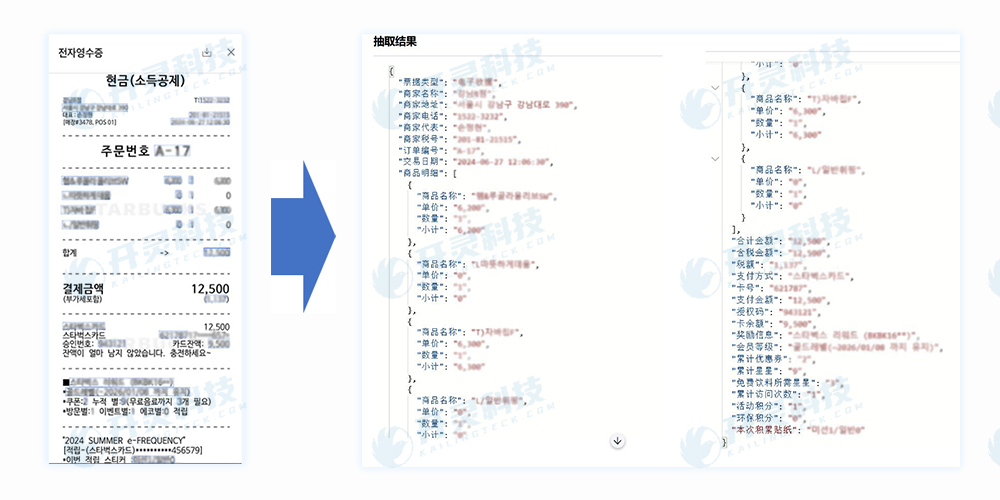
Faced with overseas documents in English, Thai, Japanese, Korean, and other languages, the system first identifies the document layout and type, then extracts the corresponding business fields. Language and layout determination occur before field extraction, which can reduce field misalignment caused by treating different documents as the same template.

After field extraction is complete, the system continues to perform completeness and business rule validation. Results with complete information and rule compliance enter structured output; tasks with missing edges, blur, occlusion, or incomplete key fields are transferred to Manual review. In this way,Overseas Invoice Recognition It goes beyond merely "reading out text" to also include classification, extraction, validation, and exception fallback.

▍III. How to form usable structured data after overseas invoice recognition
When enterprises process overseas documents, the ultimate goal is not to see recognized text on a page, but to enable the results to continue to be used by ERP, expense control, or procurement systems. The system can organize general information such as file sources, document types, and recognition status according to unified rules, while retaining the business fields required by different overseas documents.
Such structured output has two functions. First, what upper-layer systems receive is no longer just images that cannot be calculated, but field data that can continue to be verified, aggregated, and circulated; second, original files, recognition results, and review records can maintain correspondence, allowing finance staff to look back at which original invoice a field came from and how an anomaly was confirmed.
In cross-border procurement scenarios,Overseas Invoice Recognition Results can serve as the basic data for matching orders, warehousing, contracts, and settlement materials; in overseas travel and reimbursement scenarios, structured fields can connect to expense control processes according to enterprise interface rules. Which systems to enter and which fields to retain should be determined based on the enterprise's existing standards and approval rules.
▍IV. How domestic invoices and mixed multi-invoice pasting are brought into the same processing engine
Overseas invoices are a key scenario for this solution, while domestic invoices, original vouchers, certificates, and contracts can use the same entry point. A unified entry point does not erase invoice differences: the system first classifies, then applies the corresponding field structure. Domestic tax invoices of all categories can enter the input VAT invoice pool according to established processes, while overseas invoices retain fields matching their business type.
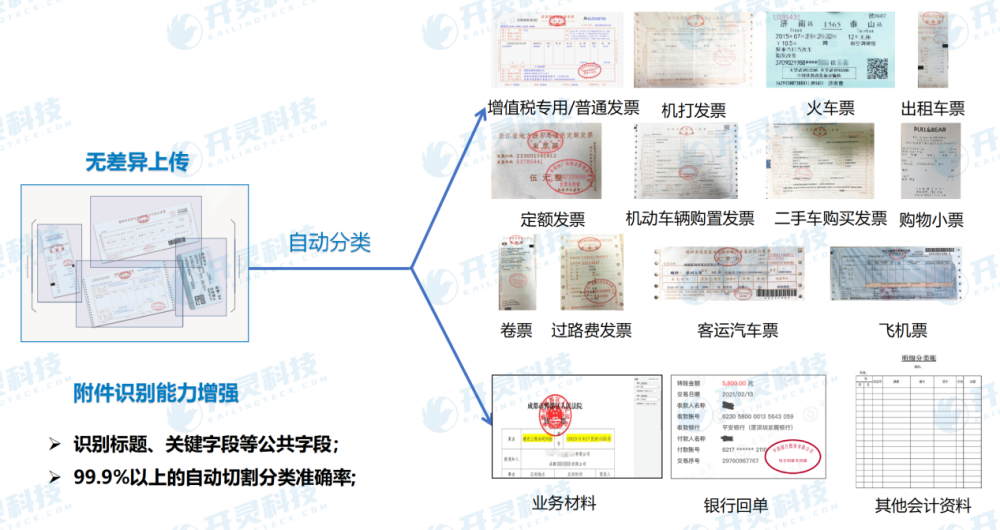
When an employee photographs multiple overseas receipts or domestic documents in the same image, the processing order is "split first, then recognize." The system first locates each document region and cuts it into independent objects, then judges the category, language, and fields one by one, avoiding dates, amounts, or counterparty information from different documents being mixed into the same result.
If multiple receipts obscure each other or their boundaries are incomplete, the system will not force the entire image to be output as one receipt; instead, it will send objects that fail verification to review. In this way, domestic invoices and Mixed pasting of multiple invoices Become Overseas Invoice Recognition An extension of capabilities, rather than conversely requiring overseas documents to adapt to domestic templates.
▍V. How red stamps, skew, and low-quality overseas invoices are returned for review
After multiple forwards or phone photos, overseas invoices commonly suffer from skewed images, inconsistent orientation, stamps covering text, and missing key areas. The system can first perform orientation and layout processing, then carry out classification and field extraction; however, image preprocessing cannot replace necessary quality control.
Results that fail completeness or business rule validation enter Manual review, other normal tasks continue to flow and do not need to wait for the entire batch of files to be fully processed. Reviewers compare the original images and extracted fields to determine whether to correct the results, supplement materials, or re-upload, and after confirmation let Structured data Return to the established process.

A cross-border procurement enterprise found that overseas supplier documents often arrived together with domestic invoices and multi-invoice images. After adjusting the processing method, files first go through a unified entry point, normal results enter the business system, and abnormal results are reviewed separately, shifting finance work from transcribing one by one to verifying tasks flagged by rules.
▍VI. What to confirm first when deploying an overseas invoice recognition system
When selecting a system, enterprises should first confirm whether it can handle actual overseas languages and non-standard invoice formats, rather than only looking at domestic standard invoice demos. Second, they should test mobile photos, scanned copies,Mixed pasting of multiple invoices and real inputs such as seal occlusion, observe whether classification, segmentation, field extraction, and exception fallback can form a complete path.
It must also be confirmed whether the structured results can connect to the existing ERP, expense control, input VAT invoice pool, or procurement system. If OCR only displays text on a page, finance still has to re-enter it; only when the recognition results enter subsequent business processes according to field definitions Overseas Invoice Recognition Only then does it truly become the data entry point for cross-border business.
Kailing Technology's AI OCR Recognition System Bring overseas invoices, multilingual recognition,Non-fixed layout Processing is placed in the solution center, covering both domestic invoices and multiple invoices in one image. Companies can first validate with high-frequency countries, supplier invoice samples, and anomalous images, then determine the field scope, validation rules, and system interfaces based on real business.
▍FAQ
Q: Do overseas invoices in English, Thai, Japanese, and Korean all need templates created in advance?
A: The system can first determine the invoice category and layout, then extract information according to the corresponding field structure, without requiring all overseas suppliers to use the same fixed template. Enterprises still need to confirm the field scope and business verification rules based on actual invoice samples.
Q: After an overseas supplier changes its invoice sample, can recognition continue?
A: Non-fixed-layout recognition does not rely on a single coordinate template and can handle changes in field positions and layouts. However, new invoice samples should still be tested with real files, and key fields that fail rule validation should go to manual review.
Q: Can overseas receipts photographed by mobile phone be uploaded directly?
A: Yes. The system supports common image and document formats and can perform preprocessing such as orientation and skew correction. If the original image is blurry, cropped, or a seal covers key fields, a clear file must be supplied or the case must be routed to manual review.
Q: Can overseas bills, domestic invoices, and mixed multiple bills be output to the same system?
A: Yes, ERP, expense control, input VAT invoice pool, or procurement systems can be uniformly connected according to enterprise interface rules, but different invoices still retain their own field structures. The specific output scope must be determined based on existing systems, field definitions, and approval rules.
Let multilingual, non-fixed-format overseas invoices be accurately classified, extracted, and verified first, then flow uniformly with domestic invoices and mixed invoice attachments. Welcome to learn about the Kailing Technology AI OCR recognition system: https://www.kailingteck.com/ai-ocr/.
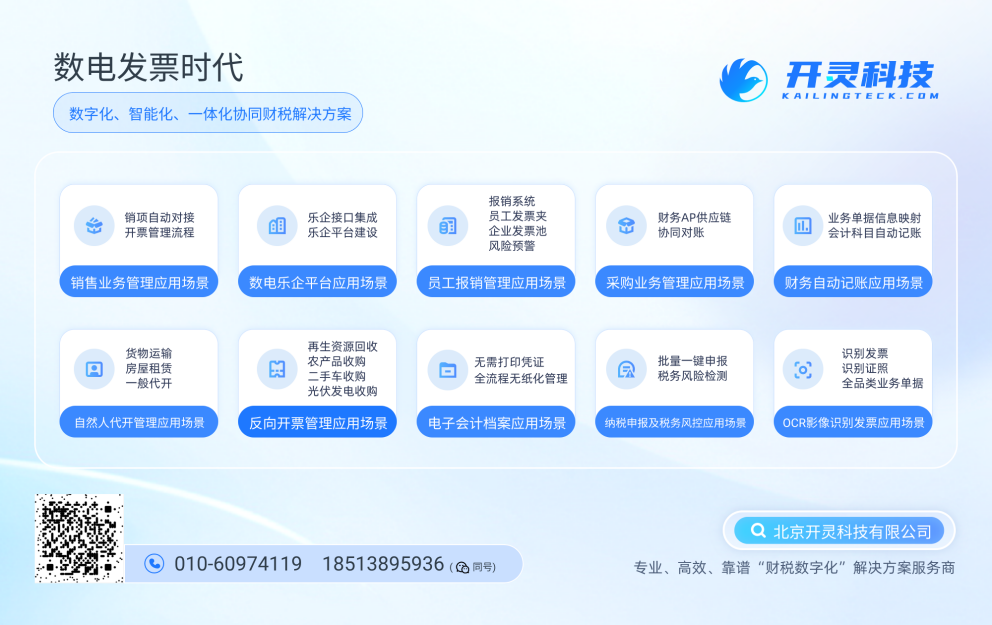
As a comprehensive business-finance-tax digitalization solution service provider, Kailing Technology provides business-finance-tax management digital transformation products and operational services for various government agencies, institutions, and large, medium, and small enterprises. The product line includes:
Solutions for businesses including sales contract management system, procurement contract management system, fully digitalized Leqi interface project, output automatic invoicing system, reverse invoicing system, invoice issuance for individuals system, employee expense control and reimbursement system, input VAT invoice management system, supply chain collaborative reconciliation system, image OCR recognition system, automatic financial bookkeeping system, and electronic accounting archives system, comprehensively driving the digitalization process across various fields.
If you have any business-finance-tax digital transformation needs, welcome to contact us. Beijing Kailing Technology will serve you wholeheartedly.
Keywords: Kailing Technology's AI OCR recognition system, overseas receipt recognition, multilingual overseas receipts, non-fixed layout OCR, English receipt recognition, Thai receipt recognition, Japanese receipt recognition, Korean receipt recognition, domestic invoice recognition, mixed multi-receipt recognition, receipt structuring, ERP integration
As a comprehensive business-finance-tax digitalization solution service provider, Kailing Technology provides business-finance-tax management digital transformation products and operational services for various government agencies, institutions, and large, medium, and small enterprises. The product line includes: solutions for sales contract management system, procurement contract management system, fully digitalized Leqi interface project, automatic output invoicing system, reverse invoicing system, invoice issuance for individuals system, employee expense control and reimbursement system, input VAT invoice management system, supply chain collaborative reconciliation system, image AI OCR recognition system, automatic financial bookkeeping system, electronic accounting archives system, etc., comprehensively driving the digitalization process across various fields.
Consultation Hotline: 18513895936 / 010-60974119 Location: Beijing