010-6097 4119Book a Demo


The Kailing Technology Reverse Invoicing system empowers scrap metal recycling enterprises, breaking down business-finance-tax data barriers and helping enterprises avoid tax risksPublished: 2026-01-08 17:44 In December 2025, the National Development and Reform Commission and the Ministry of Finance jointly issued the Notice on Implementing the 2026 Policy for Large-Scale Equipment Renewals and Trade-Ins of Consumer Goods (Fa Gai Huan Zi [2025] No. 1745), explicitly proposing to "continue promoting the implementation of the 'reverse invoicing' system for resource recycling enterprises to natural-person sellers of scrapped products and strengthen regulation," while expanding the coverage of trade-in categories. As a core category in the renewable resource sector, scrap metal is facing opportunities of surging business volume under policy promotion, but also multiple challenges such as "upgraded compliance requirements, poor data collaboration, and complex natural-person management." Based on deep insight into the resource recycling industry and accumulated business-finance-tax digital technology, Kailing Technology has launched a full-process reverse invoicing solution to precisely address the pain points of scrap metal recycling enterprises and help enterprises achieve multiple goals of "compliant operation, efficiency improvement, and cost optimization" under the new policy.
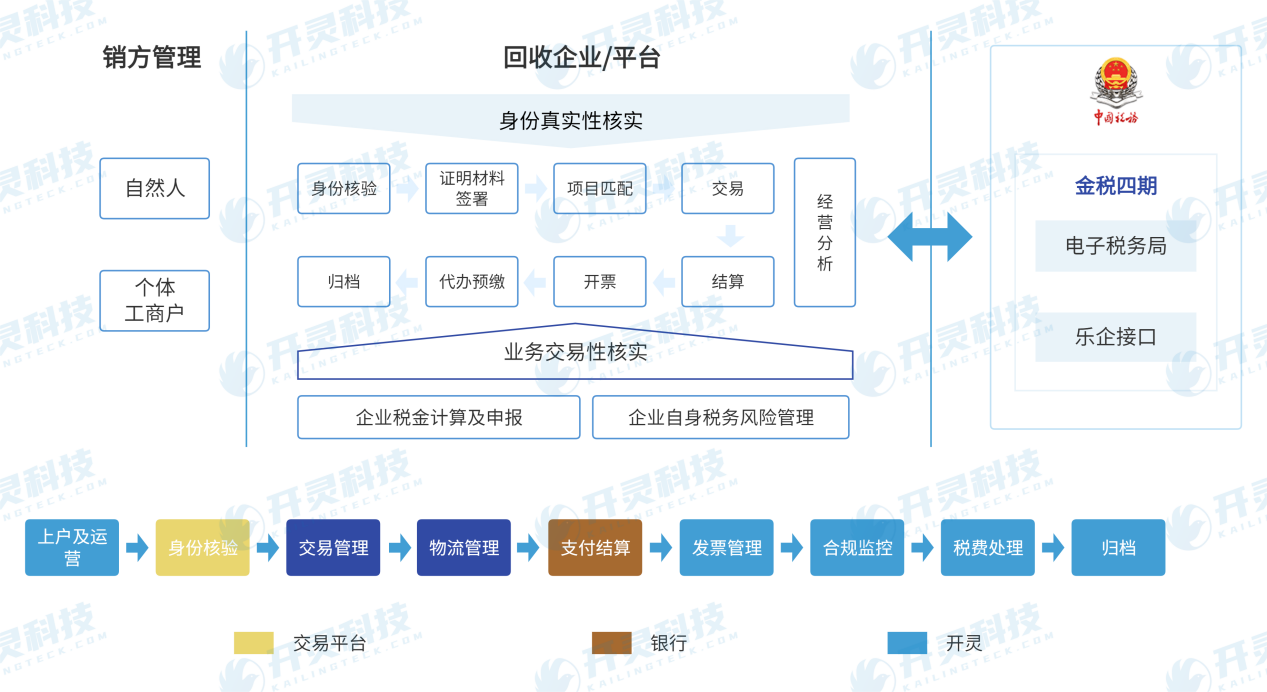
I. Core pain points of reverse invoicing for scrap hardware recycling enterprises: the dual test of compliance and efficiency under the new policyAgainst the backdrop of the normalization of the reverse invoicing policy and the deepening of the new trade-in policy, the operational pain points of scrap metal recycling enterprises are fully exposed, becoming key bottlenecks constraining business development: 1. Difficult compliance proof: scattered business evidence chain, high audit risks According to tax supervision requirements, waste hardware recycling enterprises must retain a full set of materials such as procurement contracts, transport vouchers, cargo weighbridge tickets, and transfer payment records, and establish detailed procurement ledgers. However, waste hardware recycling business is characterized by "many small sellers, scattered transactions, and high frequency." Under traditional manual management, vouchers are easily lost and ledger records are incomplete, and some enterprises have repeatedly faced tax audit risks due to missing key materials. For example, a small and medium-sized waste hardware recycling enterprise once failed to provide complete weighbridge images and payment records, which blocked input VAT deduction and resulted in nearly 100,000 yuan in additional tax burden. 2. Severe data fragmentation: business-finance-tax systems are "siloed," resulting in low efficiency The core links of scrap hardware recycling—weighbridge weighing, order generation, fund settlement, and invoice issuance—are often scattered across different systems: weighbridge data must be manually transcribed into the order system, order information is then manually entered into the invoicing platform, and payment records must be checked separately. The whole process takes an average of more than 25 minutes per order, and manual entry is prone to errors such as "wrong weight entry and category confusion." Statistics from a certain scrap steel recycling enterprise show that the finance team needs to spend 120 hours per month organizing cross-system data, with a data accuracy rate of only 85%, seriously affecting invoicing efficiency and the quality of business-finance-tax accounting. 3. Risks in individual management: lack of quota monitoring, and tax payment on behalf is prone to errors The upstream suppliers of scrap hardware recycling are mostly individual small sellers, and enterprises need to fulfill two core obligations: first, monitor in real time the individual's cumulative sales amount over 12 months,Amounts exceeding 5 million yuan require business entity registration, otherwise it is non-compliant; second is the withholding of VAT and 0.5% individual income tax on business income. Under the traditional model, enterprises rely on manual sales statistics, which easily leads to the compliance risk of "no warning when exceeding the quota"; meanwhile, tax calculations require manually distinguishing reduction and exemption policies, frequently resulting in problems such as "overpaying individual income tax and underpaying surcharges," which both increases enterprise costs and exposes them to tax penalty risks. 4. Difficulty adapting to new policy categories: Tax item matching is error-prone, and policy response lags The 2026 new trade-in policy has expanded the scope of recycling categories. Subcategories of scrap hardware have extended from traditional scrap steel, scrap copper and aluminum to more than 20 categories such as hardware from dismantled scrapped home appliances and hardware from vehicle dismantling. Different categories correspond to different tax classification codes and tax rates. If enterprises cannot update the tax item library in time, problems such as "wrong tax code and wrong tax rate" are likely to occur, leading to invalid invoices and failed input VAT deduction. II. Kailing Technology Reverse Invoicing system: an all-dimensional solution that solves the pain points of scrap metal recycling enterprisesIn response to the core needs of scrap hardware recycling enterprises, Kailing Technology takes "business-finance-tax integration" as its core to build a reverse invoicing system covering the full process of "natural person management - order processing - invoicing and archiving - tax filing," perfectly adapting to the requirements of the 2026 trade-in new policy: 1. Full-chain compliant evidence preservation: building an ironclad "four flows in one" evidence chain to respond to tax audits Through "automated collection + electronic archiving," the system achieves complete retention of the evidence chain for scrap metal recycling business, fully complying with the new policy's regulatory requirements of "traceable and verifiable": - Automatic data aggregation: seamlessly connects to the weighbridge system to obtain real-time scrap metal weighing data; synchronizes fund payment records through bank-enterprise direct connection; supports online signing of acquisition agreements and reverse invoicing authorization letters, with all data requiring no manual intervention, eliminating the risk of "missing vouchers and data tampering". - Electronic ledgers and archives: Automatically generates purchase ledgers that meet tax requirements, recording in detail the seller's contact information, scrap metal category, quantity, price, and other information for each transaction; builds an electronic accounting archives repository that stores contracts, weighbridge tickets, invoices, and payment records in a structured manner, supporting quick retrieval by "individual name, invoice number, order number," and enabling one-click export of the full set of materials during audits.
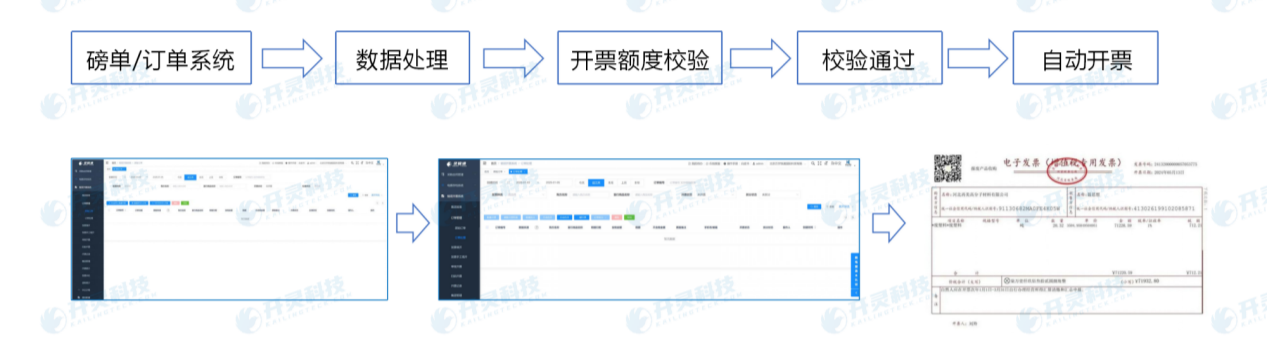
2. Business-finance-tax data connectivity: break down system silos, efficiency increased 5 times Through standardized API interfaces, the system achieves seamless integration with the existing IT architecture of scrap metal recycling enterprises, driving automatic data flow across the "weighbridge-order-capital-invoicing" stages: - Process automation: After weighbridge data triggers order generation, the system automatically verifies the individual's invoicing eligibility; once verified, it automatically matches the tax category and rate and generates an e-invoice marked "scrap product purchase" with one click, shortening the entire process from 25 minutes/order to 3 minutes/order. - Zero data errors: eliminates manual entry, with weighbridge data, order amounts, and invoicing information synchronized in real time, increasing data accuracy to 99.8%. After application by a scrap copper recycling enterprise, it reduced more than 15 red-offset invoices caused by data errors each month, saving 70% of financial reconciliation hours.
3. Intelligent management of individuals: quota alerts + tax payment on behalf to avoid compliance risks In response to the characteristic of many upstream small-scale sellers in scrap hardware recycling, the system creates a full-cycle management system of "convenient registration - dynamic monitoring - intelligent tax calculation": - Convenient real-name authentication: Natural persons scan the enterprise's exclusive QR code through WeChat mini-program, upload ID card and bank card photos,OCR technology automatically recognizes information and completes real-name authentication, and the "Reverse Invoicing and Tax Payment on Behalf Consent Form" is signed online, with no on-site processing required, increasing registration efficiency by 80%. - Dynamic quota monitoring: real-time statistics on individuals' cumulative sales over 12 months, automatically triggering warnings when approaching the 5 million yuan threshold, reminding enterprises to assist retail individuals in registering business entities; at the same time, monthly monitoring of whether monthly sales exceed 100,000 yuan, automatically determining VAT reduction and exemption eligibility, avoiding violations of "exceeding the exemption amount without paying tax." - Automatic tax and fee calculation: A built-in tax and fee calculation engine automatically calculates the 0.5% individual income tax on business income and the corresponding VAT and surcharges based on the transaction amount. During the filing period of the following month, it generates the "Tax Agency Fee Report Form" and "Tax Agency Fee Detail Report Form," and directly connects to the electronic tax bureau to complete filing and payment, eliminating "underpayment and incorrect payment."
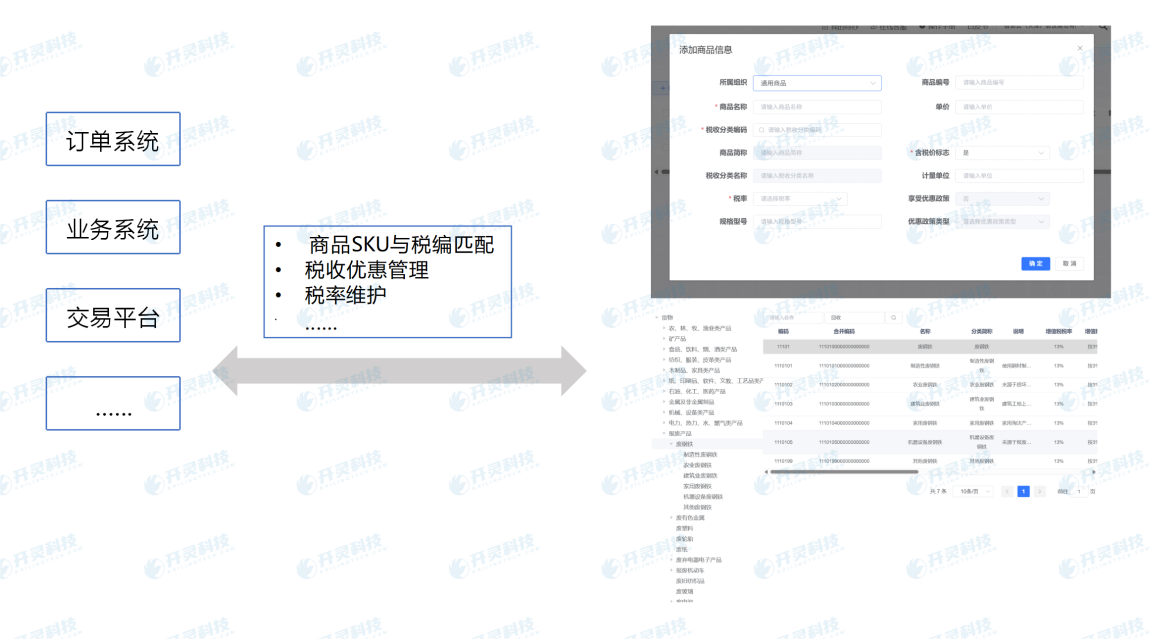
4. New policy category adaptation: Dynamic tax code library + policy synchronization, responding to category expansion To adapt to the expansion of scrap metal categories under the 2026 trade-in new policy, the system builds "dynamic update + flexible configuration" category management capabilities: - Full-category tax code library: Built-in tax classification codes and tax rate mappings for 200+ scrap metal subcategories, covering categories involved in new policies such as scrap steel, scrap non-ferrous metals, dismantled hardware from scrapped appliances, and dismantled hardware from automobiles. Enterprises no longer need to manually query policies. - Real-time policy synchronization: the system automatically updates tax policies to ensure invoicing complies with the latest requirements; supports enterprises in customizing and adding subdivided scrap metal categories in the backend and linking them to tax codes according to business expansion needs, adapting to business growth under the new policy.
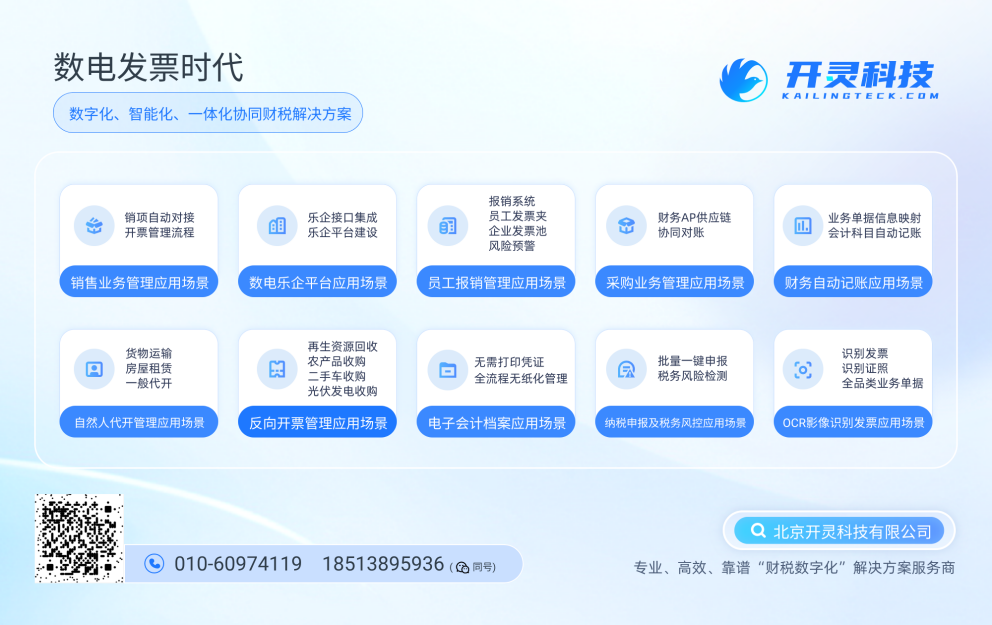
III. Multi-dimensional value delivered by the system: from enterprise cost reduction to industry upgrading, connecting to new policy benefitsThe Kailing Technology Reverse Invoicing system not only solves the current pain points of scrap metal recycling enterprises, but also creates long-term value across compliance, efficiency, and business expansion, helping enterprises seize the opportunities of the 2026 trade-in new policy: 1. Compliance value: building a solid tax defense line, avoiding risk losses The system achieves the integration of "contract flow, logistics flow, capital flow, and invoice flow," meeting the tax authorities' "penetrating supervision" requirements under the new policy, with a 100% compliance rate for input VAT deduction, avoiding fines and increased tax burdens caused by invoice issues. After application by a scrap metal recycling enterprise in North China, it successfully blocked 11 potential non-compliant invoices exceeding 5 million yuan, directly avoiding nearly 2 million yuan in tax risks. 2. Efficiency value: reduce costs and increase efficiency, unleash workforce potential Invoicing efficiency increased 5 times, finance team labor costs reduced by 50%, saving 120 hours of archiving and reconciliation work per month; at the same time, the system automatically generates business-finance-tax reports, reducing manual accounting workload, shifting finance personnel from "repetitive labor" to "cost control and decision support," and improving enterprise management. 3. Business value: supporting new policy increments and expanding market space The system adapts to the multi-category scrap metal recycling needs under the new policy, supporting enterprises to undertake new businesses such as scrapped home appliance and automobile dismantling; the simplification of natural person management processes increasessmall independent suppliers cooperation willingness. After one enterprise connected, the number of suppliers increased by 30% and business scale expanded by 25%. In addition, the system's compliance capabilities help enterprises meet the application requirements of the "ultra-long-term special government bonds supporting resource recycling projects," laying the foundation for obtaining policy funding support. 4. Industry value: Promote the standardization of scrap metal recycling and support the circular economy Solve the industry's 'small, scattered, and disorderly' problems through digital means, and promote scrap metal recycling enterprises to establish a standardized business-finance-tax management system; the transaction data accumulated by the system can provide support for industry supervision, help build a 'transparent and traceable' renewable resource recycling network, and align with the new policy's goal of 'expanding the resource recycling industry'. The implementation of the 2026 large-scale equipment renewal and consumer goods trade-in policy brings unprecedented development opportunities to the scrap hardware recycling industry, and "reverse invoicing," as a key link in policy implementation, has become a mandatory question for compliant business operations. Kailing Technology's reverse invoicing system, with "full-chain compliance, full-data connectivity and full-cycle service" at its core, not only helps scrap hardware recycling enterprises solve current pain points, but also empowers enterprises to connect with new policy dividends and achieve "compliance without pressure, further efficiency improvement and new business growth." Kailing Technology continues to deepen innovation in business-finance-tax digitalization technology, injecting more momentum into the high-quality development of the renewable resources industry and helping the "dual carbon" goals and circular economy development achieve results.。Contact us to learn more about reverse invoicing solutions for more scenarios:https://www.kailingteck.com/h-col-127.html 。 As a comprehensive business-finance-tax digitalization solution service provider, Kailing Technology provides business-finance-tax management digital transformation products and operational services for various government agencies, institutions, and large, medium, and small enterprises. The product line includes: Sales contract management system, procurement contract management system, fully digitalized Leqi interface project, output automatic invoicing system,Reverse invoicing system,Solutions for the invoice issuance for individuals system, employee expense control and reimbursement system, input VAT invoice management system, supply chain collaborative reconciliation system, image AI OCR recognition system, automated financial bookkeeping system, electronic accounting archives system, and other businesses, comprehensively advancing the digitalization process across various fields. If you have any business-finance-tax digital transformation needs, welcome to contact us. Beijing Kailing Technology will serve you wholeheartedly.
#Reverse Invoicing Solution #Reverse Invoicing System #Resource Recycling Enterprise Reverse Invoicing Solution #Agricultural Product Procurement Reverse Invoicing Solution #Digital Business-Finance-Tax |