010-6097 4119Book a Demo


Countdown to the first submission of tax-related information by internet platforms: a must-read compliance guide for e-commerce, streamers, and flexible employment platformsPublished: 2025-09-30 17:37 In June 2025, the State Council deliberated, adopted and implemented the Provisions on the Reporting of Tax-Related Information by Internet Platform Enterprises (hereinafter referred to as the Provisions), marking that tax regulation of the platform economy has entered a new law-based stage of "tax governance by data". This change requires major platforms including Taobao, JD.com, Meituan, Douyin and Xiaohongshu to complete information reporting on schedule, with far-reaching impact on fields such as e-commerce, cross-border trade, online streamers and flexible employment. To respond to this change, all types of entities need to deeply understand the key points of the policy and adopt effective compliance strategies.
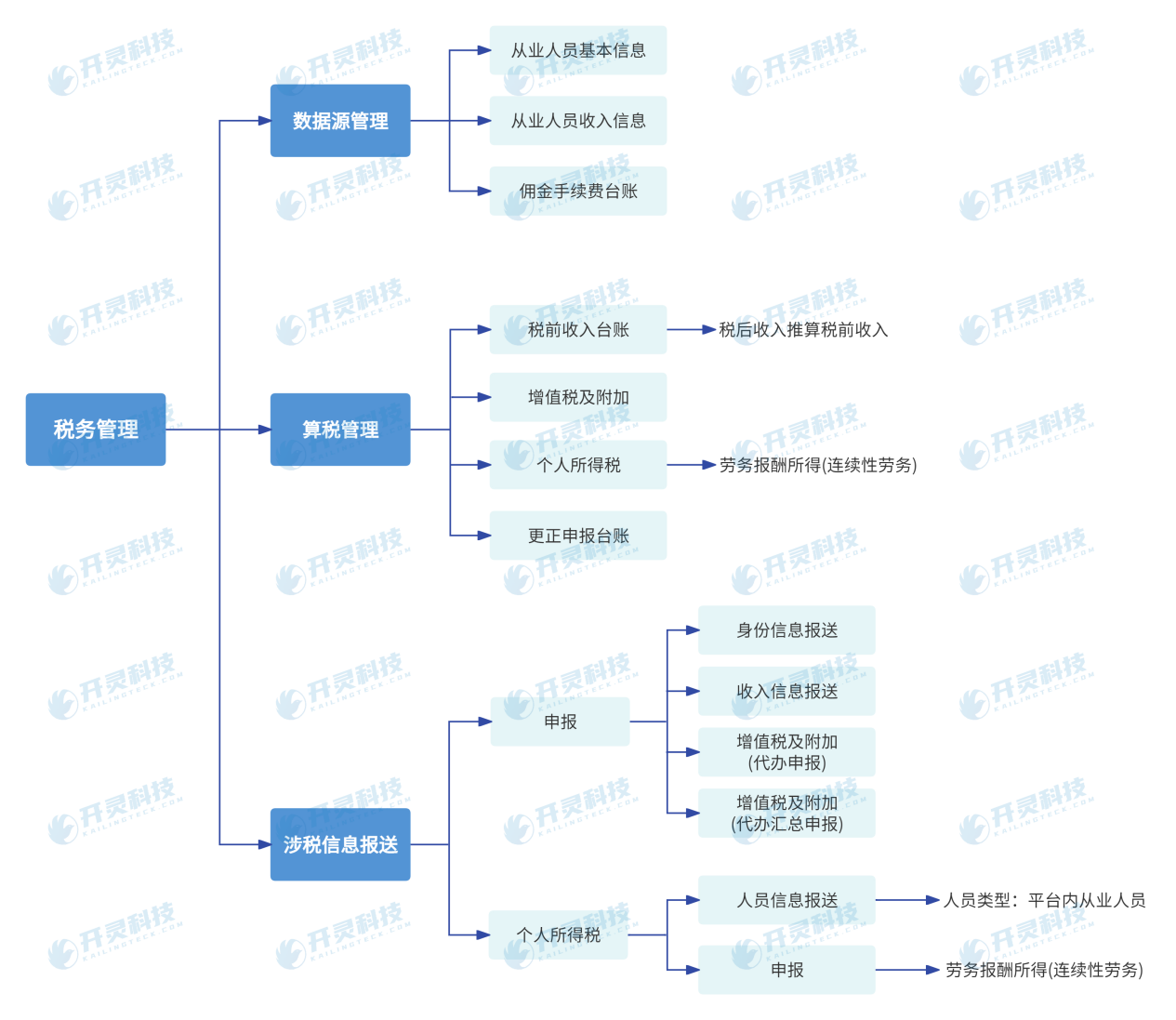
I. Background and core objectives of the new rules(1) Policy Background In recent years, the scale of the digital economy has grown rapidly, but platform transactions have problems such as strong concealment and information asymmetry between tax authorities and operators, resulting in substantial tax losses. In practice, cases of traffic e-commerce and online streamers evading taxes have frequently occurred, such as a Shenzhen e-commerce enterprise that concealed income and was pursued for back taxes and fined more than RMB 95 million, and a Shandong Douyin store that was fined RMB 2.02 million and went into bankruptcy liquidation for declaring only part of its sales. To reverse this situation, the State Taxation Administration has, since 2022, promoted "tax governance by data" relying on the "China Golden Tax Phase IV" system. In 2025, the State Council further elevated practical achievements to administrative regulations, issuing the "Provisions," which explicitly require internet platform enterprises to report to tax authorities the identity and income information of operators and practitioners within the platform. (II) Policy objectives The Regulations aim to improve the effectiveness of tax regulation, safeguard the rights and interests of taxpayers, and create a fair and healthy tax environment. Specifically, they include: 1. Achieve penetrating regulation, break information barriers, enhance transaction transparency; 2. Promote fair tax burden and eliminate tax havens between online and offline and across regions; 3. Leverage big data for risk warnings and automatically identify abnormal filing behaviors. II. Which platforms need to report information?Internet platforms required to fulfill reporting obligations include: • Online commodity sales platforms (such as Taobao and JD.com); • Online live streaming platforms (such as Douyin, Kuaishou); • Online freight and flexible employment platforms; • Provides platforms for education, healthcare, consulting, technical services, etc.; • Where overseas platforms provide for-profit services within China, they must also report in accordance with regulations. III. Whose information needs to be reported, and which information?Reporting distinguishes between entities and historical information, with the following characteristics: • Key reporting targets: enterprises with annual revenue exceeding 5 million but filing as small-scale taxpayers, enterprises with abnormal costs (such as over 30% of costs lacking invoices), enterprises with mixed public and private accounts, and high-income individuals (such as livestreamers, freelancers, and high-frequency traders); • Exemptions: practitioners engaged in delivery, domestic services, and other convenience labor services who enjoy tax preferences do not need to be reported; tax-related information before the implementation of the Provisions (before June 20, 2025) does not need to be reported retroactively. The reported information covers four categories: 1. Identity information (name, ID number, bank account, etc.); 2. Transaction information (product type, order number, amount, refunds, etc.); 3. Capital information (platform share, commissions, withdrawal records, etc.); 4. Behavioral information (IP address, cross-platform linked accounts, etc.). IV. Reporting time requirementsThe platform needs to complete reporting within the following deadlines: • Basic information (such as domain name and business type): within 30 days from the date the regulations take effect or business operations begin; • Operator and practitioner information: reported quarterly, completed in the month following the end of the quarter. With 2025 as a transition period, platforms already in operation must: • Complete the first basic information submission from July 1 to 30; • Complete the first submission of operator and practitioner information from October 1 to 31. V. Impact on various fields and compliance recommendations(1) E-commerce industry: from "barbaric growth" to "strong regulation" The new rules end the bonus period in which e-commerce relied on "information opacity," and transaction data becomes fully transparent. Impacts include: • Mandatory tax registration: individuals with income exceeding 150,000 yuan for 12 consecutive months must register as an enterprise or sole proprietor; • Costs and expenses must be evidenced by invoices and other vouchers, otherwise deemed taxation may apply; • Related-party transactions (such as multi-store operations by a controller) are more easily identified, facing consolidated tax supplements and fines. Recommendations: restructure the business model, retain cost vouchers, complete the compliance system with the help of professional tax advisors, and legally utilize tax incentive policies. (II) Cross-Border E-Commerce: From "Regulatory Differences" to "Penetrating Governance" Overseas platforms must also fulfill domestic reporting obligations. The previous method of using information asymmetry to evade taxes is difficult to sustain. Domestic cross-border sellers need to ensure compliance in links such as procurement invoices and export customs declaration. False transactions such as fake orders will be exposed due to cross-verification of data. Recommendations: ensure compliance across the entire business chain, plan the overseas tax structure in advance, and respond to possible future international data exchange requirements. (3) Online streamers and video creators: income transparency and tax burden restructuring The nature of streamer income (salary, labor remuneration, or business income) will be clearly determined through data reported by platforms. Cross-platform income consolidated audits have become the norm, and previous tax avoidance methods such as using sole proprietorship enterprises and tax havens are strictly regulated. Recommendations: optimize identity and income nature, establish a cross-platform income aggregation and filing mechanism, and prepare tax audit response strategies in advance. (4) Flexible employment platform: from "ambiguous employment" to "dual drill-through" The platform needs to verify the authenticity of labor relationships and prohibit acts such as fictitious employment and false invoicing. The nature of income is determined by actual business and the "deemed assessment collection" policy must not be abused. Recommendations: restructure business processes, strengthen data authenticity management, and assist practitioners in filing accurately in accordance with the law. Six, The path to compliance restructuring: Systematically responding to the era of strong regulationFacing comprehensively tightening tax regulation, it is recommended to respond systematically from the following three aspects: 1. Comprehensively study tax laws and regulations: become familiar with policies, make good use of tax incentives, and reduce compliance costs; 2. Establish a complete compliance system: Build compliance mechanisms from multiple perspectives including business processes, business-finance-tax management, and internal controls; 3. Introduce professional tax consultants: Conduct risk diagnosis, solution customization, compliance implementation, and continuous optimization to achieve a closed loop of "risk analysis - governance - optimization - construction." Seven, Technical Empowerment for Compliance: Kailing Technology One-Stop SolutionThe new rules require platforms to fulfill obligations such as information reporting, individual income tax withholding, and VAT agency filing, creating an urgent need to achieve efficient, accurate, and compliant business operations through technical means. To this end, Kailing Technology has launched comprehensive solutions to help platform enterprises respond efficiently to regulatory requirements。 Based on the Regulations on Tax-Related Information Reporting by Internet Platform Enterprises and related announcements issued by the State Taxation Administration, the Kailing solution builds three core modules: • Data source management:Integrates practitioner basic information, income information, and commission and fee ledger, laying the foundation for data reporting; • Tax calculation management:Calculate withholding tax in real time based on each transaction order, including VAT and surcharges and individual income tax, and support pre-tax income restoration and corrected filing; • Tax-related reporting module:Supports submission of identity and income information, agency filing of VAT and surcharges, and withholding of individual income tax, achieving full-process electronic operations.
As October approaches, tax-related information reporting and filing on behalf of others have become "required actions" that all internet platform enterprises must complete. Deploying a professional tax compliance system in advance is the optimal solution to meet the challenge. Kailing Technology has prepared a mature, stable, and efficient solution that can help platform enterprises quickly connect and deploy seamlessly, ensuring the first submission is successfully completed before October 31 and a smooth transition to the new stage of tax compliance. Contact Kailing Technology now to get dedicated solution details and technical integration, safeguarding your platform's compliance:https://www.kailingteck.com/ 。 As a comprehensive business-finance-tax digitalization solution service provider, Kailing Technology provides business-finance-tax management digital transformation products and operational services for various government agencies, institutions, and large, medium, and small enterprises. The product line includes: Solutions for sales contract management system, procurement contract management system, fully digitalized Leqi interface project, automatic output VAT invoicing system, invoice issuance for individuals system, employee expense control and reimbursement system, input VAT invoice management system, supply chain collaborative reconciliation system, imaging OCR recognition system, automatic financial bookkeeping system, electronic accounting archives system and other businesses, comprehensively advancing the digitalization process across various fields. If you have any business-finance-tax digital transformation needs, welcome to contact us. Beijing Kailing Technology will serve you wholeheartedly.
|