010-6097 4119Book a Demo


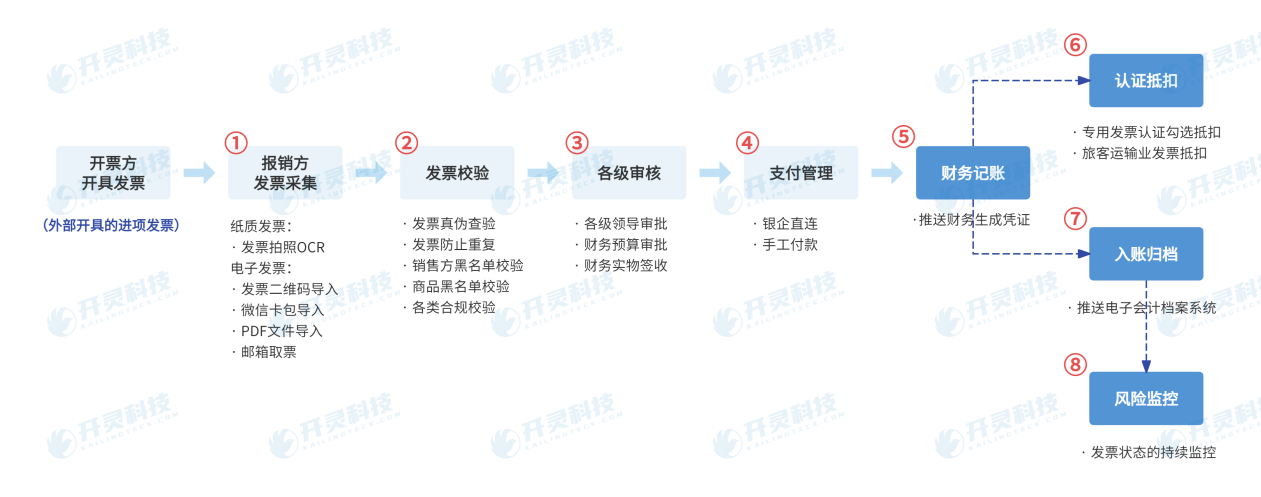
Kailing Technology's input VAT invoice risk control system provides real-time alerts on abnormal invoices and reduces tax risksPublished: 2025-09-04 17:22 Under the wave of digital business-finance-tax management, the widespread adoption of e-invoices and stricter tax supervision are advancing in parallel. Corporate input VAT invoice management is facing the triple challenge of "low efficiency, high risk, and complex processes"—duplicate reimbursement of e-invoices is hard to eliminate, the accuracy of manual compliance verification is low, authentication and deduction rely on manual operations, and abnormal invoices are hard to track in real time. A single misstep may trigger tax penalties. In response to these pain points, Kailing Technology has launched the input VAT invoice risk control system, with "full lifecycle management + real-time risk alerts" at its core, directly connecting to the State Taxation Administration interface and the judicial big data platform, integrating the full-process functions of invoice collection, verification, authentication, risk control, and archiving, creating a closed loop of input VAT invoice management featuring "pre-event prevention, in-process monitoring, and post-event traceability" for enterprises, fundamentally reducing tax risks. I. Directly addressing industry pain points: the four core challenges of enterprise input VAT invoice managementIn current input VAT invoice processing, enterprises generally face process breakpoints and delayed risks. These pain points not only consume large amounts of labor cost but also hide tax compliance risks: 1. Invoice collection and reimbursement processes are inefficient and redundantEmployee reimbursement relies on offline signature approval. If finance discovers non-compliant invoices during review (such as typos in the header, incorrect tax number, or sensitive goods included), they must be returned to business personnel to replace the invoice and go through the approval process again, resulting in high communication costs and low efficiency; at the same time, enterprises need to handle multiple types of documents such as VAT invoices, passenger transport tickets, and airline tickets, and traditional manual entry or a single collection method cannot cover all scenarios, making omissions and errors likely. 2. Certification and deduction operations are cumbersome, error-prone, and difficult to link At month-end, finance personnel need to insert tax control devices to log into the Electronic Tax Bureau and manually select and certify paper invoices one by one. This is not only time-consuming and labor-intensive but may also lead to selection errors due to visual fatigue; in addition, the selection operation is disconnected from the financial system, making it impossible to "automatically trigger certification after voucher generation." Tax amount calculations (such as deduction amounts for train tickets and flight itineraries) require manual calculation, further increasing the workload. 3. Lagging invoice risk warnings and prominent tax hazards Under the traditional management model, enterprises only learn about invoice voiding, red-letter reversal, loss of control, and other anomalies when they receive notice or penalties from tax authorities, and cannot prevent and control them in advance. If suppliers have major tax violations, abnormal taxpayer status, tax arrears, and other issues, enterprises find it difficult to grasp them in a timely manner and are prone to input tax transfer-out due to receiving "problem invoices," facing risks of tax repayment and fines. 4. Weak invoice archiving and traceability managementE-invoices are prone to duplicate printing and reimbursement issues, and the safekeeping of paper invoice originals relies on offline storage cabinets, posing risks of loss and damage; moreover, invoice reimbursement status, certification progress, and risk records do not form a unified ledger, making it difficult to quickly trace the full-process information of invoices during subsequent audits or tax inspections. II. System Core Capabilities: Dual-driven by "full-process management + real-time risk control"Kailing Technology's input VAT invoice risk control system relies on the technical advantage of direct tax bureau connection, deeply integrating "full invoice lifecycle management" with "multi-dimensional risk monitoring," covering every key node from invoice collection to tax filing, achieving "automated processing + real-time alerts." (1) Full-lifecycle automated management: from collection to archiving, no manual intervention With the goal of "cost reduction and efficiency improvement", the system integrates multi-scenario collection methods, intelligent verification, automatic authentication and electronic archiving functions, opening up the entire process of input VAT invoice management: 1. Multi-terminal and multi-scenario invoice collection, covering all invoice types Supports PC and mobile (APP、WeChat Mini Program, DingTalk Mini Programetc.) collaboration, employees can collect invoices through WeChat card wallet import, chat file upload, email receipt, photo recognition, scanner gun QR code entry, PDF import, etc., and can even batch-process paper invoices through scanners; for special tickets such as train tickets and airline tickets, the system automatically OCR-recognizes the ticket information without manual entry. 2. Direct connection to tax authority verification ensures invoices are authentic and compliant After collection is completed, the system connects in real time to the invoice verification platform and electronic ledger database of the State Taxation Administration, automatically completing invoice authenticity verification, duplicate reimbursement checks (invoices already reimbursed are prohibited from second submission), and compliance review (such as consistency of header and tax number, screening of sensitive goods, and alerts for consecutive-number invoices); for abnormal invoices (such as fake invoices or incorrect headers), the system immediately pops up alerts, blocking non-compliant invoices from entering the reimbursement process. 3. Intelligent certification and deduction, linked with financial systems to improve efficiency The system automatically screens special VAT invoices eligible for deduction, forming a "selected deduction invoice pool." Finance personnel can achieve "one-click selection for multiple companies" without logging into the electronic tax bureau for each entity; it supports "financial system linkage," where after payable vouchers are generated, the system automatically triggers the certification and deduction interface, synchronously completing the selection operation, with selection results returned in real time; at the same time, the system automatically calculates the deductible tax amount based on invoice tax rates, and deduction amounts for special invoices such as passenger transport tickets can also be automatically calculated, avoiding manual calculation errors. 4. Full-invoice ledger and electronic archiving for worry-free traceability All invoice information (full invoice face content, verification results, reimbursement status, certification progress, risk records) is stored in real time in the "input VAT invoice data pool", supporting export to Excel statistical tables for query and analysis; invoice originals (electronic invoice source files, paper invoice scans) are automatically backed up by the system, forming "double insurance" together with offline storage cabinets and meeting electronic accounting archive management specifications; subsequent quick retrieval by dimensions such as invoice number, reimburser, and date makes audit tracing more efficient.
(II) Multi-dimensional real-time risk monitoring: early warning of anomalies, pinpointing risk sources With "front-loaded prevention and control of tax risks" as its core, the system builds a three-dimensional risk control system of "invoice compliance + supplier risk control + anomaly tracking", ensuring that every invoice is within a controllable risk range: 1. Full-scenario compliance verification, blocking risk entry points Built-in inherent compliance validation rules, covering risk points across the entire invoice process: - Basic information verification: consistency between purchaser name and tax number, validity of invoice code and number; - Business logic validation: consecutive invoice number alerts, taxi invoice same license plate anomaly detection, passenger transport ticket name and enterprise employee matching validation; - Custom rule validation: enterprises can set "blacklists" (e.g., prohibited reimbursement product categories, discredited sellers) and "sensitive words" based on business needs, and flexibly enable or disable validation rules to adapt to management needs across different industries. 2. Real-time risk control for suppliers, avoiding associated risks in advance The system connects to the enterprise judicial big data database to monitor the status of partner suppliers in real time: - Tax risk early warning: Whether suppliers have major tax violation records, abnormal taxpayer status, or tax arrears information; once the risk threshold is triggered, early warning notifications are immediately pushed to finance personnel; - Business interruption warning: if a supplier is listed as an "out-of-control household" due to tax issues, the system immediately reminds the enterprise to suspend cooperation, avoiding receipt of "out-of-control invoices" that lead to input tax transfer-out. 3. Full-cycle tracking of abnormal invoices, enabling risk traceability Establish an "abnormal monitoring invoice pool" to track invoice status changes in real time: - Reimbursed/booked invoices: monitor whether they are voided, red-flushed, or listed as abnormal; once a status change occurs, the system immediately warns and locks the relevant invoice, and simultaneously triggers an "input tax amount transfer-out" reminder; - In-transit invoices: real-time monitoring of invoices that have been applied for but whose originals have not been received, reminding finance personnel to follow up on the status and avoid document loss; - Risk tracing: for abnormal invoices, the system automatically links business entities (reimbursers, approvers, suppliers) and operation records, generating a visualized risk detection report to facilitate enterprise accountability and rectification.
(3) Cross-system integration and flexible adaptation: fitting the enterprise's existing management system The system does not operate independently but seamlessly connects with the enterprise's existing management systems through standardized API interfaces, adapting to the needs of enterprises of different sizes: - Connect to expense control and OA systems: integrate with mainstream expense control and OA platforms such as SAP Concur, Weaver, Seeyon, and Landray to embed invoice verification and compliance checks into the approval process, achieving integrated "reimbursement application - invoice review - approval"; - Link with financial systems: connect with enterprise ERP and financial software, synchronize invoice certification information and tax amount data, automatically generate accounting vouchers, and avoid duplicate data entry;
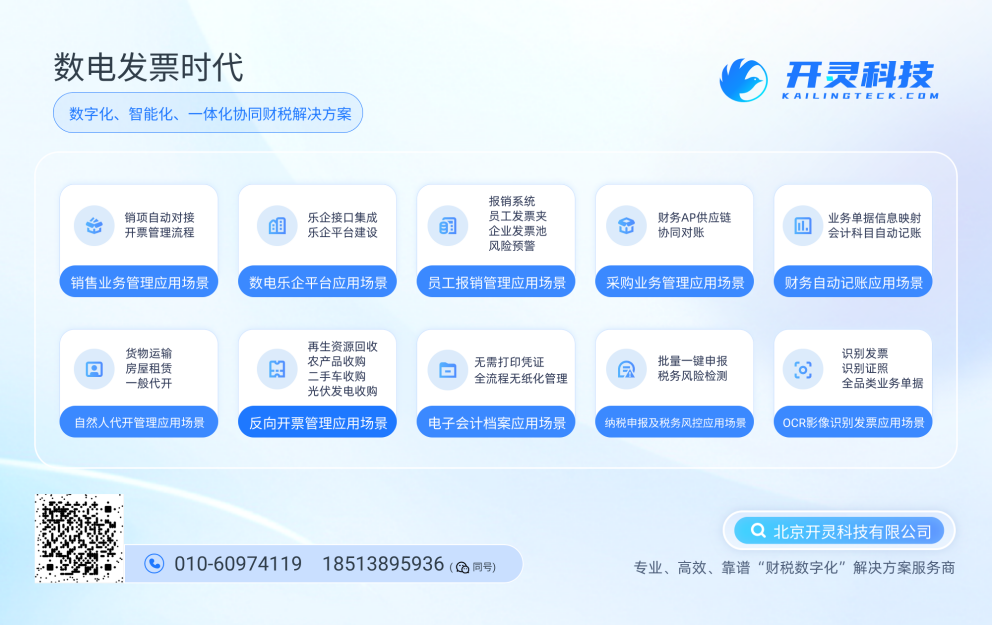
III. System Core Value: Cost reduction and efficiency improvement + risk prevention and control, safeguarding enterprise business-finance-tax securityKailing Technology's input VAT invoice risk control system brings multiple values to enterprises by replacing manual work with automation and post-event response with real-time alerts: 1. Significantly reduce labor costs and improve management efficiency Automated collection, verification, and authentication replace more than 80% of manual operations. Finance personnel no longer need to check invoices and calculate tax amounts one by one, and employees no longer need to repeatedly revise non-compliant reimbursement forms, reducing communication and time costs by more than 60%; taking an enterprise with 100 employees as an example, about 30 finance labor hours can be saved each month. 2. Front-loaded prevention and control of tax risks, avoiding economic losses Provide real-time alerts for abnormal invoices and supplier risks, turning "passively accepting tax penalties" into "proactively preventing and controlling risks," and avoiding tax supplements and fines caused by fake invoices, out-of-control invoices, and red-ink reversed invoices; at the same time, compliance verification and electronic archiving ensure enterprises meet tax audit requirements and reduce audit risks. 3. Data-driven refined management, supporting decision-making The input VAT invoice data pool provides multi-dimensional statistical analysis (such as deduction tax amount trends, distribution of abnormal invoice types, supplier risk levels), enabling finance personnel to quickly generate reports and providing data support for enterprise tax planning and supplier management. 4. Aligned with digital transformation trends, enhancing compliance levels Electronified archiving meets the requirements of the "Measures for the Management of Accounting Archives," and full-process digital records realize "traceable invoices, monitorable risks, and shareable data," helping enterprises upgrade business-finance-tax management from "paper-based" to "digital." With the advancement of China Golden Tax Phase IV, tax supervision is becoming increasingly refined. As a key voucher for enterprises to deduct taxes and operate compliantly, the management quality of input VAT invoices directly relates to enterprise business-finance-tax security. Kailing Technology's input VAT invoice risk control system, with "full-process automation + real-time risk alerts" at its core, not onlyIt solves the efficiency challenges of enterprise invoice collection, certification, and archiving, and further front-loads tax risks through a multi-dimensional risk control system, helping enterprises achieve the dual goals of "cost reduction and efficiency improvement" and "compliance and security." If youTo learn more about smarter and safer input VAT invoice management solutions, please contact Kailing Technology:https://www.kailingteck.com/h-col-108.html 。 As a comprehensive business-finance-tax digitalization solution service provider, Kailing Technology provides business-finance-tax management digital transformation products and operational services for various government agencies, institutions, and large, medium, and small enterprises. The product line includes: Solutions for sales contract management system, procurement contract management system, fully digitalized Leqi interface project, automatic output VAT invoicing system, invoice issuance for individuals system, employee expense control and reimbursement system, input VAT invoice management system, supply chain collaborative reconciliation system, imaging OCR recognition system, automatic financial bookkeeping system, electronic accounting archives system and other businesses, comprehensively advancing the digitalization process across various fields. If you have any business-finance-tax digital transformation needs, welcome to contact us. Beijing Kailing Technology will serve you wholeheartedly.
|