010-6097 4119Book a Demo


Tax authority answer: Are temporary workers settled by "wages" or "remuneration for labor"? (with a guide to compliant invoice issuance for individuals)Published: 2025-05-28 17:44 Temporary worker generally refers to informally employed labor in the workplace, who can start work directly without a probation period standard. It is more common in the domestic service industry, usually with a daily wage of several hundred yuan for a 4 to 8 hour workday. Temporary workers also do not enjoy pension and monthly minimum wage protection like formal labor. Temporary workers are divided into two types: contract employees and dispatched labor. The purpose of hiring temporary workers is to handle additional short-term work, for example hiring temporary workers as substitutes because regular workers are on maternity leave. Many companies temporarily hire individuals to handle some work for the company, and these jobs require paying the individuals accordingly. However, some finance staff cannot correctly distinguish: should temporary workers have individual income tax withheld as "wages" or as "labor remuneration" before settlement? The tax authority has also given a clear reply on this issue. Let's take a look today! I. Do temporary worker wages belong to "wages" or "remuneration for labor services"?
Tax bureau reply:If a temporary worker has an employment relationship with the unit, file and pay tax as wages and salaries income; if the temporary worker has no employment relationship with the unit, file and pay tax as remuneration for labor services income. It seems there is a conclusion, but in practice, when using and doing the work, many colleagues still report being confused: Is my company and this temporary worker actually an employment relationship? This issue can be viewed as follows: it mainly depends on how you have agreed with this temporary worker and how the contract is signed. (1) If a labor contract is signed, it is a labor relationship. For those who pay wages normally on a monthly basis, select "Yes" for "Is employee" and fill in the normal wage and salary report. Enterprises should follow"Wages and salaries"Pay remuneration to temporary workers, withhold and remit individual income tax according to "wages and salaries," and at the same time need to withhold and remit social insurance for temporary workers. The individual income tax on "wages and salaries" applies a 7-bracket progressive tax rate: the deduction is 5,000 yuan. Wages paid to employees can be distributed by preparing a payroll table,Employees do not need to provide invoices to the unit。
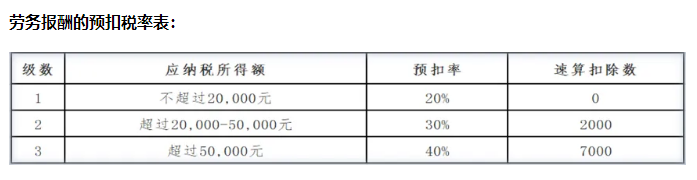
(2) If a labor service contract is signed, it is a labor service relationship. If wages are not paid monthly or no labor contract is signed, select "No" for "Is employee" and fill in Enterprises should follow"Remuneration for labor services"Individual income tax is withheld and remitted, and enterprises receiving labor services do not need to provide social insurance for the persons providing labor services. The individual income tax rate on labor remuneration is 20%-40%. Enterprises paying labor fees cannot offset costs by creating payroll sheets,Requires individuals to provide invoices for accounting。However, when an individual provides labor services not exceeding 500 yuan, the enterprise may use internal vouchers as pre-tax deduction vouchers.
II. Whether social insurance must be paid for temporary workers Most companies basically have temporary workers, interns, and probationary employees. Do these employers actually need to pay social insurance for them? 1. Temporary workers are divided into three situations: ① Sign a labor contract and pay labor remuneration regularly. If a labor contract has been signed, an employment relationship has definitely been formed, and social insurance must be paid. ② Signing a labor service contract belongs to a service relationship, and social insurance does not need to be paid. ③ No contract has been signed, but an employment relationship has actually been formed. This situation also belongs to an employment relationship, and social insurance should also be paid for it.
Therefore, whether temporary workers need social insurance depends on which of the above situations they fall under! 2. Interns come to the unit for internship without signing a labor contract, but signing a tripartite agreement, valid from the signing date until the graduate reports to the employer. No employment relationship is established, and social insurance is not paid! 3. For probationary employees, according to the Social Insurance Law, the employer shall pay social insurance within 30 days from the date of employment. Not paying is actually illegal, and arbitration can be pursued.
The probation period is included within the term of the labor contract, and social insurance must also be paid during the employee's probation period. 4. In labor dispatch, the dispatch unit pays social insurance, but the employing unit must pay work-related injury insurance for them; once casualty occurs, it will bear joint liability. 5. There are also three types of people who do not need to pay social insurance: part-time employees; rehired retirees; and personnel hired from other units who have been suspended from their posts. III. Temporary workers have different natures, and accounting entries also differ Temporary workers have different natures, so the accounting methods and entries must be different! 1. The enterprise directly hires temporary workers, signs labor contracts with them, and pays remuneration regularly on a monthly basis. Assume the editor is a temporary worker hired by Company A, with a monthly settled salary of 10,000 yuan this month. Accounting treatment: Debit: Employee Compensation Payable
2. If an enterprise has not signed a labor service contract with a temporary worker and occasionally charges per service, there is no employment relationship; the temporary worker provides labor services and there is no actual employment relationship. The enterprise does not need to withhold individual income tax for them, and only needs to handle it as labor remuneration. Such temporary workers need to go to the tax bureau to issue labor invoices, and the enterprise's finance staff record them based on the invoices. Assume the editor is a temporary worker hired by Company B, with a monthly settled salary of 10,000 yuan this month. Accounting treatment: Debit: Administrative Expenses—Labor Fees
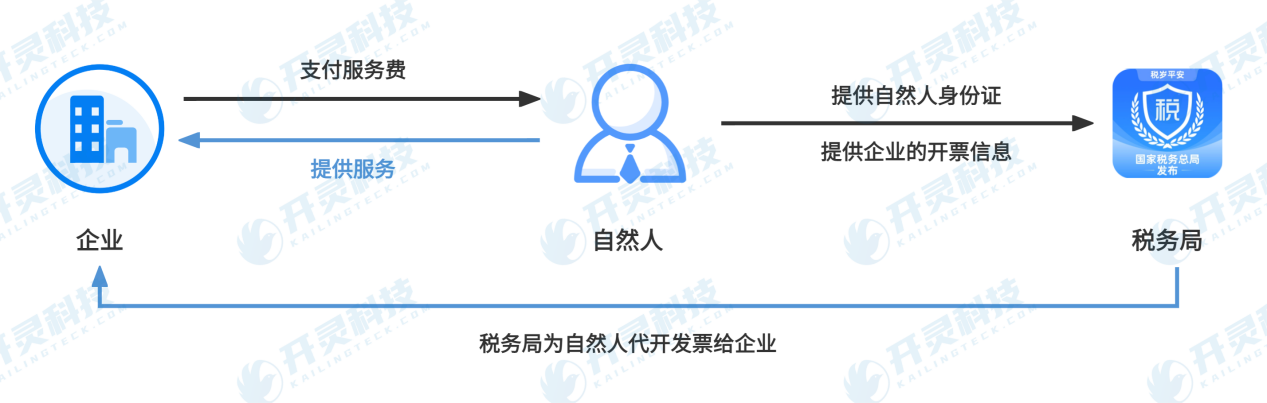
IV. Everyone should beware of misunderstandings in paying labor remuneration! Misconception 1: When paying labor remuneration to an individual, no invoice is needed for pre-tax deduction. Correction: The above understanding is wrong. As mentioned earlier, when an enterprise pays remuneration for labor services to an individual, it must obtain an invoice before it can be deducted pre-tax. In practice, when it comes to labor service invoices, both enterprises and the individuals providing labor services are troubled. If individuals do not issue invoices, enterprises cannot deduct before tax, and the reasons individuals are unwilling to issue invoices are, first, that it is troublesome, and second, that they do not want to pay VAT. Here we introduce how natural persons can compliantly carry out “invoice issuance for individuals”:
Full-process compliance guide for the Kailing Invoice Issuance for Individuals Platform: ▪ Identity verification and data encryption: relying on the public security system's real-name authentication and face-scan authentication technology to ensure the invoicing person's identity is authentic and valid, eliminating risks such as "impersonation invoice issuance" and "fake invoice issuance" from the source. All data transmission is processed through encrypted channels, complying with Level 3 security protection standards. ▪ Automated invoicing: bidding farewell to the traditional model of manual invoicing and offline trips to tax bureaus, individuals submit invoicing applications online through the platform, the system automatically matches tax rules, generates compliant fully digitalized e-invoices (ordinary invoices), and supports multi-format downloads in XML/OFD/PDF, meeting enterprise financial archiving requirements. ▪ Tax payment and voucher retention: the platform automatically calculates VAT and surcharges, supports multiple payment methods such as WeChat/Alipay/UnionPay, and generates tax payment certificates in real time. Enterprises do not need to withhold and remit; individuals complete the tax payment process independently, ensuring a complete and compliant tax chain.
Misconception 2: When paying labor remuneration to an individual, the payer directly multiplies by the 20% tax rate when withholding individual income tax. Correction: The above understanding is wrong. The income amount must first be calculated, and then individual income tax is withheld at the 20% tax rate. Misconception 3: If the labor remuneration paid to an individual does not exceed 800 yuan, there is no need to file individual income tax. Correction: The above understanding is wrong. If the income from remuneration for labor services does not exceed 800 yuan each time, since the deduction is calculated at 800 yuan when the income from remuneration for labor services does not exceed 4,000 yuan each time during withholding and prepayment calculation, the individual income tax to be withheld and prepaid is 0. 0 does not mean no filing is required. Misconception 4: When paying labor remuneration for the same item to the same individual and receiving it multiple times within one month, each time can be reduced by 800 yuan or a 20% deduction. Correction: The above understanding is wrong. For income from remuneration for labor services, if it is one-time income, the income obtained from that item is counted as one time; if it is continuous income from the same project, the income obtained within one month is counted as one time. Contact Kailing Technology now to unlock the compliant invoice issuance for individuals solution for temporary workers:https://www.kailingteck.com/h-col-126.html 。 Some content is from the internet As a comprehensive business-finance-tax digitalization solution service provider, Kailing Technology provides business-finance-tax management digital transformation products and operational services for various government agencies, institutions, and large, medium, and small enterprises. The product line includes: Solutions for sales contract management system, procurement contract management system, fully digitalized Leqi interface project, automatic output VAT invoicing system, invoice issuance for individuals system, employee expense control and reimbursement system, input VAT invoice management system, supply chain collaborative reconciliation system, imaging OCR recognition system, automatic financial bookkeeping system, electronic accounting archives system and other businesses, comprehensively advancing the digitalization process across various fields. If you have any business-finance-tax digital transformation needs, welcome to contact us. Beijing Kailing Technology will serve you wholeheartedly.
|