010-6097 4119Book a Demo


Explore the winning path of digital invoice management and drive enterprise tax management innovation and upgradingPublished: 2024-10-14 16:55 Driven by the digital wave, corporate tax management is undergoing unprecedented change. Fully digitalized e-invoices, as the vanguard of this transformation, are gradually becoming the new favorite of corporate tax management. I. Why have fully digitalized e-invoices become the new favorite of enterprise tax management?"Tax control by invoice" has always been one of the important methods of tax collection and administration. Through traditional paper invoices, electronic invoices, and now the promoted fully digitalized e-invoices, the principle remains unchanged. Paper invoices are printed with high-standard anti-counterfeiting technology, have fixed layouts and formats, and are standard invoices with unified format issuance and unified digital numbering by the state. Enterprises must apply to tax authorities to obtain them and can issue them only with media such as dedicated tax control equipment. Electronic invoices, also called "paper-electronic invoices," are based on the current paper invoice style and management process, electronically rendering the face of paper invoices. Although they reduce links such as invoice printing and delivery, invoice application, sale, issuance, quota, and cancellation still follow the paper invoice management model. The fully digitalized e-invoice is a new invoice with equal legal effect, without format, without medium, and requiring no application. It is elementized and tagged, turning all invoice information into structured data. Multiple invoice types are merged into a single fully digitalized e-invoice type, requiring no tax control equipment application, invoice type verification or approval of maximum invoicing limit. With intelligent credit granting and automatic targeted delivery, it achieves nationwide unified coding.
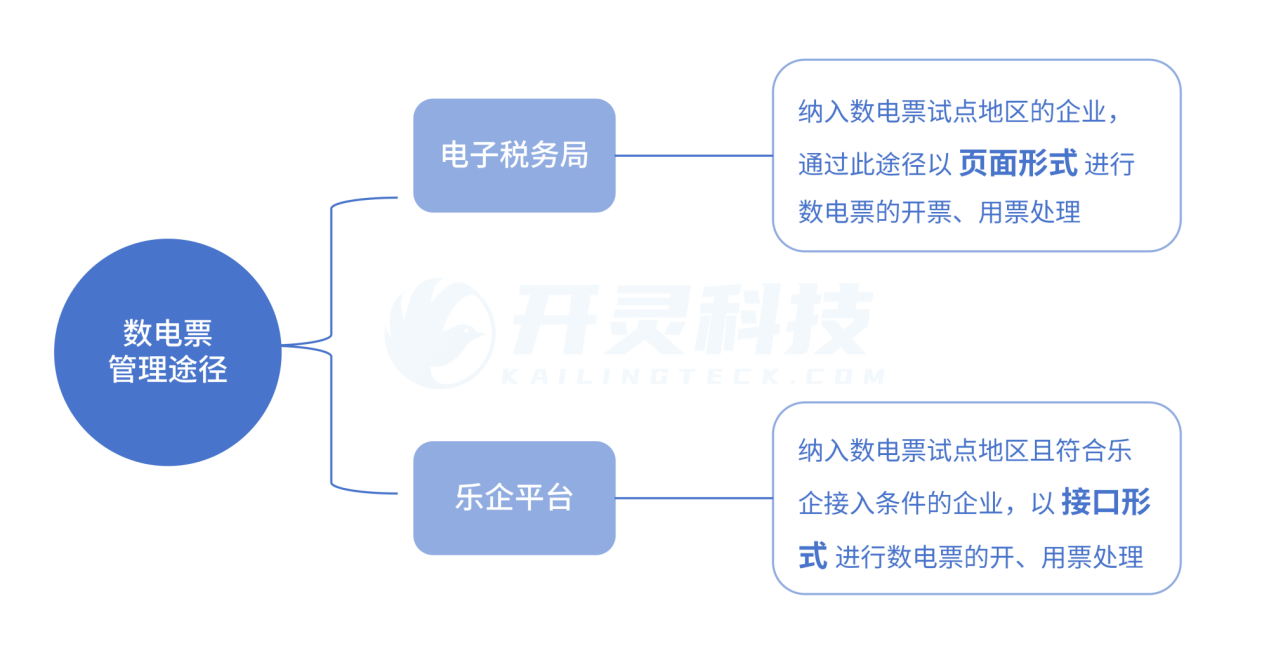
Since the promotion of fully digitalized e-invoices, they have quickly won the favor of many enterprises due to the convenience of the issuance process and cost savings. Looking deeper at the reasons, on one hand, the full digitalization of invoices brings convenience to accountants. New highlights such as removing media, removing formats, credit-based systems, code assignment, tagging, and elementization will bring convenience to enterprise tax departments and financial management, effectively promoting the digital transformation of enterprise management. On the other hand, the full digitalization of invoices will impact accounting, accounting archives, and tax management under the business-finance-tax integration system. Precisely because of this, fully digitalized e-invoices have always been a hot topic in the field of finance and tax management. They not only represent the future trend of tax management but are also the new favorite of enterprise tax management. II. Which is better, the Electronic Tax Bureau or the Leqi platform?Currently, for enterprises to achieve issuance and usage management of fully digitalized e-invoices, there are two management channels: the electronic tax bureau and the Leqi platform. These two channels each have their own characteristics, providing enterprises with tax services at different levels. E-Tax Bureau path:Pilot enterprises can log in to the web portal of each province's electronic tax authority and enjoy the comprehensive fully digitalized e-invoice services provided by the tax authority. These services include the full process of invoice issuance, delivery, verification, authentication, and collection, creating a convenient and intuitive page-based operating environment for enterprises. Through such web portal operations, enterprises can easily and conveniently complete the issuance and management of fully digitalized e-invoices. Leqi Platform channels:Enterprises that meet the Leqi access standards can use the official interface provided by the State Taxation Administration to achieve direct connection with tax bureau-side systems. The Leqi platform provides digital electronic invoices and related tax-related services with open rules and unified standards, but this platform is only open to enterprises that meet specific conditions. Through the Leqi platform, enterprises can enjoy a higher degree of automated and integrated tax services.
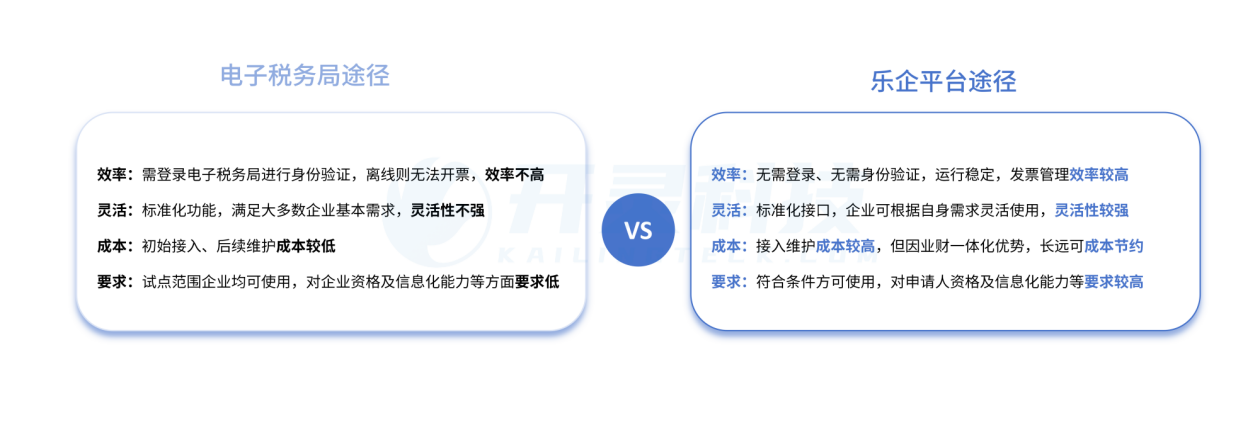
Whether the Electronic Tax Bureau or the Leqi platform, both are official tax authority fully digitalized e-invoice management platforms, and each has its own unique advantages and limitations. Below we compare the two management channels to help enterprises weigh them according to their own needs when choosing.
III. How should different enterprises choose fully digitalized e-invoice management approaches?When choosing a fully digitalized e-invoice management approach, enterprises need to comprehensively consider factors such as their own scale, business complexity, and technical capabilities. Small and medium-sized enterprises: flexibility and cost-effectiveness For small and medium-sized enterprises, flexibility and cost-effectiveness are the main considerations when choosing a fully digitalized e-invoice management method. Enterprises may not have enough resources to support business-finance system transformation and Leqi interface adaptation, so they need to choose an easy-to-operate and lower-cost solution. The electronic tax bureau may be more suitable for such enterprises because it provides basic fully digitalized e-invoice services and requires no additional system development or maintenance costs. Large enterprises: automation and integration level Large enterprises usually have more complex business processes and tax needs, and therefore require a higher degree of automation and system integration. The Leqi platform offers the possibility of deep integration with enterprise internal systems, enabling full-process automated management from business-finance data to invoices, thereby optimizing tax management processes and improving the efficiency and accuracy of tax processing. In addition, the Leqi platform provides more flexible interface services that can help large enterprises better carry out digital and intelligent tax management. Group enterprises: Centralization and control Due to their cross-regional and diversified business characteristics, group enterprises need centralized and highly controllable fully digitalized e-invoice management. The Leqi platform's centralized management function allows group enterprises to manage the fully digitalized e-invoices of all subordinate units on a unified platform, thereby achieving dual improvements in tax compliance and efficiency. Industry-Specific Requirements: Customization and Compliance Although the electronic tax bureau and the Leqi platform are consistent in providing the basic functions of fully digitalized e-invoice management, in certain special functions, the Leqi platform's feature iteration speed may be slightly slower than that of the electronic tax bureau. This means that under specific circumstances, the Leqi platform may temporarily be unable to meet the invoicing needs of certain specific industries. For example, the need to issue uniform motor vehicle sales invoices in the automobile industry, and the need for import enterprises to collect customs payment data, etc. When enterprises face these special invoice management needs, before choosing the Leqi platform as the fully digitalized e-invoice management method, they need to fully consider the Leqi platform's current level of support. Enterprises should assess whether the Leqi platform already provides corresponding functional support, or whether there is a clear update plan to meet these special needs. If the Leqi platform cannot provide support for the time being, enterprises may need to consider using the electronic tax bureau, or wait for subsequent updates of the Leqi platform. IV. ConclusionWhen choosing a fully digitalized e-invoice management approach, enterprises should consider not only current functional support but also long-term service stability, data security, and the platform's update and maintenance strategy. In this way, enterprises can ensure that the chosen solution meets their specific needs while maintaining tax compliance and business continuity. Whether choosing the electronic tax bureau or the Leqi platform, enterprises need to make a wise choice based on their own actual situation. Only by choosing a suitable fully digitalized e-invoice management method can enterprises go further on the path of digital transformation. Source: internet Kailing Technology provides enterprise business-finance-tax digital product lines according to enterprise needs: Solutions for businesses including sales contract management system, procurement contract management system, fully digitalized Leqi interface project, output automatic invoicing system, employee expense control and reimbursement system, input VAT invoice management system, supply chain collaborative reconciliation system, image OCR recognition system, automatic financial bookkeeping system, and electronic accounting archives system, professionally and efficiently supporting the transformation and upgrading of enterprise business-finance-tax digital management. If you have any business-finance-tax digital transformation needs, welcome to contact us. Beijing Kailing Technology will serve you wholeheartedly.
|