010-6097 4119Book a Demo


Interpretation of the new "reverse invoicing" policy and key application points across industriesPublished: 2024-09-20 17:26 Today let's discuss a hot topic in the business-finance-tax field—reverse invoicing. What exactly is "reverse invoicing"?It may sound a bit convoluted, but it is actually very simple. Usually, in a transaction, the seller issues an invoice to the buyer, which is called forward invoicing. However, sometimes due to special reasons, the buyer needs to issue an invoice to the seller, which is the so-called "reverse invoicing". Although it may seem a bit strange, in the business-finance-tax field, this kind of operation is legal and common. So under what circumstances is "reverse invoicing" used? Here are a few examples: 1、 Agricultural product procurementMany agricultural products are purchased directly from farmers. Since they are individuals, they cannot issue invoices and may also be unwilling to have invoices issued on their behalf. To convenience farmers while ensuring enterprises can deduct taxes compliantly, enterprises purchasing agricultural products are allowed to issue agricultural product purchase invoices themselves.
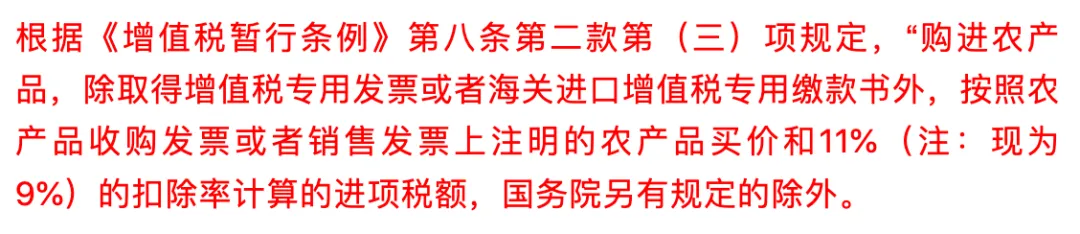
If the purchaser is a general taxpayer, it may use this purchase invoice to deduct input VAT.
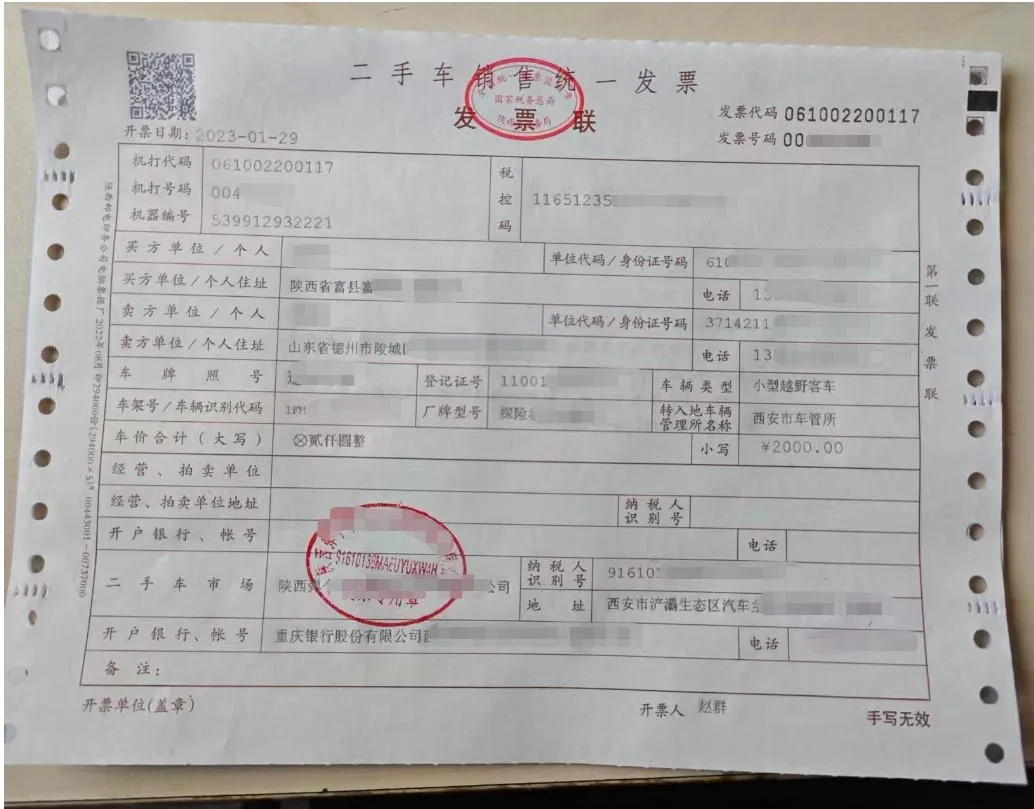
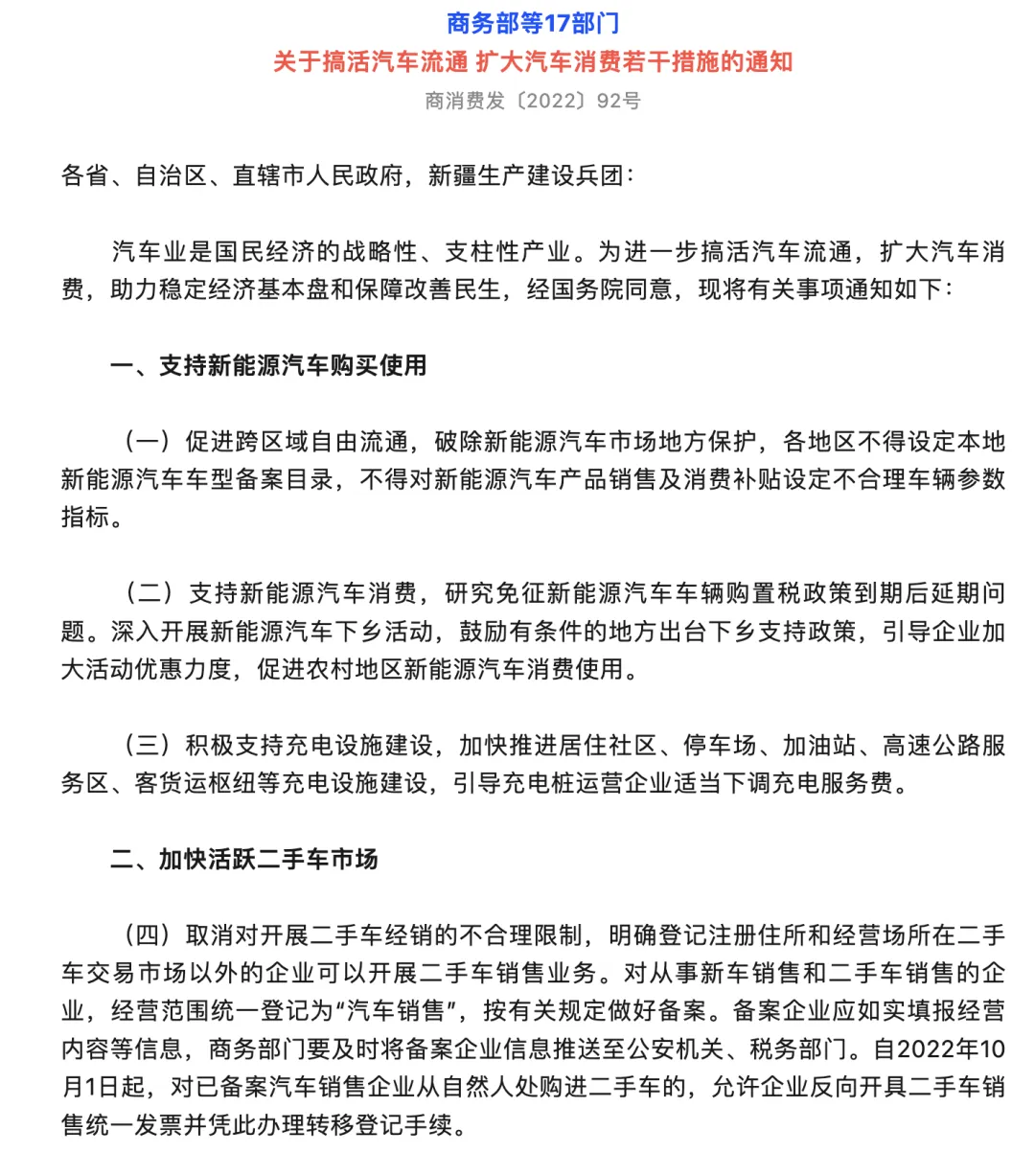
Input VAT calculation formula: input VAT = purchase price × deduction rate" For example, for the invoice just mentioned, the deductible input tax = 15,484.92 × 9% = RMB 1,393.64; The amount included in cost is 15484.92-1393.64=14091.27 yuan. 2、 Second-Hand Car TransactionsThe used car market is currently booming, but many used cars come from individual sellers. Individual sellers may be unable to provide invoices, so buyers can issue a unified used car sales invoice themselves when purchasing a used car.
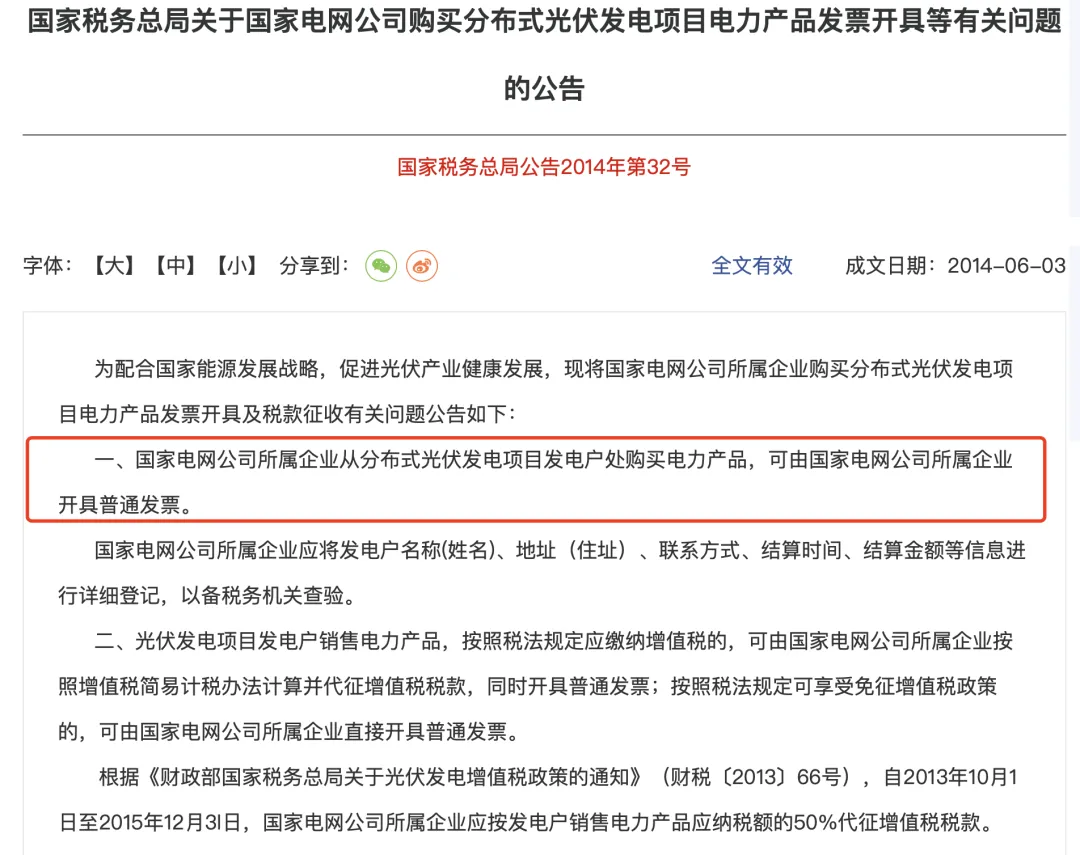
3、 Electricity purchaseFor example, when the State Grid purchases electricity from distributed photovoltaic power generation from residents, the State Grid may issue ordinary invoices to the residents.
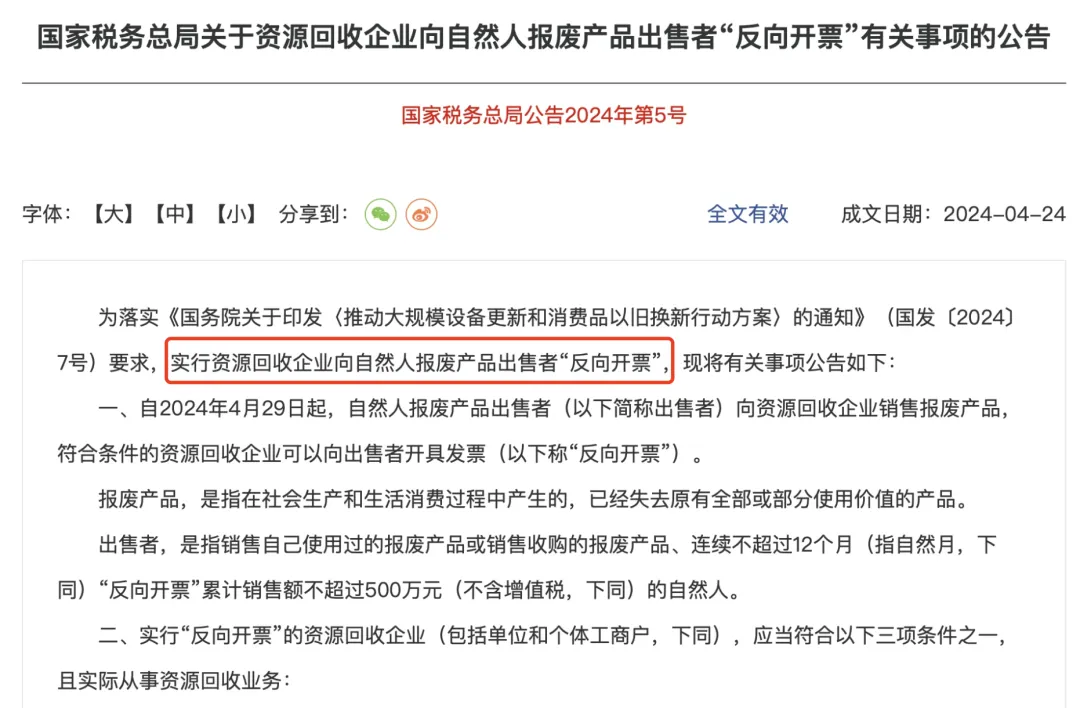
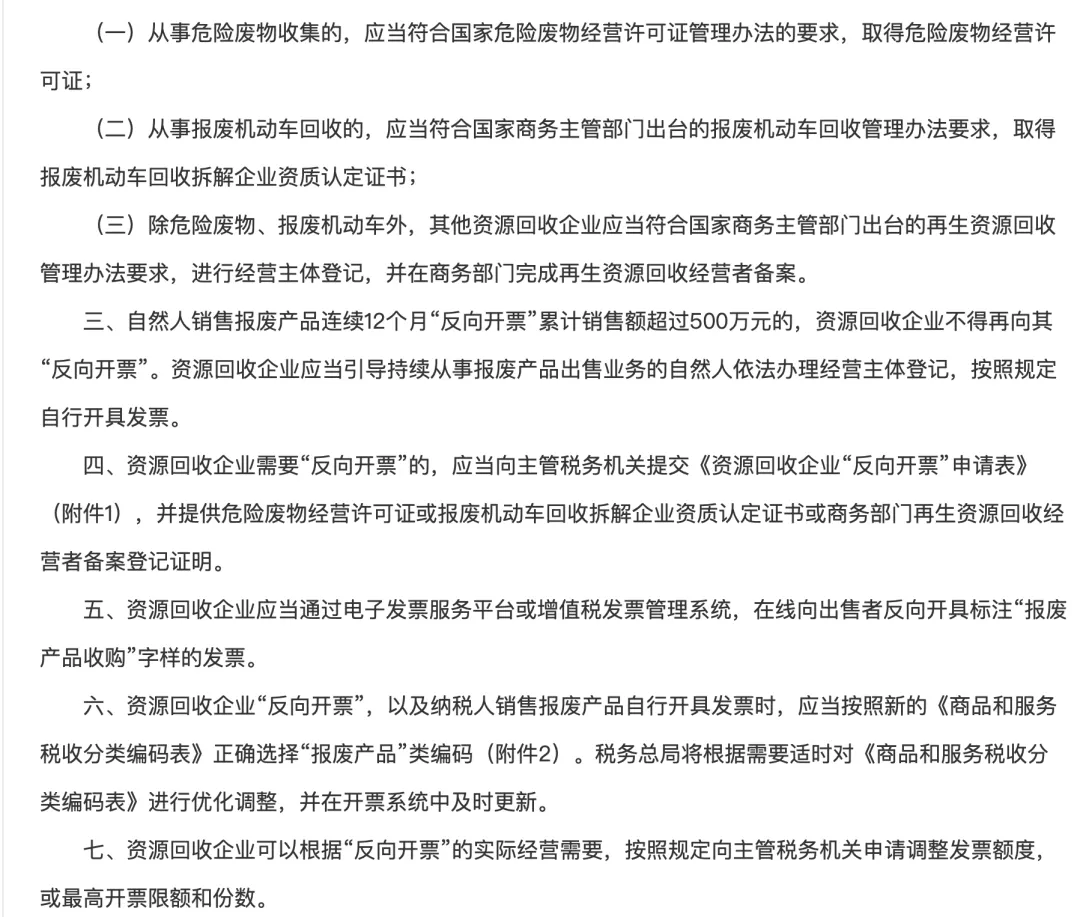
4、 Scrap materials recyclingResource recycling enterprises use "reverse invoicing" when selling used products to individuals, which is a new policy this year.
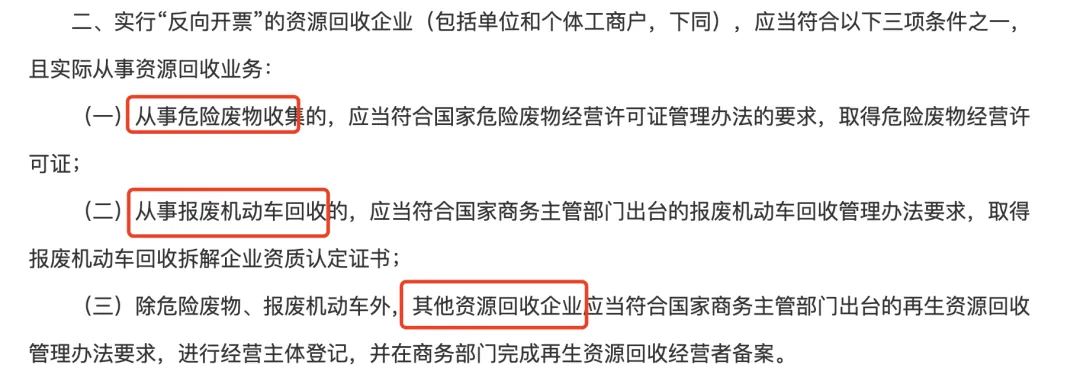
The seller here is a resource recycling enterprise that meets one of the following three conditions.
If you are an ordinary company and recycle a piece of equipment from your shareholder as an individual, can you issue a reverse invoice to him? This situationDefinitely notYes! And the seller here is an individual. What can be sold to resource recycling enterprises includes: ①Have personally used scrapped products; ②Scrapped products self-purchased; For invoice issuance, which involves the seller's VAT payment issue, "reverse invoicing" aims to facilitate individuals selling waste materials while also solving the acquirer's problem of having no invoice for expenses. The sale of goods falls within the VAT taxable scope, and the purchaser files VAT on behalf, but two preferential policies can be enjoyed. First, individuals selling self-used scrapped products are exempt from VAT;
Second, natural persons selling scrapped products they have acquired can also enjoy preferential policies.
In general, "reverse invoicing" is not a new thing, but this year's new policy has once again pushed it into the spotlight. It can be said that this is a good thing. It not only facilitates sellers but also solves the invoice problem of purchasers, providing us with a new solution for expenses without invoices. Source:Network Kailing Technology provides enterprise business-finance-tax digital product lines according to enterprise needs: Solutions for businesses including sales contract management system, procurement contract management system, fully digitalized Leqi interface project, output automatic invoicing system, employee expense control and reimbursement system, input VAT invoice management system, supply chain collaborative reconciliation system, image OCR recognition system, automatic financial bookkeeping system, and electronic accounting archives system, professionally and efficiently supporting the transformation and upgrading of enterprise business-finance-tax digital management. If you have any business-finance-tax digital transformation needs, welcome to contact us. Beijing Kailing Technology will serve you wholeheartedly.
|