010-6097 4119Book a Demo


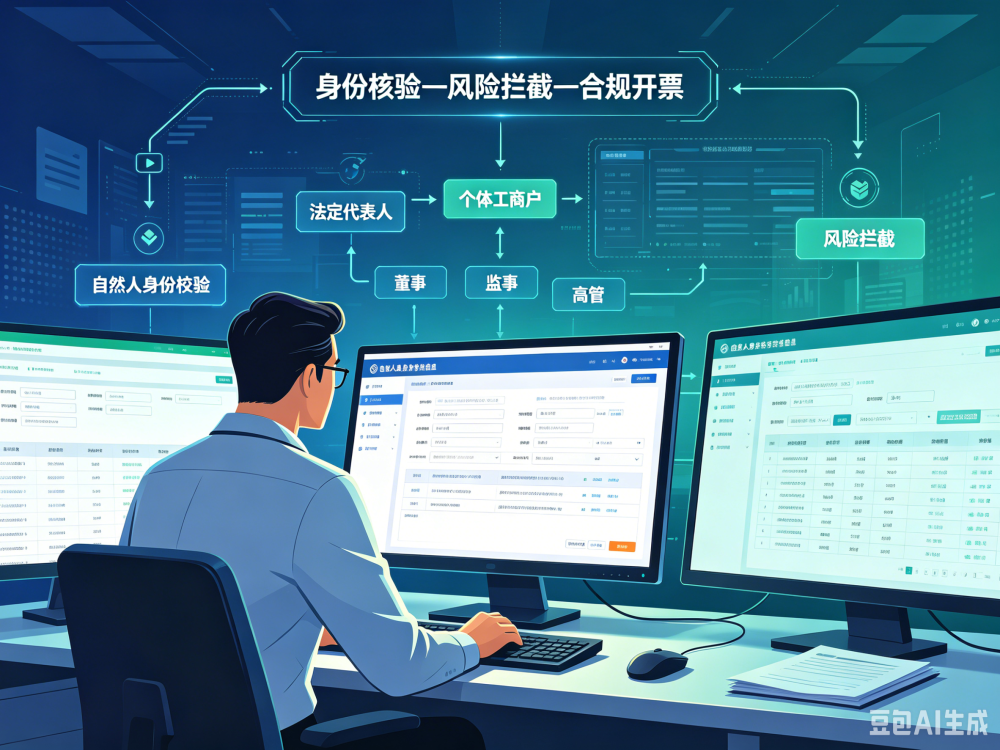
Kailing Technology Reverse Invoicing Individual Identity (Chairman, Executives, Supervisors) Query Interface, Precisely Eliminating Reverse Invoicing Identity RisksPublished: 2026-05-28 16:29 I. The "qualification threshold" for reverse invoicing, which many enterprises have not yet realizedIn 2024, the State Taxation Administration issued the Announcement on Matters Concerning "Reverse Invoicing" by Resource Recycling Enterprises to Individual Sellers of Scrap Products (No. 5 of 2024), officially opening a compliant invoicing channel for resource recycling enterprises. After the policy took effect, more and more enterprises began deploying reverse invoicing systems to solve the long-standing industry problem of "accounting without invoices." But in actual implementation, a key detail has been overlooked by a large number of enterprises:Not everyone who comes with an ID card to sell goods is qualified as an "individual" to accept reverse invoicing. The State Taxation Administration has clear restrictions on the applicable subjects of reverse invoicing — the seller must be a natural person engaged in the recycling of scrapped products in an individual capacity. If the person has any of the following identities in the business registration system, they do not fall within the scope of the policy: Enterprise legal representative Enterprise directors, executive directors Enterprise supervisor Senior management (general manager, deputy general manager, finance head, etc.) Individual business operators The reason is straightforward: these individuals already have business entity status, and their transactions with enterprises may constitute business operations or related-party transactions, which do not fall within the scope of "individuals occasionally selling scrapped products."
II. Consequences of failing to investigate thoroughly: not as simple as "just completing a formality"If an enterprise does not conduct identity verification of transaction counterparties and issues reverse invoices to persons who do not meet the conditions, the consequences fall into three levels: First layer: the invoice is invalid. Tax authorities determine that the transaction does not qualify for the reverse invoicing policy; the invoice already issued is not compliant and may not be used for input VAT deduction or cost deduction. Second layer: Input VAT transfer-out + tax payment. Input VAT already deducted must be fully transferred out, costs already expensed must be adjusted upward into taxable income, VAT and corporate income tax must be paid retroactively, and late fees will be charged. The third layer: risk of being deemed false invoicing. If the amount involved is relatively large or the number of transactions is relatively high, the tax authority may determine that the enterprise "issued invoices while knowing it did not meet the conditions," triggering administrative penalties for false invoicing or even criminal prosecution. Particular attention should be paid: under China Golden Tax Phase IV, tax authorities have cross-system data comparison capabilities. The ID number of the invoicing counterparty in the invoice system and the legal representative/executive information in the business registration system can be automatically cross-compared. In other words—Even if the enterprise does not check, the tax bureau can still find out. The only difference is: if the enterprise proactively checks, it is "fulfilling the duty of reasonable care"; if it does not check, it is "management dereliction of duty." III. Why is manual verification infeasible?Some enterprises' approach is to have finance staff search the names of counterparties one by one on the National Enterprise Credit Information Publicity System to see whether there are affiliated enterprises. This approach has four fatal flaws: Same-name issue. "Zhang Wei," "Wang Fang," "Li Qiang"—these high-frequency names may correspond to hundreds or thousands of records in the business registration system, and it is impossible for humans to determine which one is the same person. Cross-province issues. A person may serve as legal representative in Province A, as supervisor in Province B, and register an individual business in Province C. Manual inquiries usually check only one province, resulting in an extremely high omission rate. Timeliness issue. Business registration information changes dynamically. It may be fine when checked today, but next week this person may be registered as a supervisor of a company. However, tax audits determine the identity status "at the time of invoicing." Efficiency issues. A resource recycling enterprise deals with dozens to hundreds of individual sellers every day. Manually checking each one is completely unrealistic. Even with dedicated staff, it cannot cover all transactions. IV. Kailing Technology's interface solution: automation, full coverage, real-time capabilityKailing Technology's identity query API has a clear design goal:Make identity verification an automatically executed step in the invoicing process, requiring no extra manpower from the enterprise; ineligible transaction parties are blocked before entering the invoicing step. 1. Query dimensionsBased on the ID number of the transaction counterparty, the interface automatically queries all of the following dimensions:
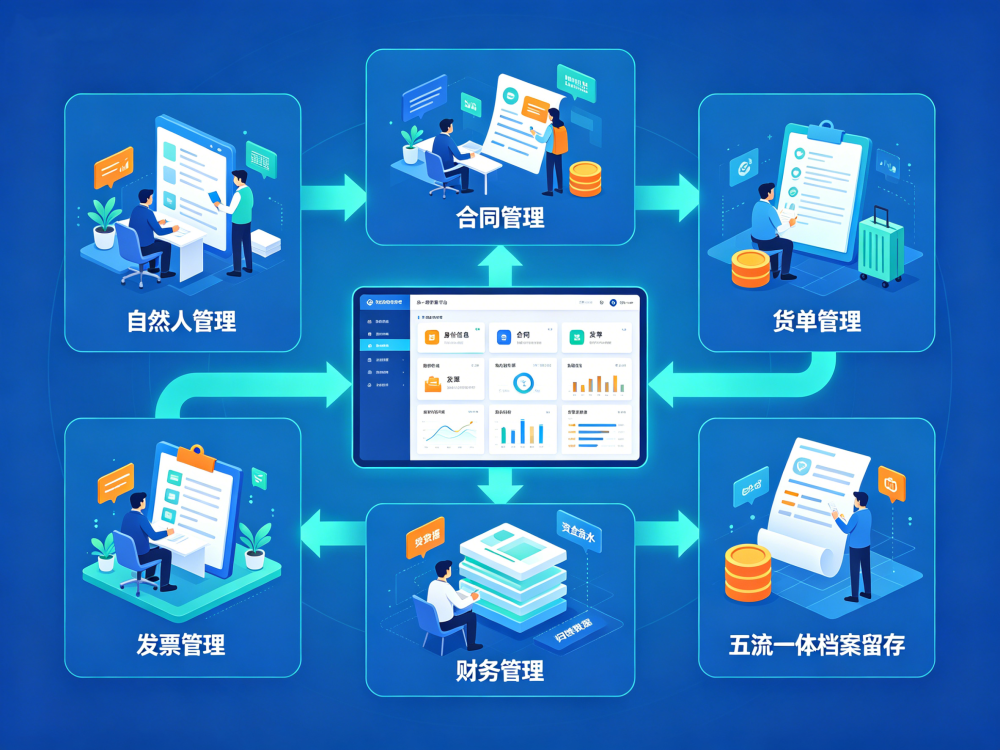
The query scope covers all registered market entities nationwide (including enterprises, individual industrial and commercial households, farmers' professional cooperatives, etc.), with no province or enterprise type restrictions. 2. Data sourcesThe interface connects to the enterprise registration data source of the State Administration for Market Regulation, with data update frequency synchronized with business registration changes. This ensures query results reflect the latest status rather than historical snapshots. 3. Verification time pointKailing Technology's system triggers identity verification at two key nodes: Node 1: When an individual is first filed. When an individual supplier cooperates with the enterprise for the first time, the system immediately performs a full identity query after facial scan authentication. If it fails, file creation is impossible, blocking at the source. Node 2: Each time invoicing is initiated. Even if verification is passed at the time of profile creation, the system still performs a real-time secondary verification before each actual invoicing. This is because business registration information can change at any time—last week a person may have been an ordinary natural person, and this week they may have just been appointed as a supervisor of a company. Dual-node verification ensures:No matter when the identity changes, it can be accurately captured at the time of invoicing. 4. Result processingVerification results are divided into three types: Passed: No business entity identity of any kind; normally enter the invoicing process Intercept: If a clear legal representative/director/supervisor/executive/sole proprietor identity exists, the system blocks invoicing and returns the specific reason (e.g., "This person is the legal representative of XX Company, Unified Social Credit Code XXXXX") Mark: If there are historical role records of a deregistered enterprise, the system marks a reminder but does not forcibly intercept, leaving it to the enterprise to judge Interception records are automatically archived and retained as compliance evidence that the enterprise has "fulfilled its reasonable review obligation". V. Coordination with the full process of reverse invoicingIdentity validation is not an isolated function; it works in coordination with other compliance capabilities of Kailing Technology's reverse invoicing system: 5 million annual quota verification:Before each invoicing, automatically accumulate the amount already invoiced to that individual in the current year. E-Tax Bureau registration status pre-check: Confirm the natural person has completed real-name registration with the Electronic Tax Bureau Bank card real-name consistency verification: Ensure the receiving account and the invoicing target are the same person Five-flow archiving: Verification-passed records, together with contracts, business documents, invoices, and bank receipts, form a complete evidence chain Multiple verifications are superimposed to form a complete compliance protection net. If any link fails, the transaction cannot enter the invoicing process.
VI. Access MethodsKailing Technology's identity query API supports two access methods: Method 1: Integrated into the Kailing reverse invoicing/invoice issuance for individuals system. When enterprises use the complete Kailing Technology solution, identity verification runs automatically as a built-in capability, with no additional integration required. Method 2: Independent API call. The enterprise already has a self-built invoicing system and only needs identity verification capability, so it can call the Kailing Technology identity query API separately. A standardized API is provided, and the connection cycle is usually completed within 3 working days. The system overhead of one identity verification is negligible, but the risk it avoids may be hundreds of thousands or even millions in back taxes and fines. More importantly: when a tax audit comes, every verification record retained in the system is strong evidence of the enterprise's "proactive compliance." It proves that the enterprise did not "fail to know," but rather "checked, confirmed, and only then issued the invoice." In the environment of China Golden Tax Phase IV's "tax governance by data," this systematic compliance capability is changing from a "bonus item" to a "must-have." To learn more about the identity verification API technical documentation or to apply for test integration, please consult Kailing Technology:https://www.kailingteck.com/h-col-127.html 。 As a comprehensive business-finance-tax digitalization solution service provider, Kailing Technology provides business-finance-tax management digital transformation products and operational services for various government agencies, institutions, and large, medium, and small enterprises. The product line includes: Solutions for businesses including sales contract management system, procurement contract management system, fully digitalized Leqi interface project, output automatic invoicing system, reverse invoicing system, invoice issuance for individuals system, employee expense control and reimbursement system, input VAT invoice management system, supply chain collaborative reconciliation system, image OCR recognition system, automatic financial bookkeeping system, and electronic accounting archives system, comprehensively driving the digitalization process across various fields. If you have any business-finance-tax digital transformation needs, welcome to contact us. Beijing Kailing Technology will serve you wholeheartedly.
#Reverse Invoicing Solution #Reverse Invoicing System #Reverse Invoicing Individual Identity Verification #Resource Recycling Enterprise Reverse Invoicing Solution #Agricultural Product Procurement Reverse Invoicing Solution #Digital Business-Finance-Tax |