
Taihu County People's Hospital | Centralized collection and verification of input VAT invoices
Enterprise overview
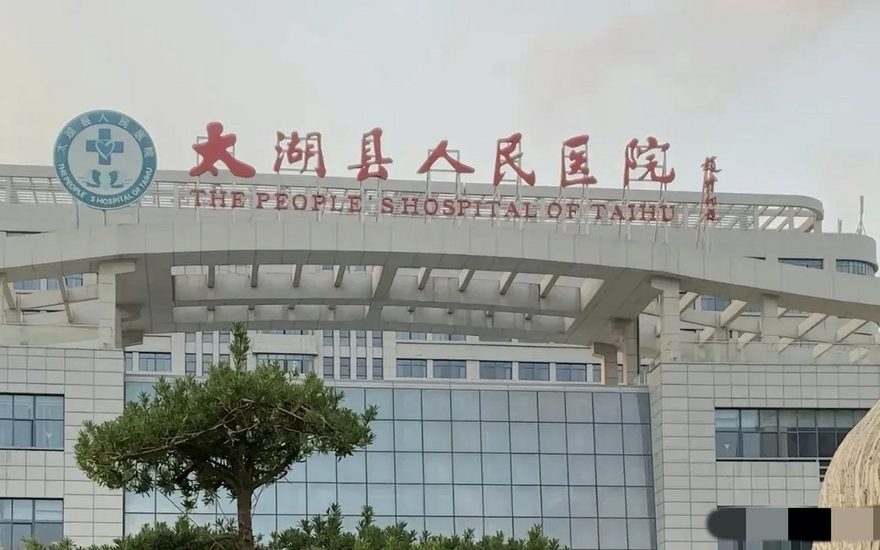
Founded in 1939 and located in Taihu County, Anhui Province, Taihu County People's Hospital is a non-profit general hospital. In September 2023, it was approved by the Anhui Provincial Health Commission to be upgraded to a national Grade III general hospital. The hospital covers 190.5 mu, with a building area of 110,000 square meters, 800 open beds, and more than 800 in-service employees, including 134 with senior professional titles and 350 with intermediate professional titles. It has 33 clinical departments and 12 medical technology departments, with the medical imaging department and neurology department as municipal key specialty construction disciplines. The hospital is equipped with large and medium-sized equipment such as 3.0T high-field-strength MRI, 256-slice ultra-high-end spiral CT, linear accelerator, DSA, and hyperbaric oxygen chamber, with nearly 480,000 annual outpatient and emergency visits, 35,000 discharges, and more than 7,000 surgeries.
Business pain points
- Daily procurement covers pharmaceuticals and consumables, testing reagents, medical equipment, logistics services, and professional outsourcing. Supplier qualification requirements are high, invoice compliance standards are strict, and expense attribution for different departments and projects needs to be accounted for separately. After invoices arrive, business personnel print and paste them and submit paper copies to finance, and finance centrally completes verification and registration at the receipt stage. Invoice management processes and reimbursement/payment processes each run separately, connected manually in between. The same transaction may simultaneously have paper printouts and fully digitalized e-invoice source files, making duplicate booking difficult to prevent at the process level
- The correspondence between invoices and purchase orders and goods receipt notes relies on manual maintenance, and discrepancies must be traced back item by item, lengthening the reconciliation cycle. Manual entry itself is a source of errors; one wrong entry propagates through certification, deduction, and vouchers all the way down
- Supplier invoicing status cannot be grasped in real time, and enterprises can only passively receive notifications after risks occur. Since China Golden Tax Phase IV promoted tax governance by data, tax-related anomalies on the supplier side are directly transmitted to the enterprise's input VAT deduction; without real-time monitoring, enterprises can only passively accept tax prompts, and compliance pressure keeps rising
Solutions
- Connect invoice collection, authenticity verification, duplicate checking, certification, posting, and archiving into one online process, eliminating paper circulation and manual registration steps
- Establish compliance validation rules for all invoices; abnormal invoices are blocked and returned to the handler at the submission stage, no longer discovered only at certification
- Connect with the financial system's voucher generation link, automatically associate documents with accounts payable and expense vouchers, and allow vouchers to trace back to original invoices
- Ultimately shifts finance from processing invoices one by one to handling only exceptions, ensuring full input VAT deduction where applicable, with a fully compliant and traceable process
- At the same time, invoice data is accumulated as analyzable assets, supporting multi-dimensional statistics by supplier, project, and period, providing a basis for subsequent supplier evaluation and cost control