
Deshengmen Hospital of Traditional Chinese Medicine | Automatic invoicing integrated with charging system
Enterprise overview
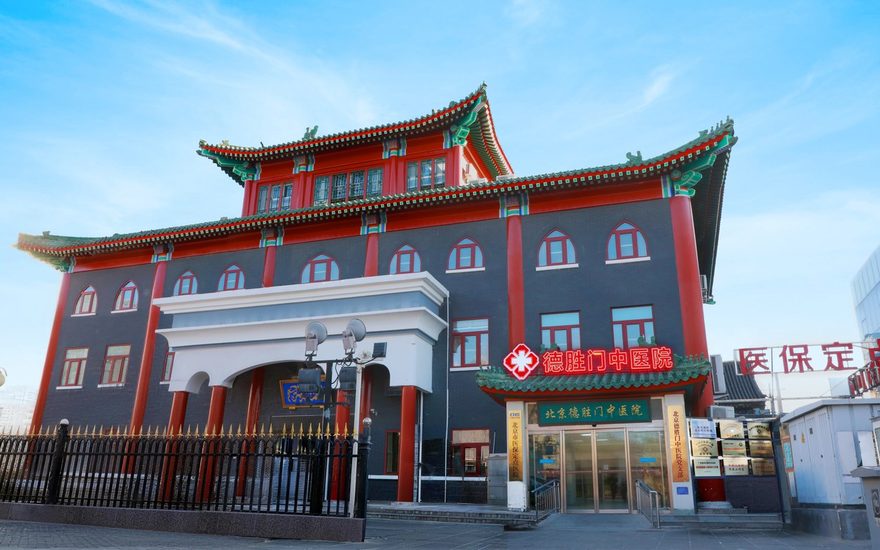
Beijing Deshengmen Hospital of Traditional Chinese Medicine is located on the North Second Ring Road of Beijing, adjacent to the Deshengmen Gate Tower. It is a comprehensive traditional Chinese medicine medical institution approved by the health administrative department and a designated medical institution for Beijing medical insurance. The hospital has departments including traditional Chinese medicine internal medicine, ophthalmology, stomatology, orthopedics and traumatology, psychiatric rehabilitation, gastroenterology, dermatology, nasopharyngology, gynecology, otology, geriatrics, and pediatrics. Among them, traditional Chinese medicine internal medicine mainly diagnoses and treats thyroid, respiratory, diabetes, tumor, craniofacial nerve, blood disease, and andrology directions; the hospital also has a Guoyitang hall, with multiple national masters of traditional Chinese medicine and renowned experts, professors, and doctoral supervisors, equipped with dedicated consultation rooms and inheritance studios, with a large outpatient volume and high frequency of payment and invoicing.
Business pain points
- Serving patient populations as well as multiple settlement entities such as medical insurance, commercial insurance, and group physical examinations, with large invoice demand, high frequency, and one-to-one correspondence with diagnosis, treatment, and charging records. Invoicing actions are concentrated on the finance side, business personnel cannot initiate self-service, and when customers chase invoices, it also goes through the loop of business to finance and then feedback. Issued invoices are stored in a scattered manner, month-end reconciliation requires searching in multiple places, and annual aggregation starts all over again.
- Invoicing data is disconnected from business data, so management cannot see the overall invoicing situation. Invoicing volume drives up labor input linearly with business growth, and during settlement periods when invoices are concentrated, queues are severe; if the counterparty cannot get the invoice, they will repeatedly follow up, directly affecting settlement progress.
- Errors such as a wrong header, a reversed tax ID, or a product name that does not match reality are hard to avoid at the process level. Under China Golden Tax Phase IV, invoicing data is fully reported, and any inconsistency between invoice information and the substance of the business directly triggers warnings, amplifying the error risk of manual entry
Solutions
- Embed invoicing capabilities into existing business processes, so customers can apply self-service within the original interface without jumping out to another system
- The system fills in invoice face information in a standardized manner according to preset templates, eliminating errors in header and tax number from the source
- Layout files of fully digitalized e-invoices are automatically archived and retained, meeting the requirements for preserving original files
- Ultimately achieving a closed loop of invoicing, delivery, archiving, and reconciliation on one line, with invoice data transparent to management
- At the same time, standard interfaces are reserved for subsequent access to Leqi Direct Connection and expansion of new sales channels, so business expansion is no longer constrained by invoicing capacity