
← Back to case list
Zhixiang Technology · Printing and Imaging Equipment Manufacturer
Zhixiang Technology | VAT Input Invoice Management System
Collection, Verification, and BookingCapability Scope
Input invoice poolCore Capabilities
Enterprise overview
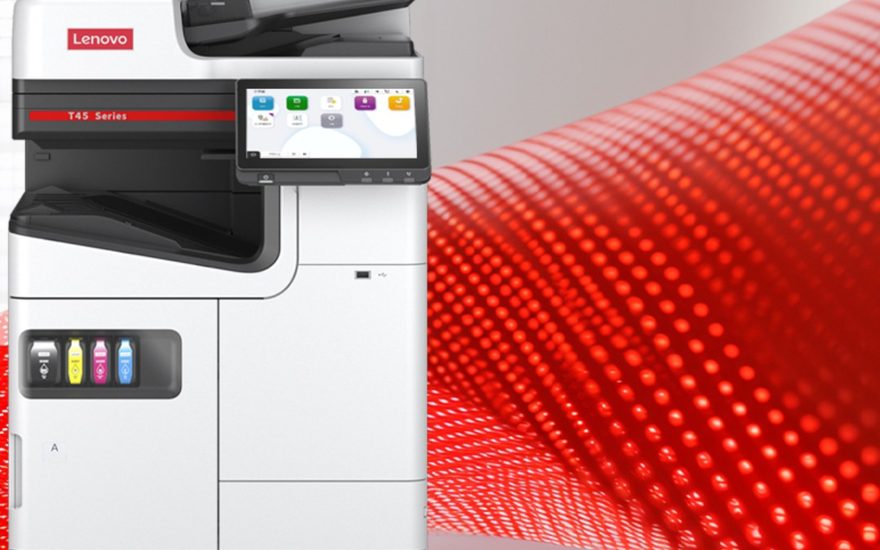
Zhixiang Technology Co., Ltd. is Lenovo Imaging, spun off and established by Lenovo Group in 2017 and renamed Zhixiang Technology in 2022. It is registered in the Tianjin Pilot Free Trade Zone and focuses on office printing and imaging. The company has more than 120 printing products, covering various laser printing needs of individuals, families, small and medium-sized enterprises, and industry customers. Its products include monochrome and color laser printers, multifunction all-in-ones, and more, and it provides users with mobile printing, print management, and other solutions. In recent years, it has launched AI printing products supporting voice control.
Business pain points
- Procurement in the manufacturing stage is spread across raw materials, parts, molds and tooling, equipment spare parts, outsourced processing, and logistics. Suppliers include both large manufacturers with long-term agreements and small and micro suppliers providing temporary replenishment, with varying invoice types and arrival rhythms. Input VAT invoices currently arrive through three channels: employee reimbursement uploads, supplier emails, and paper documents mailed with goods. Finance must first collect all invoices, classify them, enter them into the system one by one, and then manually check whether the invoice face matches the business documents. Invoice arrival times are disconnected from business occurrence times, erupting centrally before month-end closing.
- Whether an invoice is voided, red-ink reversed, or already reimbursed repeatedly can only be compared by manually checking records, and cannot cover the full volume
- Anomalous invoices often only surface at the certification stage, by which time payment has been made and the business is closed, making recovery difficult. The same transaction may simultaneously have a paper printout and a fully digitalized e-invoice source file, making duplicate posting difficult to prevent at the process level
- The correspondence between invoices and purchase orders and goods receipt notes relies on manual maintenance, and discrepancies must be traced back item by item, lengthening the reconciliation cycle. After China Golden Tax Phase IV promoted tax governance by data, tax-related anomalies on the supplier side directly affect enterprise input VAT deductions. Without real-time monitoring, enterprises can only passively accept tax prompts, and compliance pressure continues to rise
Solutions
- Connect business, reimbursement, and tax management links so that documents entering through three channels—mobile photo capture, email receipt, and batch scanner entry—are recognized and structured immediately, eliminating manual collection and classification at the source
- Automatically connect to tax authority authenticity verification, duplicate reimbursement comparison, issuer status checks and invoice compliance validation, blocking abnormal invoices before entry rather than after certification
- Establish input risk monitoring covering all suppliers, with real-time alerts for abnormal invoicing party status, invoice red-voiding, absconding and loss of contact, transforming passive response into proactive defense
- Ultimately forms a unified input VAT invoice pool, where invoices, purchase orders, and payment records are traceable across all three, meeting China Golden Tax Phase IV regulatory requirements throughout the entire process
- At the same time, invoice data is accumulated as analyzable assets, supporting multi-dimensional statistics by supplier, project, and period, providing a basis for subsequent supplier evaluation and cost control