
Can the invoicing items for input and output differ? 2026 compliance points

Can the invoicing items for input and output differ? 2026 compliance points
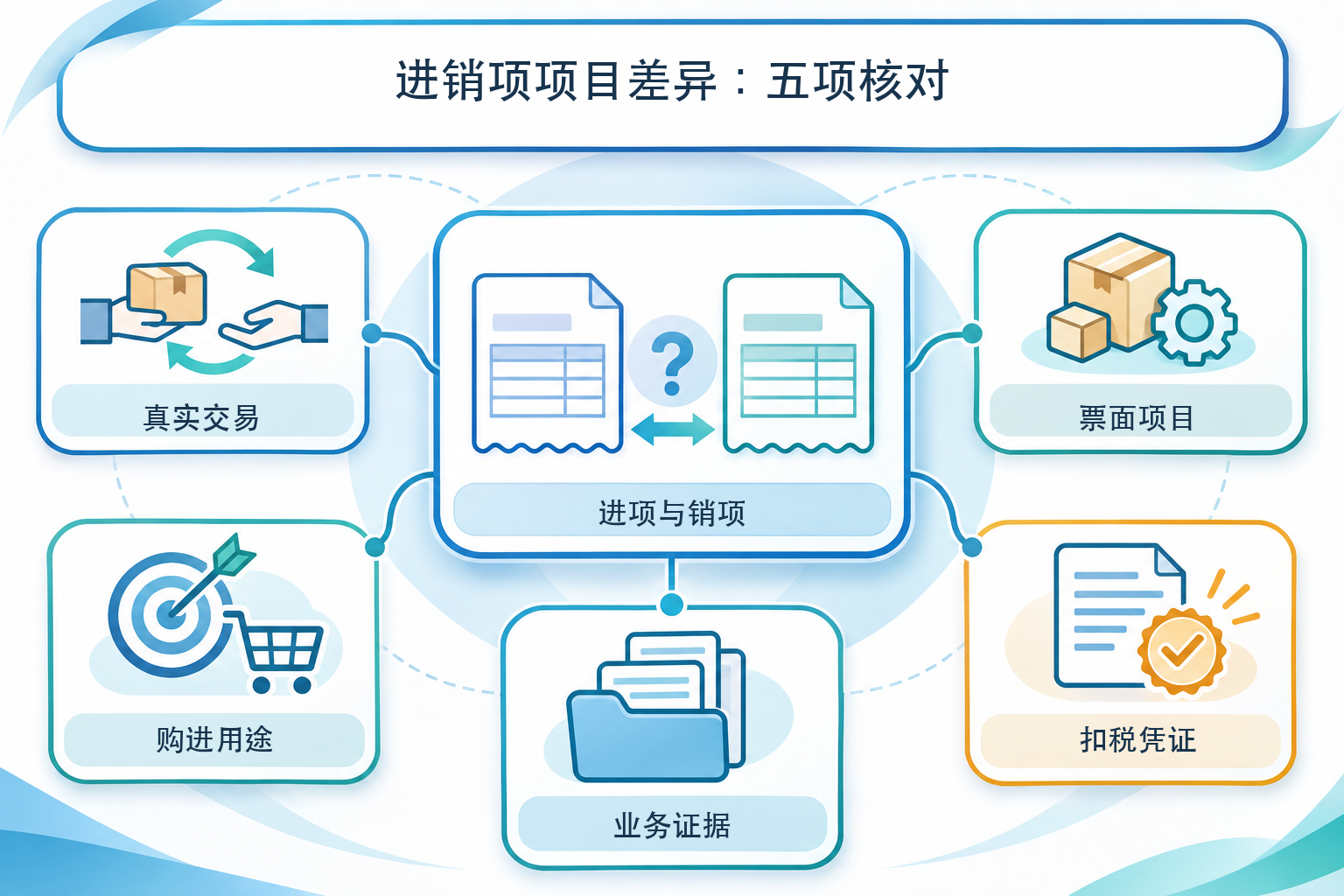
When the item names on input VAT invoices and output VAT invoices differ, you cannot judge a violation solely on the basis of "literal inconsistency," nor can you directly conclude that the input tax is deductible. First verify separately whether each invoice truthfully reflects its respective transaction, then trace the purpose of purchase, the tax deduction voucher, and the applicable non-deductible provisions. The applicable basis for judgment is the 2026 VAT Law of the People's Republic of China and its implementing regulations; the old interim regulations can no longer be treated as the current main rules.
I. Which differences may come from genuine operations
For manufacturers purchasing raw materials and selling processed finished products, purchase item names and sales item names are usually not the same; trading companies may also purchase office equipment and transportation services while selling another category of goods. In such cases, the relationship between procurement, requisition, processing or service use and sales business should be explainable. If the enterprise merely resells the same batch of goods as-is but the input and output invoice item names differ greatly without reasonable explanation, the contract, warehouse in/out records and actual goods should be checked, and it cannot be glossed over with "different industries".
II. First check whether the invoice itself is issued correctly
The seller, buyer, product name or business item, amount, etc. on the invoice should match the actual business. If the input VAT invoice itself writes the purchased goods incorrectly, or the output VAT invoice writes the actual sales item as another item, the invoicing party should be contacted to handle the original invoice per regulations and obtain a correct invoice; an erroneous invoice cannot be retained just because the two invoice names are similar. Tax classification codes, quantities, amounts and invoice status should also be checked against business documents.
III. Deduction also depends on deduction vouchers and use
Under general taxation, input VAT credit should be checked against the VAT Law, implementing regulations and specific policies for eligible deduction vouchers and purchase use. Where used for simplified taxation projects, tax-exempt projects, collective welfare or personal consumption, etc., it may fall within the scope of non-deductible or require apportionment and transfer-out. Even if the input and output invoice item names are completely identical, these checks cannot be skipped; even if the names differ, compliant deduction should not be automatically denied. Specific tax treatment should be determined based on the taxpayer's status and business facts.
IV. Keep the explanation of differences in business evidence
It is recommended to link purchase contracts or orders, warehousing or acceptance, production requisition or service use, sales contracts, outbound delivery or delivery, payments and invoices, and record conversion relationships and responsible persons for situations such as "raw materials becoming finished products", "mixed procurement" and "service input"; for unexplainable item name differences, suspend automatic matching and review first. The so-called "four flows consistency" can serve as a verification clue, but cannot replace statutory deduction conditions, nor should it mechanically require every purchase and sale item name to be identical word for word.
V. System alerts should serve manual judgment
Invoice management tools can help organize invoice items, classification codes, business documents and exception lists, but "different names" is only suitable for triggering verification, not for automatically judging false invoicing or automatically releasing deduction. Kailing Technology's input VAT invoice, output VAT invoice and tax risk-related products can serve as candidate tools for difference management; actual invoice acquisition channels, matching rules and alert capabilities should be subject to version, authorization and project acceptance. In case of major disputes, rely on the opinions of the competent tax authority and professional tax judgment.
Verification Basis
VAT Law of the People's Republic of China (effective 2026);Implementing Regulations of the Value-Added Tax Law of the People's Republic of China;Revised provisions of the State Taxation Administration's Implementing Rules for Invoice Management Measures。
As a comprehensive business-finance-tax digitalization solution service provider, Kailing Technology provides business-finance-tax management digital transformation products and operational services for various government agencies, institutions, and large, medium, and small enterprises. The product line includes: solutions for sales contract management system, procurement contract management system, fully digitalized Leqi interface project, automatic output invoicing system, reverse invoicing system, invoice issuance for individuals system, employee expense control and reimbursement system, input VAT invoice management system, supply chain collaborative reconciliation system, image AI OCR recognition system, automatic financial bookkeeping system, electronic accounting archives system, etc., comprehensively driving the digitalization process across various fields.
Consultation Hotline: 18513895936 / 010-60974119 Location: Beijing