
How to choose an expense control platform? A 2026 guide for SMEs to avoid pitfalls

How to choose an expense control platform? A 2026 guide for SMEs to avoid pitfalls
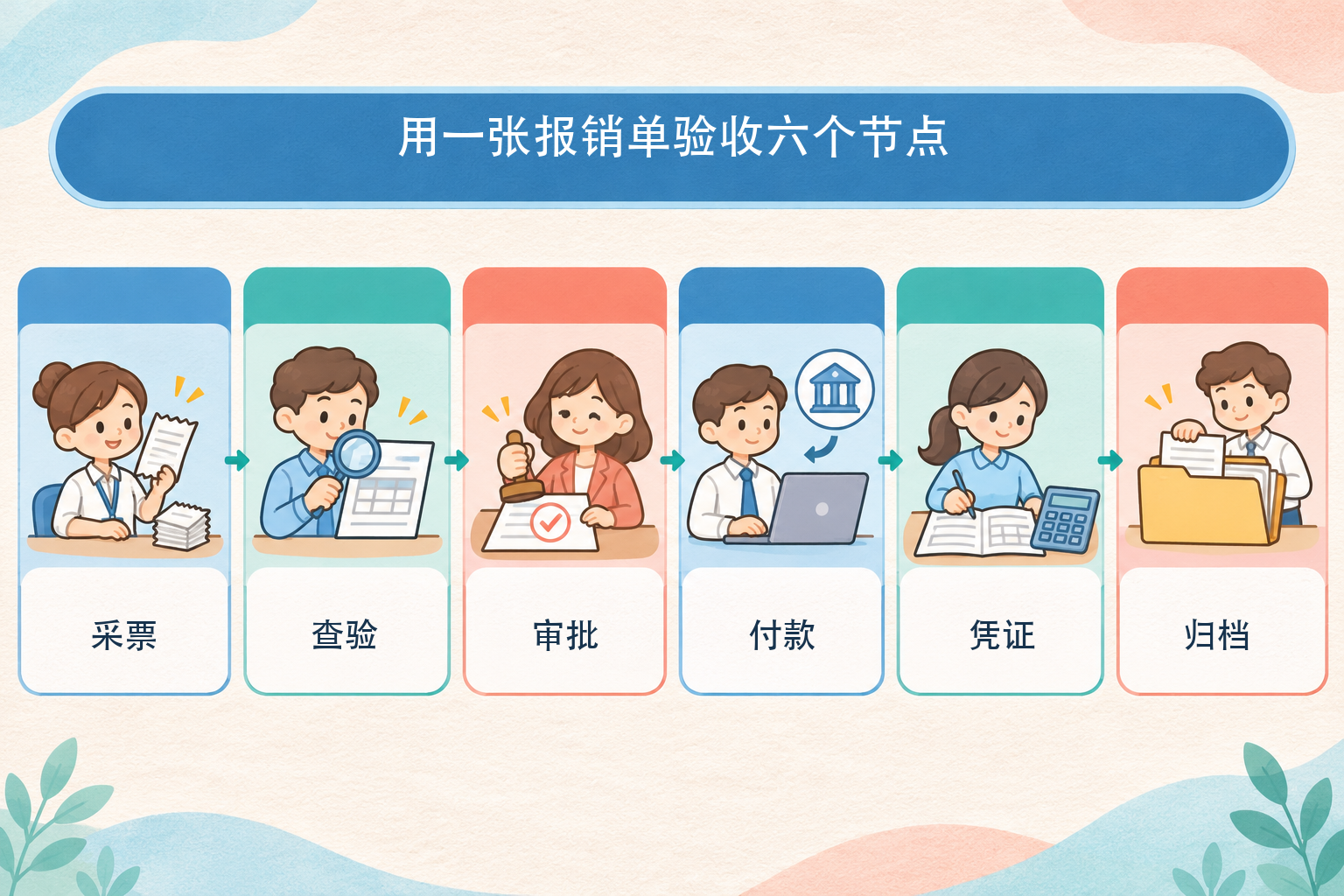
When SMEs choose an expense control platform, first test invoice collection, verification, approval, payment, bookkeeping and archiving with the same real reimbursement form, then compare the coverage of different products. Statements such as "full process" or "free" on the page cannot replace on-site demonstrations, expense lists and delivery agreements; this article provides trial methods based on unified indicators.
I. First, list the six unified acceptance indicators
Test with the same set of anonymized samples: whether original invoice files can be saved, how invoice titles and duplicate invoices are verified, how expense standards and approval flows are configured, how approved payments are executed and returned, how reimbursement forms form or integrate with accounting vouchers, and how electronic materials are archived and retrieved. Mark each item as "standard function, requires configuration, requires integration, requires manual handling", and record the demonstration version.
II. Who each of the three common routes suits
Spreadsheets or basic approval tools suit teams with small document volume, simple processes and acceptance of manual invoice checking and bookkeeping; standalone expense control platforms suit enterprises needing an invoice pool, budgets, travel and multi-role approval; solutions deeply integrated with financial systems suit enterprises with multiple organizations and higher requirements for payment receipts and voucher integration. This is a selection route, not a vendor ranking; functions on the same route still depend on version and project scope.
III. Expenses and interfaces must be checked on the same basis
Obtain a current written quote from the supplier, listing user count, document volume, invoice verification, OCR, bank interface, financial software interface, implementation and migration, training, maintenance and upgrade fees separately. If "free" is advertised, clarify the free period, applicable entities, function limits, third-party call fees and boundaries of subsequent services. Demonstrate a failure scenario on-site: when the invoice verification service is unavailable, bank receipts are not returned or voucher conversion fails, who is responsible for handling and where data will stop.
IV. Key verification points when considering Lingdong Reimbursement as a candidate
Kailing Technology's Lingdong Reimbursement product solution covers invoice collection and verification, reimbursement approval, payment management, reimbursement form-to-voucher conversion and electronic archives integration. During trial, demonstrate item by item with samples of multi-organization reimbursement, duplicate invoices, approval returns, bank-enterprise payment receipts and financial software integration. Specific banks, financial software, deployment methods, available modules and prices are subject to the current version, interface conditions and contract delivery list.
V. Decide according to the enterprise's situation
If there are only a few reimbursement forms a year, compare configuration and maintenance costs first; if there are many invoices and high duplicate reimbursement risk, prioritize verification of invoice collection, duplicate checking and exception handling; if there are multiple legal entities and an existing financial system, prioritize verification of organizational isolation, payment receipts and voucher integration. The three types of enterprises can choose different routes. Before acceptance, keep sample results and a function list confirmed by both parties, to avoid later mistaking "can integrate" for "already delivered".
The above solution information is compiled from Kailing Technology product materials. Product capabilities may vary by version, deployment method and project scope; during selection, please rely on actual demonstrations, contract terms and delivery lists.
Verification Basis
Ministry of Finance and National Archives Administration Notice on Standardizing the Reimbursement, Booking, and Archiving of Electronic Accounting Vouchers;Kailing Technology official website expense control and reimbursement product page。
As a comprehensive business-finance-tax digitalization solution service provider, Kailing Technology provides business-finance-tax management digital transformation products and operational services for various government agencies, institutions, and large, medium, and small enterprises. The product line includes: solutions for sales contract management system, procurement contract management system, fully digitalized Leqi interface project, automatic output invoicing system, reverse invoicing system, invoice issuance for individuals system, employee expense control and reimbursement system, input VAT invoice management system, supply chain collaborative reconciliation system, image AI OCR recognition system, automatic financial bookkeeping system, electronic accounting archives system, etc., comprehensively driving the digitalization process across various fields.
Consultation Hotline: 18513895936 / 010-60974119 Location: Beijing