
What is the end-of-life vehicle reverse invoicing process? Kailing Technology: five-flow integrated tax compliance solution
What is the end-of-life vehicle reverse invoicing process? Simply put: enterprises holding the qualification recognition certificate for end-of-life motor vehicle recycling and dismantling first apply to the competent tax authority to activate reverse invoicing; afterward, when a vehicle owner delivers an end-of-life vehicle, the enterprise verifies the owner's identity and vehicle information, completes the recycling procedures, pays the owner themselves according to the purchase price, and at the same time issues an invoice as the enterprise party. This mechanism comes from Announcement No. 5 of 2024 of the State Taxation Administration and solves the long-standing problem for end-of-life vehicle recycling enterprises of "paying for vehicles but being unable to obtain input invoices." This article breaks down the complete process of end-of-life vehicle reverse invoicing in the order of "activation - vehicle receiving - verification - payment and invoicing - evidence retention," and explains how Kailing Technology's five-flow integrated tax compliance solution leaves verifiable evidence at each step.
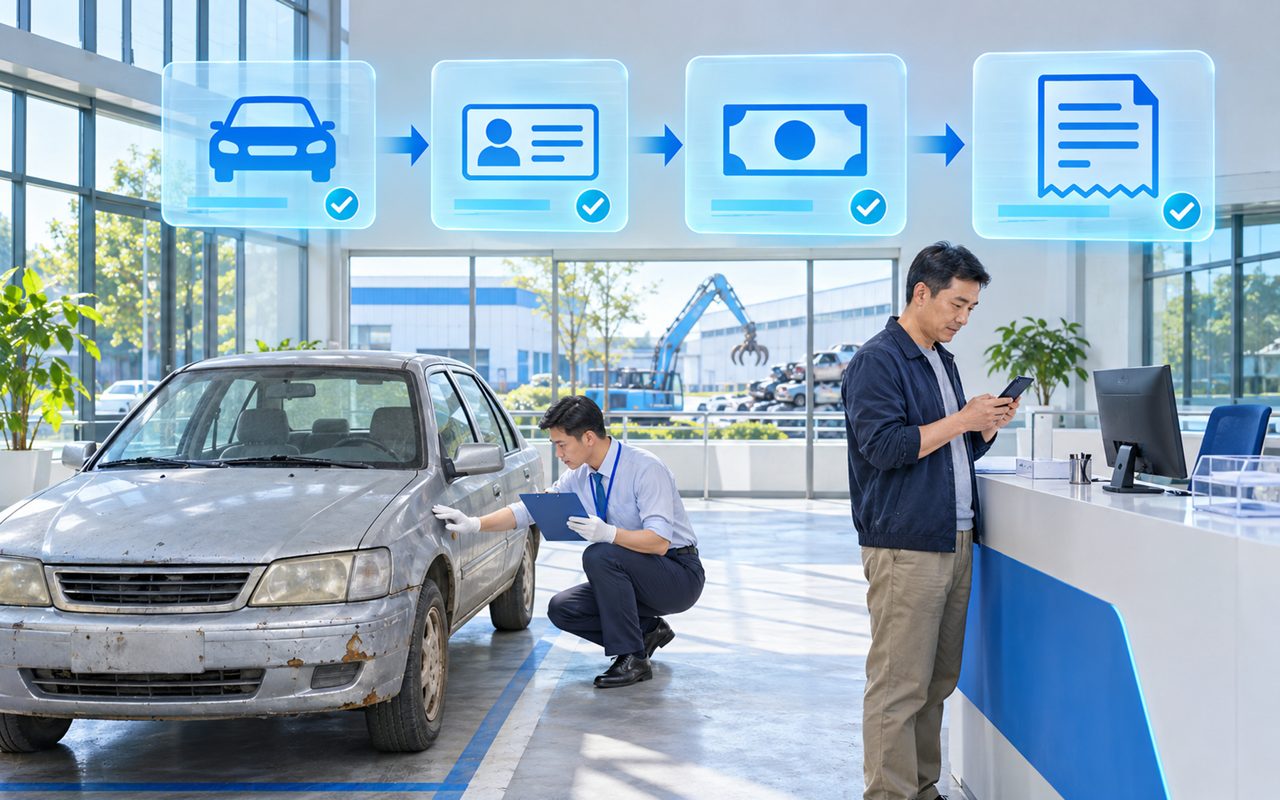
▍Step one: confirm eligibility, apply for activation with the qualification recognition certificate
Whether reverse invoicing is possible depends first on enterprise qualifications. According to Announcement No. 5 of 2024, if a recycling enterprise has any one of the three qualifications—the hazardous waste operation permit, the renewable resource recycling operator registration, or the end-of-life motor vehicle recycling and dismantling enterprise qualification recognition certificate—it may apply to the competent tax authority. For end-of-life vehicle recycling enterprises, applying with the end-of-life motor vehicle recycling and dismantling enterprise qualification recognition certificate is sufficient; there is no need to separately register as a renewable resource recycling operator.
When applying, generally submit the reverse invoicing application form and the qualification certificate, and activation occurs after confirmation by the competent tax authority. If the enterprise chooses to handle three-flow integrated reverse invoicing through a payment platform or bank holding the Leqi joint-use qualification, it also needs to open an account on the corresponding platform; the platform sends a user unit invitation to the enterprise via the electronic tax bureau, and the enterprise confirms before interface integration.
| " The ticket to reverse invoicing for scrapped vehicles is the qualification recognition certificate for end-of-life motor vehicle recycling and dismantling enterprises. |
▍Step two: vehicle receiving registration, verify vehicle, documents, and person together
When a vehicle owner delivers an end-of-life vehicle to a recycling enterprise, the first thing is registration. Registration requires verifying three things at the same time: the vehicle, i.e., whether information such as the vehicle identification number, license plate, and model matches the actual vehicle; the documents, i.e., whether documents such as the motor vehicle registration certificate and driving license are complete; and the person, i.e., whether the deliverer is the registered vehicle owner in person or a legally authorized agent.
End-of-life vehicles differ from scrap steel and waste paper in that each vehicle has a unique identity, and the vehicle information itself is the core evidence of the goods flow. Kailing Technology's five-flow integrated tax compliance solution photographs the vehicle and documents at the vehicle receiving stage, automatically recognizes the license plate, and links the registration information and vehicle photos to the same purchase order, with subsequent invoicing and payment all using the number of this order.
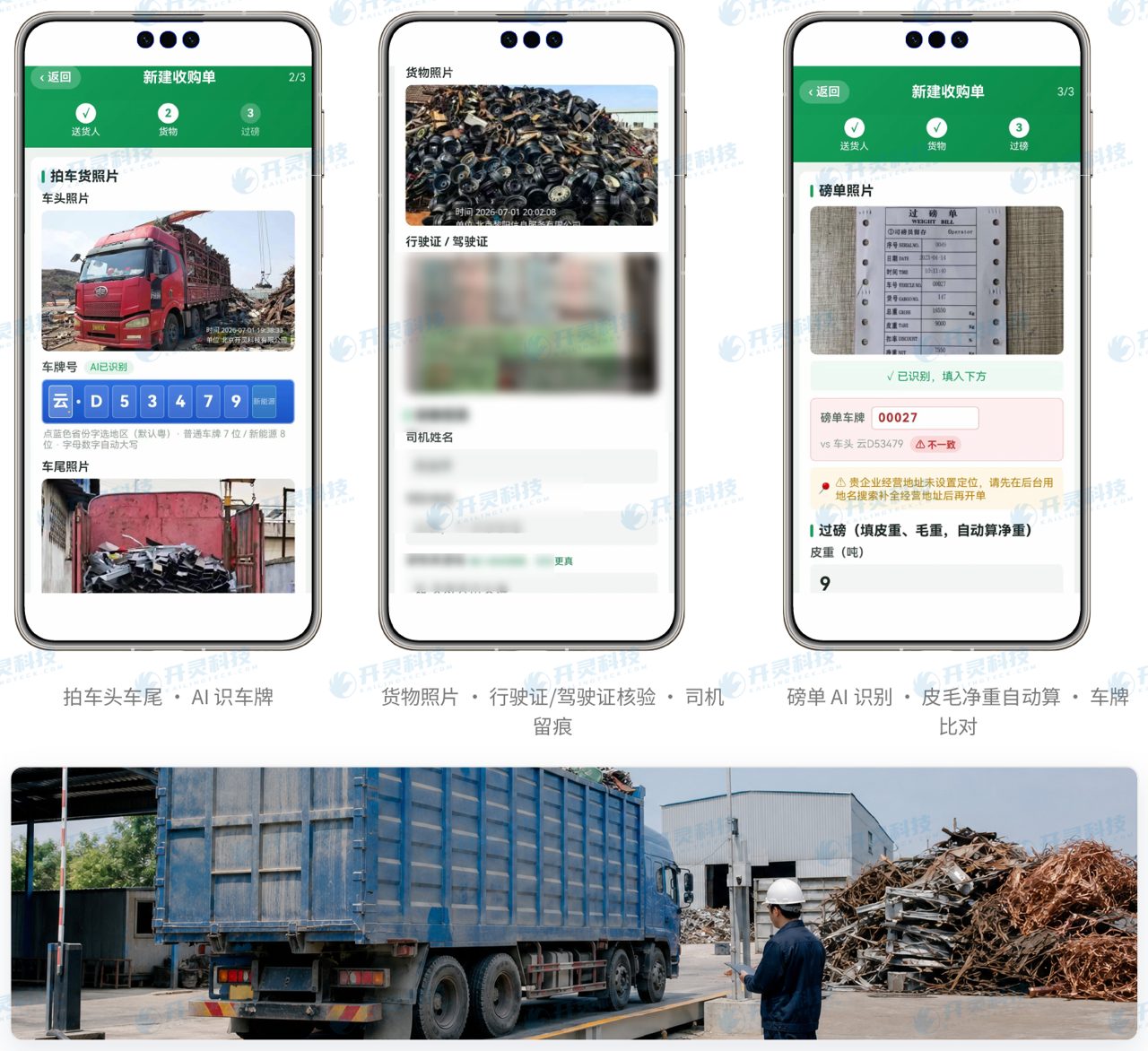
Kailing Technology on-site purchasing: license plate recognition and photo evidence retention (information desensitized)
▍Step three: verify the seller to avoid invoicing the wrong person
The seller in reverse invoicing is a natural person, and the seller's identity compliance must be confirmed before invoicing. According to Announcement No. 5 of 2024, enterprises may not issue reverse invoices in the natural person capacity of persons serving as legal representatives, directors, supervisors, senior executives, or other specific roles, and the sales amount ceiling for the same natural person within 12 consecutive months is 5 million yuan (excluding VAT). The unit price of end-of-life vehicles is limited, so quota issues are relatively rare, but situations such as false identity and vehicle delivery on behalf of others do occur.
Kailing Technology's solution completes ID card recognition, liveness detection, and facial comparison during file creation, while also performing employment reverse lookup, quota verification, and blacklist comparison; if the vehicle owner is delivering a vehicle for the first time, they scan a code to create a file once, which can be reused thereafter. For delivery on behalf of others, the system requires registration of the entrusted relationship, and the payment recipient remains the vehicle owner themselves.
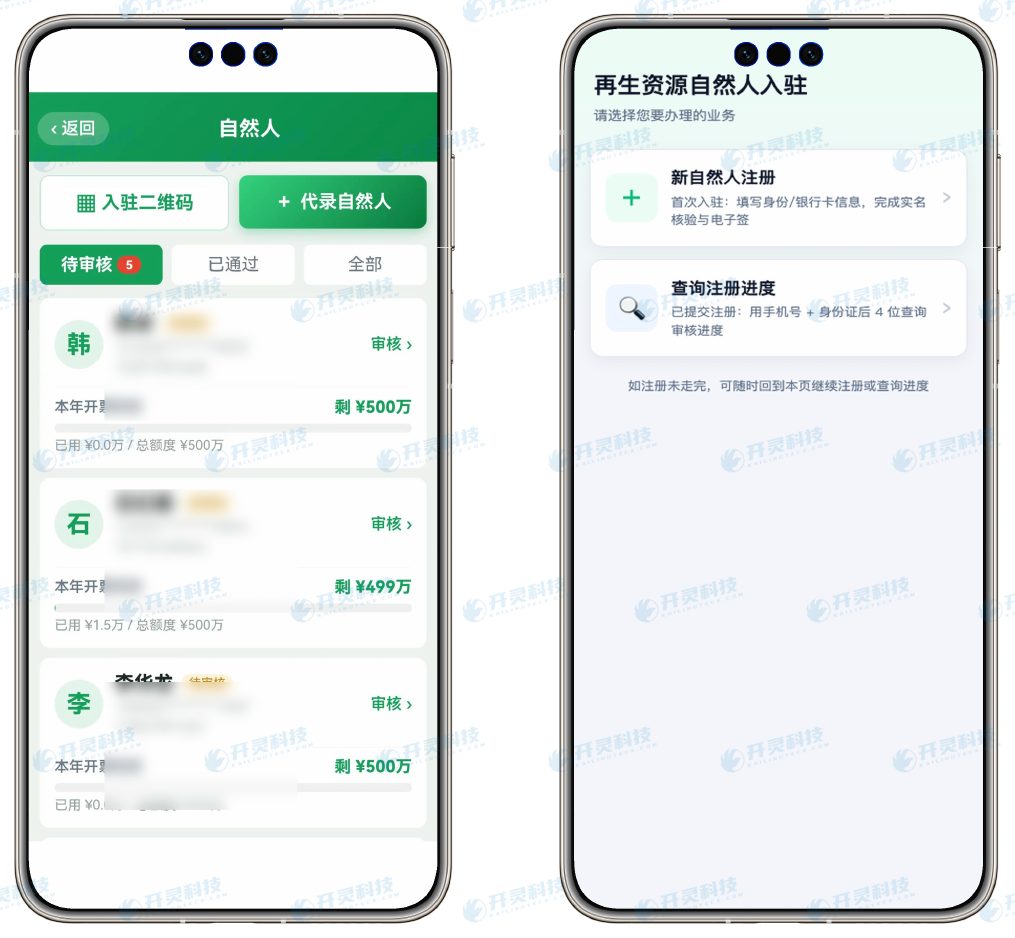
Kailing Technology natural person file: real-name and quota verification (information desensitized)
▍Step four: settlement payment and invoicing completed in one step
After the recycling procedures are completed and the purchase price is confirmed, settlement begins. Kailing Technology's solution generates a settlement statement based on the purchase order, and the settlement amount cannot be modified arbitrarily once confirmed; payment is settled per person, paid to the vehicle owner's own bank account via bank-enterprise direct connection or an already integrated channel, and a reverse invoice is issued at the same time as successful payment; the system calculates VAT and surcharges according to regulations and handles matters related to individual income tax, with invoice PDF, OFD, and XML layout files automatically retained.
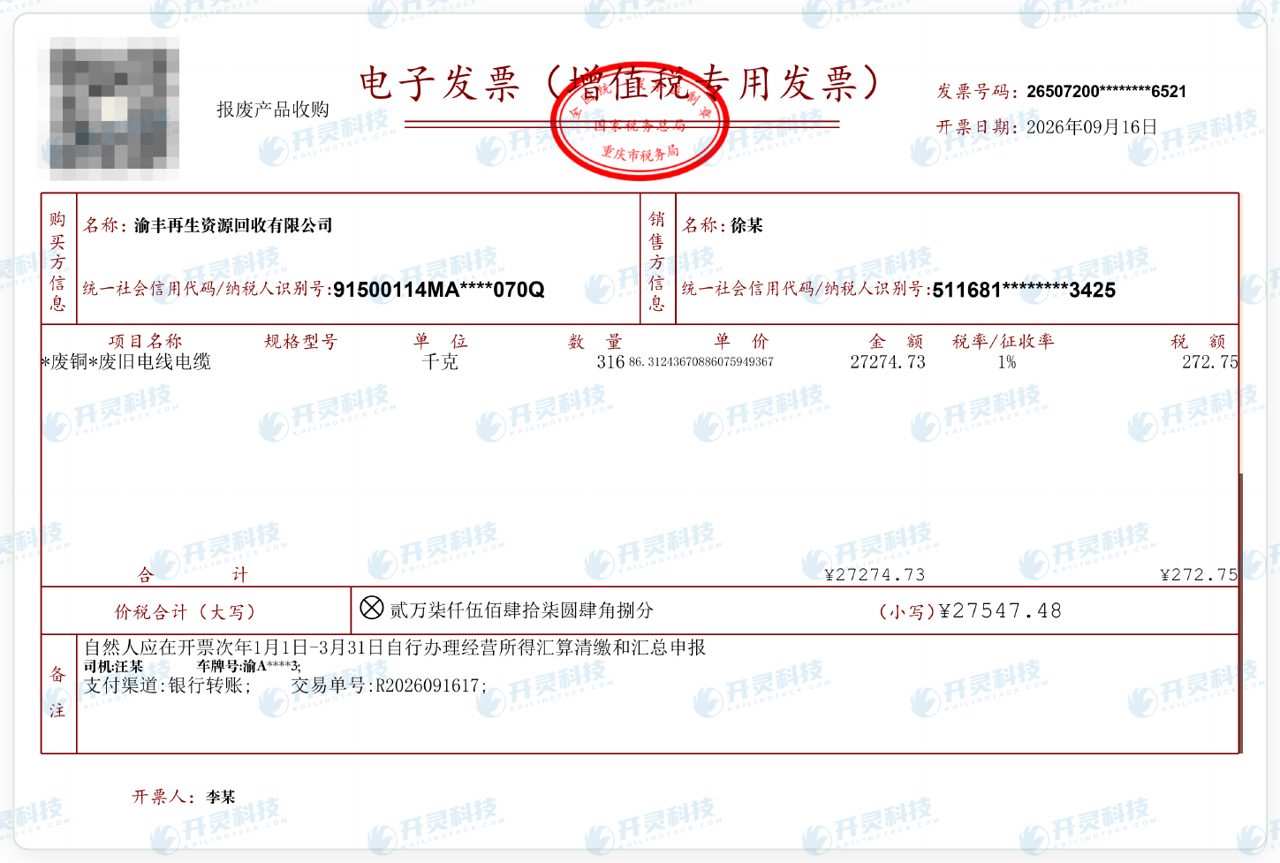
Kailing Technology reverse invoice example: seller is a natural person (information desensitized)
Synchronizing payment and invoicing means the fund flow and invoice flow are naturally consistent. In the past, many scrapped vehicle recycling enterprises paid first and then centrally supplemented invoices at the end of the month, lacking a correspondence between payment records and invoices and requiring case-by-case explanation during verification; this step is precisely to avoid such situations.
▍Step five: five-flow archiving, one-vehicle-one-file traceability
The complete evidence for a scrapped vehicle can be organized according to five flows: the natural person identity flow, i.e., the vehicle owner's identity and verification records; the contract flow, i.e., the recycling agreement or purchase confirmation; the goods flow, i.e., vehicle photos, documents, registration information, and subsequent dismantling and warehousing records; the fund flow, i.e., payment receipts; and the invoice flow, i.e., the reverse invoice layout files. Kailing Technology's tax compliance solution integrating five flows links the five flows under the same business order number to form a one-vehicle-one-file archive, so any missing flow is visible at a glance, and the entire evidence set can be exported with one click.
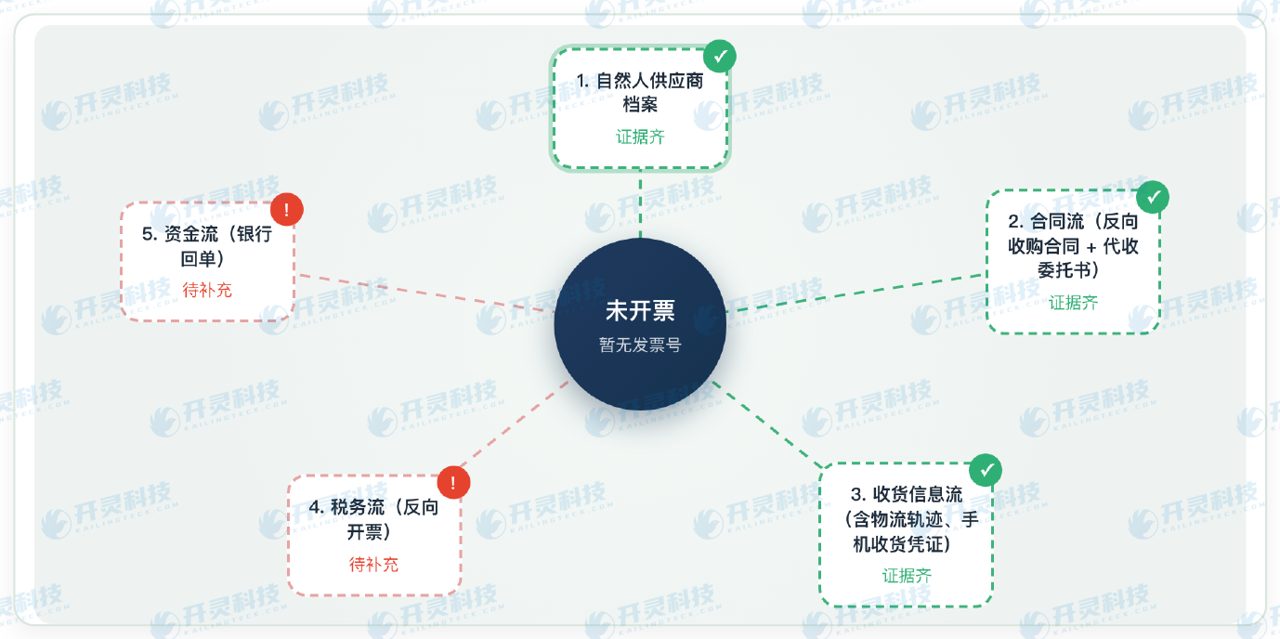
Kailing Technology five-flow star-chain diagram: missing evidence flows visible at a glance (information desensitized)
The table below summarizes the evidence that should be retained at each step of the entire reverse invoicing process for scrapped vehicles.
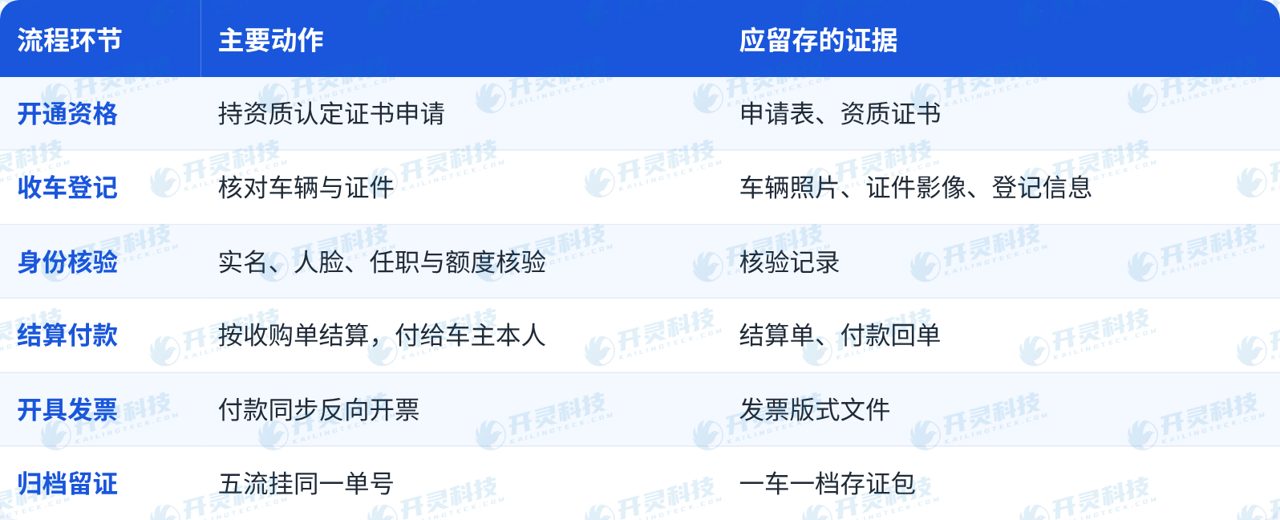
End-of-life vehicle reverse invoicing process and evidence retention checklist
▍Three common bottlenecks: think ahead about how to handle them
First, inconsistency between vehicle owner and payee. If the vehicle owner entrusts a relative to deliver the vehicle and requests payment to the relative's account, this will cause the fund flow and invoice flow to be inconsistent. It is recommended to insist on paying the vehicle owner in person; where special circumstances genuinely exist, retain authorization materials in accordance with enterprise rules and handle with caution.
Second, multiple owners for one vehicle or incomplete documents. If the registered vehicle owner differs from the actual deliverer, or documents are missing, the procedures should first be completed in accordance with the relevant regulations on end-of-life motor vehicle recycling before entering settlement and invoicing; it is not advisable to issue invoices first and supplement documents later just to save time.
Third, vehicle returns or price adjustments. If a vehicle return or purchase price adjustment occurs after invoicing, a red-letter invoice should be issued as required, and the original purchase order and original invoice should be associated in the system to maintain data correspondence.
| " Every reverse invoice for a scrapped vehicle should be traceable back to that vehicle. |
▍FAQ
Q: What qualifications does a scrapped vehicle recycling enterprise need to perform reverse invoicing?
A: Holding the qualification recognition certificate for end-of-life motor vehicle recycling and dismantling enterprises is sufficient to apply to the competent tax authority for reverse invoicing; no separate filing as a renewable resource recycling operator is required.
Q: Who is the seller in reverse invoicing for scrapped vehicles?
A: The seller is the natural person vehicle owner who delivers the scrapped vehicle, the buyer is the recycling enterprise, and the invoice is issued by the enterprise.
Q: Can the vehicle payment be transferred to an agent?
A: It is best not to. If the money is paid to the agent but the invoice is issued to the vehicle owner, the money and the invoice do not match, which is difficult to explain during verification. It is recommended to pay the vehicle owner directly.
Q: What evidence needs to be retained for reverse invoicing of scrapped vehicles?
A: It is recommended to retain the vehicle owner's identity verification records, recycling agreement, vehicle photos and document images, settlement statement, payment receipts, and invoice layout files. Kailing Technology's solution files these into a one-vehicle-one-file archive.
If you want to smooth out the process and keep complete evidence for end-of-life vehicle recycling, learn about Kailing Technology's five-flow integrated tax compliance solution: https://www.kailingteck.com/fxzy/ .
As a national high-tech enterprise, Kailing Technology focuses on the digital and intelligent transformation of enterprise business-finance-tax and operations management, providing software products, system integration, implementation and delivery, and operational services for various government agencies, institutions, group enterprises, and SMEs.
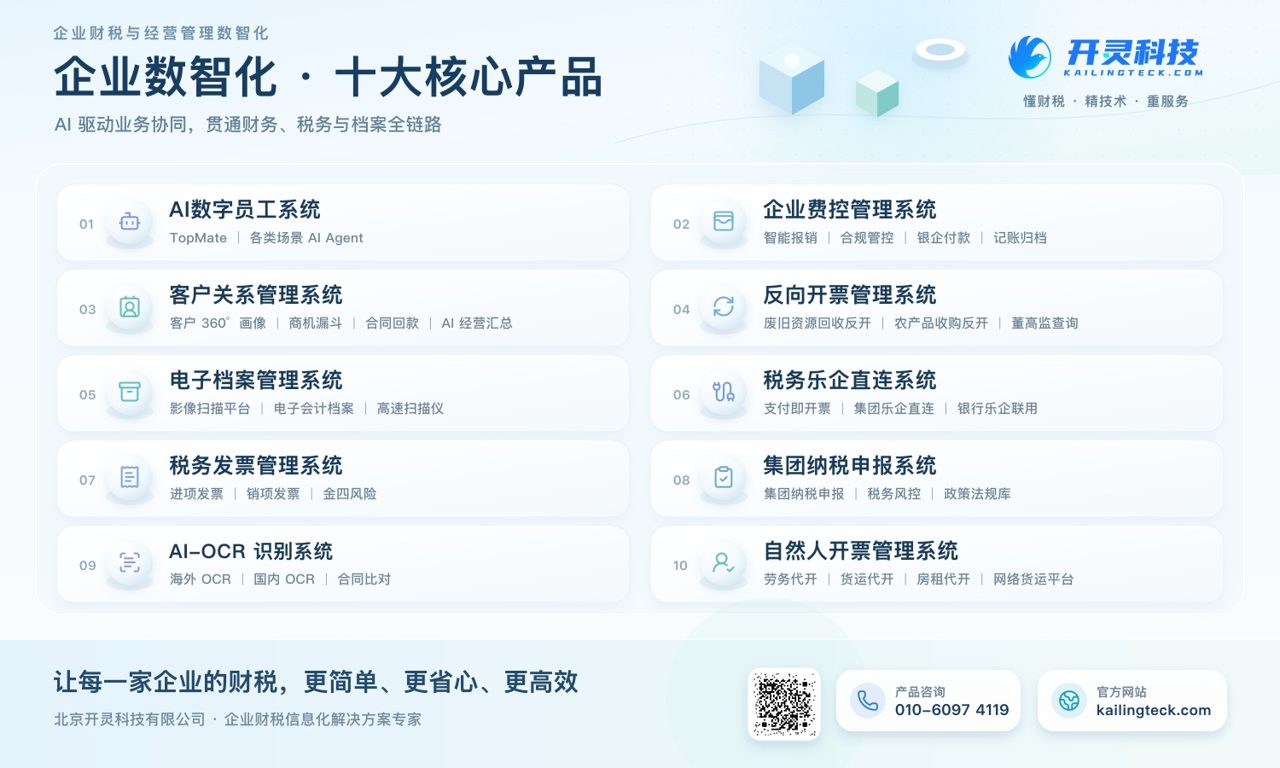
The company has now formed ten core product lines, including: AI digital employee system, enterprise expense control management system, customer relationship management system, reverse invoicing management system, invoice issuance for individuals management system, electronic archives management system, tax fully digitalized e-invoice Leqi system, tax invoice management system, group tax filing system, and AI OCR recognition system. It is committed to connecting enterprise business, finance, tax, funds, and archive data to help customers improve operational efficiency, business-finance-tax compliance capabilities, and digital management levels.
If you have any business-finance-tax digital transformation needs, welcome to contact us. Beijing Kailing Technology will serve you wholeheartedly.
Keywords: End-of-life vehicle reverse invoicing process, end-of-life motor vehicle reverse invoicing, how to issue reverse invoices for end-of-life vehicles, end-of-life motor vehicle recycling and dismantling, resource recycling reverse invoicing, Kailing Technology five-flow integrated tax compliance solution, five-flow integration
As a comprehensive business-finance-tax digitalization solution service provider, Kailing Technology provides business-finance-tax management digital transformation products and operational services for various government agencies, institutions, and large, medium, and small enterprises. The product line includes: solutions for sales contract management system, procurement contract management system, fully digitalized Leqi interface project, automatic output invoicing system, reverse invoicing system, invoice issuance for individuals system, employee expense control and reimbursement system, input VAT invoice management system, supply chain collaborative reconciliation system, image AI OCR recognition system, automatic financial bookkeeping system, electronic accounting archives system, etc., comprehensively driving the digitalization process across various fields.
Consultation Hotline: 18513895936 / 010-60974119 Location: Beijing