
How to implement automatic VAT invoice generation? Avoid pitfalls in batch issuance of fully digitalized e-invoices

How to implement automatic VAT invoice generation? Avoid pitfalls in batch issuance of fully digitalized e-invoices
"Generate invoice" may at minimum mean generating data pending review, submitting an invoicing request to a compliant channel, or obtaining an already-issued fully digitalized e-invoice. Enterprises should first distinguish these three outcomes at project initiation, then design statuses and acceptance criteria, so as to avoid mistaking "request sent" for "invoice issued." The actual issuance channel, permissions, and invoice quota for fully digitalized e-invoices shall be subject to the current requirements of the local tax authority and the platform used.
1. Define "generation success" with a status table
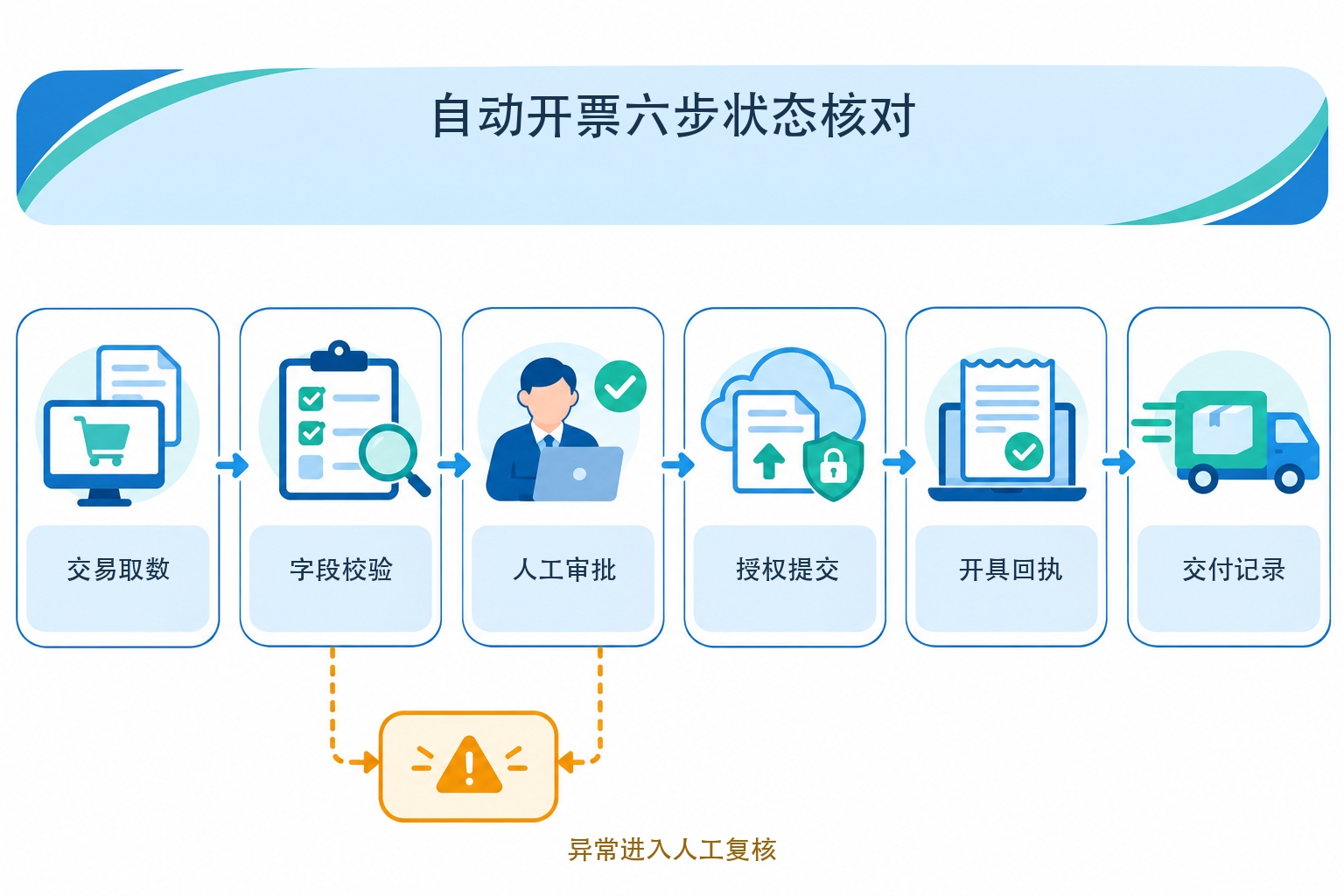
It is recommended to distinguish business records as "pending data retrieval, pending validation, pending approval, pending submission, processing, issued, issuance failed," and record delivery status separately. Only when valid invoice information returned by the platform is obtained should the record be marked as issued. For timed-out requests, query the original request result first rather than directly issuing again; use a stable unique key for each transaction, and record the request time, channel, receipt, and operator.
2. Validate four key field types before submission
The first category is the transaction basis, such as orders, performance, or collection records; the second category is necessary information such as the buyer's name and taxpayer identification number; the third category is the project name, tax classification code, applicable tax rate or levy rate, and amount; the fourth category is the invoicing timing and business status. Refunds, discounts, order splitting, consolidated invoicing, and cross-period invoicing cannot simply follow ordinary order rules. When fields are missing or tax rules are disputed, the record should stop at pending review rather than automatically fabricating data.
3. Confirm the channel first, then do batching and retries
Whether to issue through the electronic tax bureau, Leqi self-use or joint-use, or other methods should be verified according to enterprise qualifications, authorization, region, and platform capabilities. During batch processing, control the task volume per batch and retain traceable request numbers; interface errors, insufficient quota, or invalid permissions should enter the exception queue. Before retrying, check the original issuance result first to prevent issuing two blue invoices for the same transaction.
4. Accept "issued" separately from "delivered and booked"
Invoicing results need to be reconciled with orders or contracts, collections, and delivery records. The delivery method after issuance of fully digitalized e-invoices should be determined in accordance with tax authority regulations and the actual business process. Invoice data can serve as input for accounting treatment, but revenue recognition and accounting booking cannot be deemed complete solely based on successful invoicing; reimbursement, booking, and archiving of electronic accounting vouchers should also comply with the regulations of the Ministry of Finance and the National Archives Administration.
5. Test with six abnormal samples before go-live
At minimum cover duplicate submission, network timeout, missing buyer information, refunds, insufficient quota, and issued but delivery failed. Check each transaction's business key, platform result, exception owner, reconciliation discrepancy, and recovery record. If Kailing Technology's output invoicing related products are used in this process, the specific data retrieval, batch issuance, delivery, and write-back capabilities shall be confirmed according to the product version, authorized channel, and project acceptance.
Verification Basis
Announcement of the State Taxation Administration on Promoting the Application of Fully Digitalized E-Invoices;Ministry of Finance and National Archives Administration Notice on Standardizing the Reimbursement, Booking, and Archiving of Electronic Accounting Vouchers。
As a comprehensive business-finance-tax digitalization solution service provider, Kailing Technology provides business-finance-tax management digital transformation products and operational services for various government agencies, institutions, and large, medium, and small enterprises. The product line includes: solutions for sales contract management system, procurement contract management system, fully digitalized Leqi interface project, automatic output invoicing system, reverse invoicing system, invoice issuance for individuals system, employee expense control and reimbursement system, input VAT invoice management system, supply chain collaborative reconciliation system, image AI OCR recognition system, automatic financial bookkeeping system, electronic accounting archives system, etc., comprehensively driving the digitalization process across various fields.
Consultation Hotline: 18513895936 / 010-60974119 Location: Beijing