
For reverse invoicing of waste paper, are there risks for individual sellers? Kailing Technology: a five-flows-in-one tax compliance solution
When waste paper packing stations promote reverse invoicing, they often get stuck on the individual seller side: the elderly man delivering cardboard boxes on a tricycle, the couple collecting recyclables around residential compounds—at the first mention of facial recognition and invoicing, their first reaction is "will this make me pay tax" and "will something go wrong." For reverse invoicing of waste paper, are there really risks for individual sellers? Objectively speaking, the risk is not in reverse invoicing itself, but in whether they understand their tax obligations, whether their identity information is impersonated by others, and whether sales exceed the cap. This article explains these situations one by one from the perspective of individual sellers; at the same time, from the perspective of packing stations, it explains clearly how to explain it to sellers and how to keep risks at bay with Kailing Technology's five-flows-in-one tax compliance solution.
▍First, to be clear: what reverse invoicing brings to individuals
Before reverse invoicing, when individuals sold waste paper to packing stations, settlement was mostly in cash or by transfer with no invoice; packing stations could not obtain input VAT and had to bear the tax burden themselves or use non-compliant channels to "find invoices." After the implementation of Announcement No. 5 of 2024 of the State Taxation Administration, qualified packing stations can issue invoices with themselves as the buyer and the individual as the seller, turning individual sellers' income from "unclear" into compliant income with records and taxes paid.
For individuals, reverse invoicing means two things: first, they need to bear taxes and fees as required, handled by the packing station at the time of invoicing; second, this income will remain in the tax system. Understanding these two points makes clear where the following risks come from and how to avoid them.
▍Risk 1: Not knowing what taxes you owe
The taxes and fees borne by the individual seller include VAT, surcharges, and individual income tax on business income. VAT is calculated at a 3% levy rate reduced to 1%; if the individual's cumulative monthly sales through reverse invoicing (including across multiple packing stations) do not exceed 100,000 yuan, they may enjoy exemption under the policy Q&A; surcharges are levied at half the actual VAT paid; individual income tax is prepaid at 0.5% of sales, and for reverse invoicing under the three-flows-in-one model, the portion of annual sales within 600,000 yuan is reduced to 0.25%.
These taxes and fees are calculated and filed by the packing station on the individual's behalf; individuals do not need to visit the tax bureau themselves. Packing stations should explain at purchase which taxes were deducted and how much, itemized on the settlement statement, to avoid sellers mistakenly thinking their payment was "docked."
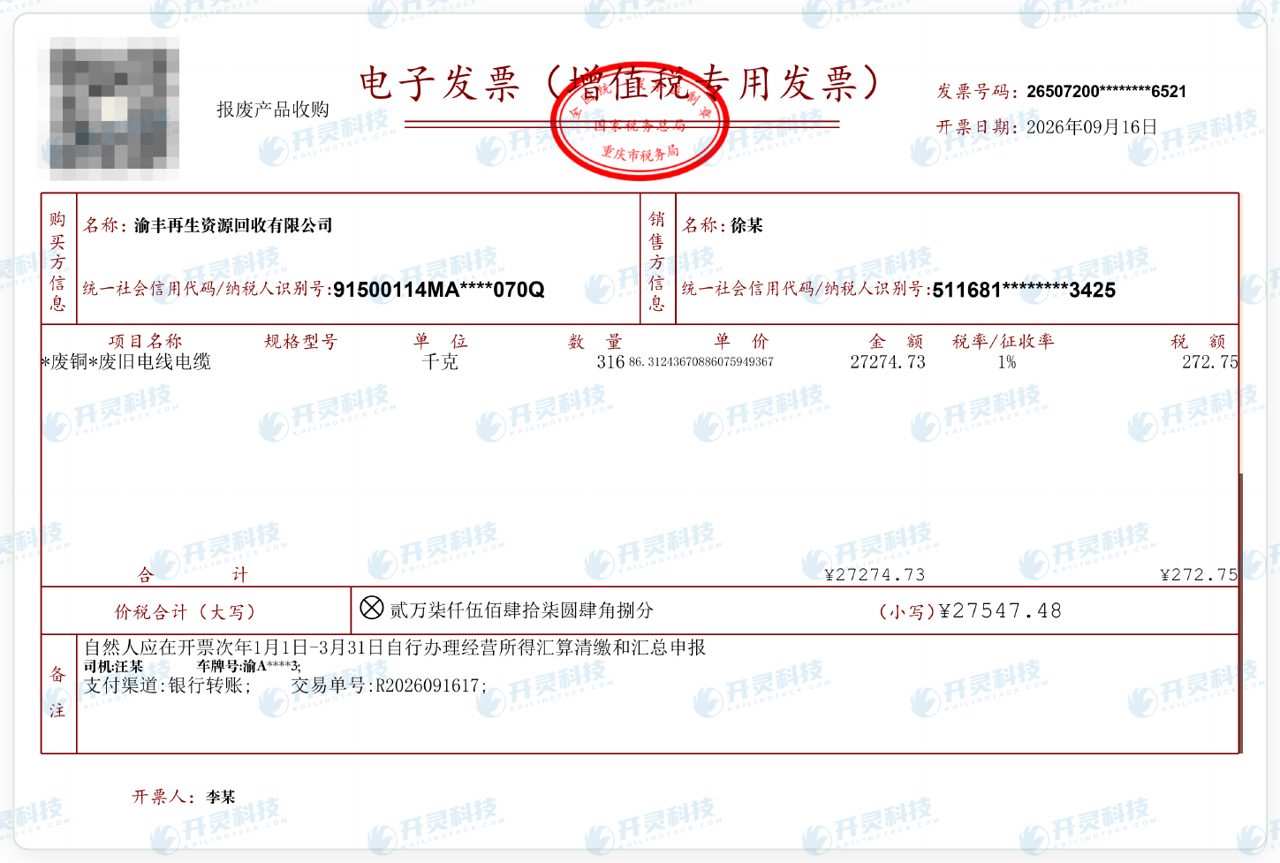
Kailing Technology reverse invoice: seller is the individual seller (information desensitized)
▍Risk 2: Forgetting the annual reconciliation of business income
This is the point most easily overlooked by individual sellers. The individual income tax prepaid at reverse invoicing is only a prepayment; according to Announcement No. 5 of 2024, sellers should complete the annual reconciliation of business income themselves with the competent tax authority at the place of business operation before March 31 of the year following reverse invoicing, and the packing station should provide them with information on reverse invoicing and taxes paid.
If an individual fails to complete the reconciliation as required, the tax authority may recover the tax according to law and require the packing station to stop reverse invoicing to that person. For long-term sellers, this means they may no longer be able to sell through reverse invoicing. Packing stations can send a unified reminder at the start of each year and organize the full-year invoicing and tax payment information for sellers.
| "Prepayment is not the end; don't forget the annual reconciliation before March 31 of the following year." |
▍Risk 3: ID card used by someone else to issue invoices
In the waste paper recycling industry, some purchasers take the easy route and use acquaintances' ID cards to issue invoices for multiple small sellers; some sellers also lend their ID cards to others. Impersonated persons unknowingly generate sales and tax records, occupy their own 5 million yuan quota, and may be required to complete the annual reconciliation.
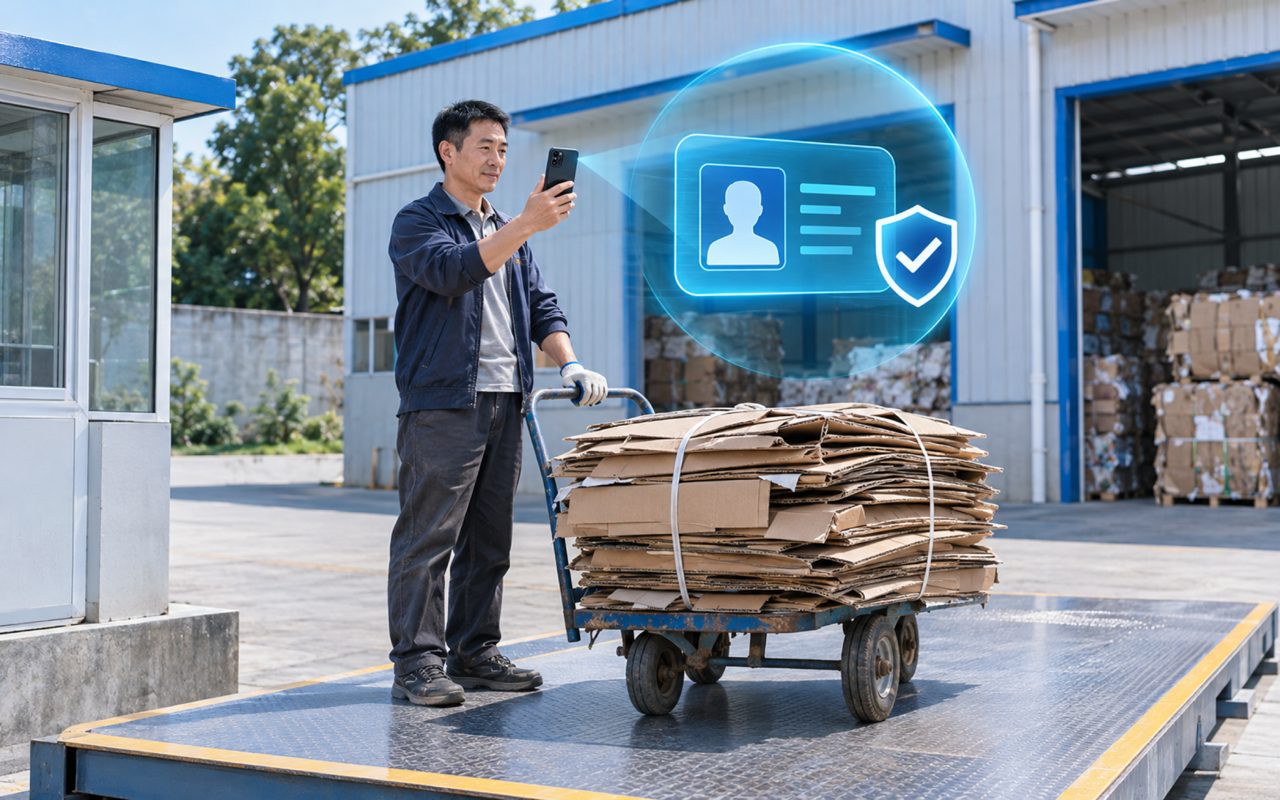
The key to prevention is confirming identity before invoicing. Kailing Technology's five-flows-in-one tax compliance solution requires sellers to scan the code and register at first delivery, with ID card recognition, liveness detection, and facial comparison to confirm identity; payment is made only to the person's own bank card; and the person must scan the code to confirm at each delivery. If identity impersonation is discovered, the individual can report it to the competent tax authority and apply for verification and handling.
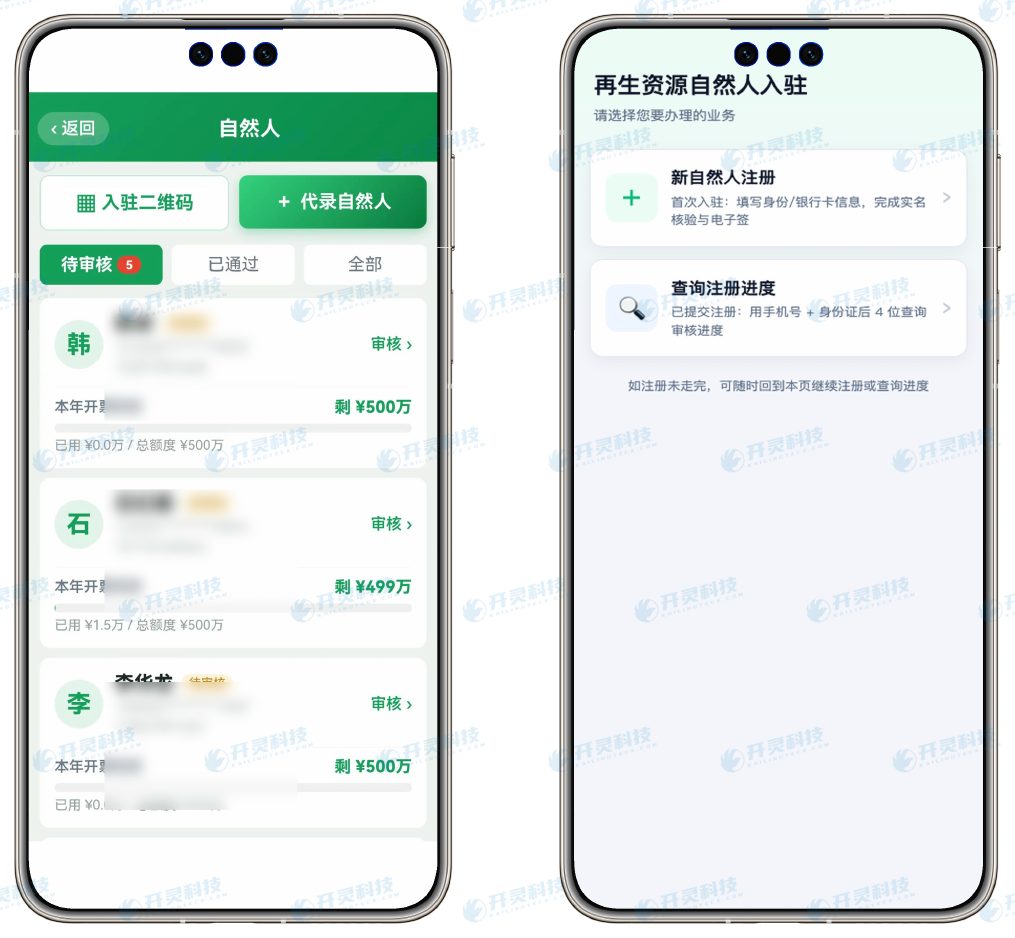
Kailing Technology registration: real-name and facial comparison to confirm identity (information desensitized)
▍Risk 4: Sales exceeding 5 million yuan
According to Announcement No. 5 of 2024, the amount a person sells through reverse invoicing in any 12 consecutive months is capped at 5 million yuan (excluding VAT); beyond that, the packing station cannot continue to issue reverse invoices to that person and should advise long-term sellers to register a business entity such as an individual industrial and commercial household and issue invoices themselves.
The unit price of waste paper is not high, but some large long-term suppliers may approach the cap over a year. Kailing Technology's solution accumulates sales on a rolling 12-month basis per person and gives advance reminders when approaching the cap, so packing stations can communicate with suppliers in advance to complete registration and avoid temporary suspension of invoicing affecting collection. In addition, persons serving as legal representatives, directors, supervisors, or senior executives of enterprises cannot use reverse invoicing as natural persons; the system automatically cross-checks at registration.
▍How packing stations can keep risks at bay
These risks for individual sellers ultimately fall on the packing station: invoices with unverified identities, invoices exceeding the cap, and invoices paid to third parties all make the packing station's input VAT untenable. Kailing Technology's five-flows-in-one tax compliance solution links the natural person's identity, purchase contract, goods trajectory, funds, and invoice for each waste paper purchase under the same business order number, and issues alerts for five scenarios: same card, high frequency, abnormal tonnage, price deviation, and different location.
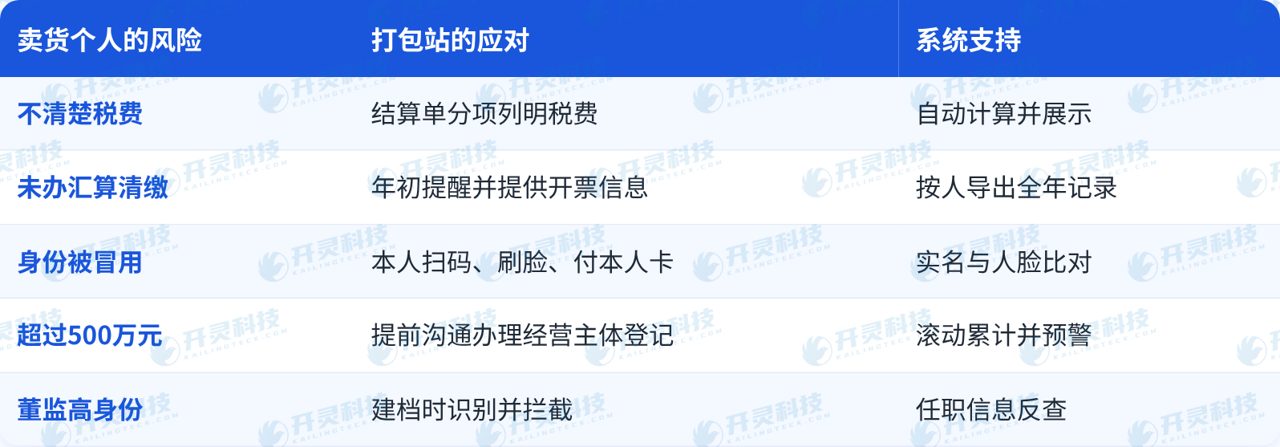
Risks for individual sellers and how packing stations respond
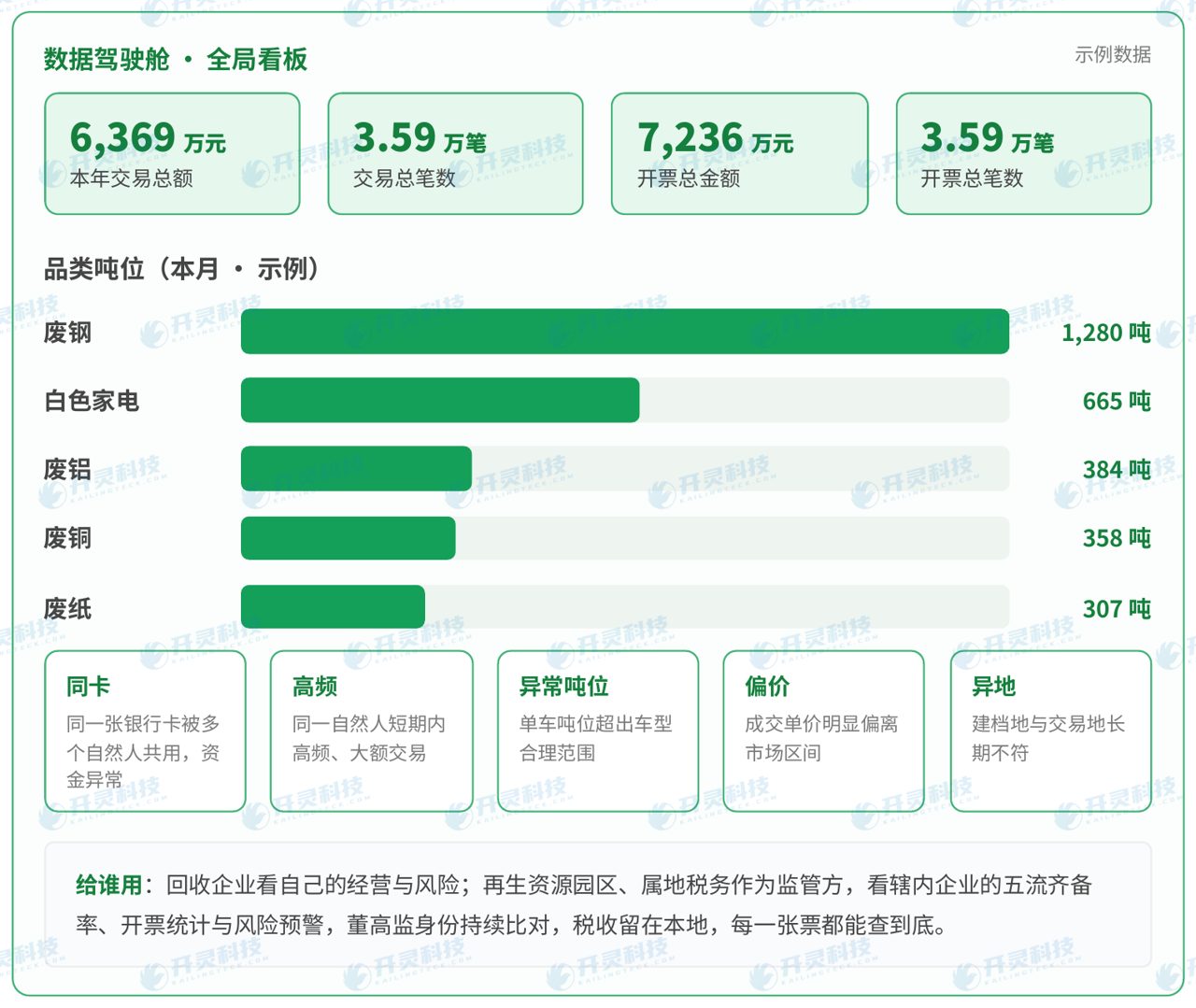
Kailing Technology risk alerts: five types of anomalies such as same card and high frequency (sample data)
▍How to explain it to sellers: one notice sheet is enough
Much of sellers' worry comes from not understanding. Packing stations can prepare a simple notice sheet and give it to sellers at first registration, clearly stating four things: first, the packing station will issue reverse invoices for them and handle taxes and fees on their behalf; second, which taxes and fees will be deducted at each settlement, itemized on the settlement statement; third, they must complete the annual reconciliation of business income themselves before March 31 of the following year, and the packing station will provide full-year invoicing information; fourth, do not lend your ID card to others, and you must scan the code in person to confirm at delivery.
The notice sheet can be signed by the seller and scanned into their registration file. This fulfills the duty to inform and also leaves a basis for any later disputes.
▍FAQ
Q: For reverse invoicing of waste paper, does the individual seller need to pay tax?
A: Yes. The individual seller bears VAT, surcharges, and individual income tax on business income, which the packing station calculates and files on their behalf at the time of invoicing; those who qualify can enjoy exemption or reduction benefits.
Q: Does the individual seller need to file taxes themselves?
A: Day-to-day filing is handled by the packing station, but individual income tax is only prepaid; the individual must complete the annual reconciliation of business income themselves before March 31 of the year following invoicing.
Q: What if someone else uses my ID card to issue invoices?
A: You can report it to the competent tax authority and apply for verification and handling; the packing station should insist on the person scanning the code, facial recognition, and payment to the person's own bank card, to prevent impersonation at the source.
Q: What is the maximum a person can sell in a year?
A: The cumulative sales amount of reverse invoicing over any 12 consecutive months is capped at 5 million yuan (excluding VAT); once exceeded, the person must register a business entity and issue invoices themselves.
To make waste paper purchasing reassuring for sellers and worry-free for packing stations, welcome to learn about Kailing Technology's five-flows-in-one tax compliance solution: https://www.kailingteck.com/fxzy/ .
As a national high-tech enterprise, Kailing Technology focuses on the digital and intelligent transformation of enterprise business-finance-tax and operations management, providing software products, system integration, implementation and delivery, and operational services for various government agencies, institutions, group enterprises, and SMEs.
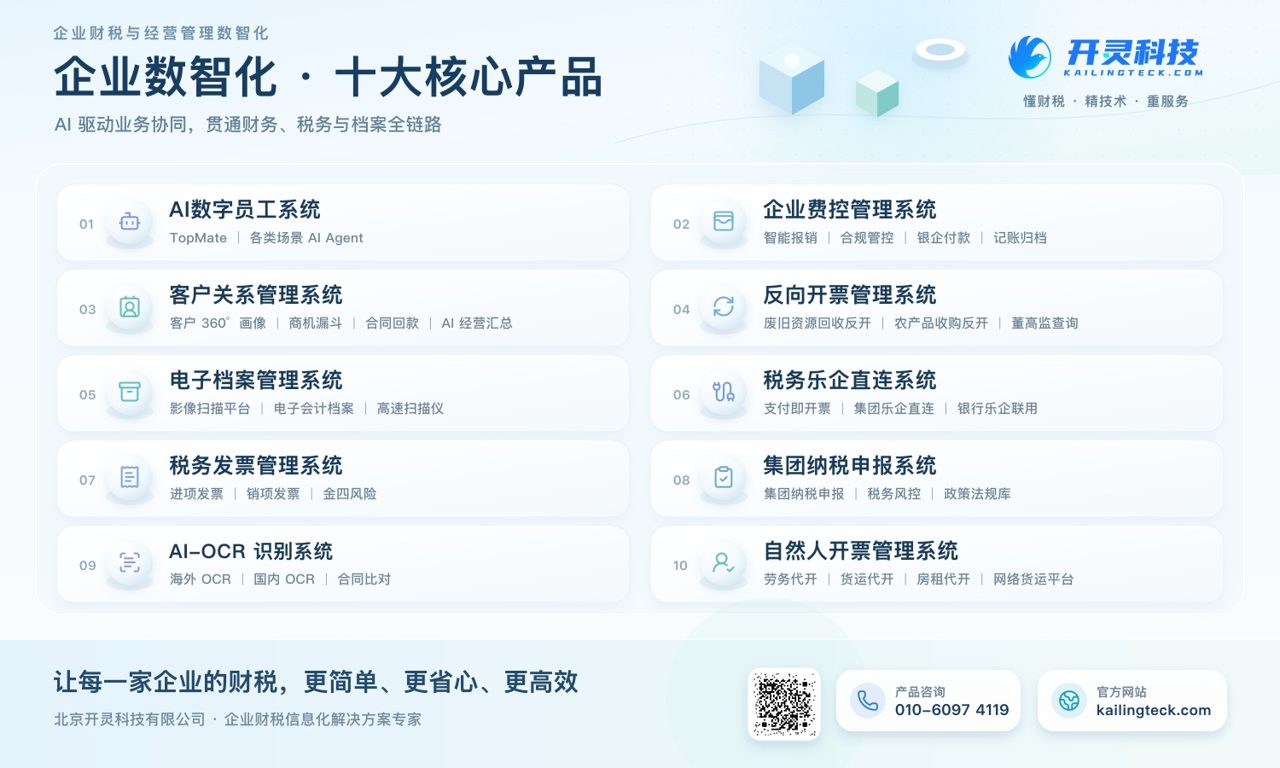
The company has now formed ten core product lines, including: AI digital employee system, enterprise expense control management system, customer relationship management system, reverse invoicing management system, invoice issuance for individuals management system, electronic archives management system, tax fully digitalized e-invoice Leqi system, tax invoice management system, group tax filing system, and AI OCR recognition system. It is committed to connecting enterprise business, finance, tax, funds, and archive data to help customers improve operational efficiency, business-finance-tax compliance capabilities, and digital management levels.
If you have any business-finance-tax digital transformation needs, welcome to contact us. Beijing Kailing Technology will serve you wholeheartedly.
Keywords: waste paper reverse invoicing individual seller risks, waste paper reverse invoicing natural person risks, waste paper reverse invoicing, reverse invoicing annual reconciliation, reverse invoicing 5 million, Kailing Technology five-flows-in-one tax compliance solution, resource recycling reverse invoicing
As a comprehensive business-finance-tax digitalization solution service provider, Kailing Technology provides business-finance-tax management digital transformation products and operational services for various government agencies, institutions, and large, medium, and small enterprises. The product line includes: solutions for sales contract management system, procurement contract management system, fully digitalized Leqi interface project, automatic output invoicing system, reverse invoicing system, invoice issuance for individuals system, employee expense control and reimbursement system, input VAT invoice management system, supply chain collaborative reconciliation system, image AI OCR recognition system, automatic financial bookkeeping system, electronic accounting archives system, etc., comprehensively driving the digitalization process across various fields.
Consultation Hotline: 18513895936 / 010-60974119 Location: Beijing