
Reverse invoicing for scrap aluminum: who issues to whom and how many points are paid? Kailing Technology Five-Flow-Integrated tax compliance solution
"For reverse invoicing of scrap aluminum, who issues to whom?" "How many points are paid for each invoice issued?" These two questions are almost the first two that every scrap aluminum recycling station owner asks when encountering reverse invoicing. First, the answer: reverse invoicing means the recycling enterprise, as the buyer, issues an invoice to the individual selling scrap aluminum; the invoice is issued by the enterprise and the tax is handled on behalf of the individual by the enterprise; under current policy, the taxes and fees borne by the individual selling goods consist of three parts: VAT, surcharges and individual income tax on business income, totaling around 1.3% to 1.6% in common cases, depending on monthly sales and whether invoicing is done through the three-flow-in-one method. This article explains one by one "who issues, to whom, how much is paid, and how it is paid," and explains how the Kailing Technology five-flow-in-one tax compliance solution makes every scrap aluminum reverse invoice verifiable.
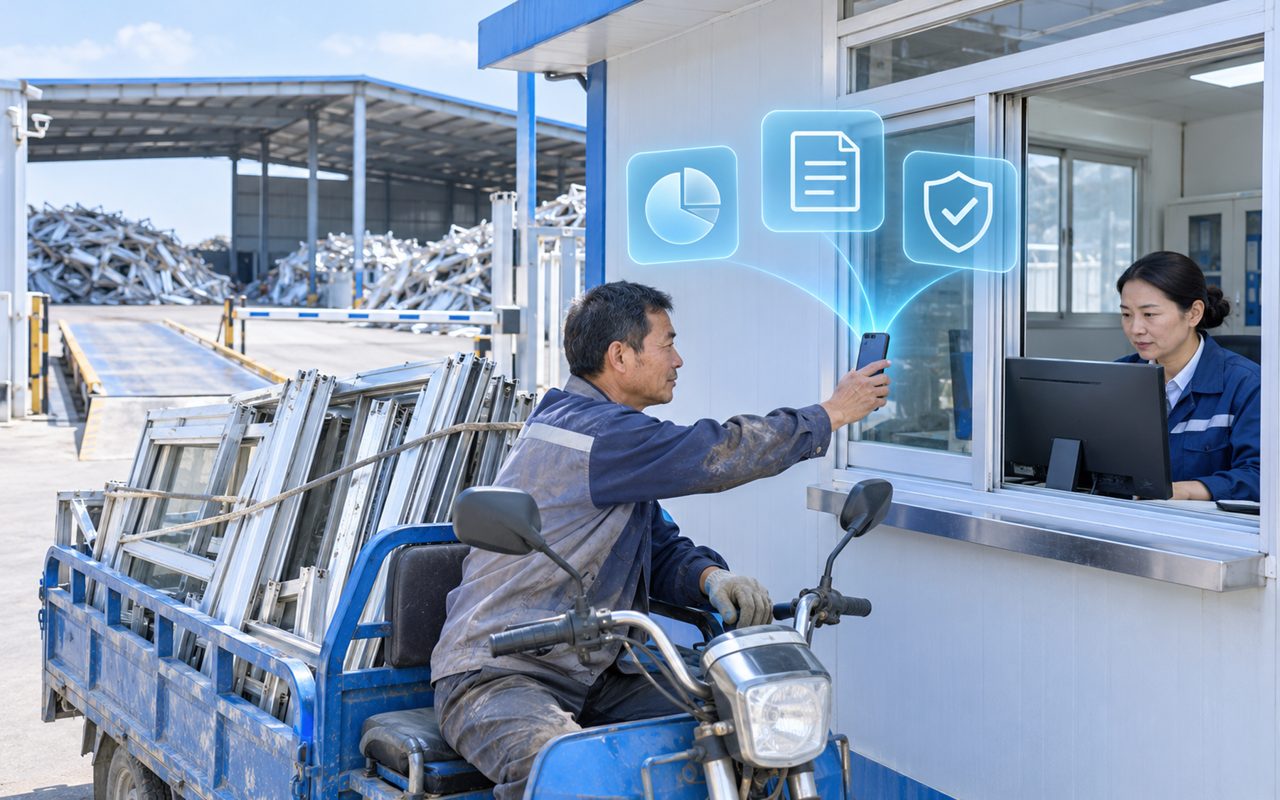
▍Who issues to whom: the enterprise issues the invoice, the individual is the seller
Reverse invoicing is called "reverse" because the invoicing direction is opposite to the usual one. Normally an invoice is issued by the seller to the buyer; in scrap aluminum recycling, the seller is an individual who brings door and window frames and profile scraps to sell and has no invoicing capability, so the buyer, that is, the recycling enterprise, issues the invoice in the system with itself as the buyer and the individual as the seller.
The basis is State Taxation Administration Announcement No. 5 of 2024. An enterprise able to issue invoices this way must hold one of the following: a hazardous waste business license, a renewable resource recycling operator filing, or a qualification certificate for end-of-life motor vehicle recycling and dismantling enterprises, and must apply to its competent tax authority to enable it. On the invoice face, the buyer is the recycling enterprise and the seller is the natural person; this invoice is the input voucher lawfully obtained by the enterprise.
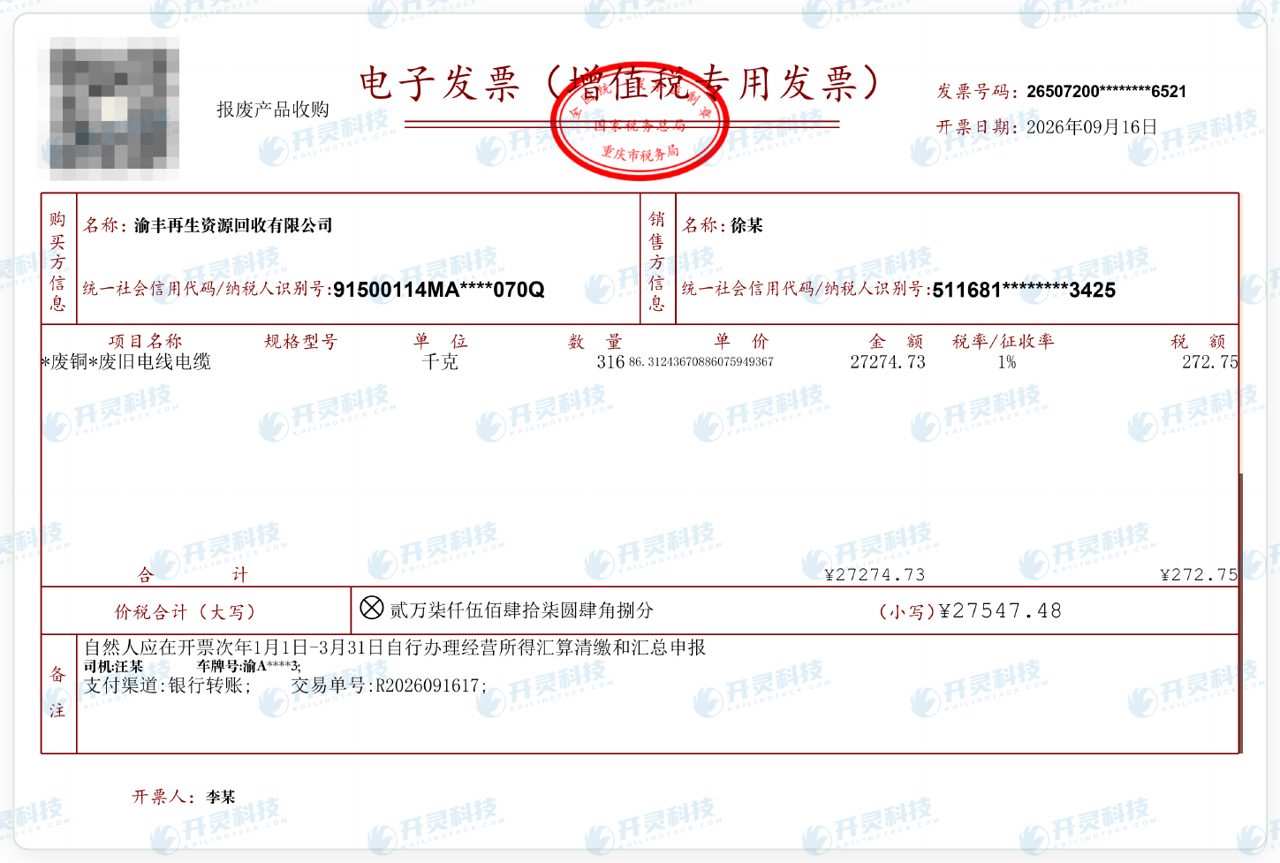
Kailing Technology reverse invoice: seller is a natural person (information has been desensitized)
▍How many points are paid: the three tax components are calculated separately
The taxes and fees that an individual selling scrap aluminum needs to bear are divided into three parts, all calculated and filed on their behalf by the recycling enterprise at the time of invoicing.
- VAT: Natural persons are treated as small-scale taxpayers, with the 3% levy rate reduced to 1%, a preference effective until December 31, 2027; according to the tax authority's policy Q&A, if the seller's cumulative sales amount obtained through reverse invoicing each month (including from multiple enterprises) does not exceed 100,000 yuan, exemption may apply.
- Surcharges: Urban maintenance and construction tax, education surcharge and local education surcharge are based on the VAT actually paid, and small-scale taxpayers are levied at half rate before December 31, 2027; where VAT is exempt, the surcharges are exempt accordingly.
- Individual income tax: Prepaid as business income, generally at 0.5% of sales amount; from July 1, 2026, for reverse invoicing through the three-flow integration, the portion of annual sales not exceeding 600,000 yuan is prepaid at a reduced rate of 0.25%.
Adding the three parts together, an estimate using urban construction tax as an example is shown in the table below. The table shows approximate ratios calculated on sales amount; actual results are subject to calculation by the tax system and local implementation practices.
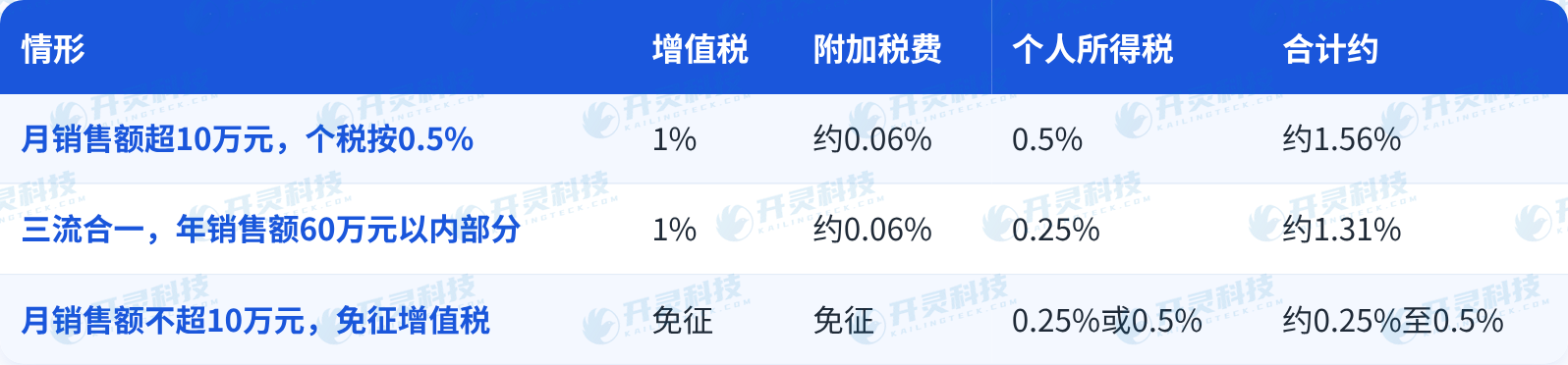
Estimate of taxes borne by individuals under reverse invoicing for scrap aluminum
It should be noted that individual income tax is prepaid, and the seller must complete the annual settlement of business income themselves before March 31 of the year following invoicing, with refunds for overpayment and additional payment for shortfall.
▍How the money is paid: enterprise handles on behalf, filing the following month
The taxes are calculated together by the recycling enterprise at the time of invoicing, and the enterprise handles, as required, the filing of VAT and surcharges and individual income tax on behalf of the seller, submitting the relevant report forms to the competent tax authority and paying within the filing period of the following month. If the enterprise fails to pay the taxes handled on behalf of others on time, its reverse invoicing qualification may be suspended and the taxes and late fees recovered.
Under the three-flow-in-one model of Leqi integrated use, when an enterprise pays an individual through a qualified payment platform or bank, the platform simultaneously calculates the tax, withholds and remits it, and issues the invoice, achieving invoicing upon payment and tax payment upon invoicing. The Kailing Technology five-flow-in-one tax compliance solution can connect to multiple such channels and also supports enterprises issuing invoices through the electronic tax bureau interface, to be chosen according to the enterprise's actual situation.
▍Correct invoicing is not enough: five-flow-in-one evidence retention
Having clarified who issues the invoice and how much is paid, scrap aluminum recycling enterprises must answer another question: can this invoice withstand scrutiny. Tax audits focus on whether there are real people, goods, and money behind the invoice. Kailing Technology's Five-Flow-Integrated tax compliance solution divides the evidence for a scrap aluminum purchase into five flows, retained around the same business order number.
- Natural person identity flow: The seller scans a QR code to file their profile, with ID card and bank card recognition, liveness detection and face comparison, along with a reverse check of director and senior executive positions, verification of the 5 million yuan limit and blacklist comparison.
- Contract flow: Purchase confirmation or agreement, recording product name, unit price, and settlement basis.
- Goods flow: On-site check-in, photos of the front and rear of the vehicle, weighbridge ticket recognition and license plate comparison, with grade photos attached to the purchase order.
- Fund flow: Payment is made to the person's own bank card that has been filed and verified, and the receipt is automatically written back.
- Invoice flow: A reverse invoice is issued simultaneously with payment, and PDF, OFD and XML format files are retained.
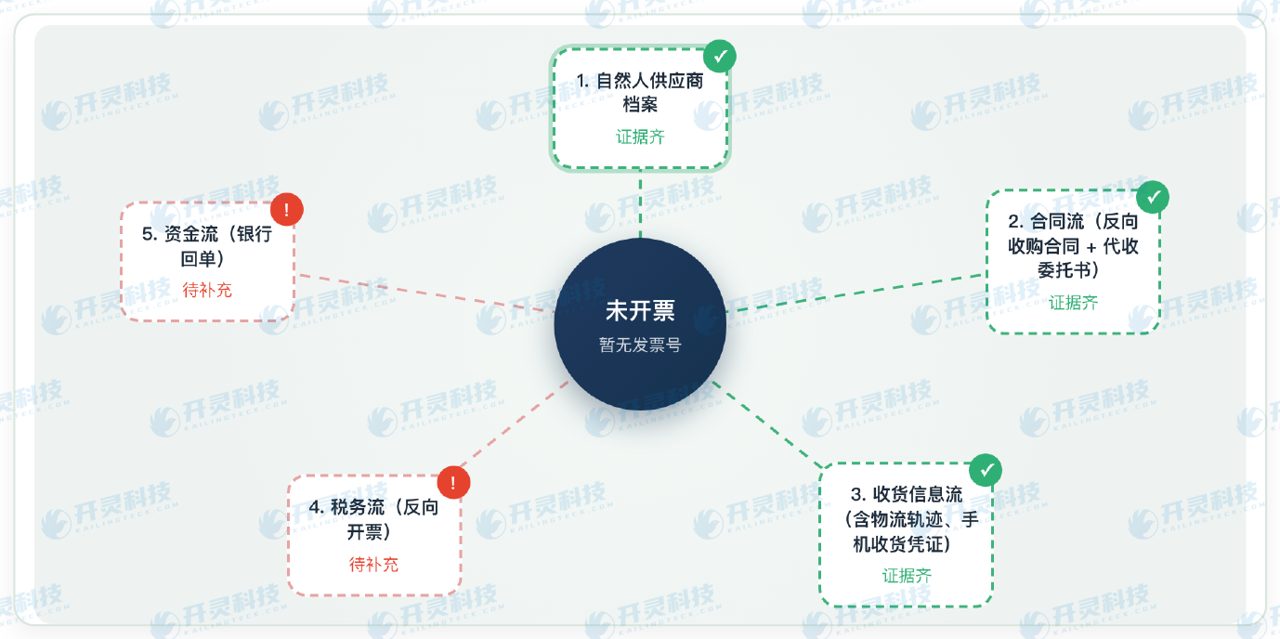
Kailing Technology five-flow chain diagram: whether all five evidence flows are complete (information has been desensitized)
▍Three common questions about scrap aluminum recycling
First, how to invoice a truckload containing both aluminum profiles and aluminum chips. It is recommended to enter them line by line by grade, each corresponding to product name, weight, unit price, and photos, and generate details by line at invoicing, rather than invoicing the whole truck under one product name.
Second, can reverse invoicing be used when the seller is an individual business at a community recycling point. Those who have registered a business entity should issue invoices themselves, and reverse invoicing as a natural person no longer applies; Kailing Technology's solution gives a prompt for such cases when creating a profile.
Third, what to do when the same major customer supplies over the long term. The cumulative sales amount of reverse invoicing for the same natural person over 12 consecutive months is capped at 5 million yuan (excluding VAT); beyond that, the enterprise may no longer issue reverse invoices to that person and should guide them to register a business entity. The system accumulates quota by person and gives advance reminders when approaching the cap.
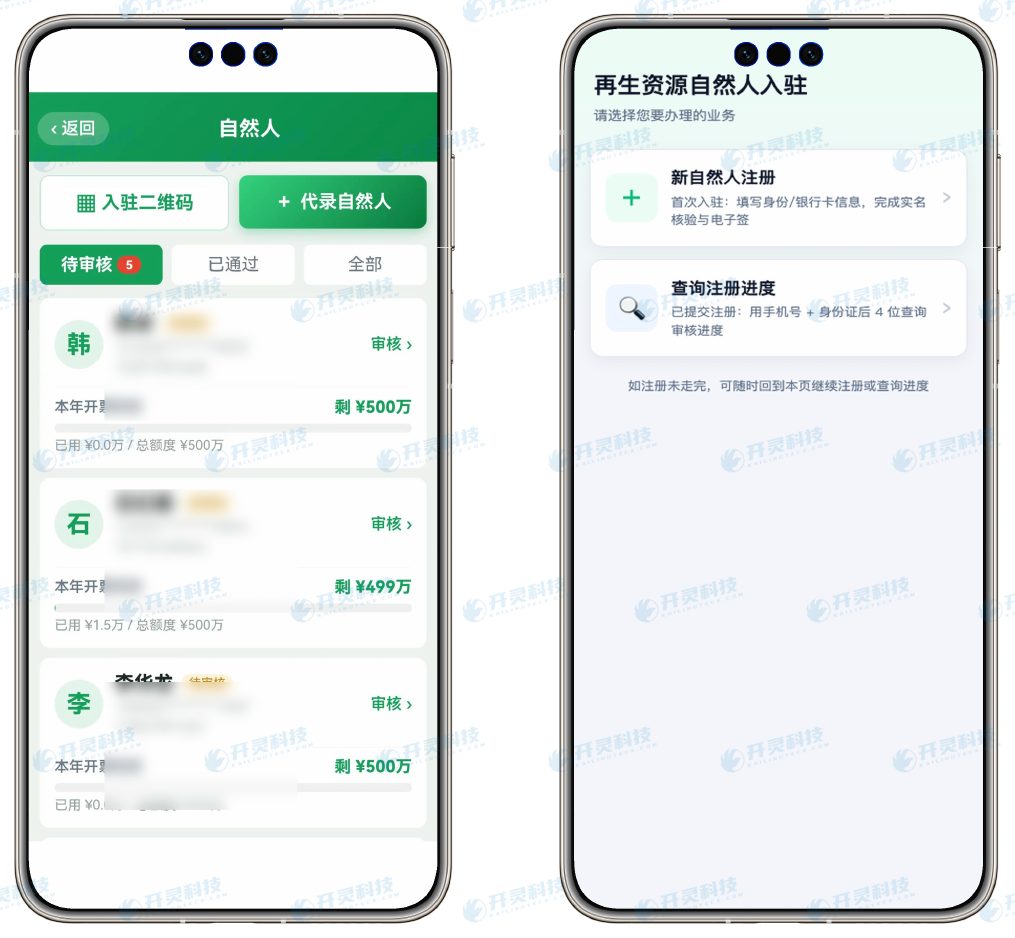
Kailing Technology natural person profile: cumulative quota by person (information has been desensitized)
| "Only when the tax points of reverse invoicing are calculated clearly and the five-flow evidence is fully retained is scrap aluminum purchasing truly compliant." |
▍A calculation tip for recycling station owners
Many recycling stations worry before implementing reverse invoicing that "sellers will stay away because they think the tax is too high." In fact, when no invoices were issued in the past, enterprises had no input, and the pressure of VAT and income tax would ultimately be reflected in the purchase price; after implementing reverse invoicing, enterprises obtain compliant input and can pass part of the saved costs on to the purchase price, offsetting the one-point-something-percent tax cost borne by sellers. It is recommended that recycling stations, before implementation, conduct a calculation using the purchase volume of the past three months, work out the cost change after the enterprise obtains input, and then discuss the purchase price adjustment plan with major suppliers.
When communicating, you can write the taxes borne by the seller, the way the enterprise handles filing on their behalf, and the timing of annual settlement into a simple explanatory sheet, post it at the weighbridge or distribute it with the settlement slip, so that sellers clearly understand what they pay and why. Transparent explanations are easier to trust than verbal explanations.
▍FAQ
Q: For reverse invoicing of scrap aluminum, who issues to whom?
A: It is issued by a qualified recycling enterprise; the buyer is the recycling enterprise and the seller is the individual selling scrap aluminum.
Q: How many points are paid for reverse invoicing of scrap aluminum?
A: The individual selling goods bears VAT, surcharges and individual income tax on business income, totaling about 1.3% to 1.6% in common cases; VAT is exempt if monthly sales do not exceed 100,000 yuan, and the specific amount is subject to calculation by the tax system.
Q: Who pays the taxes and fees?
A: The recycling enterprise calculates and handles the filing on behalf of the individual at the time of invoicing, and payment is made within the filing period of the following month; under the three-flow-in-one model, it is withheld simultaneously at payment.
Q: Does an individual selling scrap aluminum still need to file taxes themselves?
A: Individual income tax is prepaid; the seller must complete the annual reconciliation of business income on their own before March 31 of the year following invoicing.
To calculate clearly, issue correctly, and keep traceable records for reverse invoicing of scrap aluminum, you are welcome to learn about Kailing Technology's Five-Flow-Integrated tax compliance solution: https://www.kailingteck.com/fxzy/ .
As a national high-tech enterprise, Kailing Technology focuses on the digital and intelligent transformation of enterprise business-finance-tax and operations management, providing software products, system integration, implementation and delivery, and operational services for various government agencies, institutions, group enterprises, and SMEs.
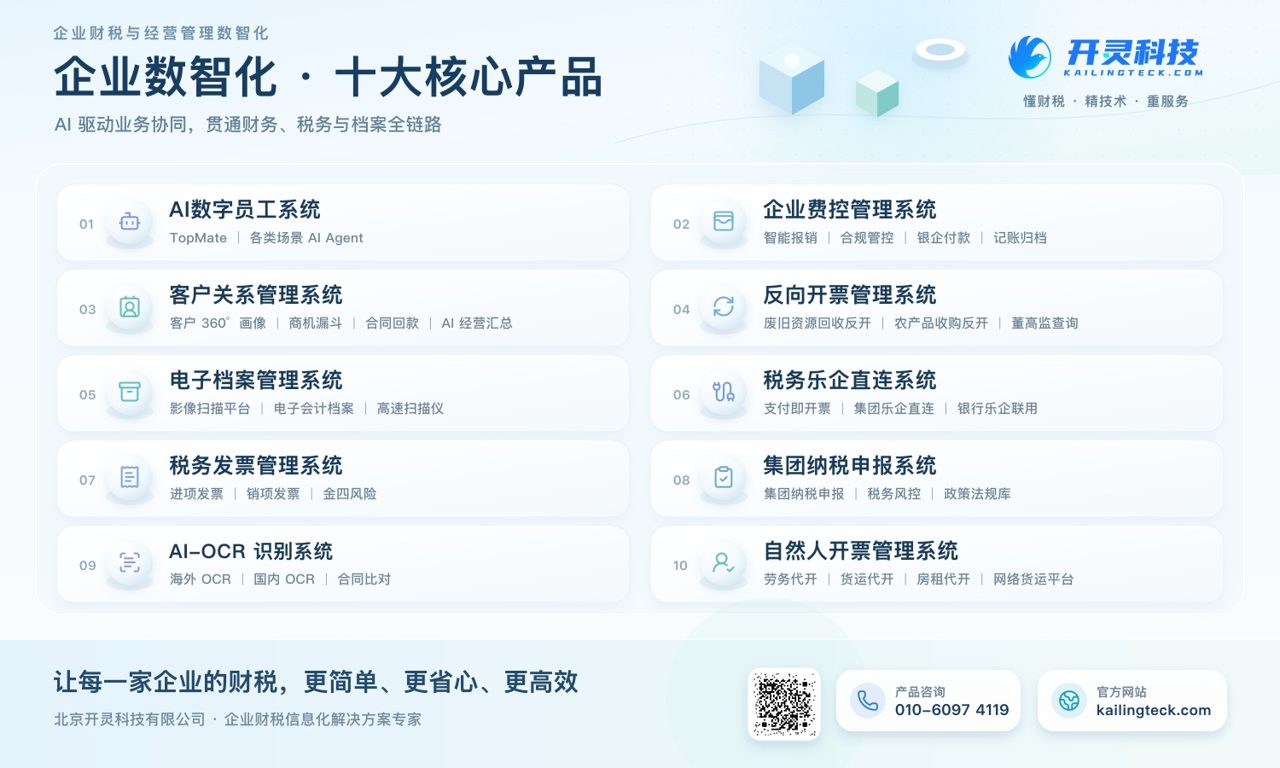
The company has now formed ten core product lines, including: AI digital employee system, enterprise expense control management system, customer relationship management system, reverse invoicing management system, invoice issuance for individuals management system, electronic archives management system, tax fully digitalized e-invoice Leqi system, tax invoice management system, group tax filing system, and AI OCR recognition system. It is committed to connecting enterprise business, finance, tax, funds, and archive data to help customers improve operational efficiency, business-finance-tax compliance capabilities, and digital management levels.
If you have any business-finance-tax digital transformation needs, welcome to contact us. Beijing Kailing Technology will serve you wholeheartedly.
Keywords: Reverse invoicing for scrap aluminum: who issues to whom, reverse invoicing tax rate for scrap aluminum, how many points are paid under reverse invoicing for scrap aluminum, scrap aluminum recycling invoicing, resource recycling reverse invoicing, Kailing Technology Five-Flow-Integrated tax compliance solution, Five-Flow-Integrated
As a comprehensive business-finance-tax digitalization solution service provider, Kailing Technology provides business-finance-tax management digital transformation products and operational services for various government agencies, institutions, and large, medium, and small enterprises. The product line includes: solutions for sales contract management system, procurement contract management system, fully digitalized Leqi interface project, automatic output invoicing system, reverse invoicing system, invoice issuance for individuals system, employee expense control and reimbursement system, input VAT invoice management system, supply chain collaborative reconciliation system, image AI OCR recognition system, automatic financial bookkeeping system, electronic accounting archives system, etc., comprehensively driving the digitalization process across various fields.
Consultation Hotline: 18513895936 / 010-60974119 Location: Beijing