
Why can't reverse invoicing for used and scrapped vehicles be issued? The Kailing Technology resource recycling reverse invoicing system performs upfront troubleshooting of blockers such as inconsistency between seller and payee, and ensures tax compliance through the integration of five flows.
Scrapped vehicle recycling enterprises often encounter this situation: the vehicle has been received and the money has been paid, but the reverse invoice cannot be issued, or it is returned by finance after being issued. There are five most common reasons: the enterprise's qualifications are incorrect, the seller is not the vehicle owner, the payee is inconsistent with the seller, the vehicle information does not match the documents, and the seller's quota or identity is restricted. The Kailing Technology resource recycling reverse invoicing system moves these blockers forward to the vehicle intake stage for item-by-item verification, so used and scrapped vehicle recycling enterprises can discover problems before invoicing. This article explains the cause and handling method for each blocker one by one. Once these blockers are troubleshooted in advance and every vehicle purchase has evidence under the integration of five flows, tax compliance for reverse invoicing is assured.
▍First distinguish: which vehicle purchases can use reverse invoicing
The prerequisite for reverse invoicing of used and scrapped vehicles is that the recycling enterprise has reverse invoicing qualifications such as scrapped motor vehicle recycling and dismantling qualifications, the seller is an individual, and the transaction object is a scrapped vehicle. The reverse invoicing stipulated in the State Taxation Administration Announcement No. 5 of 2024 targets the scenario in which resource recycling enterprises purchase scrapped products from natural persons.
If an enterprise purchases used cars that can still be driven on the road and are intended for resale, this is a used car business and invoices are generally issued according to the relevant provisions on used car sales; the reverse invoicing rules for scrapped products cannot simply be applied. Misclassifying the nature of the business is the number one reason for "being unable to issue," and enterprises are advised to first confirm the business type according to the vehicle's final destination.
In practice, the same enterprise may have two types of business at the same time: some vehicles enter the dismantling line, and some are resold whole. It is recommended to mark the vehicle's destination at the time of vehicle intake registration, with dismantled vehicles entering the reverse invoicing process and resold vehicles entering the used car business process, managing the two types of documents separately to avoid having to distinguish them at month-end.
▍Blockers 1 to 3: qualifications, seller identity, and payee
Reverse invoicing for used and scrapped vehicles most often gets stuck at the "person" link, specifically in the following three situations.
Blocker 1: Enterprise qualification does not match the business type
Some enterprises only hold a used car business qualification, without a scrapped motor vehicle recycling and dismantling qualification or other reverse invoicing qualification, yet they apply for reverse invoicing when taking in scrapped vehicles, so naturally no invoice can be issued. Solution: first confirm the qualification; during the qualification application period, the individual tax authority invoice issuance channel can be used.
Blocker 2: Seller is not the vehicle owner
Scrapped vehicles are often resold through "scalpers" or intermediaries, and the person handing over the vehicle is not the owner named on the vehicle license. Handling: create the profile based on the natural person who actually sells the scrapped vehicle, check the ID card against the vehicle certification materials, and clarify ownership first in cases of resale by an intermediary.
Blocker 3: Seller and payee mismatch
This is the most searched question: the vehicle owner agrees to sell the car but asks for the money to be paid to a relative's or intermediary's account. The fund flow does not match the invoice seller, and it will be blocked by validation at invoicing; even if an invoice is issued, it is hard to prove oneself. Solution: insist on paying to the seller's own bank card; where collection by another party is truly needed, compliant authorization and verification should be completed first.
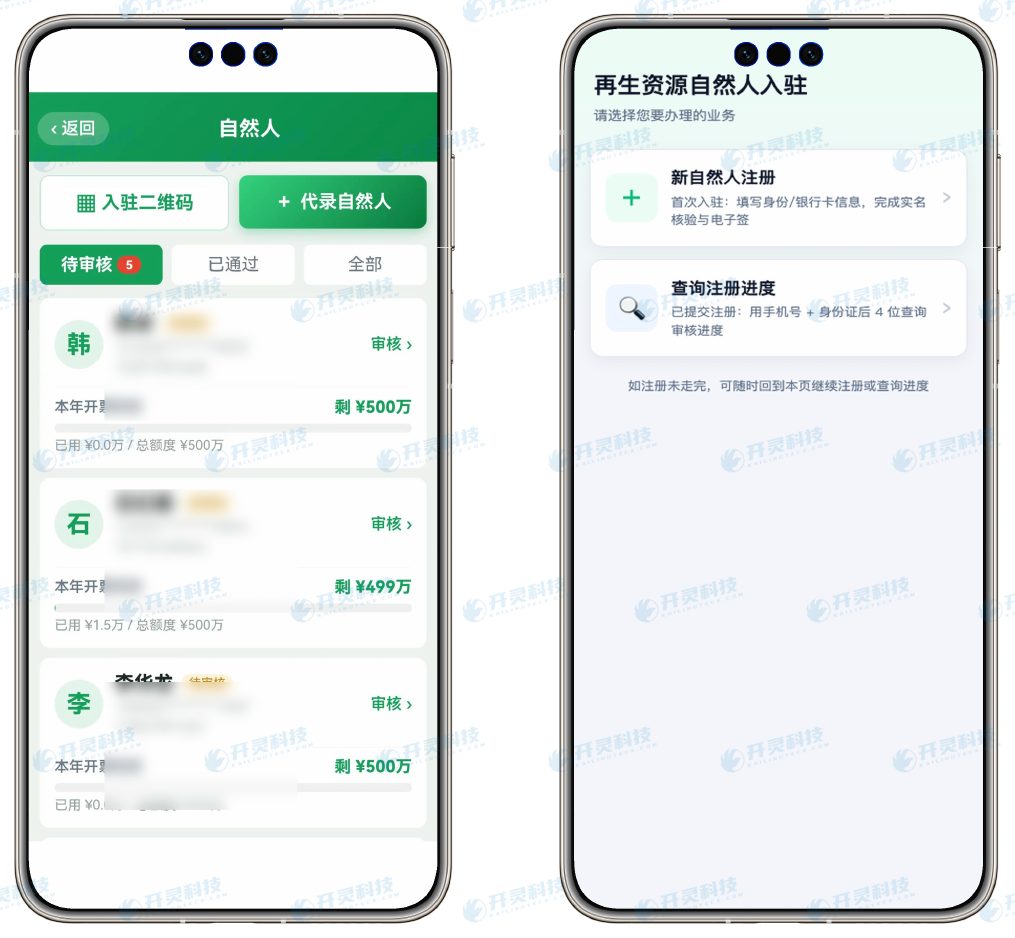
Kailing Technology natural person profile creation: one-time verification of real name and bank card (information desensitized)
▍Blockers 4 and 5: vehicle information and quota identity
Even if the "person" issue is resolved, vehicle information and the seller's status may still prevent the reverse invoice from being issued.
Blocker 4: Vehicle, weighing, and documents do not match
Scrapped vehicles are priced by whole-vehicle weight or by vehicle. If any of the license plate, vehicle photos, weighing records, or dismantling warehousing records at vehicle intake is missing, or is inconsistent with the settlement statement, it cannot be proven that "this vehicle actually entered the plant." Handling: take vehicle photos at intake, verify vehicle license information, and have weighing data automatically enter the system, one document per vehicle.
Blocker 5: Seller exceeds quota or identity is restricted
If the same natural person's cumulative reverse invoicing exceeds 5 million yuan (excluding VAT) over 12 consecutive months, or if the seller serves as the enterprise's legal representative, director, supervisor, or senior manager, reverse invoicing is not allowed. Handling: perform an employment cross-check when creating the profile, verify the quota before invoicing, and guide those over the limit to register a business entity.
The table below summarizes the manifestations and handling methods of the five blockers.

Five major blockers and handling methods for reverse invoicing of used and scrapped vehicles
Of the five bottlenecks in the table, three lie in "people," and two lie in "vehicles" and "quotas." Putting verification actions at the vehicle intake site is much easier than reworking at invoicing time.
▍How Kailing Technology's resource recycling reverse invoicing system blocks issues before invoicing
In response to the characteristics of scrapped vehicle recycling, the Kailing Technology resource recycling reverse invoicing system distributes verification actions across four stages: profile creation, vehicle intake, settlement, and payment, leaving only a one-click operation at invoicing time.
- Profile creation: ID cards and bank cards are automatically recognized, with liveness detection and face comparison, while director and senior executive reverse checks, quota verification, and blacklist comparison are completed simultaneously.
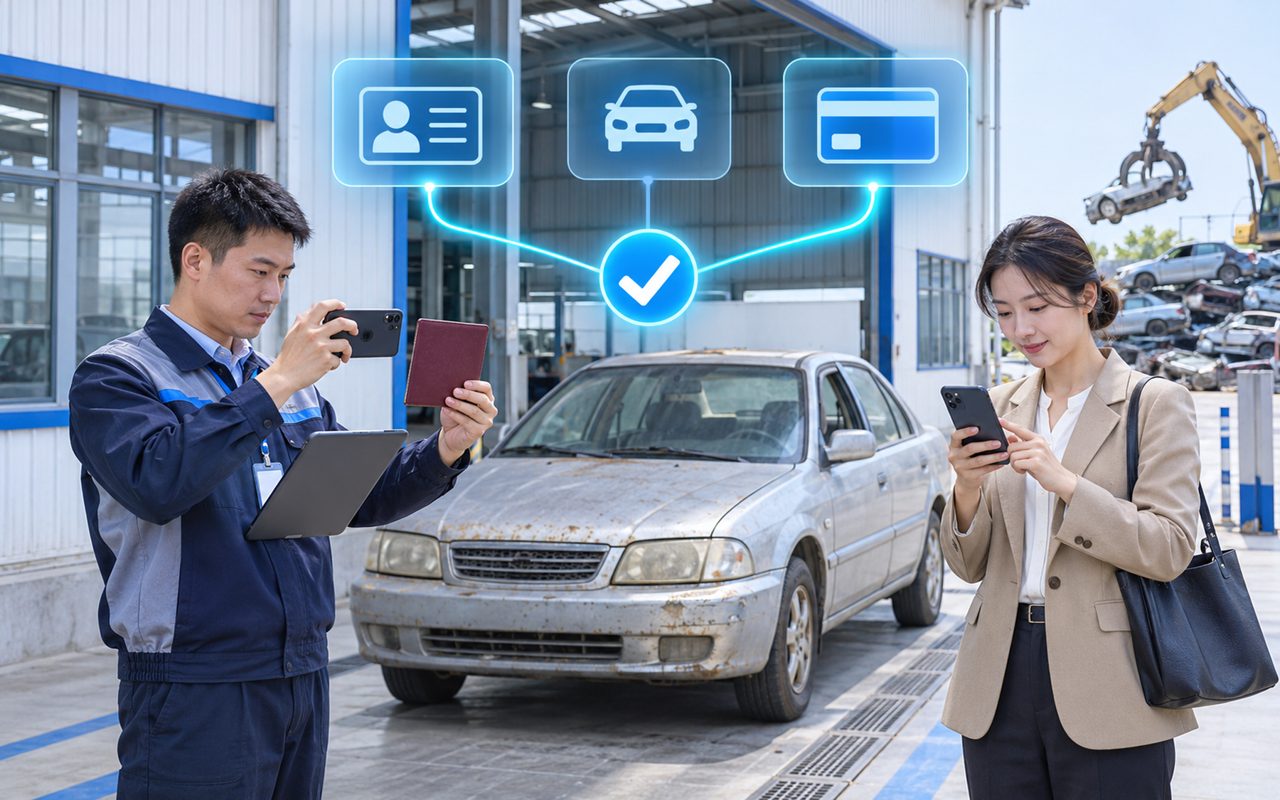
- Vehicle intake: The driver scans the code to clock in, photographs the front and rear of the vehicle to automatically recognize the license plate, verifies the driving license and driver's license information, and weighing data is collected automatically.
- Settlement: One vehicle, one order; once the settlement quantity and amount are locked, payment and invoicing are both based on the settlement amount.
- Payment-triggered invoicing: Settle by person, pay directly to the person's own card via bank-enterprise direct connection, and issue the reverse invoice in the same step as payment, with PDF, OFD, and XML files automatically retained.
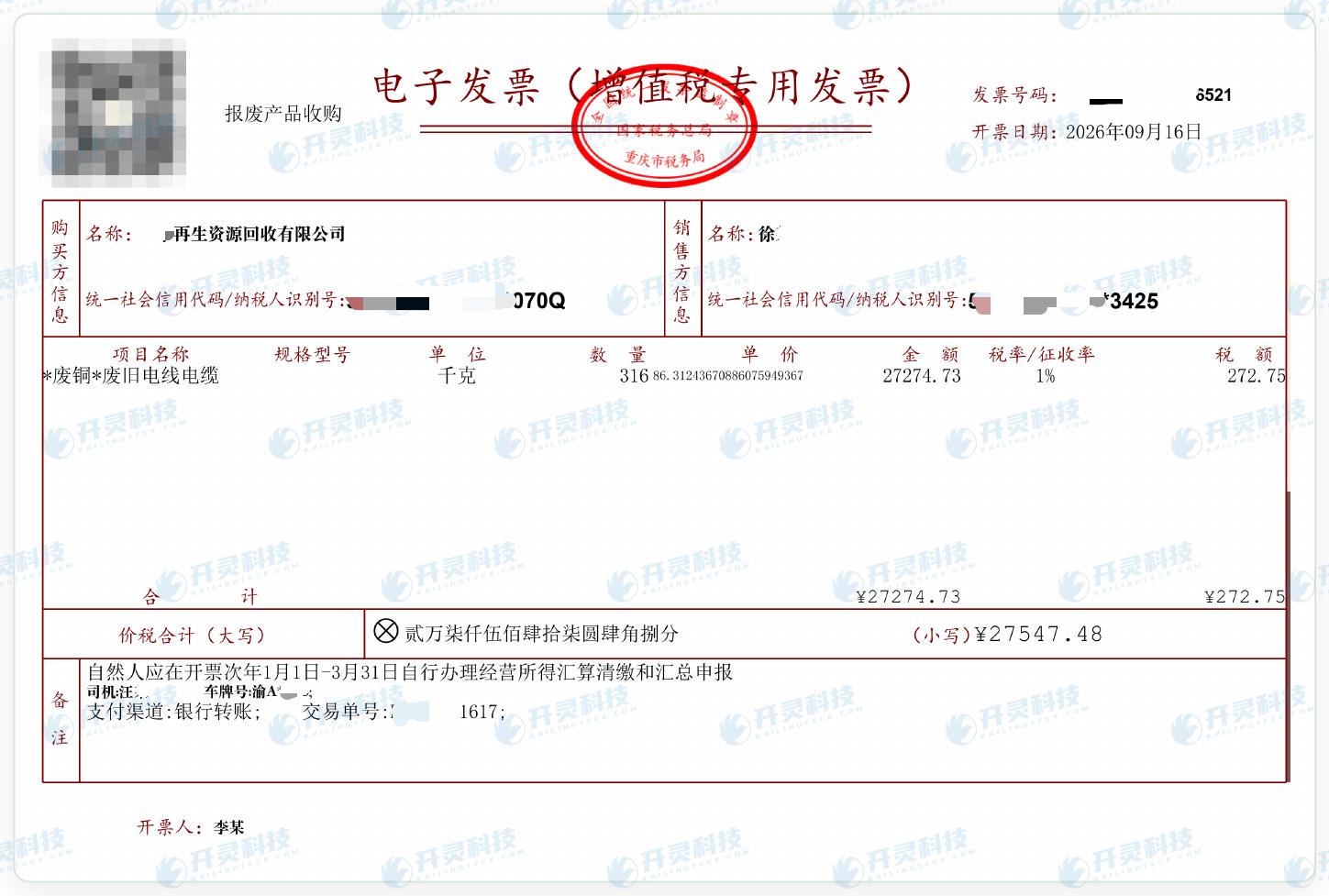
Reverse invoice example: seller is a natural person, levy rate 1% (information desensitized)
For used and scrapped vehicle recycling enterprises, the greatest value lies in solving the "unable to issue" problem in advance at the vehicle intake site: whichever item does not comply is prompted on the spot by the system, and the purchaser can immediately supplement materials or adjust the payment method, rather than discovering it only when finance issues the invoice.
▍How to troubleshoot after invoicing fails: an outside-in inspection sequence
If a reverse invoice has been submitted but invoicing fails, it is recommended to troubleshoot in the order of "qualification—identity—funds—documents—quota" from the outside in, which usually identifies the cause in a single check.
First check qualifications: confirm the type and validity period of the qualification the enterprise currently uses for invoicing, and whether this business is a scrapped product purchase. Then check identity: confirm whether the seller is the natural person himself or herself who has been filed and verified, and whether there is employment or business entity registration information. Next check funds: confirm that the payee and payment amount match the settlement statement. Then check documents: confirm whether vehicle photos, weighing records, and the settlement statement are complete and the figures consistent. Finally check the quota: confirm whether the seller's cumulative amount over 12 consecutive months is approaching or exceeding the upper limit.
The five-flow star chain diagram of the Kailing Technology resource recycling reverse invoicing system marks in red the evidence flow missing for each purchase, so troubleshooting can directly locate which item is missing without asking each department one by one. For scrapped vehicle recycling enterprises, it is recommended to write this troubleshooting sequence into the operations manual for vehicle intake positions, so that purchasers check against the same sequence on site.
▍FAQ
Q: Why can't reverse invoicing be issued for used cars?
A: Common reasons include the enterprise lacking qualifications such as end-of-life motor vehicle recycling and dismantling, the business actually being used car trading, the seller not being the vehicle owner, a mismatch between the payee and the seller, or the seller exceeding the quota or matching directors, supervisors, or senior executives.
Q: Can reverse invoicing still be issued if the seller and the payee are different?
A: This operation is not recommended. A mismatch between the payee and the invoice seller causes the fund flow to be inconsistent with the invoice flow. Kailing Technology's resource recycling reverse invoicing system by default pays only to the seller's own bank card that has been filed and verified.
Q: Can reverse invoicing also be issued for purchasing used cars that can still be driven?
A: Generally it cannot be applied directly. Reverse invoicing targets the purchase of scrapped products; used cars intended for resale belong to the used car business and invoices should be issued according to the relevant regulations.
Q: How is VAT calculated for reverse invoicing of scrapped vehicles?
A: The system calculates VAT at a 1% levy rate and calculates surcharges and withholds individual income tax; the example basis is the reduced 1% levy for small-scale taxpayers from 2023 to 2027, subject to local tax practice.
If used and scrapped vehicle recycling enterprises want to solve invoicing blockers in advance, they are welcome to learn about the Kailing Technology resource recycling reverse invoicing system: https://www.kailingteck.com/fxzy/ .
As a national high-tech enterprise, Kailing Technology focuses on the digital and intelligent transformation of enterprise business-finance-tax and operations management, providing software products, system integration, implementation and delivery, and operational services for various government agencies, institutions, group enterprises, and SMEs.
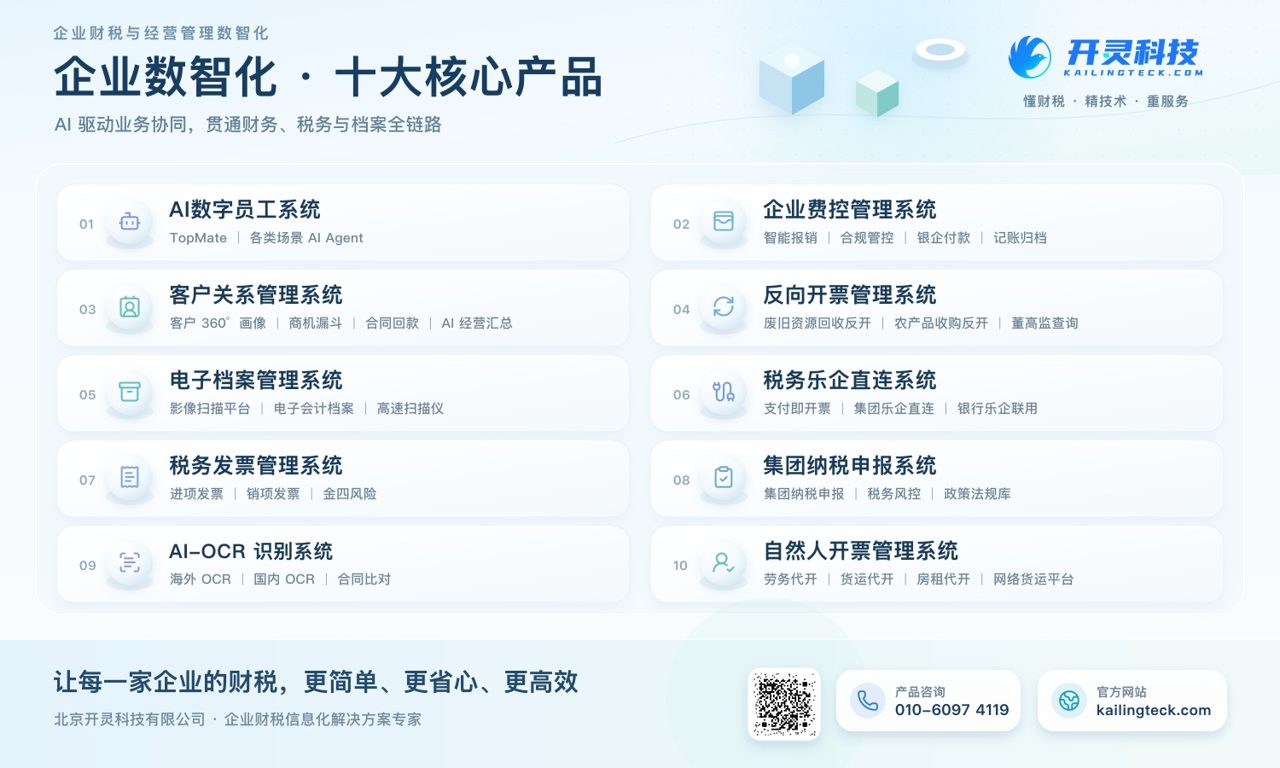
The company has now formed ten core product lines, including: AI digital employee system, enterprise expense control management system, customer relationship management system, reverse invoicing management system, invoice issuance for individuals management system, electronic archives management system, tax fully digitalized e-invoice Leqi system, tax invoice management system, group tax filing system, and AI OCR recognition system. It is committed to connecting enterprise business, finance, tax, funds, and archive data to help customers improve operational efficiency, business-finance-tax compliance capabilities, and digital management levels.
If you have any business-finance-tax digital transformation needs, welcome to contact us. Beijing Kailing Technology will serve you wholeheartedly.
Keywords: used car reverse invoicing, scrapped vehicle reverse invoicing, used car reverse invoicing cannot be issued, seller and payee mismatch, end-of-life motor vehicle recycling invoicing, Kailing Technology resource recycling reverse invoicing system
As a comprehensive business-finance-tax digitalization solution service provider, Kailing Technology provides business-finance-tax management digital transformation products and operational services for various government agencies, institutions, and large, medium, and small enterprises. The product line includes: solutions for sales contract management system, procurement contract management system, fully digitalized Leqi interface project, automatic output invoicing system, reverse invoicing system, invoice issuance for individuals system, employee expense control and reimbursement system, input VAT invoice management system, supply chain collaborative reconciliation system, image AI OCR recognition system, automatic financial bookkeeping system, electronic accounting archives system, etc., comprehensively driving the digitalization process across various fields.
Consultation Hotline: 18513895936 / 010-60974119 Location: Beijing