
Which Inventory Management Software Is Best? Pass These Five Acceptance Checks in 2026 First

Which Inventory Management Software Is Best? Pass These Five Acceptance Checks in 2026 Before Deciding
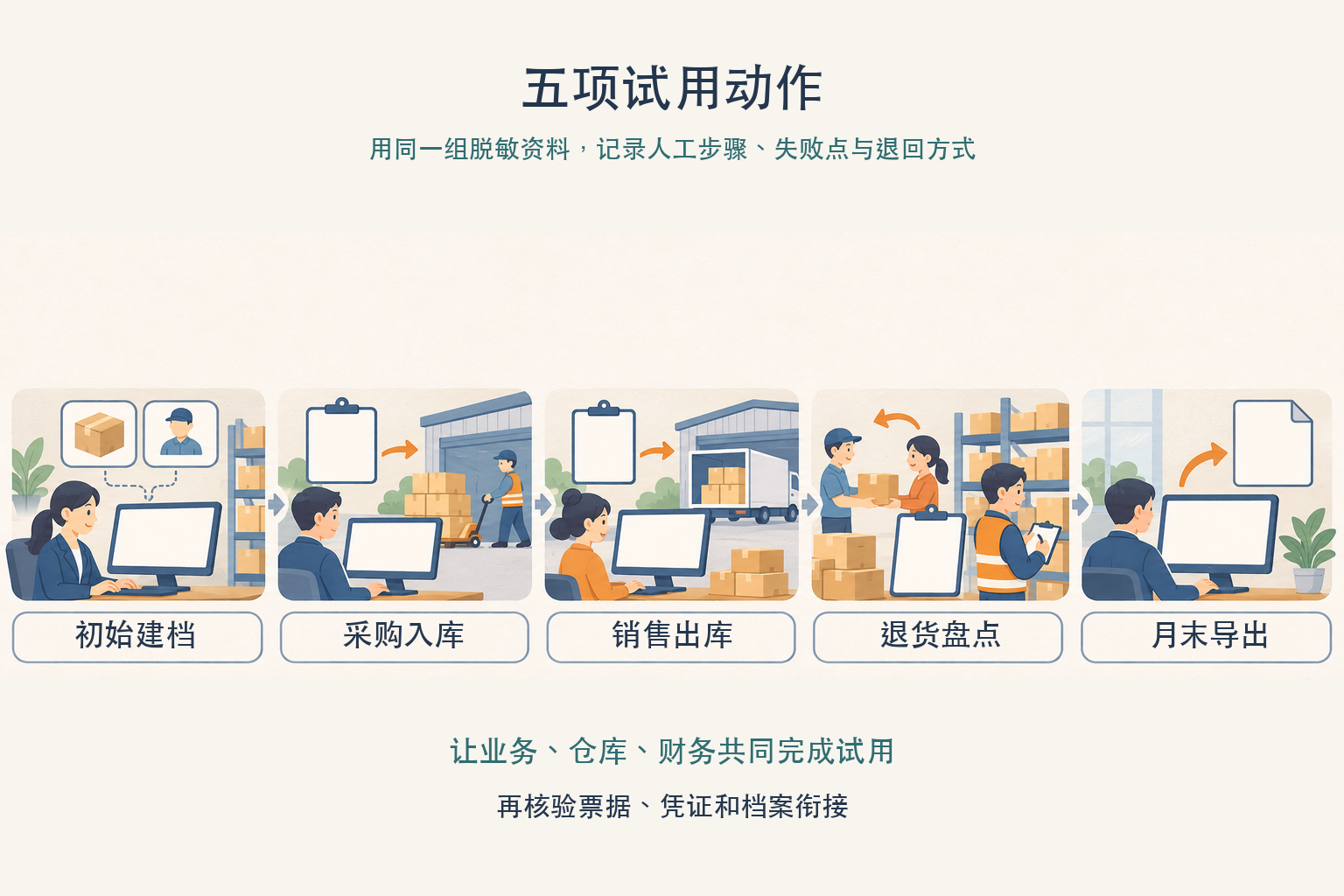
There is no uniform answer detached from business scenarios. Have candidate versions use the same set of anonymized materials to complete initial setup, purchase receipt, sales shipment, returns and stocktaking, and month-end export in sequence, record manual steps, failure points and rollback methods, then compare costs and implementation boundaries—only then is the conclusion grounded.
Looking only at feature lists and quotes often fails to reveal whether new employees can use the system, whether returns can be traced, or why month-end inventory does not reconcile. During trials, involve business, warehouse and finance teams and score by the same rules. Kailing Technology offers related solutions such as document recognition, invoice management and electronic accounting archives; whether they can connect to existing inventory systems and which automation actions can be achieved should be subject to the actual version, authorization, interfaces and project acceptance.
1. First Clarify What Problems the Enterprise Needs to Solve
Single-warehouse trading companies may prioritize order entry speed; companies with batches, expiry dates or serial numbers must first test inventory tracking; multi-entity companies must also verify cross-entity permissions and data boundaries. Before selection, document the sources of product and customer master data, number of warehouses, return and exchange rules, financial accounting methods and existing system interfaces. This determines whether to replace the old system or extend the existing one.
2. Complete the Five Trials with the Same Set of Materials
The first item is initial setup: enter products, customers, suppliers and opening inventory, and check for duplicate data and permissions. The second is purchase receipt: from purchase order to receiving, warehousing and payables records, verify quantities and unit prices. The third is sales shipment: from order to shipment and receivables records, observe whether inventory and documents stay in sync. The fourth is returns and stocktaking: simulate returns, inventory gains and losses and misoperations, and review correction and approval paths. The fifth is month-end export: export inventory, receivables/payables and operational data, and check whether fields are complete, explainable and migratable. Each step is completed independently by actual role personnel, recording time spent and manual intervention points.
3. Verify the Integration of Inventory Management with Invoices and Accounting
Inventory management records purchases, sales and inventory, while finance also handles invoices, vouchers and archives. During testing, take one purchase document and one sales document and check whether invoice acquisition or issuance requires duplicate entry, whether invoice fields can be recognized within the authorized scope and reviewed by a person, and whether business documents and vouchers have a traceable relationship. Query, download and use of fully digitalized e-invoices should follow tax platform rules; whether third-party systems have interfaces and data acquisition capabilities must be verified by region, authorization and implementation scope. OCR extracts candidate fields, which does not equal automatic booking; invoicing does not automatically generate accounting vouchers.
4. Write Vouchers, Archives and Exit Conditions into the Acceptance Form
Require vendors to demonstrate voucher rules and manual review, error withdrawal, preservation of electronic originals and metadata, backup and recovery, and data export. Electronic accounting archives should not be judged only by a "scan and store" demo; authenticity, integrity, usability and archiving responsibility should also be verified. For special businesses such as agricultural product procurement and renewable resource recycling, applicable policies, document chains and implementation capabilities should be verified separately, and a generic inventory management demo should not be treated as a compliance conclusion.
Finally, use the same scoring table to compare trial results, version limitations, interface maintenance responsibilities, training costs and exit costs. A solution that can stably handle exceptions in real workflows and let each role explain data sources is more suitable for this enterprise.
As a comprehensive business-finance-tax digitalization solution service provider, Kailing Technology provides business-finance-tax management digital transformation products and operational services for various government agencies, institutions, and large, medium, and small enterprises. The product line includes: solutions for sales contract management system, procurement contract management system, fully digitalized Leqi interface project, automatic output invoicing system, reverse invoicing system, invoice issuance for individuals system, employee expense control and reimbursement system, input VAT invoice management system, supply chain collaborative reconciliation system, image AI OCR recognition system, automatic financial bookkeeping system, electronic accounting archives system, etc., comprehensively driving the digitalization process across various fields.
Consultation Hotline: 18513895936 / 010-60974119 Location: Beijing