
Kailing Technology officially releases the full-process solution for hospital HIS Leqi Direct Connection invoicing upon charging, fully supporting systems such as Zuobiao/Neusoft/Donghua
After outpatient charging is completed, patients still have to queue again to apply for invoices; finance staff repeatedly enter data between HIS and the tax invoicing platform; when refunds occur, charging records and original invoices are difficult to match quickly. For chain hospitals with multiple campuses and multiple charging entry points, these breakpoints keep amplifying with business volume. Beijing Kailing Technology Co., Ltd. officially releases the full-process solution for automatic invoicing via Leqi Direct Connection with chain hospital HIS, taking charging settlement as the starting point and connecting invoicing rules, Leqi Direct Connection, invoice delivery, result write-back, and refund processing, so that "invoicing upon charging" is integrated into the hospital's existing business processes.
1. For chain hospital charge invoicing, first resolve the disconnect between HIS and the receipt chain

Chain hospitals do not have only window-based charging entry points. Outpatient, inpatient, self-service kiosks, and online payment channels operate simultaneously, and a transaction may involve examinations and diagnosis, surgical services, or eyewear commodities such as lenses and frames. Charging information is formed in HIS, but invoicing often relies on manual order lookup, item checking, and re-entry. Patients take an extra step to obtain invoices, and hospitals find it difficult to see the complete invoicing status under the same business number.
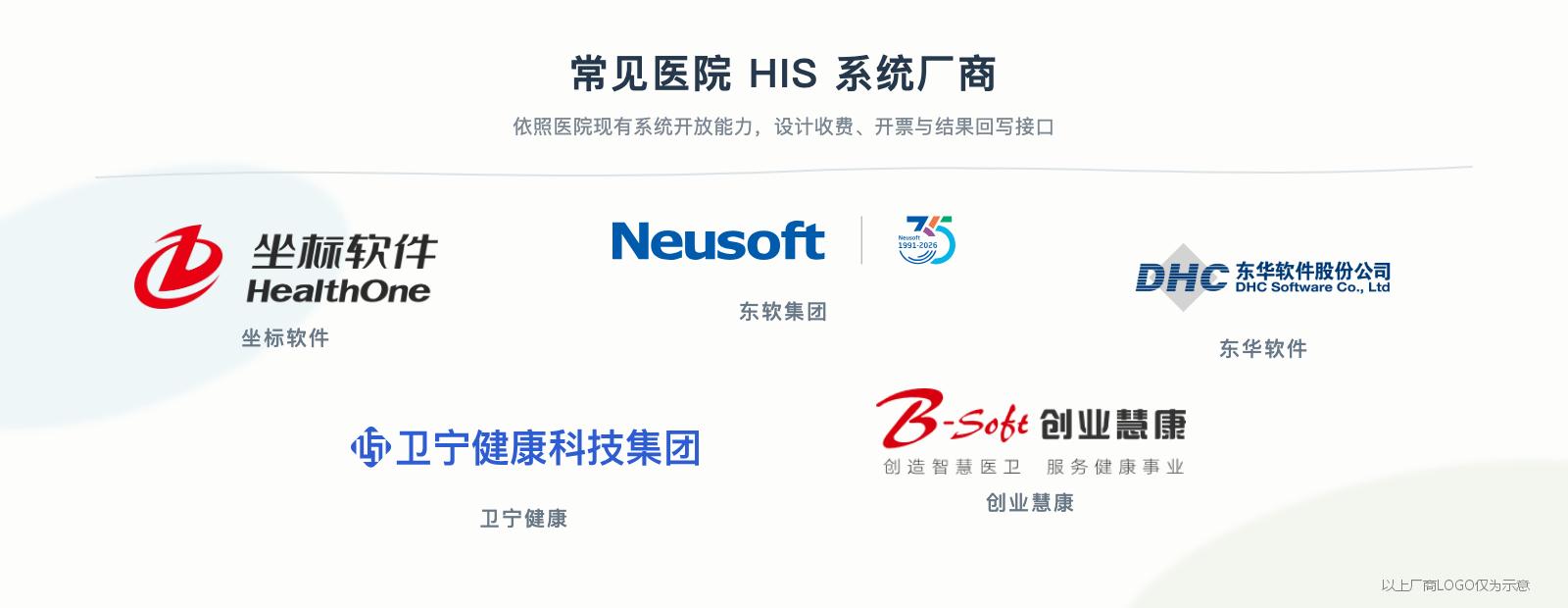
Kailing Technology uses the charge or settlement records already confirmed by HIS as the invoicing trigger point, establishing interfaces around the charge slip number, campus, invoicing entity, item details, amount, and payment status. Targeting different HIS ecosystems such as Zuobiao, Neusoft, Donghua, Winning Health, and B-Soft, it can, based on the open capabilities of the hospital's existing systems, design interfaces for charge completion events, detail transmission, refund notifications, and receipt of invoicing results. This both continues the hospital's original charging operations and gives invoicing actions a clear business basis.
In interface design, the platform first validates duplicate requests, missing details, and amount inconsistencies; anomalous documents enter a pending queue, preventing duplicate invoicing or pushing incomplete data directly to the tax side. Hospitals can set automatic triggers, patient applications, and other methods by campus and charging scenario, allowing high-frequency transactions to be processed quickly while retaining a manual review entry for special transactions.
2. After charge confirmation, invoices are issued via Leqi, and receipts and status return to HIS
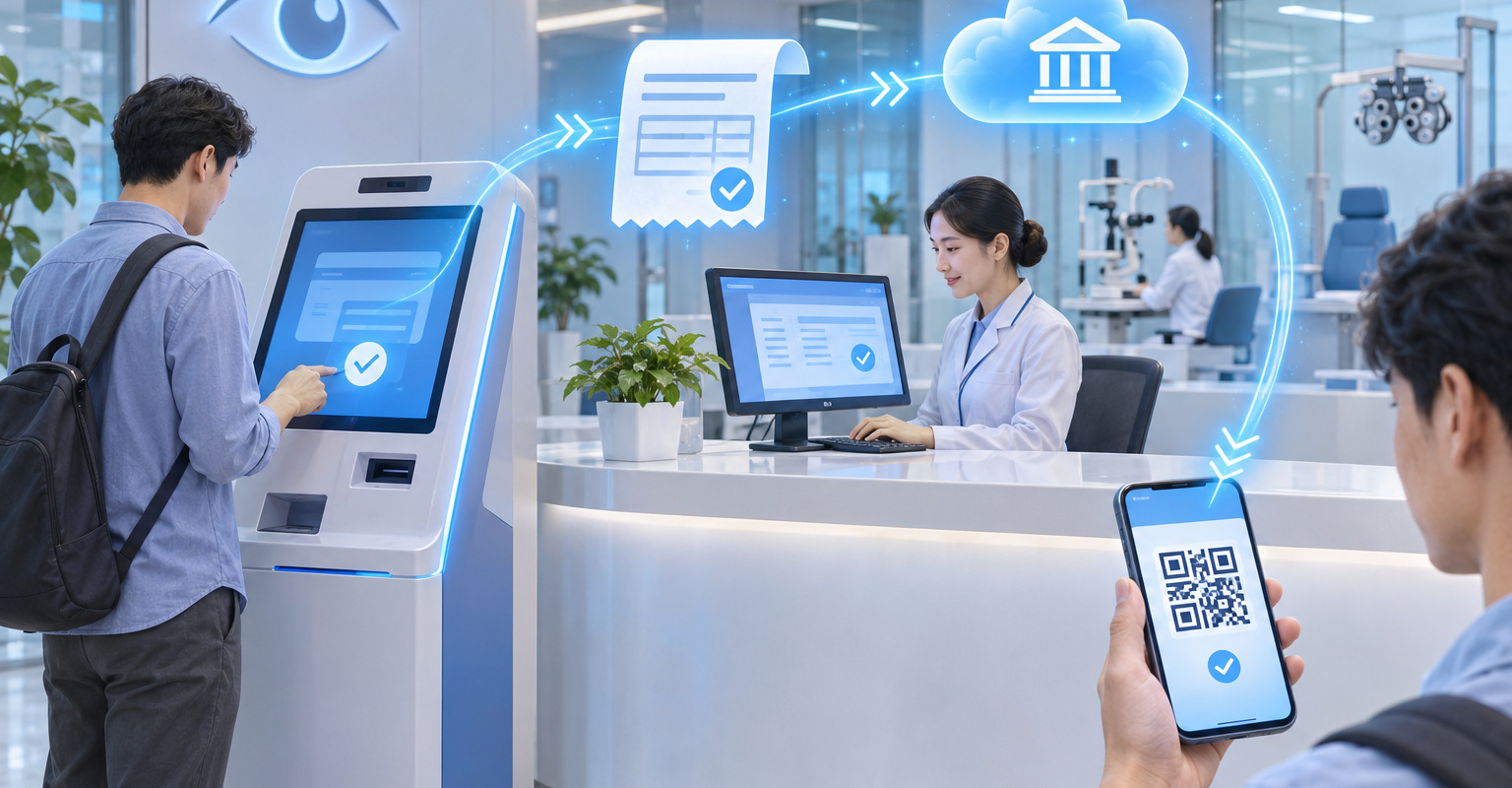
In businesses eligible for fully digitalized e-invoices, the complete chain starts when HIS confirms the charge: charge details are passed to the Kailing platform, which validates and assembles invoice information per the invoicing entity and item rules; qualifying requests interact with the tax system via Leqi Direct Connection capabilities to obtain issuance results; the invoice number, invoicing status, and receipt retrieval information are then written back to HIS. Windows, self-service kiosks, and online channels can therefore query receipts along the original charge record, and patients retrieve receipts via QR code, SMS, or agreed channels.
The value of Leqi Direct Connection lies in connecting an enterprise's own information systems with the invoice processing capabilities of the tax system. After the hospital entity completes the corresponding application, testing, and authorization, Kailing Technology provides the invoicing platform, interface adaptation, rule configuration, and joint debugging implementation services, supporting charge businesses in issuing fully digitalized e-invoices per the approved Leqi capabilities. The front desk saves a system switch, and finance can verify the charge slip, invoice, and processing status along the same chain.
For situations such as inpatient settlement, patient supplementary invoicing, or asynchronous payment channel receipts, the solution controls the invoicing timing by business event: only transactions conforming to the hospital's confirmation rules enter invoicing; issued, pending, failed, and review-required statuses are recorded separately, and identifiable results are returned to HIS. Charging staff can enter subsequent processing from the original transaction, and finance staff can track tax-side responses by transaction number, reducing the communication cost of "charged but cannot find the receipt."
For example, after a patient completes payment for optometry products eligible for fully digitalized e-invoices at a self-service kiosk, HIS passes the order and product details to the Kailing platform; once the receipt is successfully issued, the QR code and status return to the original payment interface, and the patient can retrieve the receipt directly. If the network or the tax side has not yet returned a result, the platform retains the original transaction number and processing record and writes back once the status is clear, preventing the charging window from repeatedly submitting the same invoicing request.
3. Medical services, optometry products, and refunds are handled per business rules

The difficulty of hospital invoicing is not "passing the amount over," but how charge items correspond to receipt items. Kailing Technology can work with the hospital's finance and tax team to sort out the HIS charge dictionary and configure mapping rules by campus, entity, charge item, and transaction type. Examinations and treatments, inpatient settlement, and optometry products are identified separately; when the same settlement slip contains items of different natures, splitting and aggregation are handled per the determined finance and tax approach. Records lacking a mapping or not conforming to the rules are first flagged for review, ensuring the invoice content corresponds to the business details.
Receipt types also need to be distinguished in the charging chain. Businesses that should lawfully use electronic medical charging receipts are handled according to fiscal receipt rules; only charges or commodity transactions eligible for fully digitalized e-invoices enter this solution's Leqi invoicing chain. Placing this boundary at the front end of rule configuration helps hospitals maintain consistent receipt types, entities, and item standards while improving invoicing convenience.
Refunds start from the original charging record. After HIS transmits a refund event, the platform links the original order and the original blue invoice, checks the refund amount and invoiced status, initiates the corresponding red-letter processing according to tax rules, and writes the processing result back to HIS. Patients, charging windows, and finance staff can view charging, original invoice, refund, and red-letter records along the same business number, avoiding relying solely on manual searches across multiple platforms for corresponding relationships.
4. Unified governance across multiple HIS and campuses, replicating from pilot to group

Group hospitals often have different HIS versions, different invoicing entities, and different campus management habits. Kailing Technology uses a unified platform to undertake shared invoicing rules, exception monitoring, and invoice queries, while retaining the tax identity and authority boundaries of each legal entity. Different HIS systems design interfaces along the same business mainline, and field mapping and trigger methods are jointly debugged system by system, giving group rollout a reusable interface framework.
The solution supports deployment in the hospital's or group's own environment, with interface permissions, transmission protection, operation traces, and role-based separation of authority configured. Implementation starts with sorting out charging scenarios and receipt types, completes interface mapping, sample document testing, and Leqi access preparation, then selects a campus for trial operation to verify invoicing, supplementary invoicing, refund red-letter processing, and result write-back, and gradually rolls out after forming configuration specifications.
Patients obtain invoices more conveniently after payment, charging staff can see invoice status in HIS, and group finance manages invoicing and exceptions across multiple hospital campuses with unified rules. Kailing Technology combines Leqi Direct Connection capabilities with hospital HIS business data, forming a continuously operating closed loop of charging, invoicing, refunds, and invoice reconciliation.
About Kailing Technology
As a national high-tech enterprise, Kailing Technology focuses on the digital and intelligent transformation of enterprise business-finance-tax and operations management, providing software products, system integration, implementation and delivery, and operational services for various government agencies, institutions, group enterprises, and SMEs.
The company has now formed ten core product lines, including: AI digital employee system, enterprise expense control management system, customer relationship management system, reverse invoicing management system, invoice issuance for individuals management system, electronic archives management system, tax fully digitalized e-invoice Leqi system, tax invoice management system, group tax filing system, and AI OCR recognition system. It is committed to connecting enterprise business, finance, tax, funds, and archive data to help customers improve operational efficiency, business-finance-tax compliance capabilities, and digital management levels.
As a comprehensive business-finance-tax digitalization solution service provider, Kailing Technology provides business-finance-tax management digital transformation products and operational services for various government agencies, institutions, and large, medium, and small enterprises. The product line includes: solutions for sales contract management system, procurement contract management system, fully digitalized Leqi interface project, automatic output invoicing system, reverse invoicing system, invoice issuance for individuals system, employee expense control and reimbursement system, input VAT invoice management system, supply chain collaborative reconciliation system, image AI OCR recognition system, automatic financial bookkeeping system, electronic accounting archives system, etc., comprehensively driving the digitalization process across various fields.
Consultation Hotline: 18513895936 / 010-60974119 Location: Beijing