
Overseas hotel invoices and restaurant receipts have different formats; how does finance enter them? Kailing Technology's overseas invoice AI OCR recognition system classifies and extracts dates, merchants, and amounts
After returning from an overseas business trip, employees submit hotel invoices, restaurant receipts, and local transportation receipts. Formats, languages, and currencies differ, and finance entering dates, merchants, and amounts one by one is time-consuming and prone to missing lines. Kailing Technology's overseas invoice AI OCR recognition system first classifies and recognizes, then presents the original text and extracted fields side by side for staff verification.

▍Receipt type determines which fields to check
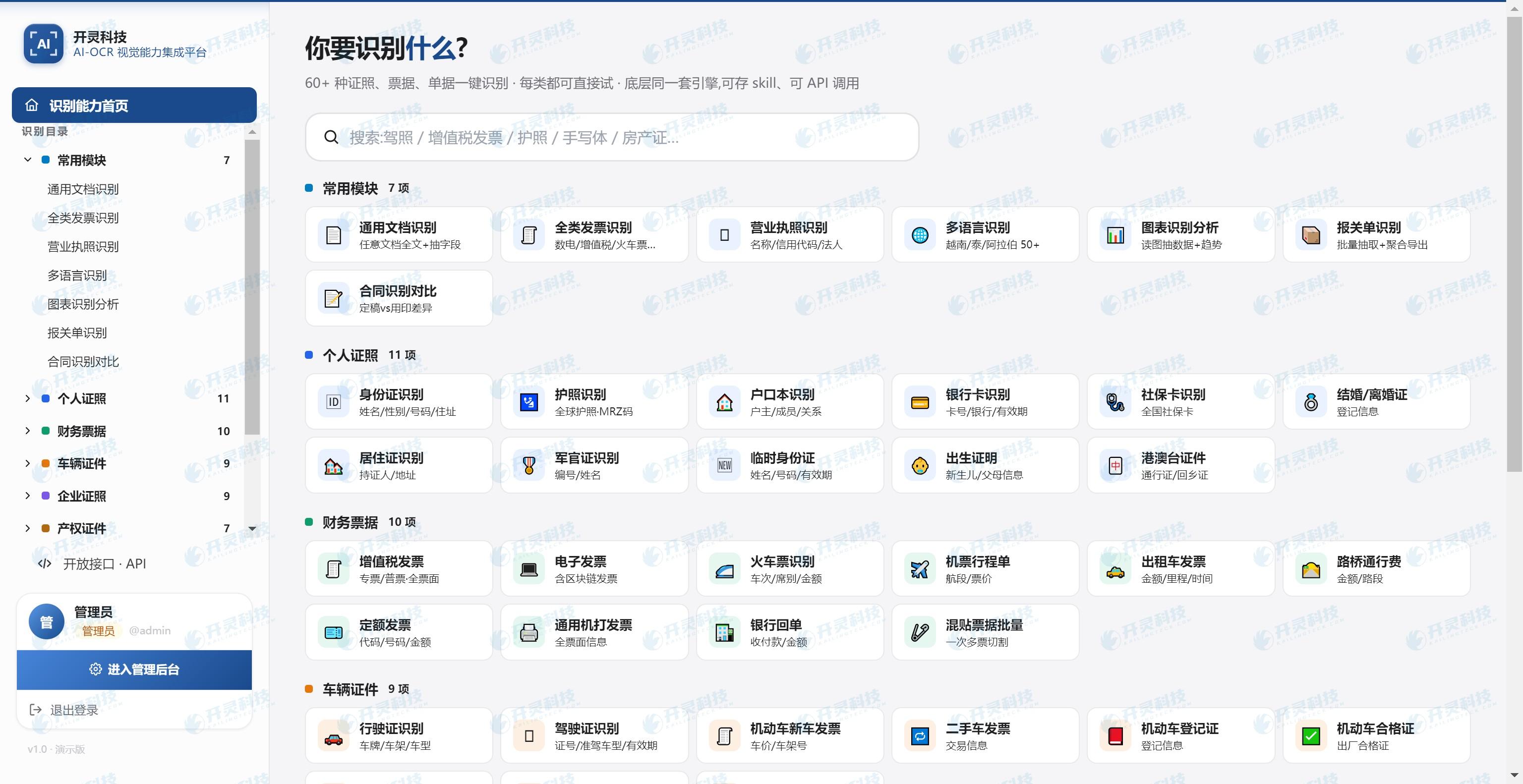
Hotel invoices usually focus on check-in and check-out dates, room nights, taxes, and total amount; restaurant receipts focus more on merchant, transaction date, line items, service charge, and payment total. The system first identifies the receipt category, then extracts according to the corresponding fields, avoiding using the same position rules to find amounts in different layouts.
With handwriting, stamp obstruction, or fading thermal paper, recognition confidence may decrease. The interface should highlight fields pending verification so that the reimburser or finance can confirm against the original receipt; blank fields must not be automatically filled with a seemingly reasonable default value.
▍Original text and Chinese comparison aid verification
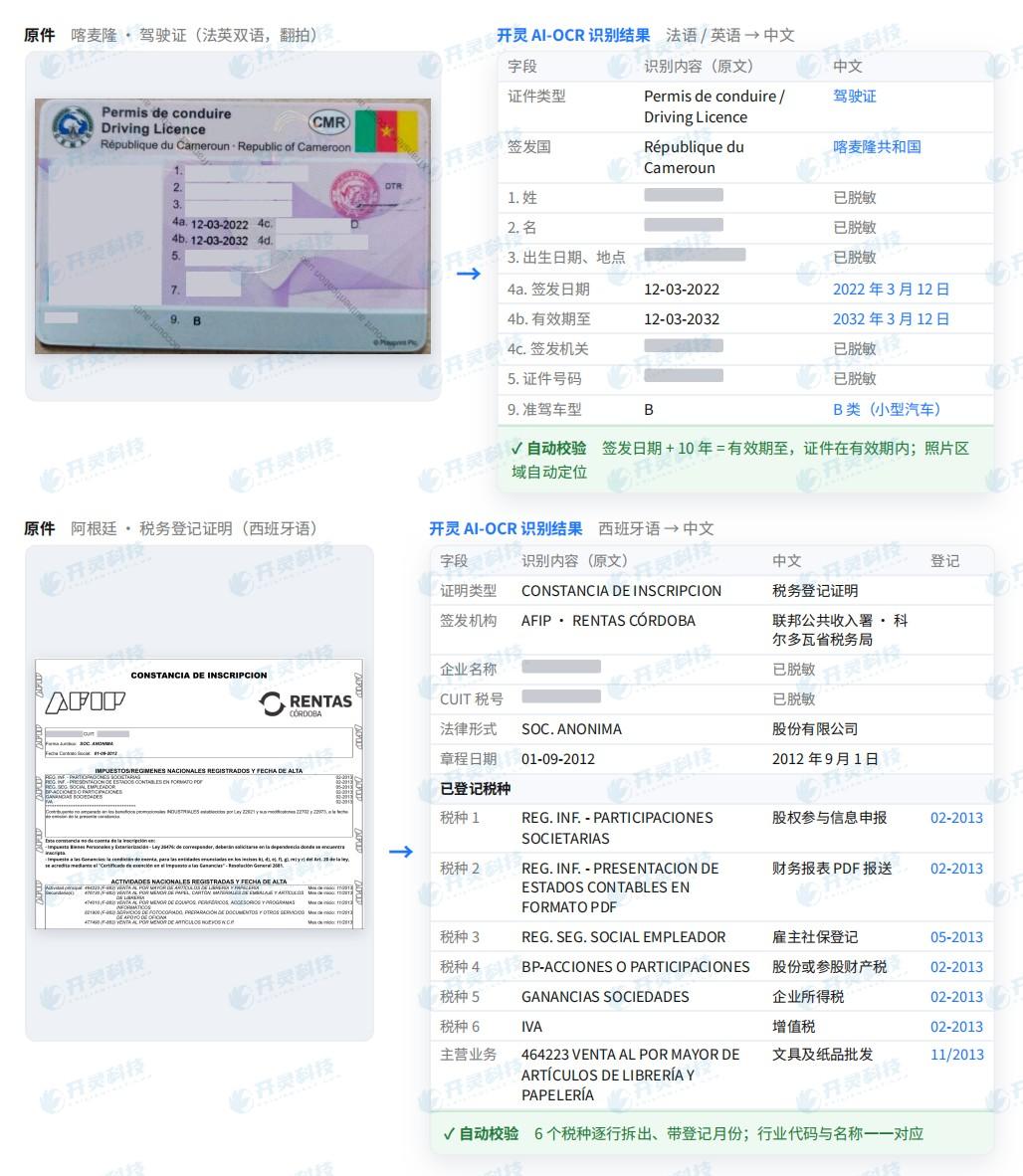
Foreign merchant names, addresses, and expense items can retain the original text with a Chinese reference to help finance understand the business purpose. Translation results are for reading assistance; the original text, images, and extracted values on the invoice must still be retained. For abbreviations, local tax types, or special charges, finance can refer back to the original invoice rather than only the translation.
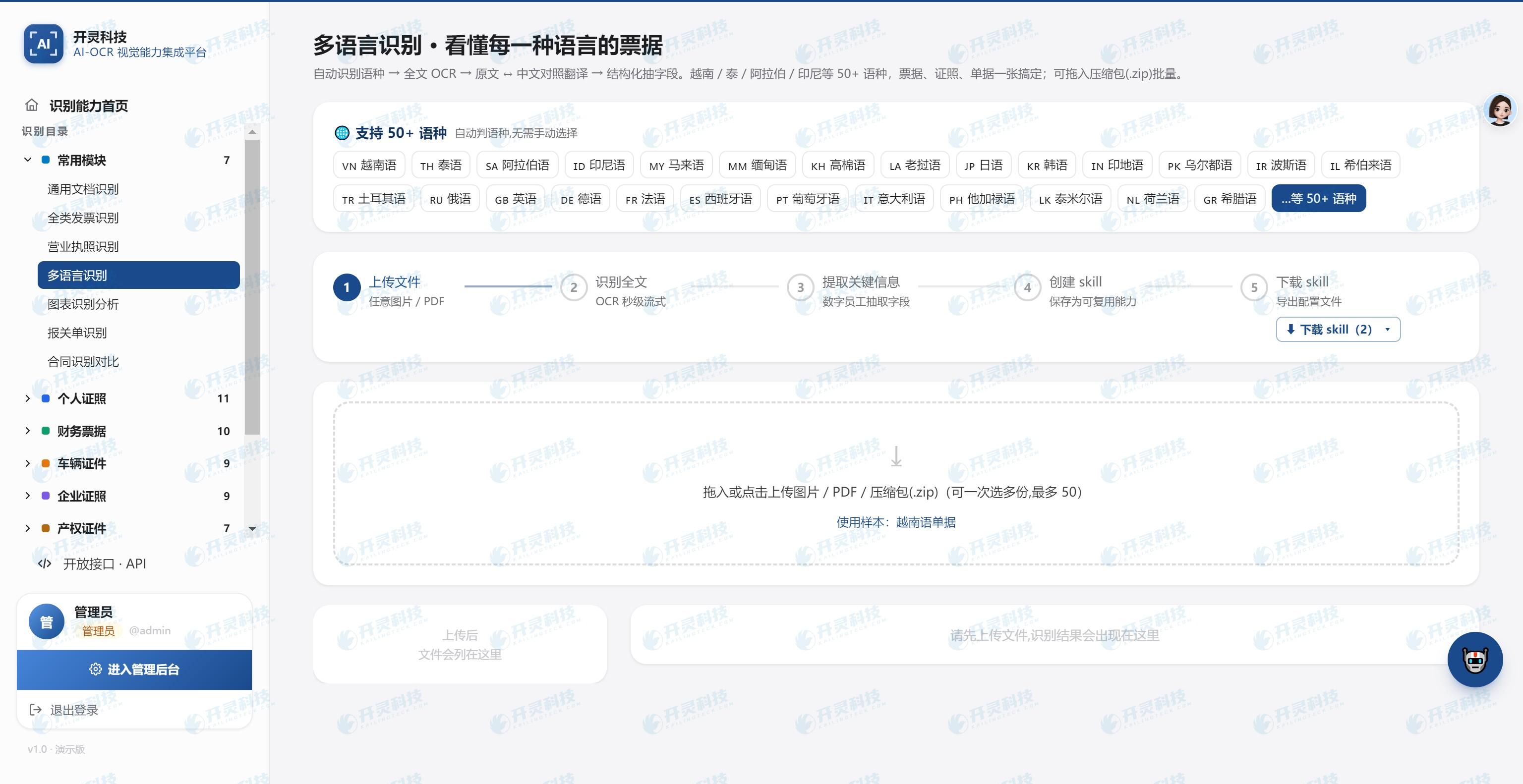
The Kailing Technology system supports recognition of multilingual and differently formatted invoices. Connecting classification, recognition, and translation reduces repeated typing by employees in spreadsheets and lowers information loss from "entering only the total because I cannot understand it."
▍Distinguish currency and level for amounts first
The same hotel invoice may show room charges, taxes, deposits, and amounts already paid at the same time; a catering receipt may have a subtotal, service charge, tax amount, and total. The system should extract amount labels and currencies separately and verify line-item totals against the face total. Foreign exchange rates and reimbursement conversion are handled according to enterprise policies and are not determined by OCR-recognized values alone.
If a receipt prints two amounts, one in local currency and one in the bank card settlement currency, finance should verify which one is used as the reimbursement basis. The recognition system retains both displays to avoid mistaking the settlement amount for the amount issued by the merchant.
▍Accept accuracy with mixed receipts
The test package can include hotel invoices, restaurant receipts, handwritten receipts, and one faded thermal receipt. Check whether classification is correct, whether date formats are misread, whether merchant names retain the original text, and whether currency symbols are recognized; focus on checking whether a prompt appears when line item totals do not match the total amount.
The implementation value of the Kailing Technology overseas invoice AI OCR recognition system is not simply "scanning" all invoices, but letting finance focus on ambiguous fields and abnormal amounts. Normal invoices require one less entry step, and problematic invoices can be found earlier.
▍How format differences affect recognition
Hotel invoices may be A4 paper or email PDFs; restaurant receipts are long, narrow thermal paper, with the date and total amount in positions that vary by merchant. Fixed-coordinate entry is error-prone; recognition by receipt structure after classification is better suited to overseas business.
Thai, Japanese, or European languages write dates, thousands separators, and decimal points differently. The system retains the original text when extracting values and prompts manual confirmation where ambiguity is suspected, avoiding mistaking months for dates or thousands separators for decimals.
Skewed photos, creases, and low light also affect results. Reimbursers should check clarity before uploading, which can reduce subsequent finance rework.
▍Amount validation should check details and totals
Restaurant receipts may include service charges and taxes, while hotels may list room charges, city tax, deposits, and credit card pre-authorizations. The system labels different amounts separately and checks the line-item total against the invoice total; discrepancies are handed to finance for review.
If the currency symbol on the invoice differs from the bank card settlement currency, both the original invoice amount and the actual payment amount are retained, and no conversion is made arbitrarily at the OCR stage. The exchange rate date and reimbursement conversion are determined according to enterprise policy.
The Kailing Technology overseas invoice AI OCR recognition system reduces reading burden through Chinese reference to the original text, while key fields are still confirmed by the handler before reimbursement.
▍The operation chain after receipts enter expense control
Recognition results can be filled into the date, merchant, currency, amount, and category in the expense form. During financial approval, the original receipt and field comparison are opened to see which values the employee changed and why; duplicate receipts are flagged by the system for verification.
Electronic images should be retained together with reimbursement forms; structured fields alone cannot be kept. For handwritten receipts that cannot be recognized, the system can hand them over for manual entry and mark the reason for low confidence.
Enterprises can calculate the manual modification rate by invoice type and prioritize improving upload guidance for common hotel, catering, and transportation invoices. Normal invoices require less entry, and abnormal invoices have a clear verification entry point.
▍Checks before recognition results enter approval
After the reimburser uploads a hotel invoice, first check whether the check-in date matches the business trip application; for restaurant receipts, check the merchant, consumption date, and expense reason. The system extracts fields, and staff confirm against the original invoice.
The same invoice may be photographed repeatedly, and finance should verify duplicates according to enterprise rules. If an image is cropped incompletely, employees should re-upload the original invoice rather than manually entering only an amount.
Retaining the original text and manual correction records helps finance explain the basis for entering cross-language invoices.
Even accurately recognized receipts need to retain the original text, because finance may later need to check consumption items, merchant address, or local taxes and fees. Saving field recognition, Chinese comparison, and the original receipt together facilitates both current reimbursement and later answers to "what exactly is this expense." For faded receipts, clear images should also be captured as early as possible to reduce the risk of illegibility later.
▍FAQ
Q: Can a hotel deposit be counted directly as the reimbursement amount?
A: Deposits, actual consumption and total paid should be distinguished and determined according to enterprise policy.
Q: Can the Chinese after recognition replace the original foreign-language receipt?
A: No. The original receipt should be retained together with the extraction and translation results.
Q: How are multi-currency receipts handled?
A: Retain the currency and amount on the receipt face; conversion follows the enterprise's applicable exchange rate and reimbursement rules.
Learn about Kailing Technology's related products and implementation plans: https://www.kailingteck.com/ai-ocr/ .
As a national high-tech enterprise, Kailing Technology focuses on the digital and intelligent transformation of enterprise business-finance-tax and operations management, providing software products, system integration, implementation and delivery, and operational services for various government agencies, institutions, group enterprises, and SMEs.
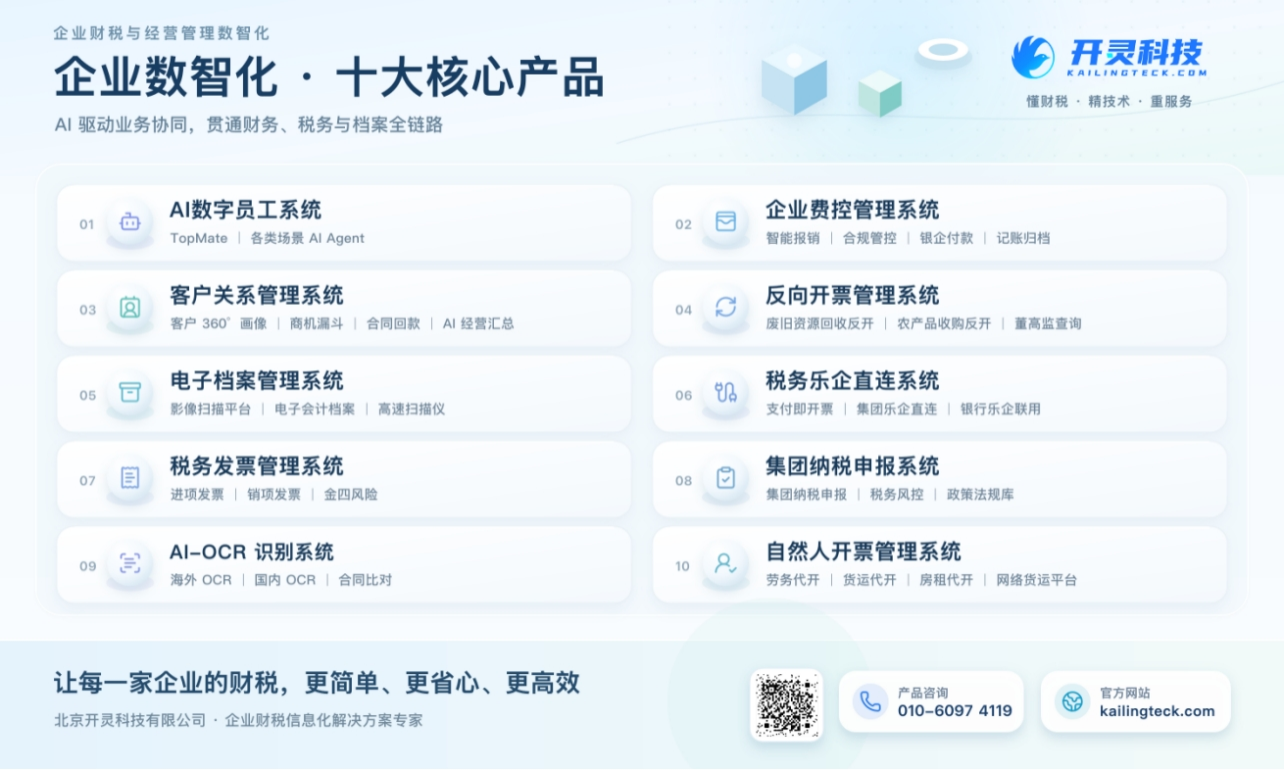
The company has now formed ten core product lines, including: AI digital employee system, enterprise expense control management system, customer relationship management system, reverse invoicing management system, invoice issuance for individuals management system, electronic archives management system, tax fully digitalized e-invoice Leqi system, tax invoice management system, group tax filing system, and AI OCR recognition system. It is committed to connecting enterprise business, finance, tax, funds, and archive data to help customers improve operational efficiency, business-finance-tax compliance capabilities, and digital management levels.
If you have any business-finance-tax digital transformation needs, welcome to contact us. Beijing Kailing Technology will serve you wholeheartedly.
Keywords: Overseas invoice OCR, hotel invoice recognition, restaurant receipt entry, multi-currency reimbursement, Kailing Technology
As a comprehensive business-finance-tax digitalization solution service provider, Kailing Technology provides business-finance-tax management digital transformation products and operational services for various government agencies, institutions, and large, medium, and small enterprises. The product line includes: solutions for sales contract management system, procurement contract management system, fully digitalized Leqi interface project, automatic output invoicing system, reverse invoicing system, invoice issuance for individuals system, employee expense control and reimbursement system, input VAT invoice management system, supply chain collaborative reconciliation system, image AI OCR recognition system, automatic financial bookkeeping system, electronic accounting archives system, etc., comprehensively driving the digitalization process across various fields.
Consultation Hotline: 18513895936 / 010-60974119 Location: Beijing